Book Review: “We Are Wolves” Anthology
Published in late 2020, We Are Wolves is a riveting, nearly feral horror fiction anthology that strikes right at the heart of trauma and toxic cultural expectations inflicted upon women. Though the inclusion of some entries was perplexing due to seeming deviation from theme and narrative purpose, We Are Wolves is, first and foremost, a worthwhile and emotionally challenging charity collection that supports survivors of abuse and assault.
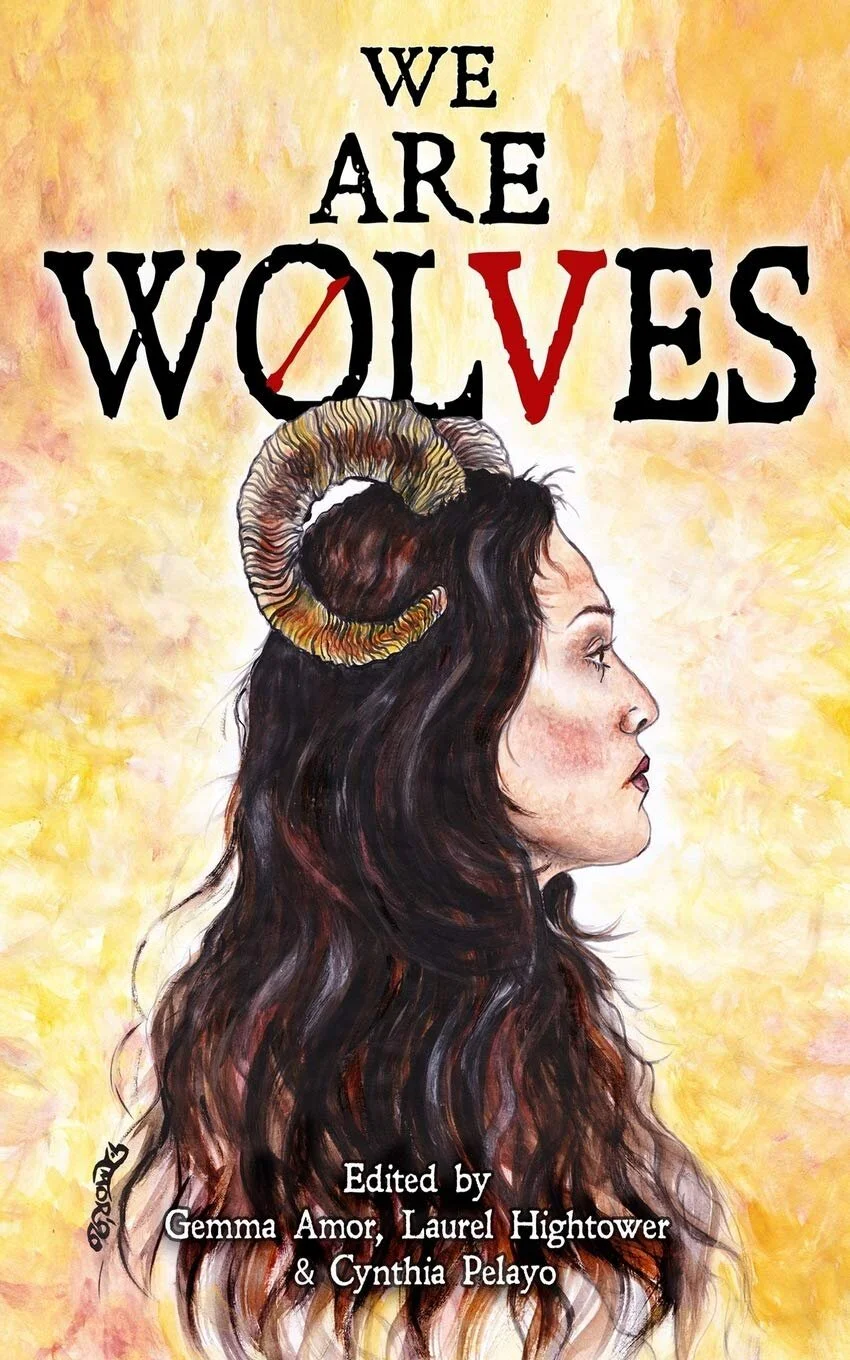
We Are Wolves is equal parts necessary and harrowing: If you’re a woman or someone who was raised as one, you’ll recognize the all-too-familiar shadows and scars of abuse and terror as expressed in these stories. This anthology is necessary, due to what it brings to light and is harrowing for much the same reason. But, as the foreword, authored by anthology editor Gemma Amor, warns: The content within these pages deals with descriptions of abuse, sexual abuse, harm to children, and other challenging subjects. Readers should always respect their limitations when it comes to engaging with potentially triggering material, but here I agree with Amor’s request, found in the foreword, that readers work with these challenging stories. Things need to change, and stories are some of our best teachers.
Opening with three strong short stories from anthology editors Amor, Laurel Hightower, and Cynthia Pelayo, We Are Wolves starts off on a viscerally and structurally sound foot. Pelayo’s “The Black Wallpaper” is a narrative cousin to Charlotte Perkins Gilman’s “The Yellow Wallpaper,” that tells the story of a burned-out career woman who’s recently been promoted to vice president at her workplace, and her partner is asking about having children while the protagonist is haunted by her own personal losses. “Though Your Heart is Breaking,” written by Hightower, details a case where detective Helena and work partner Max investigate a case where a man’s face has been torn open from the throat up. “Angel,” by Amor, is another detective tale, where Angel is dispatched with her work partner to investigate a report of an endangered child left to starve to death. Strong themes, well-written stories, and relatable characters make for a compelling start to this anthology, but as we move on to the next story, “Trouble with Fate,” by Sarah Read, we pivot into a story about three Weird Sisters who are doomed to die, though they did not think it was possible. Here we see a break from the seemingly established anthology focus on social and work pressure, as well as trauma.
As I read through this collection, the thematic focus continued to expand, offering up selections pertaining to vengeance, horror archetypes of women in cinema, a selection of poetry that thoughtfully engages with the question of magickal practice vs. commodification, and the challenges of living in our own bodies as women, among others. All of these are absolutely worthwhile points of interest to have an honest conversation about, but opening the anthology with three such narratively similar stories sets a specific tone for the rest of the collection that does not quite pan out.
We Are Wolves will be key in starting difficult conversations in the horror community, as well as other fandoms. For example, “The Curse of She Part 6: The Final Girlfriend,” written by Hailey Piper, examines the archetype of the girlfriend/lover in older horror movies, always the one being saved, if not outright slaughtered. Give the hero something heroic to do. When this archetype encounters the Final Girl, she finds her own territory in the genre threatened. Piper’s story is a beautiful examination of the commodification and abuse of women’s bodies in horror, and how even the role of “Final Girl” is not the liberated figure we take her to be—rather, the conditions for her existence are another manifestation of the oppression of the patriarchy.
We Are Wolves is a stellar read for those familiar with their own emotional shadows, and those willing to engage further with other lived experiences and perspectives that may make them uncomfortable. Horror, though with a difficult past when it comes to handling difficult subjects, is becoming more inclusive as the years tick by, and this anthology helps swing things in that important direction.
Article written by Laura Kemmerer
Laura tuned into horror with an interest in what these movies and books can tell us about ourselves and what societies fear. She is most interested in horror focused around the supernatural, folklore, the occult, Gothic themes, haunted media, landscape as a character, and hauntology (focusing on lost or broken futures).
