WSB x Moving Picture Review: Tarot (2024)
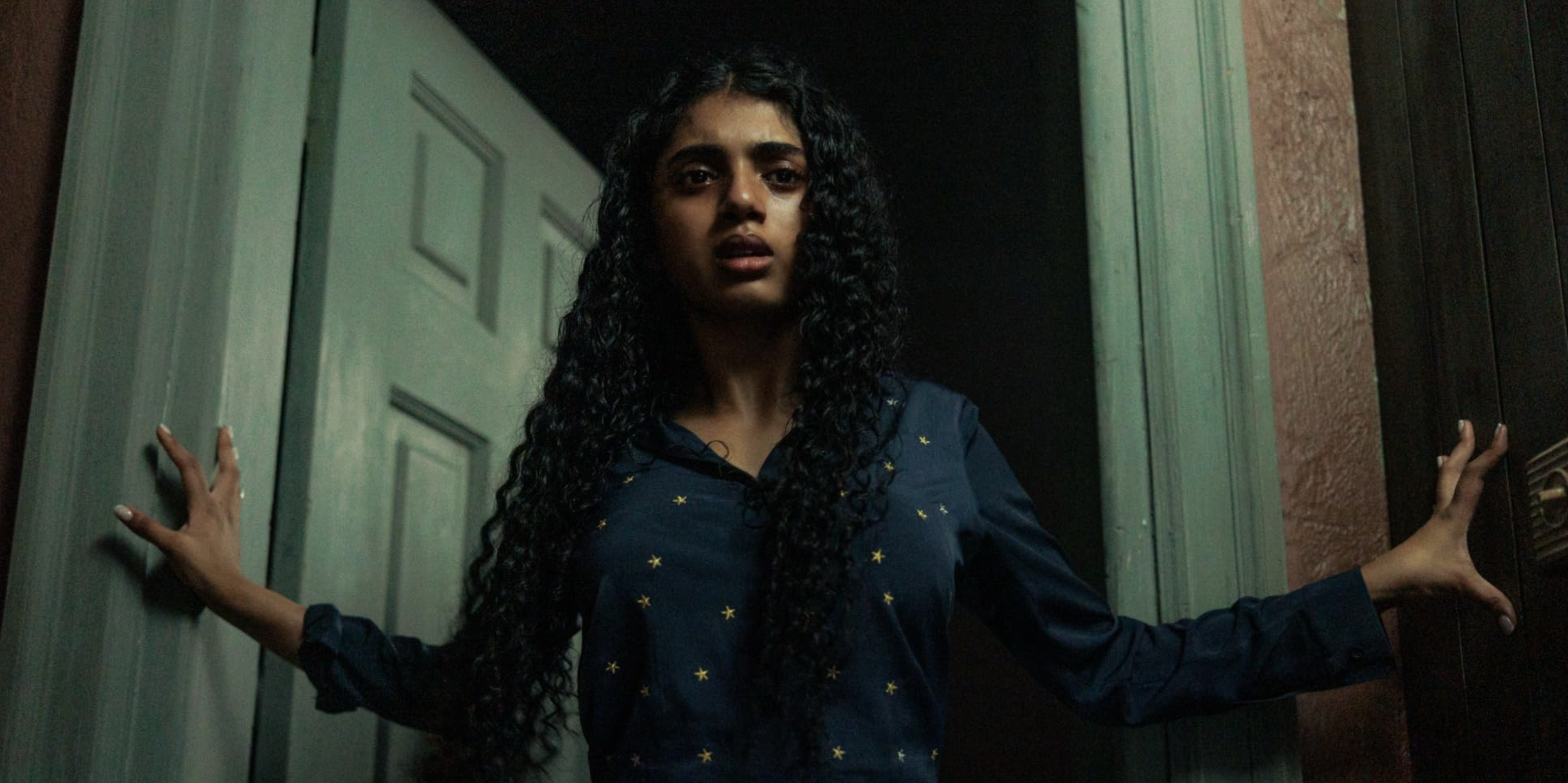
Image via IMDB
Since moving to Pittsburgh in college, I’ve lived in a number of areas around the city, but some of my fondest memories come from living in Lawrenceville, the East End neighborhood where I’ve felt the closest to attaining that elusive modern sense of community. Not coincidentally, it also put me in the closest proximity to more independent movie theaters than ever—including Waterworks Cinema, just over the Allegheny River.
The Waterworks feels like the classic American cinema—tucked away, nearly out of sight between a Taco Bell and a Burgatory in the corner lot of a quiet strip mall. It’s possibly the only thing that could make me feel nostalgic for the 90s American suburbia I grew up near. It’s fitting then that I came back here for Tarot, Screen Gems’ occult horror that I’d have felt right at home seeing as a teenager in the early 00s.
Written and directed by Spenser Cohen and Anna Halberg, and based loosely on Nicholas Adams’s novel, Horrorscope, Tarot follows a group of college students who unwittingly unleash a vengeful spirit infused into a cursed tarot deck, dooming them to mysterious, seemingly accidental deaths. The “cursed object” plot is a familiar one, as is the manner in which the deaths play out, which—particularly early on—feels strikingly similar to the Final Destination series, even going so far as to comment several times on the futility of fighting against fate.
Viewers are introduced to the friends drinking around a campfire as they celebrate Elise’s (Larsen Thompson) birthday at a rented mansion in the Catskills. A low beer alert forces them to scavenge the house’s collection of vintage astrological paraphernalia, where they find the cursed deck. The group is de facto led by Haley (Harriet Slater)—if not for her self-taught knowledge of astrology, then for being the only character with a meaningful backstory—though it’s Elise who convinces Haley to read all of their horoscopes. The rest of the crew fall in step, giving a convenient avenue to introduce their characters through Haley’s readings.
By this point, the dialogue is already feeling forced and unconvincing, and although it does find its own rhythm after this initial expository phase, it never stands out in the way it seems meant to. Jacob Batalon’s Paxton, a joke-cracking lover of true-crime podcasts, suffers the most from this, as much of the comic relief falls on his shoulders, and more often than not, comes across a little flat. It’s a shame, considering how well we’ve seen Batalon fill a similar role as Spider-Man’s sidekick Ned in the MCU.
Soon after the crew returns from their weekend, the deaths begin. The creature design of the tarot cards incarnate is by far the most impressive part of the film, which doesn’t surprise me considering the effects crew boasts credits in films like Brandon Cronenberg’s Possessor, David Cronenberg’s Infinity Pool, Color Out of Space, Censor, and more. It’s always relieving to see practical effects being used in horror and, though Tarot does include CGI, it’s used well—supplementing the practical work, rather than supplanting it.
I do wish that, as attractive as the creatures are to look at, they were able to get more time to shine. Each is given around a minute or less of screen time while they orchestrate their kills before vanishing for good. Granted, once they’ve fulfilled their purpose, there’s not much reason to continue showing up, but it would have been great to see more than one at once—the high priestess, for instance, would have made a great leader-type figure in the vein of Pinhead and his cenobites. Giving them more time would have also allowed them to develop more as characters, opening the door for a more robust mythology.
Speaking of mythology, I have a bone to pick, not just with Tarot, but with any movie that uses tarot cards as a plot device. I am by no means a believer in horoscopes or astrology or the like, but one refrain you’ll hear over and over from those who are, is that the Death card isn’t inherently bad or tied to a physical death. In fact, Tarot itself makes that point several times, saying, “In readings, death can mean the end of something, or the start of something new…” That is, until it continues, “but in your case, it just means death,” which is where I take issue. In movies, the death card always means death, so in Tarot, where death is no deadlier a card than the hermit or the magician, why not choose another card altogether and break that cycle? By including the death card as they did—in a way becoming a kind of “final boss” of the film—they create the expectation of a buildup to a climax that fails to materialize. There’s nothing special about the death card that sets it apart from the other monsters, except the significance placed upon it by dozens of prior movies and TV shows. Excluding it would have made a stronger point than its inclusion.
Another point where the film’s mythology falls apart is in its backstory. According to the legend given to us by a mystic played by Olwen Fouéré (Texas Chainsaw Massacre (2022), Mandy, The Northman), the deck was handmade by a Hungarian peasant seeking revenge. Which of course, begs the question, why are the cards written in English? It’s hardly the biggest issue for the filmmakers to tackle, but it was enough to pull me out of the film and break my train of thought. Since Haley clearly knew her way around the deck, and since the only cards that need to be identified are those that show up central to each reading, Haley could easily have named the cards by their images—no text necessary.
Tarot may be condemned to the same fate as many other forgettable teen-oriented supernatural thrillers. It feels far too sparse for the number of monsters and victims it has, and though it makes several attempts at pulling in wider themes, none stick in a satisfying way. Still, some original art and creature design make it worth at least seeing once for those interested in horror makeup, costuming, and effects. Even if only to dream about what could have been, had it put a stronger emphasis on its villains.

WSB x Moving Picture Reviews is sponsored by the Pittsburgh Moving Picture Festival. The Pittsburgh Moving Picture Festival celebrates both the art of cinema and the rich motion picture exhibition tradition of the City of Pittsburgh. Our goal in this series is to highlight new and upcoming genre films and, wherever possible, to support local, independent movie theaters in the process.

Article Written by Ande Thomas
Ande loves the intersection of sci-fi and horror, where our understanding of the natural world clashes with our fear of the new and unknown. He is an independent member of the Society for Cinema and Media Studies and a supporting member of the Horror Writers Association. He writes about monsters and foreign horror and can also be found over on Letterboxd.