The Final Girls Support Group by Grady Hendrix, reviewed
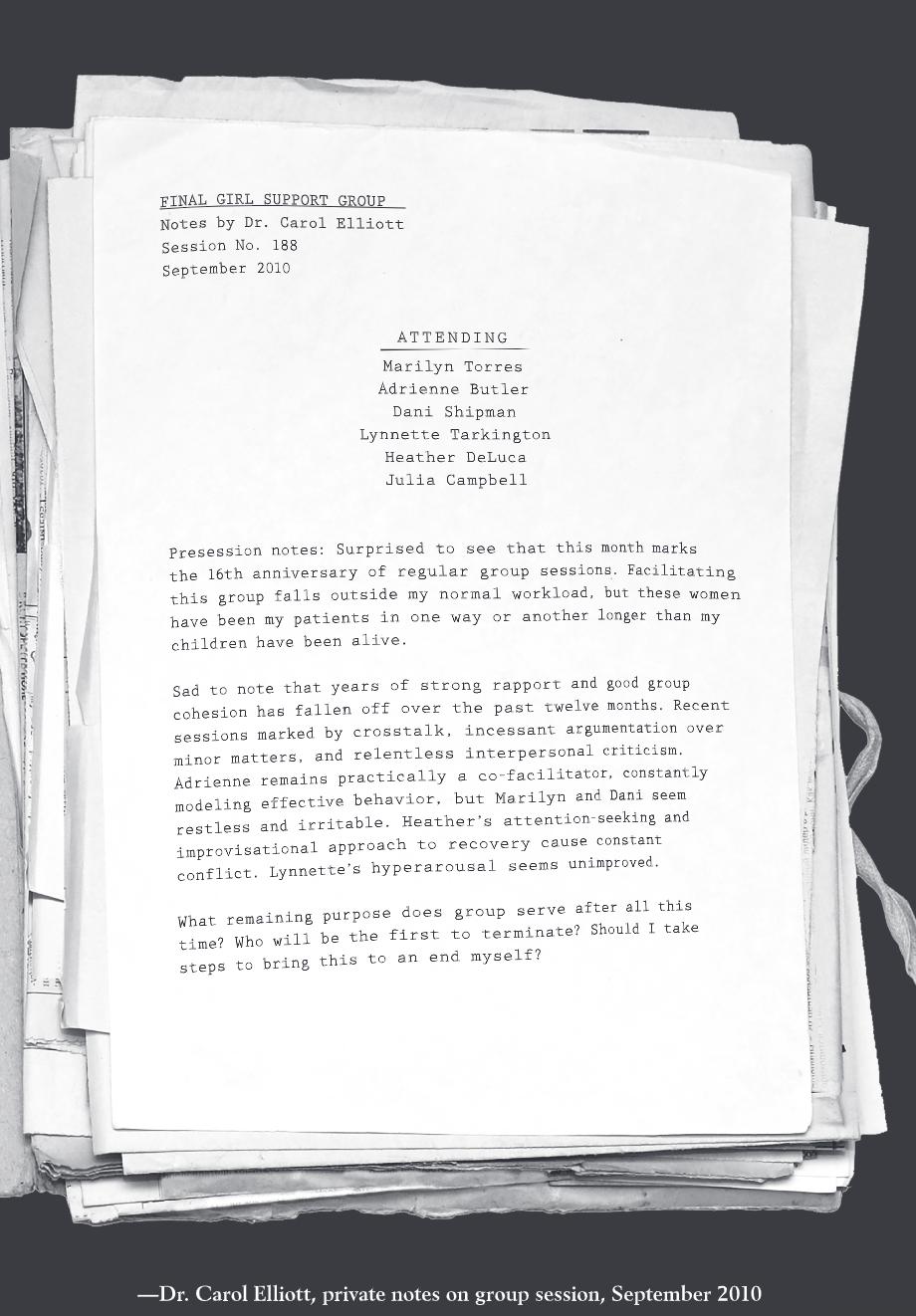
Excerpt from the book, via Bookshop.org
Heather, Julia, Dani, Marilyn, Adrienne, and Lynette. These are the “Final Girls” who have been attending the Final Girl Support Group with psychotherapist Dr. Carol Elliott for the past 16 years. Each of them are the sole survivors of traumatic homicides resulting in what the book deems as a sort of strange celebrity status: The Final Girl.
The Final Girls Support Group is a black comedy horror fiction novel written by Grady Hendrix, released in 2021. The book opens by dropping the reader directly into the story—right into a regular support group session, in fact. We sit in a room with five of the six, immersed in their complicated and nuanced relationships with little to no context on any of them. Told from Lynette’s perspective, each woman’s story is slowly revealed throughout the book, making for a briskly paced plot that keeps readers wanting to know more.
The women range in age and their experiences span multiple decades that cross the hallmarks of the horror genre. Marilyn and Dani are the first final girls, with origin stories sometime in the 1970s, while Julia is the youngest member having recently graduated law school with a prior degree in women’s studies. It’s a sort of where-are-they-now type of discourse. If there were ever a “The Real Final Girls of Los Angeles” television series akin to The Real Housewives, this would be it.
Interlaced with Lynette’s internal dialogue and snippets from news clippings she’s collected over the past few decades, it’s damn near impossible to discern which pieces are fiction and which are reality. Was that an interview that I read in the paper last week? What was the sequel to Friday the 13th called again? The world of FGSG becomes so real so quickly that readers fall right into the trap of the very horror story we’re always screaming against. Don’t go into the basement! There’s no time to warn her, because reader, we are already there.
Hendrix brilliantly weaves together each of the final girls’ traumatic histories with our own real world horror movies. In doing so, he takes readers on a journey that makes us question the reality of all of these nightmares. The films referenced in FGSG are fictions, but reading them as told by each of the women makes them feel like reality. Heather’s story is reminiscent of Nightmare on Elm Street, Julia’s has traits from the Scream franchise, and Marilyn’s is a clear reference to The Texas Chain Saw Massacre. Unfolding their stories bit by bit feels true to the ways that one heals from trauma. As we uncover the events both past and present, it becomes more and more difficult to remember that the Halloween franchise is just a story, and not a thing that actually happened. That we are reading stories within a story, that none of this is real.
The book’s major strength is Hendrix’s ability to build deep, well-rounded characters with intricate histories and relationships without telling us much at all. We learn more about Marilyn and her love for Heather through her oversized sun hat than we do any dialogue. Realistic to the point of nausea for anyone that’s been part of a dysfunctional family dynamic, these women nip and scratch at each other for 352 pages, and yet never let one another down (well, maybe). The Final Girls Support Group hits perfectly with an audience who grew up on slashers while simultaneously attending therapy and support groups of their own. Our protagonist Lynette Tarkington is as unreliable a narrator as she is anxious, and readers spend the entirety of the book inside of her brain. It is both poignant and funny, and all too relatable. In short, if you’re a millennial with an anxiety disorder, this book is for you.
Furthermore, FGSG isn’t shy about letting readers know that the true villain in every horror story is a cis-heterosexual man. Nor does it shy away from the realities of surviving a trauma. That’s not to say that every male character in the book is a villain, but that all the monsters from the final girls’ pasts are men with deranged relationships to women. It’s mommy issues all the way here. Hendrix pulls off this potentially divisive perspective through the absurd situations the women find themselves in, allowing readers to laugh at the all too real condition of being a woman in the world. Our final girls have physical scars, addictions, neuroses, and all of the other ugly parts that come with healing. Their bodies and minds have been changed from what they’ve endured. When Lynette lifts her shirt to show the deep scars from puncture wounds after her trauma, readers get a taste of what it’s like to be a final girl after the credits roll.
Where the book drags slightly is around the rising action of Lynette’s story. She escapes an attack, is kidnapped, held in a local jail, kidnapped again, rescued, and so on. In direct reflection of many thriller movie plots, this is where the story begins to flatline, simply because of the amount of time we spend in Lynette’s head with little outside interaction. I felt myself yearning to spend more time with the other Final Girls in these chapters, wondering where and what Marilyn, Heather, Julia, and Dani are doing and how they are each responding to the unfolding events through the lens of their own monsters.
The Final Girls Support Group has every beloved horror trope: the friendships, betrayals, heartache, harbingers, cameos of long-lost lover cowboys, and even a creepy child. Perhaps the greatest feat of the novel is that while humorous and absurd at times, none of the characters or plot points come off as cheesy. Campy, maybe, but not unnecessary. In addition, each location aligns with the plot in cinematic narratives: a shitty apartment, the highway, the desert, a jail cell, Marilyn’s luxurious estate, Dani’s farm, the hospital, the campground, and so on. It is a collection of every horror fans’ favorite moments piled atop a massive bonfire of hilarious unfathomable circumstance, tinged with female rage.
Without missing a beat, Hendrix seamlessly references quintessential horror canon. Like spending time with your favorite characters outside of their franchise, like only the best parts of fan-fiction, The Final Girls Support Group is horror for horror’s sake, written by a fan for fans in a deliciously outrageous conglomerate of weapons, plot twists, and blood. If you haven’t yet read The Finals Girls Support Group, add it to your bedside pile immediately.
Article written by Theresa B
Theresa writes about the intersection of art & anthropology and gendered horror. She loves demonic possession, satan, and can be found on Letterboxd.