
From Haunted Houses to Haunted Apps: How Horror Found the Smartphone
Horror has a longstanding use for the telephone. Someone calls with a threat, the line goes dead, or help turns out to be impossibly far away. Smartphones complicate that relationship. The device a character reaches for in an emergency also contains their photographs, conversations and location history. Losing control of it can mean giving someone access to much of their life.
Films such as App and Countdown build threats around that access. Other experiments, including Black Mirror: Bandersnatch, bring the audience’s own screen into the storytelling. Together with games like SIMULACRA, they explore an uncomfortable possibility: the ordinary actions we perform on a device can make us participants in a horror story.
An App That Won’t Leave
Bobby Boermans’ Dutch thriller App (2013) follows Anna, a student who discovers a mysterious application called IRIS on her phone after a night of partying. Initially useful, it begins revealing knowledge it shouldn’t possess and sending inappropriate images to her contacts. Anna cannot simply delete it. The intrusion escalates into a threat to her and the people around her.
The premise depends on how much activity already passes through a single device. People use phones to manage money, maintain friendships and fill spare time. Opening a streaming service or the application Melbet may involve the same casual gestures as checking a message. Familiarity makes moving between these activities almost automatic; few interactions receive our full attention.
App gives that routine an antagonist. IRIS interferes with Anna’s relationships through a device other people associate with her. An unwanted message sent from her phone can appear to express her intentions. The threat involves losing control over how she appears to others as well as what happens to her.
Countdown (2019) uses a simpler hook: an app claims to predict the exact moment of its user’s death. The premise turns checking a timer into an act of dread. A shrinking number supplies a deadline, but putting that number on a phone gives the character a reason to keep consulting it. The source of anxiety is always available, inviting another look even when there is nothing useful to learn.
Bringing the Audience’s Phone Into the Theater
App also experimented with the audience’s devices. Its companion application synchronized with the film through audio cues, displaying additional material on viewers’ phones. Messages, images and extra footage could give audiences information beyond what appeared on the main screen. The film was designed to remain understandable without the companion experience.
That arrangement makes the phone an unusual theatrical prop. Viewers watching Anna struggle with an invasive application could have another application running in their own hands. Looking down at a phone, normally a distraction from the film, became an intended part of watching it.
There is an obvious practical difficulty: attention divided between two screens can mean missing something on either. Boermans described adjusting the editing and extending scenes to accommodate those shifts. The experiment exposed a storytelling problem as much as a technical opportunity. A second screen needs to justify the attention it takes away from the first.
For horror, that divided attention has possibilities. Receiving information privately can separate a viewer’s experience from the apparent shared experience of the room. But extra material needs a dramatic purpose. Otherwise, checking a phone remains an interruption, however carefully it has been scheduled.
Choosing What Happens Next
Black Mirror: Bandersnatch (2018) approached audience involvement through branching choices. Viewers selected actions for Stefan, a young programmer developing an interactive game, and those decisions directed the film along different paths. As Stefan began to suspect that something else controlled him, the viewer’s participation became part of his predicament.
Although it wasn’t designed exclusively for phones, Bandersnatch belongs in this discussion because it made operating the viewing interface consequential. Selecting an option meant intervening in someone’s life within the fiction.
That creates a different relationship from watching a character make a disastrous decision. A viewer might choose something out of curiosity, hoping to discover an unseen scene or ending. The character then suffers the consequences of that curiosity. Participation gives the story a way to question why we want to see what happens next.
The choices are still limited to what the filmmakers prepared. That restriction supports the story’s concern with control: viewers can direct Stefan while remaining subject to a structure they cannot freely escape or rewrite.
Searching Someone Else’s Life
The found-phone game SIMULACRA makes investigation itself the central activity. Players search a missing woman’s phone, examining messages, photographs and simulated apps for clues. Its interface turns familiar phone use into a way of reconstructing an unfamiliar life.
There is a small but useful discomfort in that premise. Reading private conversations becomes necessary to help someone, yet it remains an intrusion. The player has access without permission and must interpret exchanges whose full context may be missing.
This is where phone-based horror has something more specific to offer than a cursed gadget. Our devices already encourage us to draw conclusions from fragments: an unanswered message, a photograph, a brief exchange between people we don’t know. Horror can make those judgments consequential.
These films and games use that involvement differently. We watch Anna lose control of her phone, direct Stefan through choices, or search a stranger’s messages ourselves. Their most interesting moments emerge when an everyday screen action acquires an uncomfortable purpose—and continuing the story means doing it again.
Other Articles You May Enjoy…
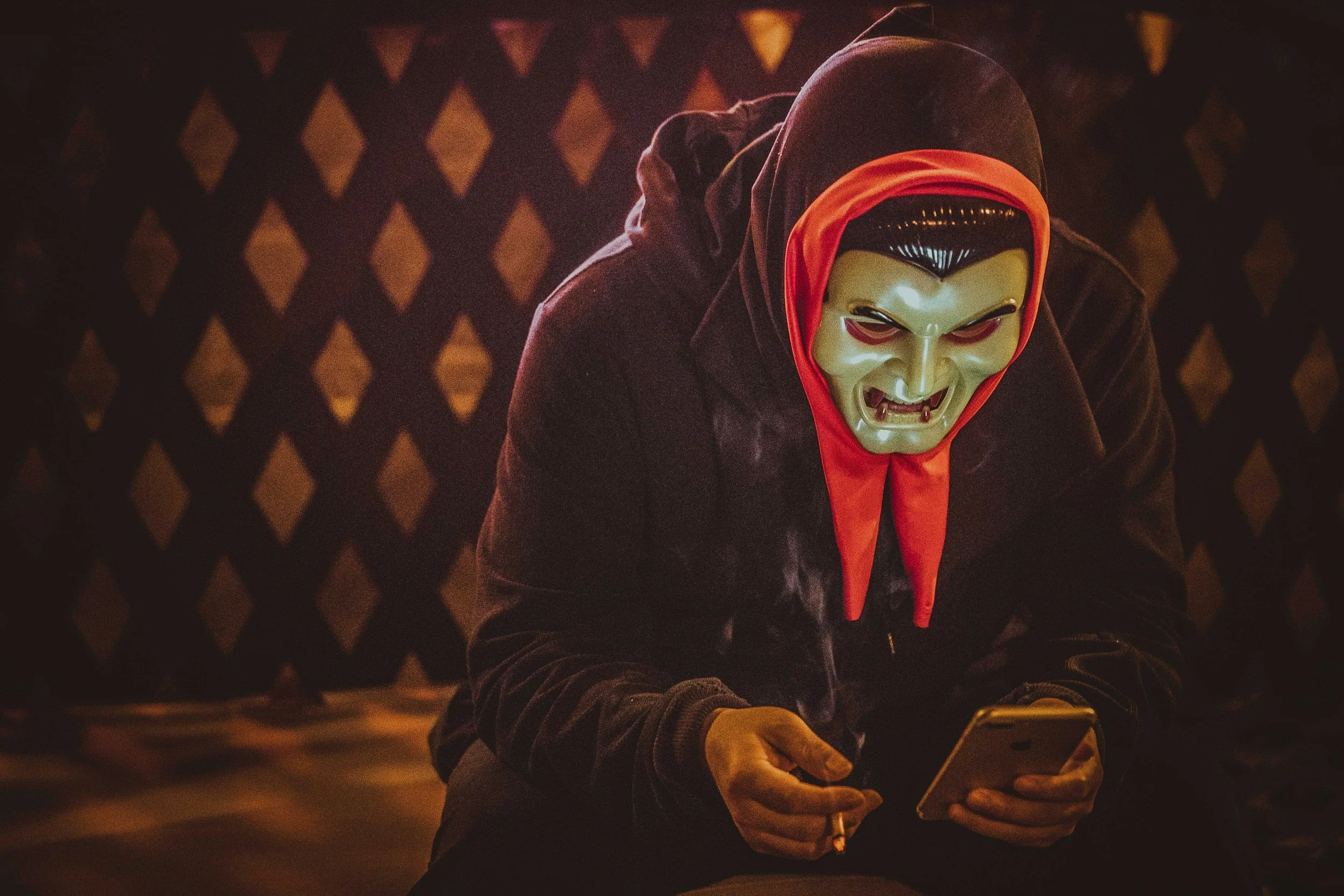


In The Buffalo Hunter Hunter, blood carries the violence of colonialism, while a settler’s journal controls whose story survives. This essay examines how Stephen Graham Jones uses vampirism and layered testimony to confront historical erasure.