In Andrzej Żuławski’s Possession (1981), Sam Neill plays a man failing to hold himself together—while the film’s monster learns to perform him perfectly.
Everyone in Possession (1981) is acting.
This is more than the obvious fact that Andrzej Żuławski’s film contains actors, or that its performances are far removed from conversational realism. Mark acts as the husband. Anna tries—then refuses—to act as the wife. Heinrich styles himself as the liberated lover; Helen (also Adjani) acts calmly. Even Bob, stranded among adult disasters, has learned the watchful silence of a child who knows too much. Each character has a role, and each role has begun to work loose from the person playing it.
The creature, by contrast, has no role at first. It begins as an infantile form of appetite: wet, dependent, voracious, unfinished. But then it grows limbs and intention until, at last, it becomes a man. More exactly, it becomes Mark—not Mark as he is, but as Anna wants him. Żuławski described the creature’s development in stages, culminating in Mark’s likeness (Bird, Toubiana, and Bonitzer). It is therefore more than the usual list of meanings laid upon it: adultery, communism, spiritual crisis, failed maternity. It is arguably the film’s finest actor. Everyone else fails to become the person another person demands. The creature alone succeeds.
Sam Neill, who died on July 13, 2026, gives this contrast its human weight (Cain). His Mark is frightening because we see him trying to maintain control even as it fails. Isabelle Adjani makes anguish kinetic; Neill watches, questions, and calculates. Anna turns pain into movement while Mark turns it into evidence.
Żuławski argued that the true horror of Possession was not the monster but a couple breaking apart without understanding why (Bird). There are possible explanations—betrayal, work, neglect, Heinrich, God, chance, faith—but none are sufficient alone. More damaging is Mark and Anna’s loss of a private language. They still speak, but their words now assign roles: guilty wife, injured husband, faithless mother, abandoned man. Their arguments are auditions in which failure is punished instantly.
Sam Neill and the Performance of Control
Mark enters the film already divided. He is an intelligence operative returning from an assignment, trained to read conduct as information. Espionage is essentially theater with state authority behind it. The spy appears to be one person while serving another intention. Mark brings this method home with him. Faced with Anna’s withdrawal, he treats it less as one of love’s ordinary conditions than as a security breach. He enters rooms and examines bodies. The husband becomes an agent because the agent was always there.
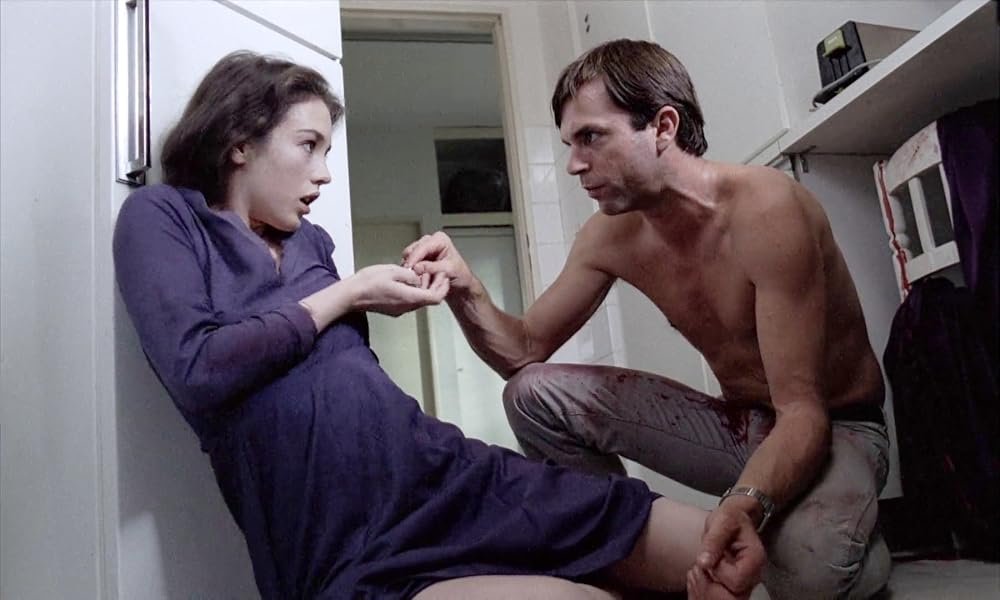
Isabelle Adjani as Anna and Sam Neill as Mark in Possession (1981).
His jealousy is less a hunger for knowledge than a demand that Anna’s behavior take a form he can control. Heinrich would be useful. A rival can be confronted, killed. Adultery leaves the husband central because it still arranges three people around one marriage. The creature offers no such convenience. It belongs to no social plot Mark can comprehend. He cannot ask what it has that he lacks, because its defining quality is that it lacks anything fixed.
Anna and the Performance of Refusal
Anna’s refusal is also theatrical, though less calculated. She moves as though language has become insufficient for her body. Her gestures are too deliberate to be random and too violent for ordinary conversation. It’s tempting to describe Adjani’s performance in terms of excess. Yet excess of what? She was honored by Cannes as Best Actress in 1981 for both Possession and Quartet (1981) (“Isabelle Adjani”). Her performance in this film rejects the pressure-cooker containment expected of a wife in a domestic drama. Anna does not tidy her distress for the viewer. In her, pain and performance become inseparable.
The subway sequence might seem to be the moment when performance gives way to psychic truth, but the scene is actually more troublesome than that. Anna hurls herself along a tiled passage that resembles a theater after the audience has gone home. There is no witness except the camera. Milk and blood spill from her because maternity and injury have become indistinguishable. She calls the event a miscarriage of her faith; the phrase makes loss productive. Something has emerged, but not as the life that was expected.
Anna does not shed her roles in the subway. They turn against one another. Wife, mother, lover, and believer do not fall away to reveal a stable self. Possession distrusts the idea of such a self. Anna’s breakdown shows what happens when one person is asked to be too many people at once. Her collapse may be the most complete performance of herself the film permits.
Heinrich offers another method. He has made personality into a spiritual regime: loose limbs, intimate address, cultivated composure, erotic confidence mistaken for wisdom. Beside him, Mark seems clenched and provincial, the old husband confronting the New Man. But Heinrich’s freedom requires spectators. Mark must be intimidated, and Anna impressed. When Heinrich meets the creature, his performance loses both its audience and its force. His confidence works wherever others agree that Heinrich is extraordinary. The creature declines to agree.
A Film That Cannot Stay in Character
The film itself cannot remain in character. It begins as espionage, becomes marital melodrama, borrows the movement of a pursuit thriller, then finds a Lovecraftian creature feature waiting in a rented flat. Each shift allows genre to teach us to read behavior differently. The spy film treats conduct as evidence; melodrama turns it into feeling; horror makes even the ownership of that conduct uncertain. Żuławski lets those conventions compete with one another until no single genre can explain what we are seeing.
That instability makes the performances feel both wild and exact. Neill is not playing the same kind of film from scene to scene because Mark no longer knows which story his life belongs to. Is he a spy recalled to duty, a cuckold in farce, a killer in noir, a father in domestic tragedy? Who knows? Adjani changes register even more violently. Anna may be an adulterous wife, or a religious visionary. Or the maker of a new species. The film’s refusal to choose is not confusion. It suggests that identity depends partly on recognizing the story in which our actions make sense.
That recognition has failed for everyone. People in Possession think they possess selves when they really possess arrangements. Take away the relationship that gives the role meaning and the self begins to fray. A lover needs a beloved who reflects their singularity. A spy needs someone to watch. The film’s title asks what happens when the role remains but the relationship that gave it meaning is gone.
West Berlin gives this question a civic body. The film was shot in a city still divided by the Wall, and Żuławski repeatedly chose streets and buildings marked by its presence (Scovell). To call the Wall a symbol of the marriage would make it harmless. In Possession, division is concrete and renewed by procedure. Checkpoints and surveillance maintain identities that geography alone cannot secure. Mark and Anna move through a city that has accepted separation as a basic organizing principle.
The Wall also resembles the edge of a set. Streets that seem open end with a barrier. Żuławski’s circling camera keeps domestic space from settling and makes doorways threatening. Daniel Bird describes the camerawork as chasing and interrogating the actors, caught in a “crazed dance” with them. Berlin does not mirror the marriage so much as keep every performance exposed as performance.
The film’s English dialogue heightens the estrangement. Stress falls on words that a naturalistic performance might have softened. Questions arrive as verdicts and declarations become incantations. The characters seem to use language rather than inhabit it. Mark and Anna have lost their private idiom, so they speak the public language of accusation.
Their vocabulary is full of words that ought to settle matters—love, faith, chance, family, duty—but each word starts another quarrel. Every conversation becomes an attempt to force the other person back into a role. Anna’s refusal to give Mark a stable account of herself injures him more deeply than adultery. She supplies events but withholds the character who would make them coherent.
The Corrected Woman and the Better Actor
Anna and Helen make this struggle visible through Adjani’s doubled body. Helen resembles Anna but offers none of Anna’s abrasion. Her green eyes mark the difference, though the deeper change is behavioral. She is composed; she is tender with Bob. She appears to be the woman Mark wanted Anna to perform, with resistance removed. Helen is Anna edited for male comfort.
Calling Helen an ideal woman does not capture her menace. Ideals in Possession are disturbing because they function so efficiently. Helen does not demand interpretation. She receives Mark and Bob as though there had never been anyone else. Her calm is as stylized as Anna’s frenzy. Adjani is playing two versions of femininity: Anna, punished for refusing what is expected of her, and Helen, who appears to meet those expectations without effort. One is called mad. The other is barely given an inner life.
Mark also acquires a double, but his was created by Anna. The creature gradually takes on his form. She has not left him for someone wholly different; she has left him to create another version of him. She wants his face and body without the history they share.
The creature seems suited to this because it appears to have no past and no life of its own. It can become exactly what Anna wants. A real lover cannot do that. A real person brings habits and needs that do not belong to the other person’s fantasy. The creature does not.
A partner who became exactly what desire asked might seem perfect. Such perfection would abolish the relationship. Love depends on the resistant fact that the beloved goes on existing beyond the lover’s use of them. A real person can resist being turned into someone else’s ideal. The monster cannot. That is what makes its obedience so disturbing: it becomes Mark so completely that the real Mark seems like the imitation.
Sam Neill’s work is crucial here. Mark appears to be impersonating himself even before the double is complete. His clipped questions and rigid posture suggest a man forcing himself into the approved outline of masculinity. Emotion arrives as sabotage. Every eruption seems involuntary and yet observed by a surviving part of him. The spy is watching the husband disintegrate.
Adjani expands until the body seems unable to hold the role. Neill contracts until the role seems unable to hold the body. Their scenes are volatile because they never understand one another on the same terms. Anna wants Mark to accept what he cannot explain. Mark wants Anna to give him an explanation he can control. Neither can do what the other asks without losing something essential.
Resemblance Is Not Return
Bob understands the danger sooner than the adults. He is the spectator inside Possession, watching adults perform family after family has ended. The neglect he suffers shows how completely the adults have abandoned him. By the end, however, he refuses the doubles standing in for his parents.
At the end, Mark’s double comes to Helen’s door. Helen, herself a double, is its proper recipient. The new couple promises symmetry: the corrected man and the corrected woman, green-eyed and frictionless, ready to occupy the space left by Mark and Anna. When Mark’s double knocks, Bob begs Helen not to open the door. He understands what the adults do not: resemblance is not return.
Aircraft and explosions gather beyond the door. The fantasy of perfect replacement collides with public catastrophe. The divided city loads these sounds with Cold War fear; Bird observes that nuclear annihilation is never far from the film’s imagination. Yet the apocalypse also follows from the logic of replacement. A copy indistinguishable from the desired original makes the original expendable.
Everyone in Possession is acting, but only the creature gives itself wholly to the role. The others resist what is expected of them. Mark cannot remain simply a husband; Anna cannot remain simply a wife or mother. Their failure is disastrous, but it is also what keeps them human.
The monster is the better actor because it has nothing else to be.
That is why the figure at Helen’s door is more disturbing than the tentacled body in the flat. The unfinished creature is visibly alien and poses a manageable question: What is it? The completed double poses a harder one: How would we know? It offers Helen the man without the wreckage and offers the film a human form without human contradiction.
Sam Neill makes that contradiction visible before the double arrives. Mark is brutal, pathetic, calculating, and bereft; sometimes within the same movement. Neill does not redeem him. He gives him the burden the creature escapes. He cannot become one thing without leaving another alive beneath it.
Possession is often called a film about divorce because divorce is its obvious wound. Its deeper subject is the fantasy that the wound might be repaired by recasting. Another wife. Another husband. The same faces, corrected. Żuławski carries that fantasy to its pitiless conclusion.
The replacement arrives. It knows the role.
It knocks.
-
Bird, Daniel. “My Dinner with Andrzej.” Metrograph, metrograph.com/my-dinner-with-andrzej/.
Bird, Daniel, Serge Toubiana, and Pascal Bonitzer. “Making a Monster.” Metrograph, metrograph.com/making-a-monster/.
Cain, Sian. “Sam Neill, Star of Jurassic Park Films, Peaky Blinders and The Piano, Dies Aged 78.” The Guardian, 13 July 2026, www.theguardian.com/film/2026/jul/13/sam-neill-death-actor-dies-aged-78.
“Isabelle Adjani, Award for Best Actress – Quartet – Possession.” Festival de Cannes, 27 May 1981, www.festival-cannes.com/en/medialibrary/isabelle-adjani-award-for-best-actress-quartet-possession/.
Possession. Directed by Andrzej Żuławski, performances by Isabelle Adjani, Sam Neill, Heinz Bennent, and Margit Carstensen, Gaumont Distribution, 1981.
Scovell, Adam. “In Search of the Locations for Andrzej Żuławski’s Possession.” British Film Institute, 5 Dec. 2025, www.bfi.org.uk/features/locations-andrzej-zulawski-possession.
Article by Pip McGough
Pip McGough is a UK-based poet and freelance writer. His poem “Render Error: After Gaza” was nominated for the 2026 Pushcart Prize. His work has appeared in The Brooklyn Rail, The Madrid Review, Wildscape, Azarao, and numerous other literary magazines and anthologies. His poetry and prose explore the intersections of myth and modernity, gender and identity, politics and folklore. He has cultivated a substantial following on Instagram, where he publishes as @manifest_gothic.
Other Articles You May Enjoy…

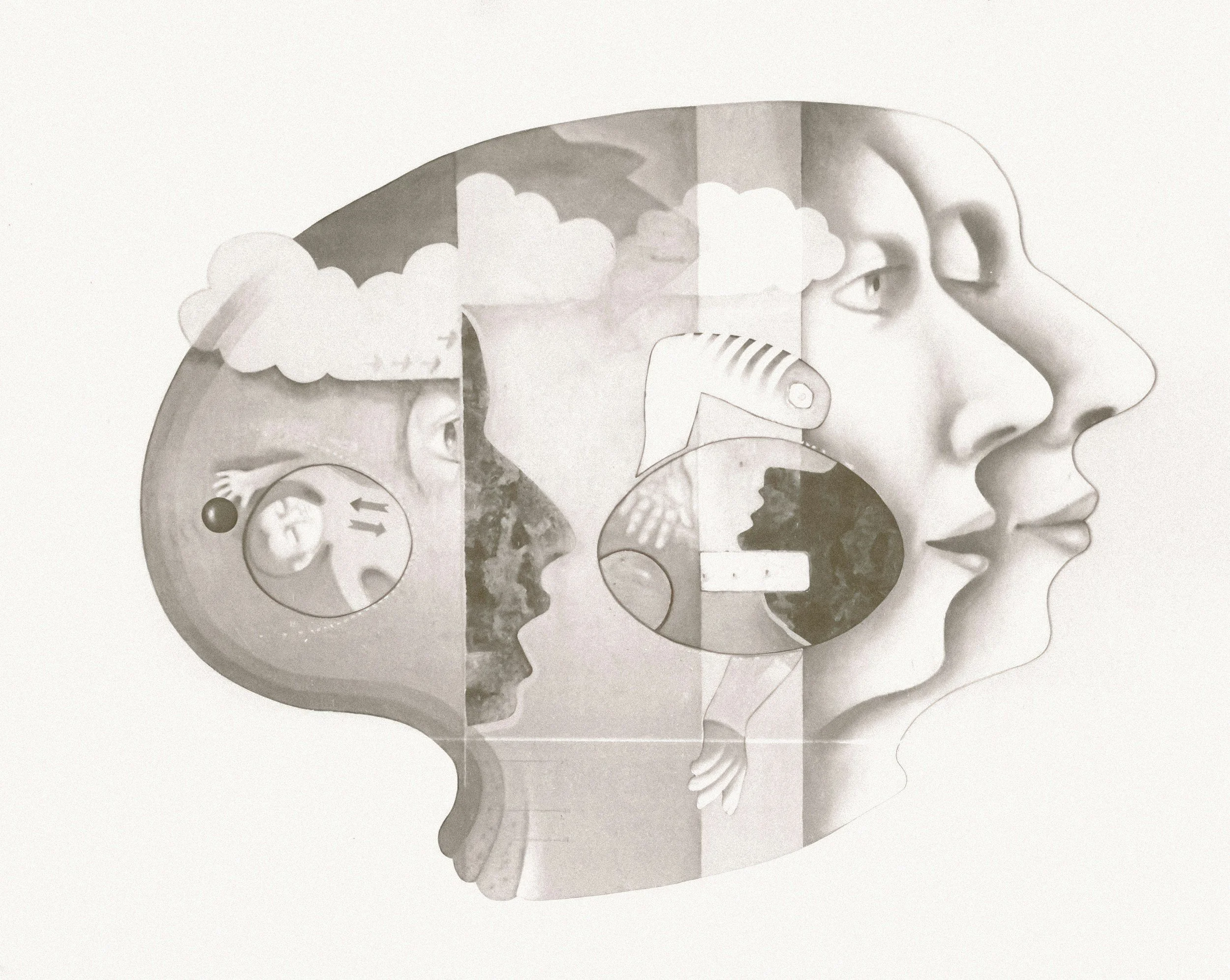
Everyone in Possession is performing a role. Pip McGough examines Sam Neill’s tightly controlled Mark, Isabelle Adjani’s explosive doubling, and the creature that becomes exactly what another person demands—making it, perhaps, the film’s most accomplished actor.