
Horror and the Architecture of Dehumanization
Introduction
The term “social horror” seeks to highlight and challenge real-life injustices and everyday violence. It moves away from the notion of the supernatural monster to emphasize the human being as the primary source of violence and cruelty against others. However, from the perspective of the radical critic Robin Wood, the Human vs. Human conflict fails to address injustice, instead merely reaffirming the social division status quo. Some contemporary film readings are limited to blaming human nature—stopping the questioning of society’s monstrosity and embracing it as normal. Under this diagnosis, the dehumanizing architecture in horror films is impossible to detect.
This essay proposes a reconciliation of self-criticism with criticism of the established passivity of modern social horror films by applying films from different subgenres, eras, and nations. It also proposes criteria to identify the architectures that validate the reading in the films. The first criterion determines whether the system functions by default or through internalization. The second criterion identifies the protocol; this is the way cruelty is rationalized. The third focuses on the degradation of individuals. The fourth evaluates whether the film successfully reveals the masses’ co-responsibility for dehumanization as the rational conclusion of the system. Under this reading, horror lies in the normalization of cruelty in society, while the systemic “monster” uses that interaction as fuel for its advantage.
What’s the Architecture of Dehumanization?
It sits at the intersection of three concepts: projective disgust, bio-political device, and grammar of cruelty (Mèlich 33); defined as the functioning of a system which has hijacked the sense of disgust to manage life through the “clean” individual who internalizes the norm, and executes it cruelly yet rationally upon the “dirty” individual categorized as abnormal.
Mary Douglas defines dirt as matter out of place (54). “Dirty” isn’t necessarily unhygienic, but rather disordered. Thus, society, in an effort to organize its environment, establishes boundaries with labels of “purity” and “dirtiness.” “Clean” is what conforms to the established order, while “dirty” is automatically defined by exclusion: What is ambiguous and doesn’t fit within the establishment challenges collective truth and destabilizes institutions, generating danger and taboo because of its transgressive power.
This analysis examines the dynamics between “clean” and “dirty” individuals as a systemic causal relationship. Institutions and their protocols act like watchmen of the “clean” individual but as a source of stigma and punishment for the “dirty” individual, turning the latter into a “fuel” individual. This process removes the Other to reaffirm the boundaries between “purity” and “dirtiness” and to reify the punishment to keep “clean” individuals together.
Cruelty by default vs. internalization
The first criterion is to confirm the cruelty of the system. To do this, one must identify at least two of the three types of individual: “clean” (generally someone who lives within the accepted boundaries set by the film), “dirty” (someone who violates those boundaries but lives alongside the “clean” individual) or “fuel” (someone who used to be “dirty” before being rejected/punished by the system, and who threatens the identity of the “clean”). Their interactions must also be framed by normalized violence and indifference to the pain of others.
From “us” oppressed to “them” disgusting
These relationships evoke the “return of the repressed” theory (Wood 197), established in “An Introduction to the American Horror Film,” a cornerstone of horror studies. However, in “What Lies Beneath,” Wood says that his theory doesn’t explain all horror movies as he initially proposed in 1979 (354). He considered that the monstrous (“the Other”) had ceased to represent repressed energies; therefore, from his theory’s perspective, such films would ultimately reinforce dominant social norms. This essay focuses on those norms. It argues that, under a cruel system, relationships between individuals are based on moral and physical distance conditioned by norms, while those norms are imposed through the emotion of disgust. Explaining the role of disgust allows us to determine whether the system is cruel by default or through internalization.
From core disgust to projective disgust
Basic disgust is an emotion that evolved as a biological defense mechanism against ingesting potentially contaminated animal products (Rozin et al. 431). Julia Kristeva describes disgust as a defense mechanism that is triggered by the abject (9). Given that the abject is neither object nor subject, but rather that which disturbs identity, system, or order (21), it is possible to identify universally and pre-socially abject things that touch the boundaries of life and meaning. Therefore, as Kristeva says, the abject (and disgust) is necessary to form an individual identity and, by extension, a social structure. Abjection reaffirms social and cultural boundaries, leaving the “disgusting” outside the established order.
How, then, can disgust operate on people? Through psychological contamination, which is based on the sympathetic “laws of magic” proposed in The Golden Bough: A Study of Magic and Religion (Frazer 11) and tested in American culture (Rozin et al. 704). These are the Law of Contagion—once in contact, always in contact(if an object considered clean comes into contact with something disgusting, the contaminating essence is permanently transferred, causing aversion, even if the object is cleaned) and the Law of Similarity—“things that appear similar on the surface are also similar in a deeper sense (objects that resemble something disgusting, are perceived as disgusting things in their own right). Thus, disgust integrates not only sensory characteristics but also definitions, beliefs, and evaluations about what the repugnant object is and “where it has been” (Ahmed 138). In other words: disgust can be moralized, thus, manipulated.
When a new law is created in order to keep the established order, but labels certain social groups as “dirty,” the brain undergoes a bodily pre-adaptation to prejudice: the “laws of magic” internalize the association between the group and dirtiness. Then, depending on the degree of internalization, the individual may experience the same physical reaction to a person as to something disgusting. The individual will treat this rejection as an unquestionable biological truth. That “unquestionable truth” is projective disgust (Nussbaum 107). In “Hiding from Humanity,” Martha Nussbaum explains that projective disgust is the projection of animal shame onto the group labeled “disgusting.” That is: “I’m human (clean), and you’re an animal (disgusting).” For Nussbaum, this is the system’s opportunity to project its own fears by creating new laws (cleaning protocols) and using existing prejudices to bureaucratically complicate current laws. That’s how disgust can be “hijacked” to become a device of social control.
Once the system’s cruelty has been confirmed, determine whether it operates by default. In a system that is cruel by default, the natural atmosphere is cruel and doesn't need to be taught. An institution (real, fictional, or metaphorical), its authorities, protocols, and norms, act like watchmen of the “clean” individual but directly punish and stigmatize the “dirty” individual. The protocol must be present, while institutions or authorities may be less clear or even passive.
Alternatively, if the system operates by internalization, the system actively molds individuals’ cognitive disgust and installs a “cleaning protocol” that “clean” individuals assimilate, normalize, and rationalize. The institutions and authorities may be less visible or even passive. The purpose of creating a new protocol or strengthening an existing one is to stigmatize, punish, or control the “dirty” individual, directly or indirectly.
Protocol
The second criterion is to identify the protocol. It’s considered a “cleaning” protocol if it seeks public order through the punishment of a “dirty” individual and is promoted by an institution or authority present in the film (or one that implicitly promotes it). It's considered a “contagion protocol” when the cleaning protocol has been internalized and rationalized, so it no longer requires an institution to supervise compliance. In systems that are cruel by default, the protocol operates naturally and with little questioning.
Under this reading, the normalization of protocols and the system’s impunity are achieved by treating disgust as a biopolitical device. For Michel Foucault, biopolitics marks the entry of phenomena peculiar to life (hygiene, birth rate, health, etc.) into the exercise of power, arranged through a complex heterogeneous network of institutions, authorities, discourses, and norms that manage bodies and how they act in society (Historia 168). Although Foucault didn’t talk about disgust, it’s easy to see that, once “hijacked” and considered a biological truth, it can be used as a biopolitical device.
The normalization needed to transform a “cleaning protocol” into a “contagious” one can be explained through the mechanisms of disciplinary power described in “Discipline and Punish: The Birth of the Prison.” Within the context of this architecture, such mechanisms become a form of manipulation. One of them is normalization through institutions, which establishes the model of “clean” individuals. Another is constant categorization, which creates self-monitoring between social groups (Foucault, Vigilar 184). Through risk management (Foucault, Nacimiento 86), the system doesn’t eliminate the danger, but manages it, so its protection is needed continuously. Finally, there is individual self-monitoring: the “clean” individual complies with the norms to avoid becoming a “dirty” individual while also ensuring that the other “clean” individuals comply with them. Under this reading, the objective of institutions is to create the conditions under which individuals desire the same things as the system, as well as serving as the machinery responsible for cleaning up society.
Status
The third criterion is to analyze how the system organizes the transition from a “clean” individual to “dirty,” or from “dirty” to “fuel.” The “dirty” individual is a target to be punished or purified, but their place within the established boundaries of the film’s society is still recognized. By contrast, the “fuel” individual is abject. The “clean” individual’s self-monitoring extends to the surveilling of others. This means that the “clean” individual has internalized the belief that being “abnormal” is worthy of the worst punishment available through institutions and protocols. That’s the impunity of the system: when law depersonalizes disgust, exclusion becomes the rational conclusion of the norm.
Co-responsibility
For the architecture to be successful, the co-responsibility of “clean” individuals must be unanimous. Therefore, consider: if individuals rationalize cruelty as an expression of their own will, the system is perfect, and dehumanization is absolute. Conversely, if an act of compassion is directed toward the “fuel” individual, and it comes from a “clean” individual, the system has failed. If it comes from another “fuel” or “dirty” individual, though, the system has succeeded. This confirms that a “clean” society has indifferently adopted apathy toward the pain of others.
Night of the Living Dead. United States, 1968
George Romero’s 1968 film is one of the most influential in history and one of the most analyzed in horror cinema, both for its treatment of the zombie and for the racial interpretations of the conflict between Ben and Mr. Cooper. It’s also important to consider the post-WWII era and the sociocultural context of the United States at the time of its release.
It can be inferred from the film that siblings (Barbara and Johnny) are “clean” individuals. Their status is confirmed when the ghoul attacks them. It’s worth noting that for Julia Kristeva the corpse is the ideal representation of the abject. The ghoul’s attack on the siblings parallels the attack on identity represented by the abject and thus reaffirms the “fuel” status of the ghoul. An argument can be made that the film’s sociopolitical context transfers a degree of default cruelty into the film. However, the system enters a stage of cruelty by internalization when Ben and Barbara hear the news on the radio. Let us remember that, in this classification of cruelty, the system actively molds disgust. This happens as they’re listening to the radio; despite having little more information about the ghouls, the newscaster clarifies that: “they seem to be in a trance, but they act like animals.” That’s the principle of projective disgust: animality projected onto the Other. The subsequent interventions come from television; each report appealing to authorities from different institutions to specify how to intervene against the ghouls. It’s interesting to note that one recommendation is to “soak them with gasoline and burn them,” when across many cultures, fire represents purification. The internalization is completed with the final scene, which is addressed in greater detail in the following criteria.
At the beginning of the film, institutions like family and religion are present, but they’re not actively promoting a cleaning protocol. That protocol takes shape through the radio and television interventions. It’s promoted by a broad spectrum of institutions that justify the final “cleaning protocol.” Let us remember that, under this reading, normalization through institutions is the principle that builds legal cruelty.
Three characters die as a result of the cleaning protocol. Helen and Harry Cooper become “fuel” individuals due to the infection of their own daughter. The couple is eliminated by Ben, who is the third to die because of the protocol. However, Ben moves from “clean” individual (who fought to keep everyone safe) to “dirty” because he remains in the contaminated area at the time of the cleanup. In other words, he was in the wrong place at the wrong time. He then moves from “dirty” to “fuel” individual when Sheriff McClelland says: “Alright Vince, hit him in the head, right between the eyes.” Tom and Judy die as “clean” individuals. They are first shown attempting to follow the protocol announced on television. Referring to leaving the house to look for gasoline, Judy asks Tom, “Are you sure we’re doing the right thing, Tom?” Tom answers, “Well, T.V. said that’s the right thing to do.” Later, the explosion “purifies” their bodies, preventing them from returning as ghouls, or “fuel” individuals.
The film’s system reveals systemic dehumanization. The co-responsibility of the masses is unanimous. The film implies that the crowd regards Ben’s death as their own will to follow the law and take it as a virtue to see it fulfilled. This is evident in the final still images. The men stare coldly at Ben’s body. Compassion has been replaced by indifference, even though the rifle lying nearby, his unripped clothes, and the total lack of resemblance to a ghoul are all signs of a mistake. They then rationalize grabbing him with hooks and throwing him into the fire. The scene is framed in photographs evoking a news report, that is, depersonalizing the situation coldly.
When Evil Lurks. Argentina, 2023
The film presents Uriel as the Rotten, or “fuel” individual. His mother, Maria Elena, tells the brothers Pedro and Jimmy that she’s been waiting for the government “cleaner” for a year. This reveals that the system is cruel by default, as Uriel’s condition is a direct consequence of the authorities’ neglect. When Pedro and Jimmy demand the institution help, the authorities respond by invoking their protocol: “There’s a protocol for these things. We call, health services come, they handle it.” This confirms the default stage: the rationalized abandonment as part of the norm.
The brothers return accompanied by Don Ruiz to take Uriel out of the city. There, the “contagion protocol” takes shape as an implicit one among the population, driven by fear of contagion. However, the government’s neglect is such that the “contagion protocol” isn’t the result of internalizing a “cleaning protocol,” but rather of self-interested actions that facilitate the spread of the disease. Maria Elena warns them of the danger of intervening with Uriel unofficially; a warning which positions her as a defending authority of the social agreement not to take the law into one’s own hands. It’s eventually revealed—again through a mother’s warning—that a “cleaning protocol” does exist, but not one from the government but rather as survival laws passed down through folklore. The brothers consider their mother’s protocol useless in their current situation. But at the moment of the revelation, we can see that evil has spread through actions based on fear, danger, and guilt—things the protocol aims to avoid. The women emerge as the true authorities of this society, warning about the dangers of breaking protocol, but the brothers constantly ignore them. Maria Elena asks for the government’s help and warns the brothers of the dangers of breaking protocol. Jimena Ruiz warns Don Ruiz not to shoot the goat. Sabrina desperately asks Pedro to leave the house due to the restraining order. Sara shares the protocol to prevent possession. Mirta, whose spiritual authority is crucial in fighting evil, is repeatedly ignored by Pedro. All are ignored, and all end up dead.
Uriel is a “fuel individual;” he’s a representation of the abject, which places his mother and brother as “dirty” individuals. This is confirmed when Don Ruiz blames them for Uriel’s condition and, because they are foreigners, accuses them of coming to pollute his land. Pedro aims to help others: the townspeople, his brother, his mother, and the children; but he consistently ignores the oral protocol that can stop evil. Therefore, his status transitions from “clean” to “dirty” individual because his actions turn those he wants to save into “fuel” individuals. To fully realize his transition, he also becomes a “dirty” individual through whom evil acts.
Although the film has moments of compassion, they are all in vain because abandonment, omission, and negligence prevail. The co-responsibility is assumed by all individuals who attack the Rotten. Each rationalizes their actions according to personal reasons: prejudices, fear, rage, guilt, or money. The system is cruel by default and successful insofar as cruelty is rationalized and compassion is non-existent.
Tetsuo: The Iron Man. Japan, 1989
To analyze this film, it is necessary to revisit the criteria to clarify a point. It has already been stated that this reading requires the film to contain all four criteria. At the same time, each criterion can be presented in different ways throughout the film without contradicting the reading. In other words, the film can begin with cruelty by default and later enter an internalization phase, or it can have both protocols simultaneously, etc. The purpose of these criteria isn’t to classify what a film does or doesn’t have, but to make visible which criteria dominate the narrative path taken by the architecture in the film (Fig. 1).
That said, films like Tetsuo represent a very particular reading within the architecture. The protagonists of these films are “fuel individuals” or become “fuel” individuals near the start of the film. Unlike the films above, dehumanization is not managed here; the films focus on telling the protagonists’ stories once they’ve been discarded by the system. The systems in these films are inherently cruel, not necessarily through protocols, but through absolute abandonment by both the system and other individuals. Given this, the main characters usually adopt one of these attitudes: they become vengeful, resigned, or they “embrace” their condition as an act of rebellion.
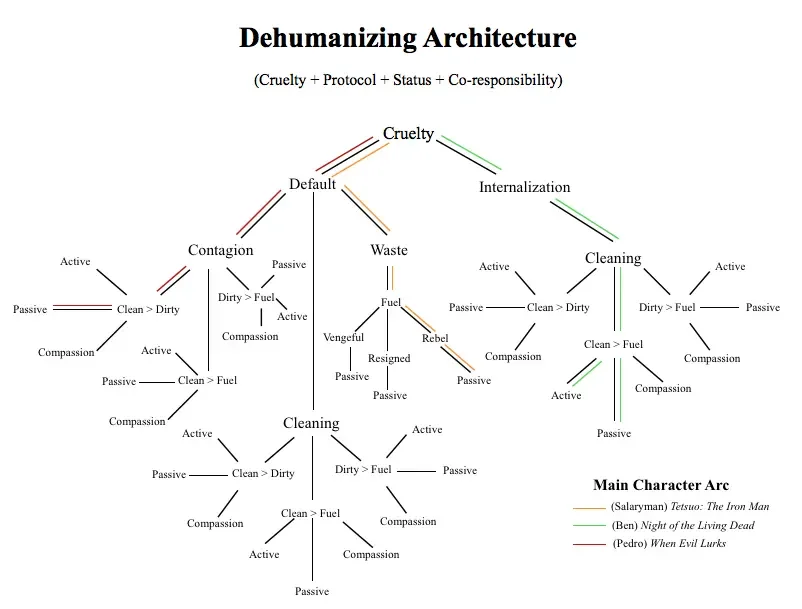
Figure 1. The unity of architecture, the film must contain all four criteria. Created by the author, Pages, 2026.
Returning to the film, we first see the fetishist Yatsu. The presence of maggots in his thigh may suggest that, in a sense, his human body has died. This would imply that Yatsu is a “fuel” individual. We can confirm this after he’s run over by the salaryman, who hides him and then continues with his life. The symptoms that threaten the salaryman’s identity indicate that he has been infected by a “fuel” individual. His own status as a “fuel” individual is established almost from the beginning. The rest of the transformation can be interpreted as a “contagion” protocol, which aligns with the idea that the pressure of the protocol is more social than institutional. However, since it is Yatsu who promotes it, it could be interpreted as representing the rest of industrialized society, or the inevitability of being consumed by technology. At the end, Yatsu and the salaryman decide to embrace their condition as “fuel” individuals. Their fusion and plan to infect the rest of society can be interpreted as an act of compassion between them, but for this reading, compassion between individuals of the same category, confirms the passive dehumanization of “clean” individuals.
Examples in which the “fuel” individual adopts an attitude of resignation include The Amusement Park, Combat Shock, and Street Trash. Examples in which the attitude is vengeful include: Audition, Maniac Cop, and Basket Case. Other films that reveal the architecture include Bacurau, Battle Royale, El Hoyo, Get Out, Huesera, Possessor, Raw, Society, The Purge, The Sadness, The Stuff, The Wicker Man, The Witch, etc.
Conclusion
In conclusion, the reading of dehumanizing architecture proposes reconciling self-criticism with a critique of horror films that appear only to reaffirm or passively contemplate social norms. The concept of the architecture of dehumanization draws on anthropological, psychological, sociological, and political approaches. It reveals the common origin of many “me vs. the other” conflicts depicted in horror films. It also rethinks the “monster” label and leaves the question open: are the prejudices in our heads truly our own, or are they implanted by the world around us? The reading was applied to films from different horror subgenres, eras, and countries to demonstrate that the architecture isn’t an isolated phenomenon. Given this conclusion, identifying the foreign ideas that inhabit us and talking about empathy aren’t enough. Perhaps breaking the architecture requires going one step further by choosing compassion over empathy.
-
Ahmed, Sara. La Política Cultural de las Emociones, translated by Cecilia Olivares Mansuy, Universidad Nacional Autónoma de México, 2015. Originally published in English as The Cultural Politics of Emotion, Edinburgh University Press, 2004.
Douglas, Mary. Pureza y Peligro. Un Análisis de los Conceptos de Contaminación y Tabú, translated by Edison Simons, Siglo XXI, 1973.
Foucault, Michel. Historia de la sexualidad 1: La voluntad de saber, translated by Ulises Guiñazú, Siglo XXI, 2005. Originally published in French as L’Histoire de la sexualité 1: La volonté de savoir, Éditions Gallimard, 1976.
Foucault, Michel. Nacimiento de la biopolítica: curso en el Collège de France (1978-1979), translated by Horacio Pons, Fondo de Cultura Económica, 2009. Originally published in French as Naissance de la biopolitique. Cours au Collège de France (1978-1979), Seuil/Gallimard, 2004.
Foucault, Michel. Vigilar y castigar: nacimiento de la prisión, translated by Aurelio Garzón del Camino, Siglo XXI, 2002. Originally published in French as Surveiller et punir, Gallimard, 1975.
Frazer, James George. The Golden Bough A Study in Magic and Religion, MacMillan, 1925.
Kristeva, Julia. Poderes de la perversión, translated by Viviana Ackerman and Nicolás Rosa, Siglo XXI, 1988. Originally published in French as Pouvoirs de l’horreur: Essai sur l’abjection, Le Seuil, 1980.
Mèlich, Joan-Carles. Lógica de la crueldad, Herder, 2014.
Night of the Living Dead. Directed by George A. Romero, Image Ten, 1968.
Nussbaum, Martha. Hiding from Humanity. Disgust, Shame and the Law, Princeton University, 2004.
Rozin, Paul, Jonathan Haidt and Clark R. McCauley. “Disgust: The Body and Soul Emotion.” Handbook of Cognition and Emotion, edited by Tim Dalgleish and Mick J. Power, Wiley, 1999, pp. 429-445. https://doi.org/10.1002/0470013494.ch21
Rozin, Paul, Linda Millman and Carol Nemeroff. “Operations of the Laws of Sympathetic Magic in Disgust and Other Domains”. Journal of Personality and Social Psychology, vol. 50, no. 4, 1986, pp. 703-712.
Tetsuo: The Iron Man. Directed by Shinya Tsukamoto, Kaijyu Theater, 1989.
When Evil Lurks. Directed by Demián Rugna, Machaco Films / Arosemena, 2023. Shudder.
Wood, Robin. “An Introduction to the American Horror Film.” Movies and Methods: Volume II, edited by Bill Nichols, University of California Press, 1985, pp. 195–220.
Wood, Robin. “What Lies Beneath?” Robin Wood on the Horror Film: Collected Essays and Reviews, edited by Barry Keith, Wayne State University Press, 2018, pp. 343–356.
Article by Christian Dávalos
Christian Dávalos is a writer based in Mexico. He studied Creative Writing at the postgraduate level at the University of Salamaca, Spain, and is a member of the Horror Writers Association. You can follow him on Instagram at @chrisdavaloshorror.

Other Articles You May Enjoy…


How Backrooms and Rose of Nevada use liminal spaces to explore job insecurity, disappearing industries, and the fear of losing your place in the world.