
‘Penny Lane is Dead’: Ozploitation with a Punk Flare
I love Australian horror. I love it enough (and write about it enough) that I’ve had several people remark that they thought our website was based in Australia. We’re not. It’s just that The Land Down Under has a way of making its landscapes feel—deliciously hostile. In Wake in Fright, the scorched outback is the biggest threat of all; in Wolf Creek, the miles of empty road are essentially accomplices. In Mia’Kate Russell’s Penny Lane is Dead, however, the outback gives way to a beach house, but make no mistake—the beach is no less terrifying than the bush.

Penny Lane (Bailey Spalding) is celebrating getting into college and is preparing a weekend celebration with her best friends Toni (Tahlee Fereday), who Penny has recently begun secretly dating, and the mousy Amy (Alexandra Jensen). Also invited (halfheartedly) is Penny’s cousin, Kat (Sophia Wright-Mendelsohn), though she doesn’t expect her to come.
Spoiler alert: she comes.
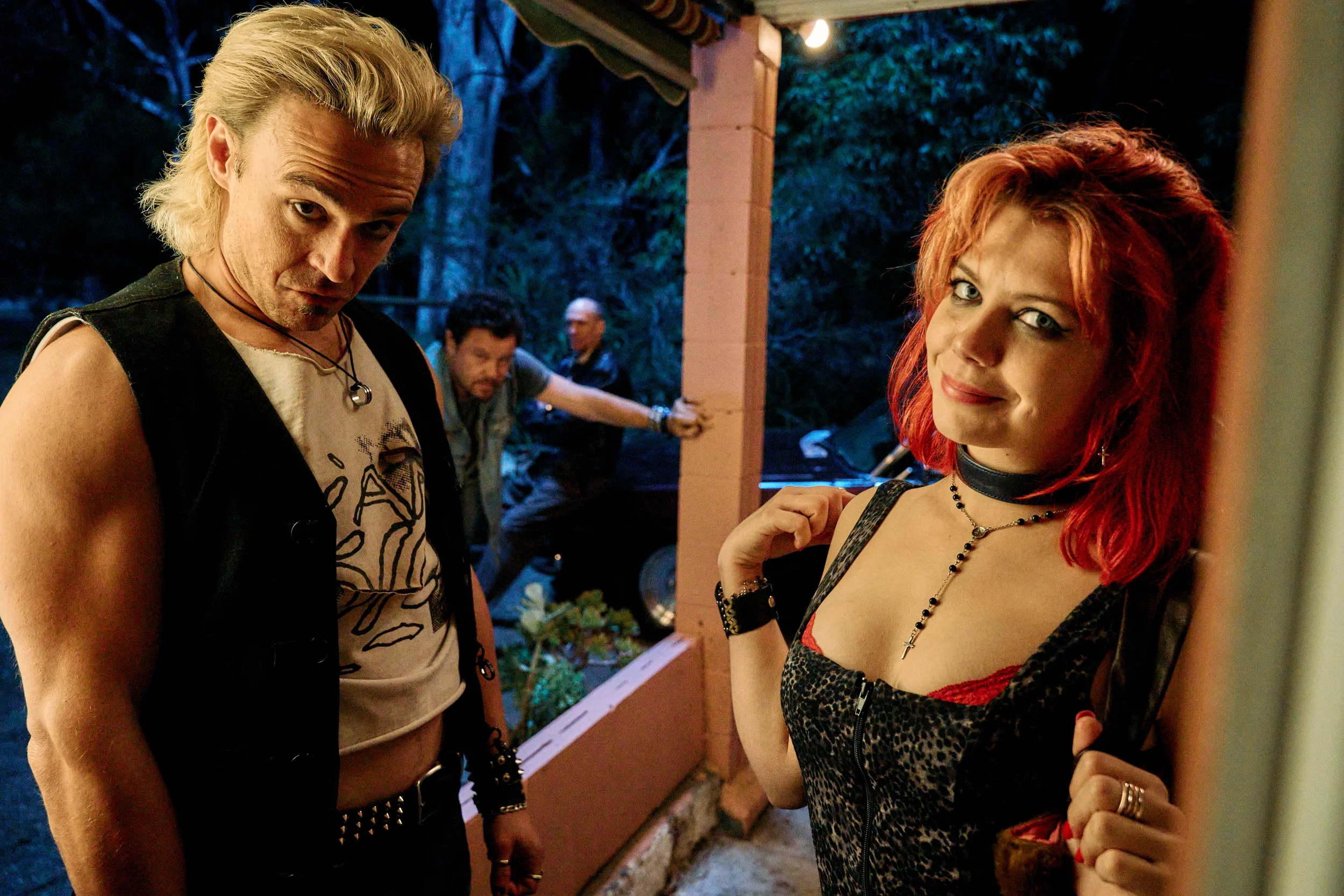
Ben O’Toole as Angus and Sophia Wright-Mendelsohn as Kat in Penny Lane is Dead. Image courtesy of Danielle Freiberg (IFC Films).
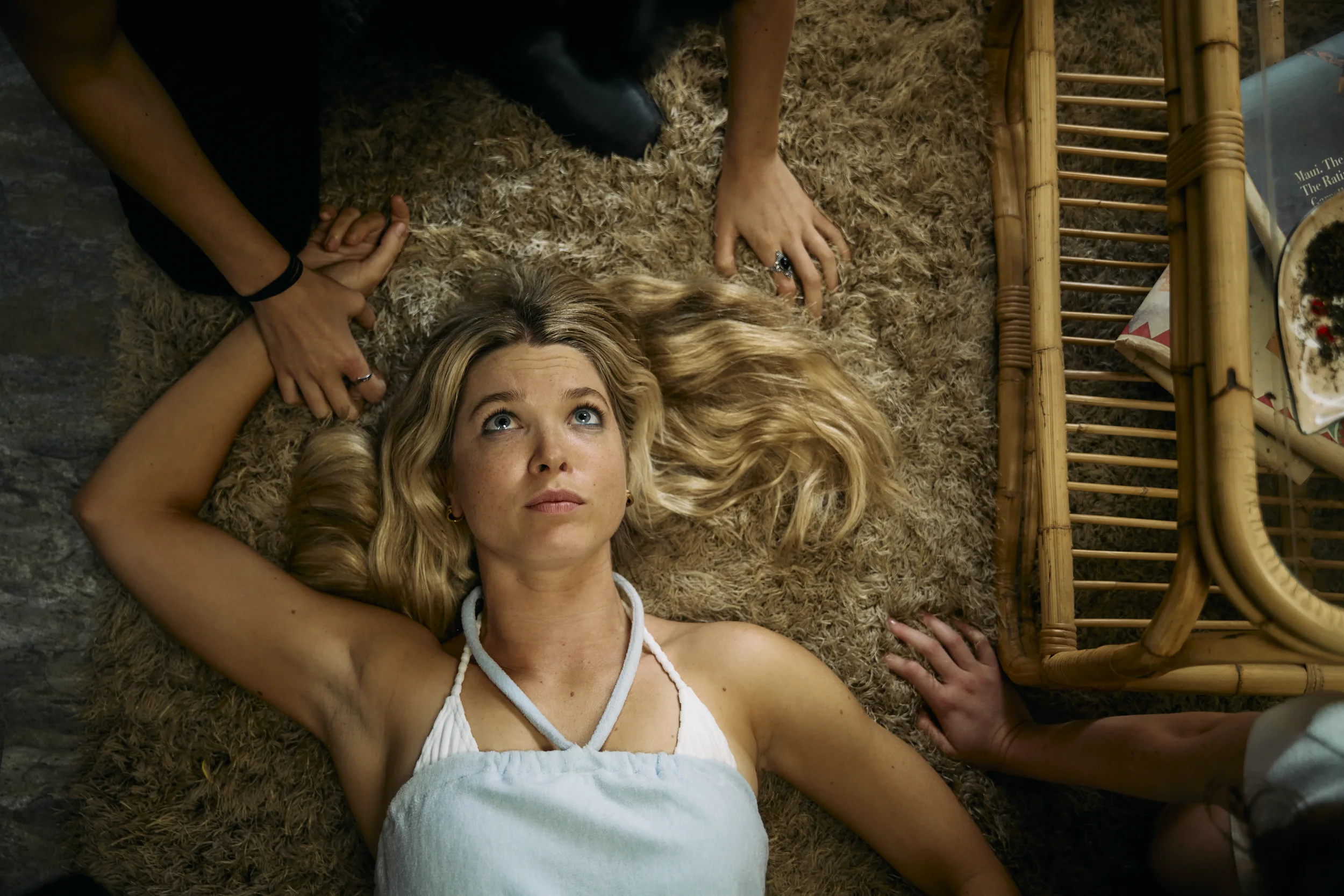
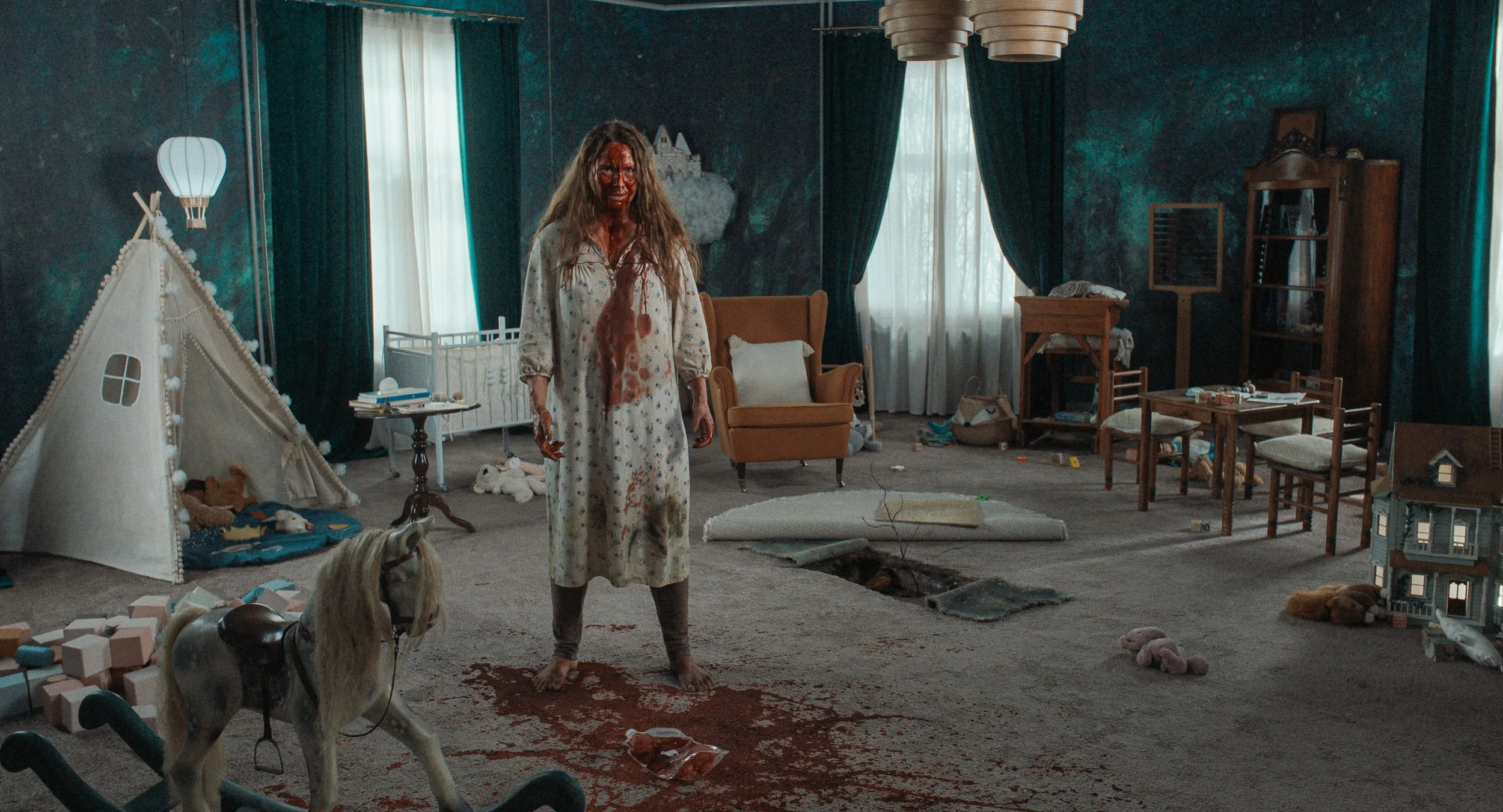
Kat shows up to the party with offensive cupcakes and loads of resentment. The girls quickly learn that Penny’s cupcake was drugged—a mean-hearted prank that reveals the kind of chaos that consistently follows Kat. Penny remains unconscious for the next half-hour or so of the film; the girls lay her in bed in a back room, throwing Kat out of the house in the process. Undeterred, Kat comes back with her older boyfriend Angus (Ben O’Toole) and his friends, who are on a strict deadline with a trunk full of drugs.
Therein lies the first wrinkle. In this variation of a home invasion movie, the invaders are invited in. Sure, Kat was tossed out, but it’s a family beach house and—love her or hate her—Kat is family. With Penny incapacitated, Toni overpowered and outnumbered, and Amy sheepishly trying to make herself smaller, there’s no one left to wrest control of the situation from Kat and Angus. When Toni thinks she’s found a way to get under Kat’s skin enough to make her want to leave, Kat panics, uttering one of the most sinister lines I’ve ever heard: “Wanna meet her?” It’s a chilling, vile invitation, solidifying Kat’s role as one of the sickest villains in years.
Wright-Mendelsohn has a lot on her shoulders as Kat. She’s responsible for the horrors at nearly every turn, sure, but she’s also terribly tortured in her own way—even if we never get a clear idea of how. She mistakes proximity to male violence for control over it but once she opens the floodgates, she can’t close them again. The part is played with a ton of range and she’s a fascinating character, but I’m afraid the script doesn’t give her as much emotional space as it could have. She moves so quickly and so far toward cruel insanity that the tragedy that’s hinted at melts away. She could have had a smoother arc from nemesis to victim and even back to nemesis again, but instead she’s pushed to the limit early and never lets up.
Fereday, meanwhile, is a rock. Russell doesn’t succumb to the urge to turn Toni into an action star, hell-bent on vengeance, but smartly uses her as a resourceful heroine in an impossible situation, doing everything she can to improvise her own rescue. Fereday gives Toni a cool, punk swagger that makes her transition from supporting character to protagonist more interesting than the more common “girl next door” to vigilante transition in revenge thrillers.
One of the film’s most impressive achievements, though, is the effectiveness of its violent scenes. Russell has a remarkable eye for making the most of her set pieces, and even when an effect isn’t particularly gruesome on its own, Russell finds a way to maximize its impact. The assault itself, for instance, is not shown on screen, but the grim weight of the act is felt as Kat watches on. This is one example, by the way, of where I’d have liked to see more complexity in Kat’s character—the consummation of her own vengeance warring with the reality of seeing it play out. But as an audience watching it through her eyes, the effect is still devastating. In another instance, a gunshot isn’t shown—circumventing the need for a squib or CG effect—but the camera lingers on the aftermath for an uncomfortably long time, driving the violence home more effectively than turning the whole film into scene after scene of bodily harm.
Penny Lane is Dead throws back to 1980s Ozploitation flicks like Roadgames (1981), Razorback (1984), and Fair Game (1986)—if not in direct conversation, at least in their pedigree of unpredictable male violence in an isolated Australia. I’ve long said that if you want to do a rape-revenge film in 2026, boundaries must be pushed; a statement must be made. Largely, Penny Lane accomplishes that by upending the players and shifting dynamics, as well as adding Kat’s culpability. There are moments where jarring swings in tone threaten to derail the commentary, but “threaten” is all they do; the film’s confident approach just keeps it on track. It’s an emotionally brutal debut picture and my sincere hope is that Penny Lane opens doors for Mia’Kate Russell like Revenge did for Coralie Fargeat: clears the way for something even bolder.
Article by Ande Thomas
Ande loves the intersection of sci-fi and horror, where our understanding of the natural world clashes with our fear of the new and unknown. He is an independent member of the Society for Cinema and Media Studies and a supporting member of the Horror Writers Association. He writes about monsters and foreign horror and can also be found over on Letterboxd.
Other Articles You May Enjoy…



Nicholas Pineda’s Infirmary starts quietly. There is, of course, the almost obligatory disclaimer at the front that identifies the footage we’re about to see as wholly true and part of an ongoing investigation, but that’s not the unsettling part.