
Interview with ‘Spirit of Fear’ Director Alex Davidson
When a man wakes up in a bed with no memory of who or where he is, his only clues a series of short warnings on sticky notes (including the ominous “Don’t go outside”), he is forced to use everything at his disposal to rediscover who he is and, perhaps equally as important, who else is in the house with him. The opening scene of director Alex Davidson’s debut horror film, Spirit of Fear, may sound a bit reminiscent of a less gory Saw film, but the comparisons end there. Fraught with an eerie, uneasy tension and spearheaded by a terrific performance by lead actor Christopher Page, Spirit of Fear does a great job at carving its own path in a crowded horror genre. I recently had the opportunity to sit down with Davidson to discuss his film, the unique challenges this film presented him with, and the importance of grounding a good horror story in the drama that underpins it.
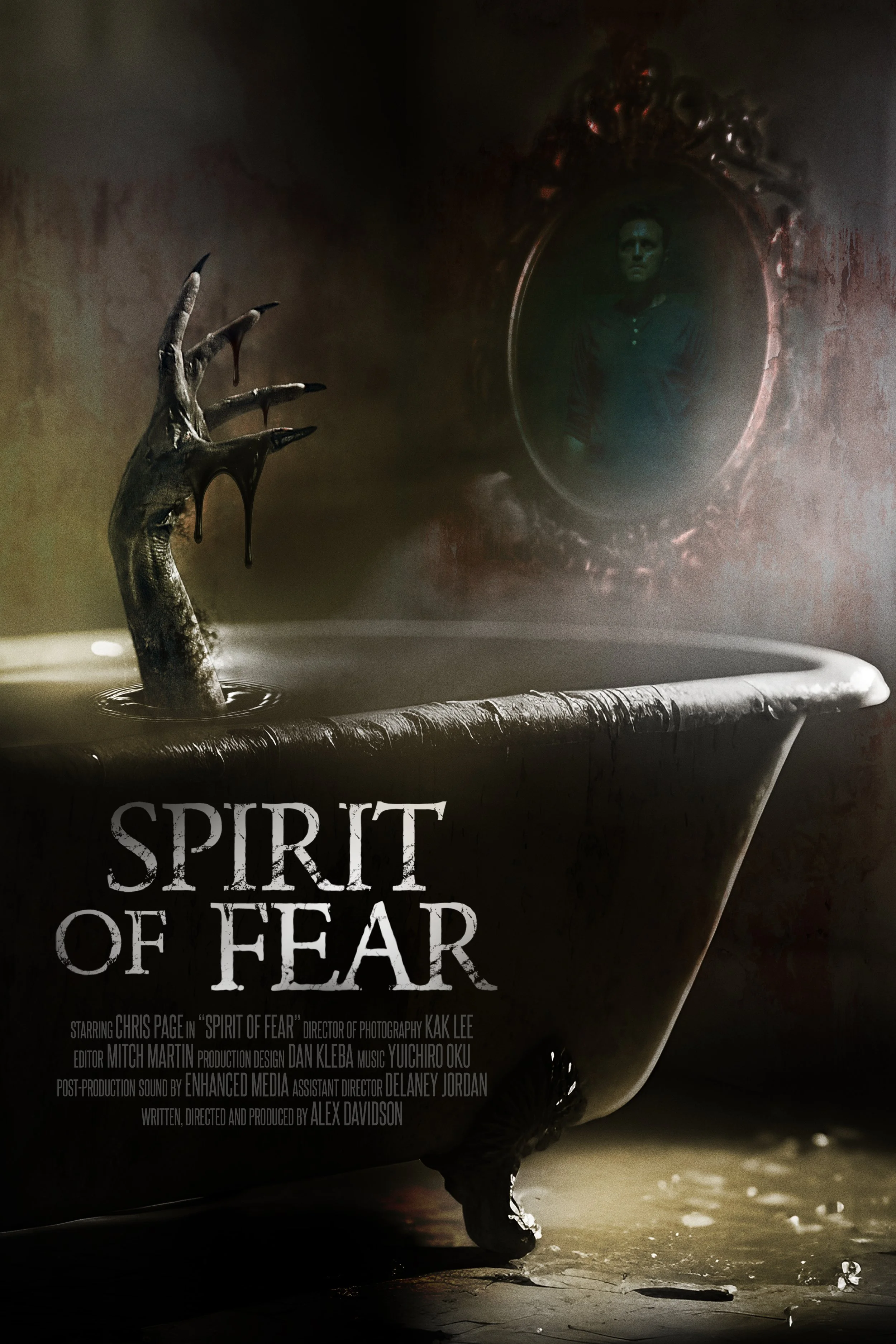
Ande Thomas: First of all, I really love how the film unfolds. The first thing that I thought of was like an old ’90s point-and-click adventure game or an escape room. But one thing that movies like this get hung up on is they fall into this pattern of “get a clue, solve it, get another clue, solve that,” and what I really appreciated in Spirit of Fear is that the character, Chris, gets a lot of clues up front and you don’t necessarily realize how they piece together until later on in the movie. So if you could talk about the writing process and how you pieced together the plot’s structure.
Alex Davidson: Yeah, so generally speaking, I had this idea of somebody alone in a house with weird stuff going on and what that would be like. From there, it kind of branched out into some of these clues with the sticky notes and then bringing in the emotional aspect with the daughter and mother, and it took me a while to figure out the ending and it wasn’t, honestly, even me that really figured it out. Originally, I knew it needed to be something metaphysical, but I didn’t know exactly what that would look like. I had a couple of ideas but nothing really felt very satisfying, and then I was with my brother, talking through the problem with him and just offhand he said, “What if it was like this?” and that led into everything that you see in the movie.
As far as the clues went though, I always thought that any good genre film should first and foremost be a drama. So for me, the important parts were the emotional parts, the internal journey the character takes and the clues are a bit of a MacGuffin, you know, they’re what get him there, they’re the process of him finding his own strength as he’s finding these clues and going through these experiences so I took that concept and tried to build the clues from there. Sometimes I would start at the end and think, “Okay, what steps make sense along the way?” Other times, I had the story laid out and needed to add some more things, like all the garage scenes were stuff that was added in later because he needed a connecting step.
AT: Something you just said—that genre film should be a drama first—I feel like that’s something that gets lost, especially among fans where you know spectacle usually takes front billing so could you talk more about about that and about how the dramatic elements of a plot need to kind of anchor or build the foundation of genre before you start seeing you know ghosts and blood and gore and things like that.
AD: Yeah, I can’t remember who it was who said, I might butcher it a little bit, but it was something to the extent of “the point of art isn’t to create perfection or to experience perfection, it’s for us to feel something.” So you can have an imperfect piece of art but if it gets you to feel something, it’s done its job. I think that’s true for films, especially. We go to see films to feel something, whether it’s to catharize, to experience somebody else’s perspective, you know whatever it might be and so I think that’s the core. So you can have these elaborate set pieces and exciting moments—werewolves coming out or whatever—but without that emotional anchor, something that makes people feel like they’ve experienced something human, it’s just a roller coaster. That’s the way I’ve always looked at it. Even every good comedy is a drama first, right? You could get a bunch of funny jokes strung together but then that’s not something that gets me to watch a movie more than once. It doesn’t have any lasting value. There’s nothing human about it, you know, it’s just a stand-up routine at that point.
AT: Are you a big genre/horror guy or is this kind of just the story that spoke to you this time?
AD: Yeah, it’s weird. I’ve never actually been much in the realm of enjoying horror films as entertainment, so I have a very limited knowledge of the genre, but I’ve always found it to be a really fascinating one. I’ve always been interested in studying it. When I was in college, I would write papers about horror from certain perspectives. So I thought it’s very academically and structurally fascinating in a lot of ways, but I just didn’t, personally, ever really enjoy the experience of watching a horror film or, not many of them anyways, but I’ve kind of become a horror guy now because I felt like this was something worth pursuing and now I have multiple other horror scripts that I’m developing and working on, so it seems that I’ve unintentionally headed down that road, but I’ve always found it pretty fascinating from a filmmaking standpoint, just not as much from an audience standpoint.
AT: Yeah, just be careful! Next thing you know, it’s 15 years down the road and you’ve made nothing but horror.
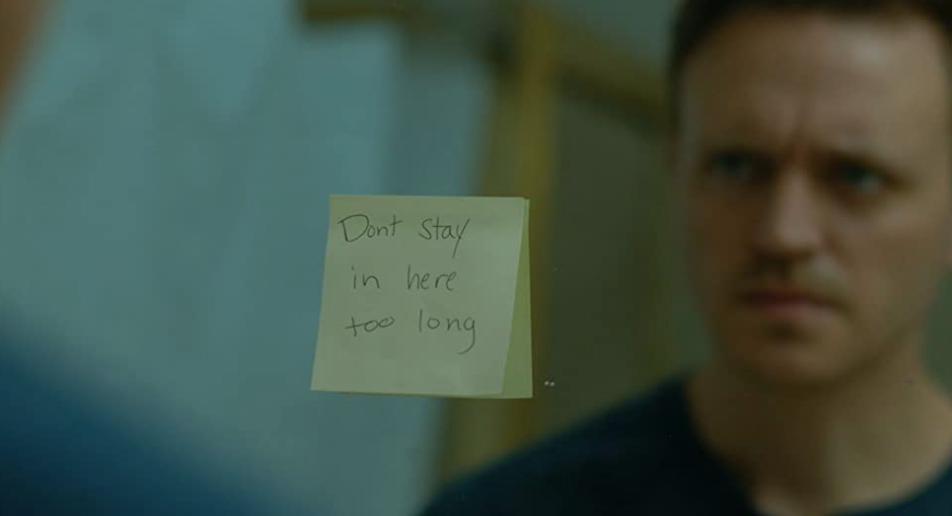
Image via IMDB
AD: If I get 15 years to make movies I’ll be pretty happy about that.
AT: Whatever it takes, right? Let’s talk about pacing. Pacing is something, specifically in this vein of the horror or thriller genres that can end up breaking a film and I was impressed at how Spirit of Fear was able to mete out the action, the discoveries, the plotline as it unraveled. For instance, like I said, you get a whole bunch of disparate information in the beginning, and following on the escape room analogy, if you’ve ever done one, you know you end up having these moments of clarity where things just fall into place and you get kind of a burst of revelations. And I think you managed those bursts where you could have these exciting points of action without costing the story its momentum. Was that something that took conscious effort to work towards? There’s no point, for example, where Chris has to artificially play dumb for a time, just so you can save a reveal for later in the film. It all feels very organic.
AD: Well, thank you, I appreciate hearing that. It was a little bit of a challenge, even when writing it and having the vision for the way the film was going to play out and what the audience’s experience was going to be. I knew it was gonna be a slow burn—there’s a lot of setup so you have to be a little bit patient with the film for the first part, but I think it starts to pick up more towards the latter half of the film, and so I intentionally wanted people to invest and pay attention to the details. I wanted the audience’s experience to be what Chris, the character’s experience is—of waking up not knowing what's going on, trying to figure out these clues, finding something very dangerous in this house and making the character very realistic rather than being that dumb horror character where the audience has to shout, “Don't go in the room!” Instead, I wanted it to be like, “well, that is what I would do, too.” So we made some intentional choices to have him running away a lot, you know, he doesn’t really confront things right away. You know, when he leaves certain rooms, he always closes the door behind him because he wants to have that security of knowing if he turned around, there wouldn’t be an open door. I wanted to create something very realistic, so for the first half of the film, he’s very methodical, trying to understand the situation he’s found himself in so [to tie it back into pacing] it was just a natural byproduct of the story. Directorially, I did want to emphasize that creepy feeling of being in a strange house at night and any creaking, any noise could be something or nothing all at the same time. I wanted that to be the tension of the film, and I wanted to have moments where you're expecting something to happen, but then nothing does. And then when it does start to happen, it’s hopefully more exciting because you had that expectation rising.
AT: Yeah, there’s certainly a kind of switching point between his gathering of information and then taking actionable steps to face the villain and that kind of plays into what you were saying about the horror trope of don’t go into that basement or or don’t go through that door that’s clearly marked, “Stay out,” which, okay might be pretty good advice, but at some point, you have to say, you know what, screw it, I gotta do something and that’s the point where he starts opening those doors and taking more risks. That’s a really good way of reconciling those two sides of the character.
AD: Yeah, at a certain point he’s got to take action and you know he almost messes it up, right? I mean, the first note that he really experiments with is this “don’t stay in this room very long,” in the bathroom, and at first he’s thinking about going outside, and it says don’t go outside, so he’s like okay, maybe I won’t touch this one but I'm gonna go test this other one where at least I can control it. I wanted to make an intelligent character who is gonna take those risks but try to do it in a way that I feel like a normal human being would.
AT: Yeah, and on that note too, for most of the film, the character is alone. There’s almost no dialogue throughout the beginning and Chris Page has a real talent for emoting what he’s thinking or what he’s working through without having to talk to himself or narrate, so, how difficult was that for you? How important was the casting process and what did you see in Chris, the actor, to kind of call Chris, the character, into existence?
AD: I knew Chris Page from another project we worked on and I really enjoyed working with him. I could tell he was incredibly talented and as I was writing it, I thought Chris would go really well with this part. I wrote intentionally not wanting to have you know, an internal monologue or voice over, or something. I want people to see what he’s seeing and take that from the character and try to figure it out with him in their own heads rather than explaining what’s going on in his, and so it’s a big acting challenge because almost every shot has Chris in it and so he carries the film. When I had finished the script, I sat down to talk to Chris about it, and he basically got every single thing right out of the gate. Small details that weren’t even explicitly said in the script, he said, “I think this is what’s happening with the character here,” or, “I think he’s acting this way because of this and that,” and he just got it and ended up doing a fantastic job. I was very happy with the performance—I don't think I could have asked for a better actor to work on it. Also, it was a grueling shoot—we shot overnights for weeks on end, people are doing 12 hour days, and to have an actor who has such a positive attitude and can still bring his performance up to where it needs to be, you know, when it’s five in the morning and can remember weeks ago, you know, in which hand he was holding a prop in different scenes or how he walked into the room, just little details like that brings marks. But yeah, as far as the filmmaking process, Chris was amazing, and at the end of the day, watching the film, I feel like you can see that his performance really holds the film together and I don’t think we were having nearly as good a film without his performance.
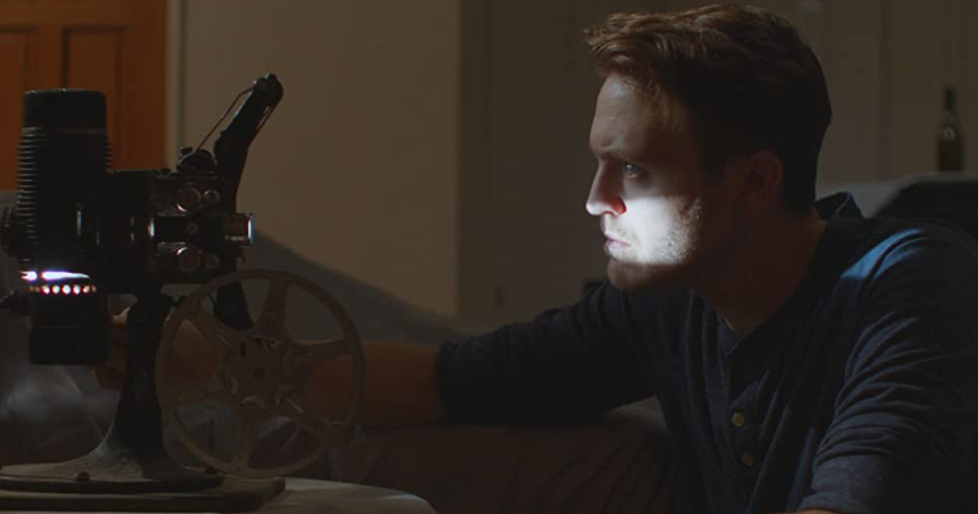
Image via IMDB
AT: You talked a little bit about this, but some things that I found interesting were some very specific references made that might otherwise be a little bit obscure, and I’m wondering how much, if you don't mind my asking, how much do your personal beliefs play into the story? Thinking specifically about a pair of biblical passages, which aren’t the standard verses that you usually see in horror. You know, it’s common to see a lot of prophetic verses or more ominous sounding ones, but it’s interesting to see a more fortifying message. Did your personal experience play into that decision or did you uncover those messages in your research and they fit the narrative you had been building?
AD: Yeah, I mean I come from a Christian background and my faith is an important aspect of my life. I didn’t set out to make any sort of religious or “Christian” film, but I think having that background lent itself to the type of film that I was making and so I was already familiar with the passages and things like that. I think ultimately, I looked at the story and what kind of message and thematic elements I was trying to express—what am I trying to say about being human in the world around us and a lot of it had to do with fear. How do you overcome the greatest fear that you might be able to experience and I think, from a Christian perspective, I think you conquer fear through sacrifice for others. And I think that’s where I landed on those scripture verses. And that does come from my upbringing of, you know, being scared as a kid and my parents would read scripture verses to calm me down or give me a sense of center or calmness, I guess, and so yeah, there are some background elements in there but there wasn’t anything I was trying to explicitly add to make it a “Christian” film, those elements just kind of fell together with the type of story I wanted to tell.
AT: Yeah, I think that really benefited the story. I’ve seen a lot of religious horror and seeing those aspects explored in a new way, I think was really refreshing, if for no other reason then it’s not the same verses you always see pop up but also, it kind of allowed the character to explore this angle where his family acts as his anchor, his grounding point and they really tie together so that he’s able to find his way back through those objects and those verses. And I love seeing you find a way to use that without resorting to that tackiness you might see in say, a Pureflix film, where they start with an agenda and try to build a story around it, right? And like you said, this is by no means intended to be read as a “Christian” horror film, but I think there’s a personal way in which the character’s relationship with religion is examined in a way that’s unique.
AD: Right, I don't really want it to be known as a “Christian” film because yeah, it is very tacky most of the time and I think that ultimately, in my mind, a Christian film is really just one that has a value that’s expressed, like a moral perspective. So like, for example, even Finding Nemo can be a Christian film if you look at it through the right lens. It’s about the love of a father for his son, you know, and I think that that’s ultimately going back to the thematic elements. What kind of theme is the story trying to express and then everything for me, being a filmmaker and writer, comes from that point, rather than saying I have a message I want to get out so how do I create a vehicle for this message. I don’t think that’s the right way to go about doing a narrative. So I agree with you 100% on that.
AT: When Chris comes out of his experience, there are some clear signs that abuse had been in the picture. Not only the clear signs on his wife’s body, but in the way that his daughter reacts when he picks her up. Do you think there’s anything specific that you’re trying to say in that sequence or are you trying to look at it as a metaphor for these kinds of real life experiences that people deal with? In other words, are you trying to explore whether it’s actually a supernatural experience versus just a domestic issue that he’s working himself through, or is that something that wasn’t really on your radar and kind of just exists in the text?
AD: It definitely exists in the text, explicitly, so in the film, it is definitely a supernatural thing that is motivating the abuse. It’s not who he normally would have been. Of course in the real world, it’s speculative, I think there is the possibility for some kind of spiritual influences that can affect people. You hear a lot of various stories you know, and I don’t have any personal experiences but I do think it’s within the realm of possibility. I think there’s also a lot of people who do have domestic abuse or are under the influence of something like that. So no, probably more the latter than the former. But maybe there’s some room for the former as well. I just found when I was writing the story, there needed to be something that would be effective of being what he was under. It needed to be something that tied in with the family and I think the worst thing I could think of was abuse. Especially when it comes to having a young daughter who isn’t sure who her dad is that day, you know? Is this the dad that’s going to pick me up and hug me or is it the dad that’s going to beat my mom? And I think you know I wanted that resonance to be there later on, at the end when he is reunited with his family and you could see that there was definitely something that happened but he almost has no memory of it, so in his mind he’s thinking I’m finally back to the people that I love, I conquered all this to get there but in reality it’s like, no, you just started over. You gotta really re-earn their trust, re-earn their love. There’s still a long process. So I find it kind of interesting to explore that theme of domestic abuse in this way. I don’t think I’ve seen that before or heard that before. I felt like something more subtle like this just may be more realistic to people inclined to believe that there are supernatural forces that can affect us in real world ways.
AT: Yeah, like you said, it’s another aspect that you don’t see very often, so it’s great to take that route. We mentioned already that you do so much with so little, in reference to the dialogue, but there’s also an economy of effects or of scares. One of the most effective scenes for me, I think, is one involving a bathtub, where there’s not a whole lot in terms of blood or gore or even props and costume, but the scene is so effective at chilling you to the core by using what you don’t see, rather than what is in front of the lens. Was building your scares in that way intentional in terms of what the script called for or was it mostly a budgetary decision, how did that shape up?
AD: Yeah, it’s mainly that the script didn’t call for it. I think the vision I was building, I wanted it to be much more like something like Jaws. Where you don’t really see the thing—you don’t see it get gory or you know, in Jaws, there’s possibly some blood in the water, but it’s not as graphic as many modern movies, so I think it’s that idea of the fear of this unknown presence, and those are always way scarier than what you can see, and so apart from getting glimpses, you know that there’s definitely something moving in the house around Chris, you know, messing with things, changing things, but you don't know what that is, and I think that that unknown is much scarier. So yeah, I think the script just kind of landed that way. Of course there’s a budgetary part there too, right? It’s cheaper to hide things and just show a little bit than show a big thing like a giant mechanical shark versus a fin. But again just the feeling, the vision I had for the audience was very much the fear of the unknown versus a shock and awe, gory type of scene. But yeah, I mean the film is basically PG aside from the thriller aspect of it or horror aspect of it, there’s no nudity or blood or big gore or anything like that. I think it really relies on psychological tension more than anything else.
AT: Very much so. Another thing that we sort of kind of talked about throughout, but if you could distill it into one answer, do you think that there’s a void in contemporary horror that you’re hoping to fill with Spirit of Fear?
AD: Before I give an answer, I guess I’ll preface again that I don’t have a huge catalog of horror films I’ve developed as a viewer. But in my opinion, there is just a general lack of genre films, horror maybe especially, that put drama first and foremost with the character’s journey. I think that there is a market for that for sure, and so I hope that’s where I can land myself—horror that exists more for the satisfying emotional aspects that you get out of your journey, hopefully.
AT: One of the last things I was going to ask—and you already answered one which is Jaws—but are there any films that you would recommend to watch before or after your film? What’s your optimal movie marathon to go with Spirit of Fear?
AD: There’s definitely a lot of references that I took things from, though not necessarily intentionally. Sometimes you look at it afterwards and realize, “Oh this seems sort of like this.” There's definitely some similarities with Memento, Jaws, Inception, I think as far as some of the dramatic elements. Maybe The Sixth Sense, as far as some of the reveals fit together. There’s a quote, “good artists copy, great artists steal.” Hopefully I stole from a lot of good stuff and I put it all together into something new.
AT: I think you did! It is definitely something that you’ve packaged in a new way, which is always a great place to start, so I think a lot of people will enjoy it. So what’s next for you, moving forward?
AD: There’s still a lot of work before this gets released. In my opinion, the hardest parts of making a film are getting the money to film it and then getting the money back after it’s filmed. For me, making the movie’s the easy part, I really enjoy that. And it’s stressful and difficult. But I like that part. You know how they say that a mother never remembers the pain of childbirth, just the joy of having her baby after? I think filmmaking is kind of like that for me, you know, it doesn’t seem like that was the hard part. Now we’re just looking for a good release so that a lot of people can see it and hoping it’s going to lead to the next project. I have a number of different ideas from a found footage horror film that’s again, very isolated, low character count, some of those aspects. I have a sci-fi/horror survival film that I’ve been working on for a while and then a couple of other ideas I’m still fleshing out and working on, so there’s definitely things I’d like to do, but again, as a filmmaker it’s all about finding the right people to partner with to get the film made.

AT: You spoke the magic words: I love found footage so for as much as my vote counts, that’s where I think you should go.
AD: I think that might be the next one. I really like that idea and I think it would be a good follow-up to Spirit of Fear, and it’s a similar feel but it’s definitely got enough different stuff going on that I think it would be a really fun space to explore. It’s got a lot more comedic elements mixed into the beginning and things like that. So it kind of moves from a bit more of a comedy, poking fun at some of the horror tropes and you start to realize, “oh no, this is actually really happening,” you know? And so I think it’d be fun to explore that kind of transition.
AT: That sounds right up my alley. Well Alex, thank you so much for spending some time with me and for giving me the chance to see your movie. I’m really looking forward to seeing it get picked up and for everyone to see it in the wild.
AD: I appreciate that, thank you.
Article written by Ande Thomas
Ande loves the intersection of sci-fi and horror, where our understanding of the natural world clashes with our fear of the new and unknown. He writes about monsters and foreign horror and can also be found over on Letterboxd.

Filmmaker Bari Kang discusses Itch!, from its practical gore and zombie influences to filming in his own NYC store and directing his daughter.