
Adrian Țofei: Director of ‘We Put the World to Sleep’ and ‘Be My Cat: A Film for Anne’
Last week, we started our conversation with Be My Cat: A Film for Anne director Adrian Țofei by talking about his film and its legacy after 10 years on the market. We touched briefly on his upcoming follow-up feature, We Put the World to Sleep, but as the conversation progressed, this next entry in Țofei’s saga came more into focus, so this week, we’re continuing the discussion by looking ahead, rather than behind, and what he’s learned from his experiences.
What Sleeps Beneath: Looking forward to We Put the World to Sleep and this kind of loose trilogy that you're crafting, I've heard you say that you're seeing Be My Cat as more of the subconscious exploration, or Freud’s concept of the “id.” And then We Put the World to Sleep as embodying the rational mind, the ego. And that in Pure, you're going to tackle the superconscious, or the super ego. That sort of psychoanalytical model is common in films, but is that something that interests you personally? And is that something that you had in mind when you were developing Be My Cat? Or did it come about—
Adrian Țofei: No. When I did Be My Cat, I did not have this in mind. I don't remember the exact moment when I thought this was going to be a trilogy. I know that I wanted to do the We Put the World to Sleep starting in 2015 when Be My Cat was in festivals. I already had the inspiration for it. But I think We Put the World to Sleep evolved as a concept and I saw that it was more metaphysical, or in certain areas more philosophical or more mental maybe than Be My Cat. And then coupled with some other experiences of mine, I started to see that we needed a trilogy and for it to go from lower to middle to higher self. Yeah. So this concept gradually came to me. As it was being developed, shopped, and then edited, then the final concept of the trilogy came to me.
WSB: I've also heard you say that—and we kind of talked about this already—getting into character. And for We Put the World to Sleep, you and your wife [Duru Yücel] would live in character for months at a time. And that it could sometimes take a toll on you, a mental or an emotional toll.
Adrian: It was partial, by the way, I want to mention this, it was partially living in character. I mean, a total living in character happened only when the camera was on. When the camera was not on, of course, we wouldn't continue to talk like our characters. But still, something lingered. Or as I said, some of the decisions we made. Some of the Facebook posts that I made, for example. Later I was looking like, hmm, was that me or that my character speaking? Hide, hide, hide, hide. I hid tons of Facebook posts made in that period.
WSB: It's interesting to me because at a point in Be My Cat, the character Adrian kind of goes through the same thing, right? He has this realization, he's like, oh my God. I am the character. The character is me. We're one and the same now. So with the understanding that you are a professional actor, that you have a lot of experience with this type of method acting, did that ever concern you? Did you ever—you and your wife—at the end of the day come out of the studio and say you know what, we need to take a step back from this and kind of recalibrate ourselves?
Adrian: Yeah, this took a toll on us, but only at the end, you know? I mean we realized that this had taken a toll on us, especially more myself I think, than on her, and I cannot explain why, because I would spoil the film. (laughs) Because my character, I would say, goes in certain directions that are probably more disturbing, so to speak. I think the biggest toll was on me. And yeah, I needed some time to recover. I don't think—because when you are doing it, you know, when you want to do this, then you are focused on the creative aspects, you know, and there is this thrill. There is this thrill of being the character. You don't, or you cannot worry. Oh my God. I'm the character. This is bad. You know, you are happy that you feel like the character or a little bit like the character at some point, because then your mind is like, oh, I can give a good acting performance. I've reached my goal. So, you don't get concerned when you do it.
You start getting concerned afterwards when you feel things that you feel; that there is a certain darkness you carry that is not yours. That feeling inside and when you go back and look at the footage and that line blurs between the character and yourself and I never felt like—here's the thing—I never felt the character. I felt traumatized by the character so after this period, I never felt like oh, now I'm the character, you know, it's more like a sort of trauma. It's like being and doing stuff that you wouldn't want to be doing. You know, it's like you’re traumatizing yourself. It’s hard to explain. I was not disturbed because I felt like I'm still the character but I was disturbed. It's as if I cannot know for sure.
Imagine if you were to do something, a horrible thing, you know, in your past, like maybe by mistake or something, or maybe you, in a moment of not thinking clearly you harmed somebody that you love and then you would live constantly haunted by remorse, by what you did. You would feel horrible for a period. It would be very hard for you to forgive yourself for what you did. You feel like there is something on you, something heavy. Same thing with this. Because while you are in character, you think certain things, you do certain things. It’s all fictional, of course, but because when you act out those things, parts of them feel real inside, you know. Just like the scene with Flory [in Be My Cat], you know, in the torture scene. That is a scene that traumatized me. Traumatized me! After I did the movie, I couldn't watch it for a very long time. I couldn't watch movies about torture, blood, anything. That scene really traumatized me because although I did not torture her, probably something felt inside as if I did. So then you're like there's a trauma, as if you did something wrong, as if you did something horrible, as if you harmed a human being. Although it was fictional, there is still this heaviness inside of you. It's very hard to put into words. So yeah, this is the type of trauma that I felt. And I've heard, and only recently these things are being talked about, because I think for decades it was just assumed that, oh, you're just an actor, you know? You just pretend, make believe, and then people have to have sessions of going out of character. I've heard Hollywood actors talking about when they had to play the role of a rapist or these things when you do atrocious things that are totally against anything that you would do in real life and they are really traumatized afterwards by this and they require psychological assistance to get rid of this guilt; guilt for something fictional, which nonetheless affected you.
WSB: Going into We Put the World to Sleep and even now, having come close to the end of it as you look for distribution, what are some things that you've learned about film and the filmmaking industry that you might have wished you had known from the beginning or something that you would say to new filmmakers who want to make, not necessarily a found footage film, but a film in general? Actually, let me preface it by saying this. We are big proponents of independent filmmakers and this sort of zero-budget filmmaking and starting from scratch, not having any resources, and a lot of first-time filmmakers have those questions, like how do I do this, what do I need to know to get my movie out there, etc.
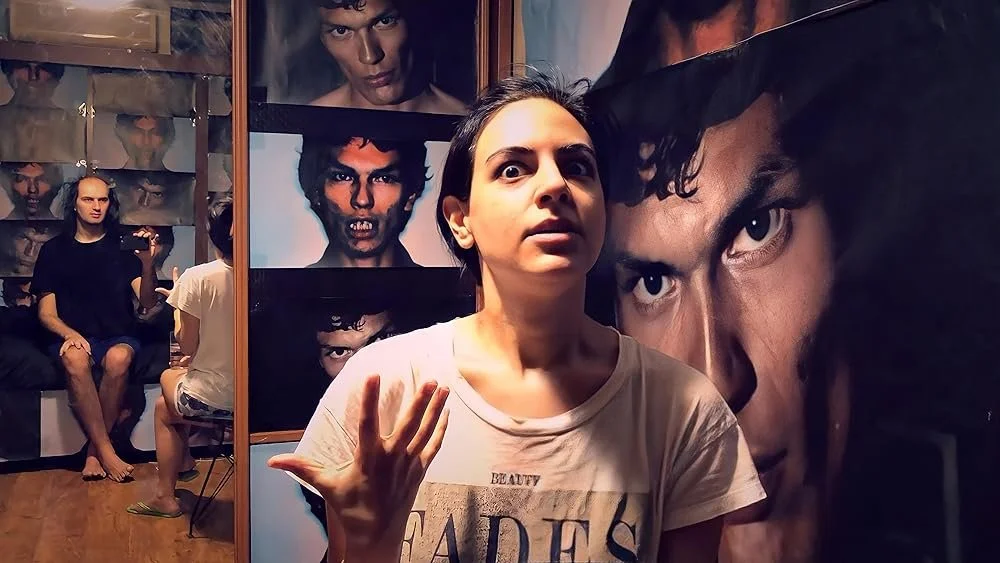
Duru Yücel in We Put the World to Sleep. Image via IMDb.
Adrian: Well, if we are to talk about little details and stuff, we already talked about this, such as living in character and all this stuff. But that's something I already knew. That's not something I learned. I've learned that it works. I've learned that it works in film. I knew that it works from my acting experience on stage, so I just learned that it works in film, as well. And I learned to not push it too far. But if we are to talk like philosophically, you know, what did I learn or stuff like that, I would say to whoever wants to start making film, this is always kind of the advice that I give: Don't read so much about ‘how to’ articles and stuff like that. I feel like they put you down. When I started, I had no experience with filmmaking at all. I started Be My Cat without ever using a camera in my life before. The first time I used a camera in my life was when I shot Be My Cat. I had never edited a film before. I knew nothing about film production. So everything was learned step by step as I was doing it. My suggestion is to just try to free yourself from everything that others say is required to be a filmmaker and to make a film. I say once you free yourself of all this stuff and you go on a genuine journey and you are able and decide to make sacrifices—speaking of sacrifice, like to sacrifice a lot of your time, like we are not talking weeks here, we're not even talking months. If you are able to sacrifice years of your life, years of your social life, you know, if you are able to dedicate 12 hours a day to having something good finally out there, then you will find your own way. That will be what you need for your specific project. Because if you go online and read, oh, you need this, you need this, you need that, maybe you do, maybe you don't. And if you don't, then you will read and you will get scared. Oh my god, I need this. Maybe for your project, that's not needed. And you will get scared and you will not make your project just because all those articles scared you. So that would be my advice. I would say the only thing that is needed is the willingness to throw yourself into the unknown and to find your own path and to be willing to give a lot of time and a lot of sacrifices on that path. And then you will find your way. It's like that thing, you know, with a car going in the dark, you don't see ahead, you just see a little portion, but nonetheless, you reach your destination. Ultimately, I would say use the same approach. Because maybe, I don't know, maybe if you see the whole path, you see something very scary ahead and then you don't even go. I think it's better if you just go and you just deal with it when it comes. I had tons of moments like this, like literally tons of moments. And maybe if somebody told me when I started to do Be My Cat, if somebody told me that it was going to be so hard, that I would have to work so many years, you know, and I would have to take so many creative risks and that it would be so hard psychologically as well, and that I would have anxiety editing—and if somebody had told me these things in advance, I might have gotten scared and not done it. But that's life, you know. It's not just a little sacrifice. We all give something out there in order to bring some value to the world.
But I’d rather not go into telling others what I've learned because like on a bigger level, on a big philosophical level, this might not apply to them, you know. Even the stuff that I said in this film about having the need for a lot of preparation and living in character and at the end putting a lot of effort into editing. For a good portion of filmmakers who will find success, these won't apply. Some other people might put a lot of effort into the script, you know, make a wonderful script and then maybe they don't even need great acting, maybe this story will speak for itself and they will get into a festival on the story’s strength alone. They will find success. I don't know. So I’m trying not to limit people to formulas of what's needed.
WSB: Yeah. Because you're absolutely right. It's very project-oriented. It depends on the person. It depends on the people you have with you. It depends on the project itself and how you plan on going about doing that. The advice you have for a found footage film might be similar to a documentary, but it might also not be and it's definitely different from doing a sitcom. So yeah, it all depends on what you're looking to do so I appreciate that and thank you for that advice.
Adrian: Yeah, I mean whoever comes to me for specific advice, you know like, oh, how can I make this role look more realistic? Then I give advice because that's a specific question for a specific problem. But when they come with a general question, Oh, what should I do in general in life to make films? Then I don't give advice because if it's not specific, then I'm putting this person in a box and maybe the box that I'm putting him in, it's not his box. And I'm doing him more harm than good, actually. If he comes to me and says, look, this is my box. It's yellow on one side. It's red here. How can I make it so that it's better seen? Ah, okay. If you want to—okay, you put this here, you do that. But if it's a specific question, yeah, I'm comfortable giving advice. If it's a general question, I'm not comfortable.
WSB: So I know you're still working—well, production is finished on We Put the World to Sleep and you're submitting it to festivals, correct?
Adrian: Yes, yes, I'm waiting. It's already submitted. I'm waiting to hear from festivals. Already it was on the cusp at a couple of huge festivals, I might say. Very happy to know that it was close to being selected. But of course, it's frustrating because it wasn't, but a festival premiere should happen this year. I mean, it should. I mean, now the question is, which festival, you know? Of course, everybody dreams of the top 10, big ones. I dreamed as well. As I said, it just didn't happen. But those ones, I mean Sundance, Cannes, you know, they didn't happen. It's enormous, the competition there is absolutely enormous just for traditional film. So when you come with found footage, you can imagine. So that's why for me when hearing that they were like, that the movie was on the bubble, you know, like close to being selected, they just couldn't find a spot. That felt like, wow, that still felt like a great achievement because found footage films, these big festivals usually have at most one spot for found footage films. Like when I'm talking about Sundance, South by Southwest, Tribeca, if they select a found footage film, they don't have many, because there's some people that still have a stigma associated with found footage. So it's usually at most one spot. So you can imagine the enormous competition for that.
Where I do not have lots of hopes, paradoxically, is in smaller genre festivals. I had the same experience with Be My Cat. Be My Cat went to some of the bigger ones; it went to the Nashville Film Festival, I remember. And it went to some of the general festivals. But there were also, I also submitted it because I wanted it to reach more people, to reach more audiences. I also submitted it to smaller, lesser known genre festivals. And I got tons of rejections. Then I understood something about this. I think when the movie, it's a bit, how should I say it? When the movie is a bit ambitious in terms of concept, you know, when it's not just a ghost or a monster eating people, you know, when it just goes beyond that, it'll be a bit harder to find and to get selected in the smaller festivals, actually. Because a lot of the smaller festivals, I realize they focus on more generic horror. That was my experience. I don't know. Maybe the reason is because they have fewer slots, you know, like they have fewer films to show to their audiences. So then they don't want to bore their audiences or disappoint, where at bigger fests, they can take those risks because of their popularity, they also probably attract more of the niche audiences.
WSB: So I'm on the panel, a selection panel for a small, a very small local festival. And I can say from my experience, a lot of what goes into the selections that we make, obviously we want good films and we want to support the indie artists that are really making an impact, but the things that get screened might not be our favorites at the festival because they might not play well with the crowd that we attract, you know? So there's always that play between, do I want this film because I love it? Or I liked this one a little less, but I think it will play a lot better with the audience and keep people engaged. So I think you're absolutely right on that.
Adrian: Yeah, yeah. It's a lot about, for example, Be My Cat, although later it found success in the Spanish speaking countries, you know, it found certain communities. It went viral when certain podcasters who had a ton of followers talked about it. So then it found tons of fans in Latin America, in Spain, in Portugal and so on. But those people, you know, because they talk about cult films, they talk about underground film, they already collected these types of people from all over the country. But when I submitted to festivals, you know, it didn't have that success because from what I observed, Latin America is much more focused on gothic horror with ghosts, like so much, you know, not so much into psychological thrillers and stuff like that. So, as you said, some of the programmers, maybe they, you know, they know their audience. So even though they watch and maybe they appreciate the film, they just don't want to make their audiences scratch their heads.
WSB: Yeah, makes sense. But I'm confident that We Put the World to Sleep is going to find its place this year, given the cult status of your previous film. How far are you in the process with Pure?
Adrian: Now I'm writing the script. This is going to be more scripted. It was too much work on We Put The World To Sleep. I pushed it even further with the improv on We Put The World To Sleep. I don't want to do the same thing with Pure. I want it a bit more structured so that it doesn't take me a lifetime to edit. I don't want to have 100 hours of footage. Like even less than the footage that I had in Be My Cat. Because this one is still evolving after nine years. I mean, just a couple of days ago, I just realized something about Pure and like literally a huge portion, like half of the movie has just come into existence in my mind and in some notes. So I just have to expand it now and do a sort of script. Not a full script, again, I'm not going to write a full script, but still very important parts are going to be scripted.
WSB: Yeah. A skeleton of a script. I'm anxiously awaiting that one as well. And of course, congratulations on Be My Cat, on its success over the past 10 years. I know that's where this whole conversation started. I'm so glad that I found it, that I was able to recommend it to so many people. And I appreciate the work that you've put in.
Adrian: And by the way, speaking of Be My Cat, if you still have like five more minutes. I don't fully agree that the editing is great in Be My Cat. There are still some repetitions. There are still some things that are repeated a bit too much. I've watched it recently and there are some parts that I want to cut out now. I would love to do a director's cut of Be My Cat. I want to remove some footage that is repeating a bit too much, and I want to add new footage instead. So in the end, the runtime would be the same. Only that it's going to be some repetitions removed and some new footage added. It's a plan, but I would only do it if there are some festivals interested in premiering it. There's a lot of work and I would prefer putting that effort into Pure, you know? So I proposed this to some festivals, you know, if they would be interested in premiering a director's cut of Be My Cat. But without having the screener to show them the movie. I just told them what I want to do. So, let's see if they are willing to take this type of risk of saying yes to this.
WSB: Well I’d love to see that and I'll continue to shout this movie and your future movies from the rooftops because I think what you've created is something really special and has pushed the found footage genre forward, which is not something I can say for every film that comes across the screen.
Adrian: Well, I guess it also depends on the intention. Because I did have the intention of pushing the genre forward. I cannot say that I was that filmmaker who just started out to... I cannot be modest about this and say like, oh, I just wanted to make a film. And then it turned out to be this. I was ambitious from the start. I had this intellectual ambition of doing something that would push the boundaries of the genre, that would move it forward, that would give it more value. So I think it's possible. So since it happened in my case, I believe it's possible to have high ambitions for a film without failing or without succumbing to your own ego. But I don't know what's the recipe for that. What's the recipe for that? I don't know. I just know that I had that ambition. The only thing is that it didn't happen the way I expected it. It took much, much longer. You know, it took like more than five years. Now it's like going to 10 years. So it looks like more than seven years, I would say. Probably somewhere eight, nine years till it finally reached this cult status. And it took much longer to reach the people. So yeah, I think it's good actually to be ambitious and to aim high. As long as you have a sense of measure. But that's something that you cannot quantify, you cannot talk about it. I guess as long as you have the understanding and the feeling that you can pull that off, you can aim higher, I would say, as a filmmaker.
WSB: Yeah, I think that's great. I think it's necessary, especially when you don’t have a big studio behind you or this huge budget behind you. There's this scrappy sort of sense of DIY, of do-it-yourself aesthetic. And that kind of ambition is necessary to kind of push you forward through those difficult times when you're sitting at midnight in your editing studio trying to scroll through all this footage. So no, I think that's absolutely necessary and makes for a much better film. So yeah, congratulations on the film. Good luck on getting the next film into these festivals and with the production of Pure as well.
Adrian: Thank you so much.
Article by Ande Thomas
Ande loves the intersection of sci-fi and horror, where our understanding of the natural world clashes with our fear of the new and unknown. He is an independent member of the Society for Cinema and Media Studies and a supporting member of the Horror Writers Association. He writes about monsters and foreign horror and can also be found over on Letterboxd.
Other Articles You May Enjoy…
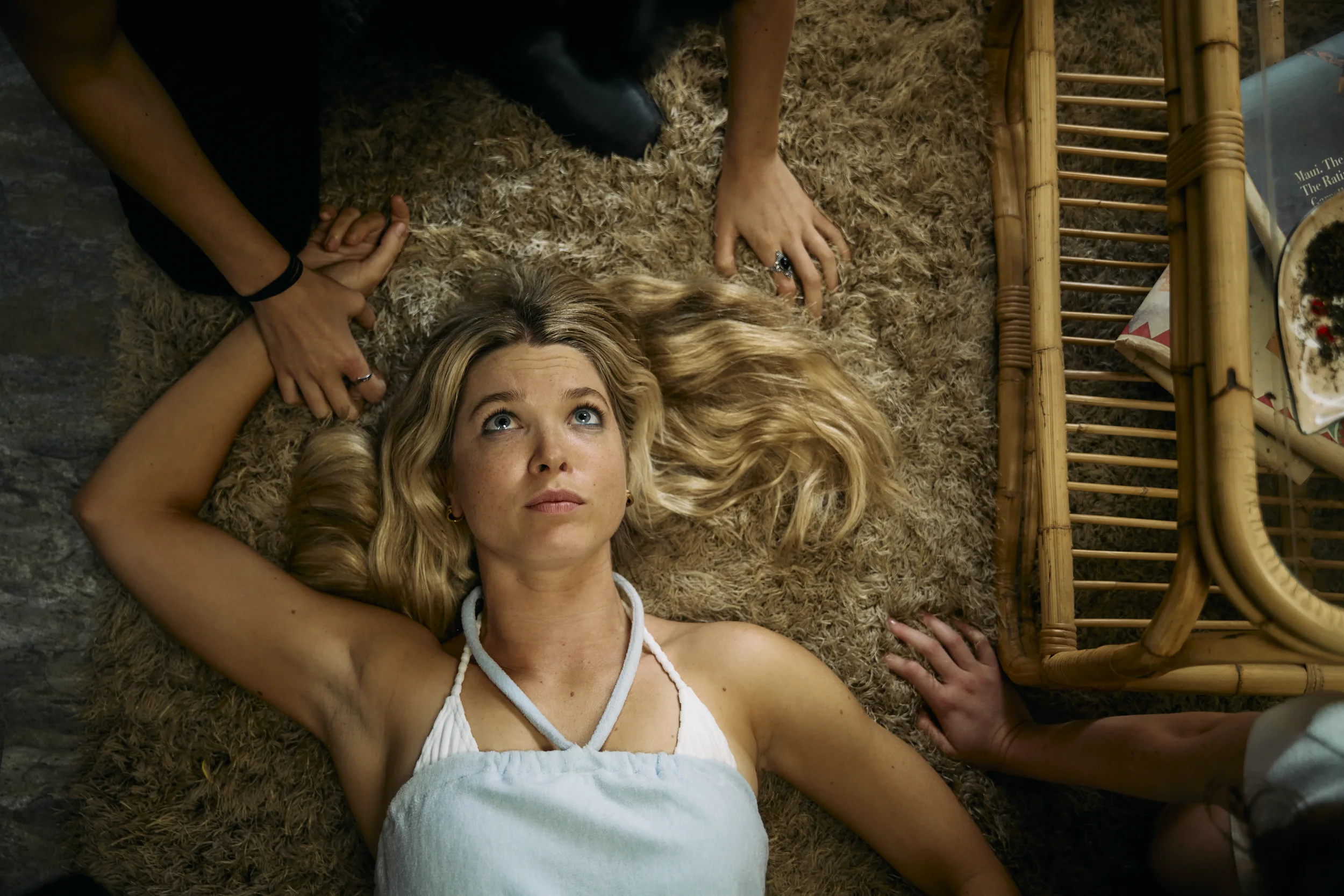
Filmmaker Bari Kang discusses Itch!, from its practical gore and zombie influences to filming in his own NYC store and directing his daughter.