
Los parecidos: A Tribute to Rod Serling’s ‘The Twilight Zone’
I began watching The Twilight Zone later than many—it wasn’t until my teenage years that we got Syfy (at the time, Sci-Fi Channel) as part of our cable package—but from that point forward, I spent far too many hours holed up watching late-night marathons of Rod Serling’s tales. Safe to say, I’m not alone. There are countless examples of film and television inspired by The Twilight Zone: From Tales from the Darkside, The X-Files, and Black Mirror, to The Truman Show; Shadow in the Cloud, or any film by M. Night Shyamalan, The Twilight Zone’s legacy on horror and sci-fi is undeniable. Hidden among these high-profile loose nods to the series, however, you can still find gems that really capture the feeling of the original series. In 2015, for instance, Mexican writer and director Isaac Ezban released Los parecidos, or The Similars, a heartfelt tribute to the show, that calls to mind two episodes in particular: It’s a Good Life and Number 12 Looks Just Like You.

The film takes place on the eve of the Tlatelolco massacre in 1968, entirely in a Mexican bus station, five hours outside of Mexico City. A handful of characters are stranded in the station as an unprecedented storm rages outside, delaying all buses into the city. A weary Ulises (Gustavo Sánchez Parra), anxious to get to the hospital where his wife is in labor, argues with the station attendant, Martín (Fernando Becerril), who insists that he has no control over the situation. This process repeats as more frustrated passengers arrive, only to be stuck while they wait out the storm.
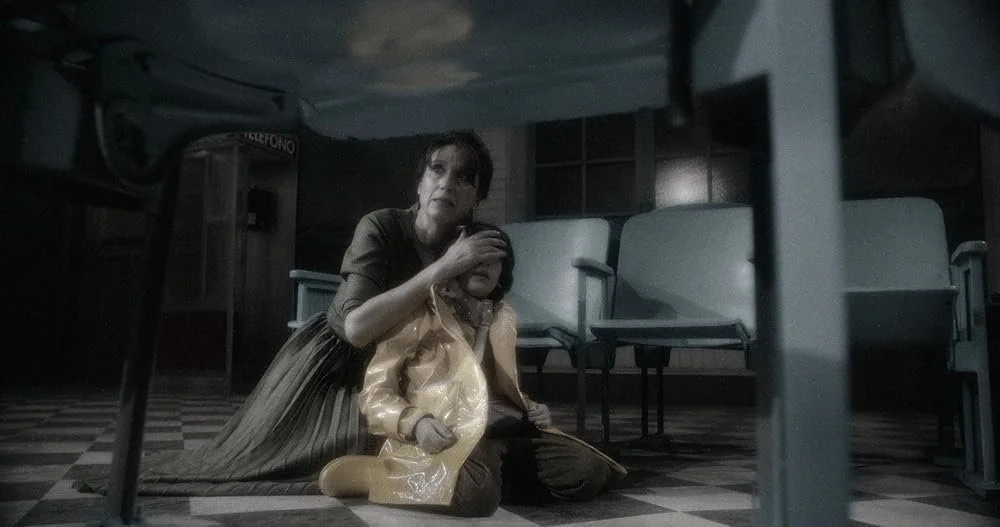
The tension begins to ramp up quickly as Roberta (María Elena Olivares), an older Indigenous woman, shouts at Ulises, while Martín, inside the ticket booth, collapses. In the restroom, Irene (Cassandra Ciangherotti) speaks to Rosa (Catalina Salas), who soon goes into epileptic fits. As the characters argue about what to do and how to handle Rosa’s condition, Martín emerges from his booth, face wrapped in bloody bandages. Upon hearing of Rosa, he inexplicably blames Ulises. It doesn’t take long for others to begin turning on Ulises as well, as the malady taking over the bus station becomes clearer: Slowly, victims are being transformed into the spitting image of Ulises.
The Similars touches on the horrifying consequences of absolute conformity, as in Number 12 Looks Just Like You, as well as plays with the concept of an omnipotent antagonist to challenge its characters, but the movie’s real strength lies in the care Ezban takes to replicate the atmosphere of the original series. Though shot on a brand-new RED camera in 5K, Ezban uses a combination of hard lighting, thick filters, and a little post-production magic to replicate the conditions and imperfections of film stock, even cranking down the color saturation to produce an almost-but-not black-and-white image that calls to mind classic 1960s television, while lending a unique, otherworldly quality to the picture. Ezban even goes so far as to avoid using camera shots that normally wouldn’t be seen in that earlier era.
The result is a film that aches of a bygone era—one that celebrates a shared nostalgia, but doesn’t neglect the more difficult memories of the same time, for example, the events that would take place the next day in Tlatelolco. Using a real-life massacre as a closing twist is a bit uncomfortable, but it was just uncomfortable enough to make me read up on an historical event that I, frankly, knew very little about. The Similars is an exciting and unique ode to the grandfather of all “serious sci-fi,” that I can say with all sincerity takes you on a journey to another dimension; a dimension not only of sight and sound, but of mind. What else could you ask of a movie?
Article written by Ande Thomas
Ande loves the intersection of sci-fi and horror, where our understanding of the natural world clashes with our fear of the new and unknown. He writes about monsters and foreign horror and can also be found over on Letterboxd.

Other articles you may enjoy…
![[Book Review] ‘Crawling Horror: Creeping Tales of the Insect Weird’](https://images.squarespace-cdn.com/content/v1/5d3e481bc5a6e40001b215a8/1766154499255-F0L1IWN8LNDPWPCMZTTL/9780712353496.jpg)

Filmmaker Bari Kang discusses Itch!, from its practical gore and zombie influences to filming in his own NYC store and directing his daughter.