Scenery in Miniature: An Interview with Artist Nikki Norris
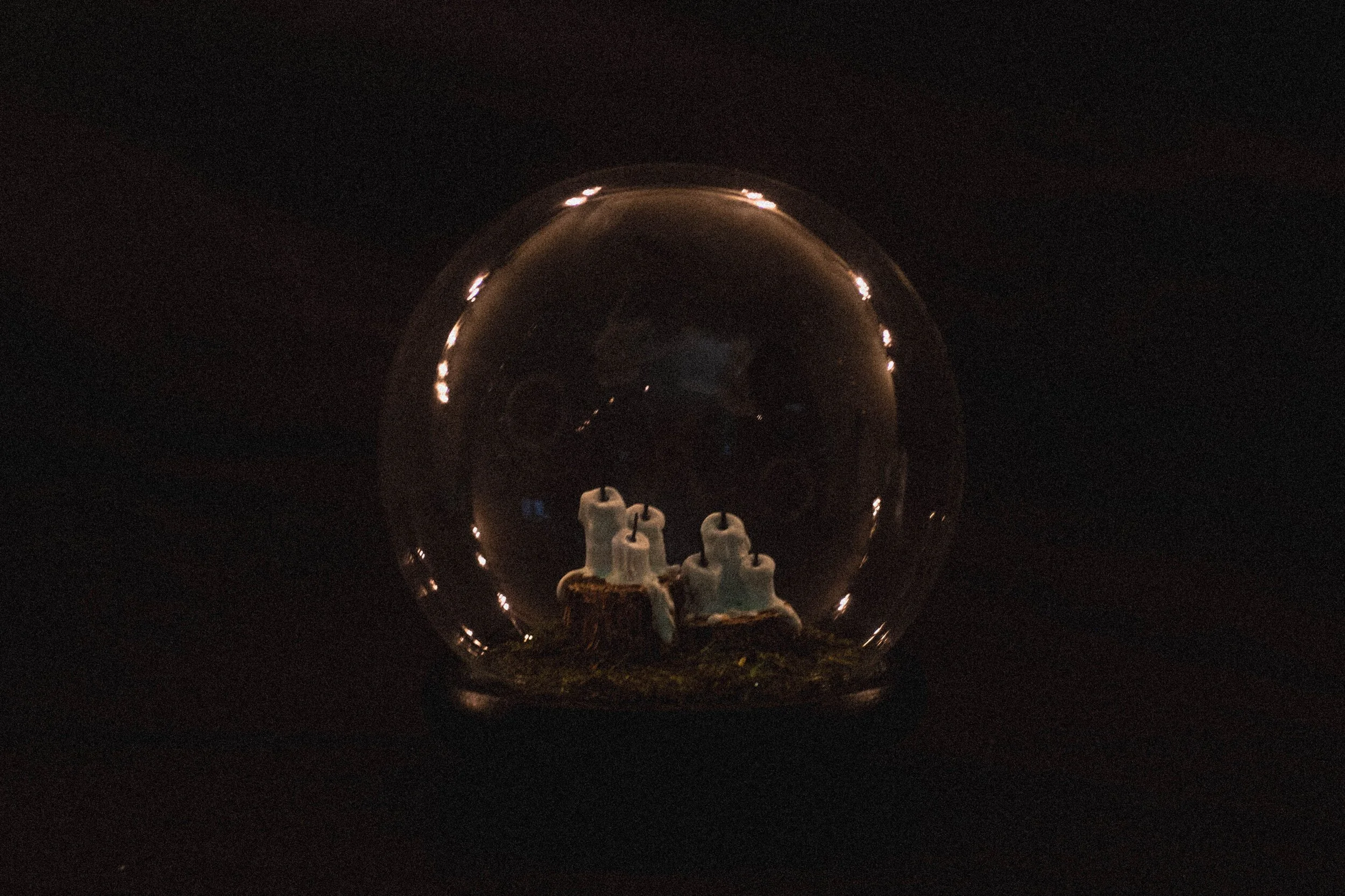
Art by Nikki Norris, Image courtesy of the artist
Spend any amount of time in and around Pittsburgh, and you’ll likely notice a robust macabre community of creatives—those who love horror and create it, those who are fond of things that go bump in the night, and those who start their own businesses to capture the spirit of the spooky in their own unique ways. Nikki Norris, based just outside of the city, is one such artist: Her dioramas capture the spirit of the spine-chilling, while also working with whimsy for her business The Witch’s Hollow.
Norris, born in Houston, Texas, has had a lifetime love affair with the creepy. From growing up visiting cemeteries and hiding fake centipedes in her grandmother’s purse, to a burgeoning creativity that expanded into photography and other art forms during her teenage years, Norris went on to move to the Pittsburgh area at 18, where she now resides with her husband, dog, tarantula, and chickens.
Inspired by her love of the macabre, and drawing from nature, death, film, and music, among other art forms, Norris has branched out from horror-inspired photography to creating dioramas. “I love to daydream and come up with scenes that I then recreate through my art. I aspire to create pieces that evoke a certain atmosphere—whether that be cozy or disturbing—and make my audience really feel the scene,” Norris wrote. I spoke with Norris about her love of the macabre, her creative process, and her plans for the future.
What has drawn you most to horror and the macabre? (And just for fun, what are some of your favorite horror movies?)
Horror has been ingrained in me from a young age—from watching Are You Afraid of the Dark? to spending time in local cemeteries—but there is something quite beautiful about the macabre. Being alive is macabre in a way, isn't it? Realizing you're made of flesh and blood and bones. It's all very gross, fascinating, and beautiful. I do think horror is fun. It's far less scary than real life!
My favorite horror movies are cliché, but they are The Exorcist and Night of the Living Dead. Horror films from the '60s, '70s, and '80s are my favorite! There is just something so magical about them, especially the film and the practical effects. I love campy and ridiculous movies too, like Killer Klowns from Outer Space.
What is your artistic philosophy? (In shooting horror photography, for example, are there certain ideas or feelings you find yourself revisiting?)
I aim to pull certain emotions out of my viewers. In photography, it is often unease that I go back to—what is that creature in the background? Is it out to harm the character in the scene? Sometimes, however, it is the main character of the photo that I want to cause the unease. Say a zombie, a vampire, or a demon. Even landscape photos can make you feel uneasy if done right. Anything could be lurking in the fog or behind the trees.
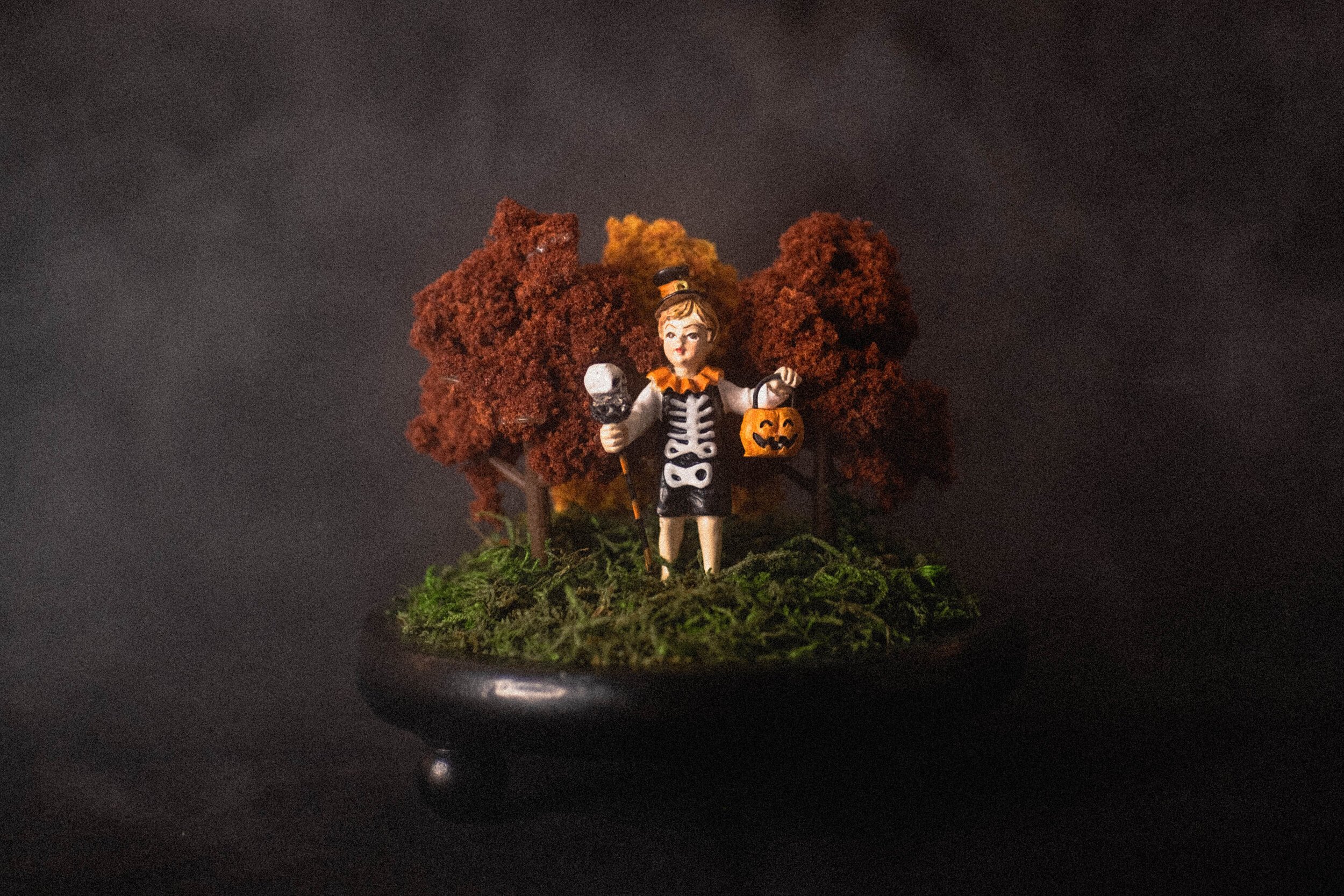
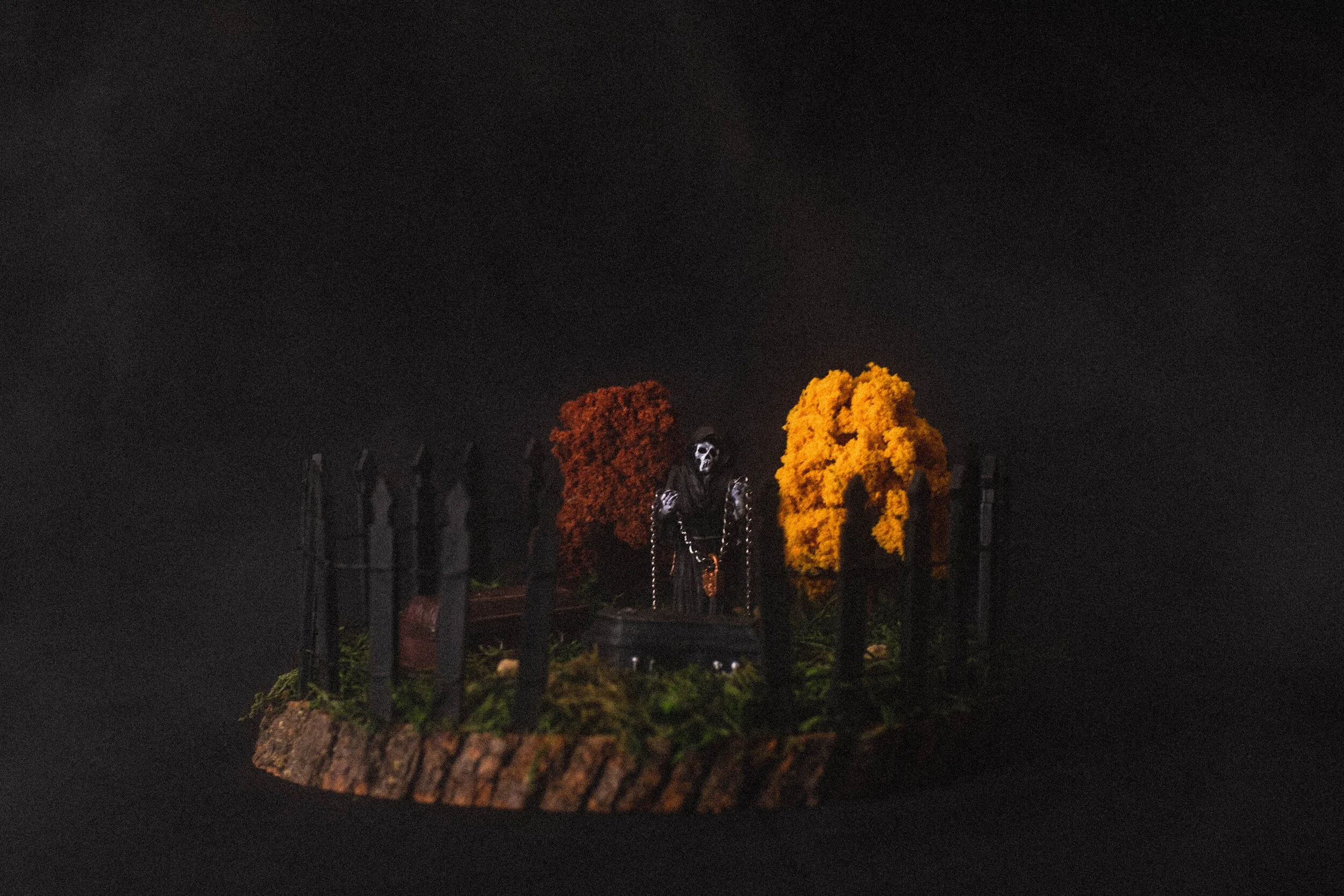
When making a diorama, do you plan a scene in advance? What distinguishes between a cozy scene vs. something more haunting?
I rarely plan a diorama scene in advance. Most of the time, I take a key piece (such as a human or animal figure) and work around that. What would this owl be doing? Maybe he's a wise old owl who loves to read, so he has a little book next to him.
I think it's all in the imagination, really. A cozy-looking scene could quickly become haunting and vice versa. But I do like to lead each scene in a certain direction. A cemetery scene that might normally creep someone out can be made cozy by adding a bench with pumpkins. It makes me imagine sitting there in the cool fall air, just enjoying life. Nothing creepy about that!
Are there certain places you visit for inspiration? (e.g. Allegheny Cemetery, etc.) Do you aim to tell a story with diorama scenes? (Maybe something for the viewer to uncover as they keep looking?)
I'm more likely to visit film and music for inspiration, though I do often go for walks when I want to think about projects. I most often just walk around my property. I really enjoy being in nature and it can be a big inspiration for me as well—the way the sunlight filters through the trees, orange leaves falling through the sky, squirrels rustling in the brush—I like to notice details like this and then bring them to life in another way through my work.
I definitely aim to tell stories. I like to think that viewers would imagine the scene coming to life. Perhaps they imagine fog rolling through the woods, birds chirping, or the main character of the scene moving around. I do like to hide details sometimes, such as mushrooms deep in the forest, or a raccoon hiding behind a tree.
What are your plans for the future with your work? (Are you focusing on dioramas for now, or are you planning to expand to something else?)
My work is ever-evolving! I love dabbling in new things. I am really enjoying the dioramas for now—they're a lot of fun—but I would like to expand my photography portfolio. Maybe I will shoot some more models soon. I think it would be so cool to have a studio where I could have elaborate sets, but that is a distant dream.
This interview has been edited for length and clarity.
Interview by Laura Kemmerer
Laura tuned into horror with an interest in what these movies and books can tell us about ourselves and what societies fear. She is most interested in horror focused around the supernatural, folklore, the occult, Gothic themes, haunted media, landscape as a character, and hauntology (focusing on lost or broken futures).

![[Movie Review] Avalon Fast’s “CAMP” is the Latest in the New Wave of Transgressive Filmmaking](https://images.squarespace-cdn.com/content/v1/5d3e481bc5a6e40001b215a8/1782401219629-WQRPE1S2P04BE4SNHMJ2/mPAUB3_Q.jpeg)
After a traumatic labor, Saga wakes to the cries of her newborn son in his bassinet on the other side of the room. While most watching will likely pick up on baby Kuura’s negative reaction to sunlight—I couldn’t stop thinking about the pain it would have caused Saga to get up and gather her son herself. The irony of thinking about her struggles is further amplified by the cries and almost animalistic moans and later-described hairy body that are all chalked up as “normal” and that the couple has a perfectly healthy babe. After all, everyone insists that every baby and every pregnancy… is different.