
WSB x Moving Picture Review: Cuckoo
“The hedge-sparrow fed the cuckoo so long that it had it head bit off by it young.” —King Lear
The highly anticipated Cuckoo opened this weekend, adding to the heap of movies that are proving 2024 to be a great year for horror. Written and directed by Tilman Singer, the story follows protagonist Gretchen (played by Hunter Schafer) as she moves with her father, stepmother, and younger half-sister to a resort in the German Alps.
Cuckoo was wise to keep its trailers ambiguous. Fans had an inkling that the place and people running it were up to something sinister, but we were not necessarily prepared for the dizzying spiral that Cuckoo molds. As the family moves in, the resort owner Herr König (Dan Stevens) and the neighbor Dr. Bonomo (Proschat Madani) welcome the family in such unsettling manners that one has to wonder if it will be possible to suspend your disbelief for the entire film. It is, because attempting to untangle the strangeness of Cuckoo is more difficult than not.
It is quickly established that Gretchen is the black sheep of the family. She’s ostracized and discarded as an unruly teenager, one whom we find out just moments later is grieving a significant loss. Her sister Alma (Mila Lieu) seems to be the lynchpin of Gretchen’s struggles as the two of them battle for attention from their father. I’m being intentionally broad here so as not to give away too much because Cuckoo is best experienced blind, but it’s important to note their estranged sisterhood is an unexpected delight in this escape-the-terror flick.
While it's no secret that childbearing and motherhood are ripe grounds for horror, Cuckoo takes the monstrous feminine to a new level by intertwining, overlapping, and distorting just one part of a woman’s long and complex lifetime. This hyperfixation of what a body is presumably able to do is an iteration of a theme that pervades the entire movie, from title to blood splatter, to the final scene. Interestingly, there is as much emphasis on child-raising as there is child-bearing here, a blunt confrontation of what it means to grow and protect something.
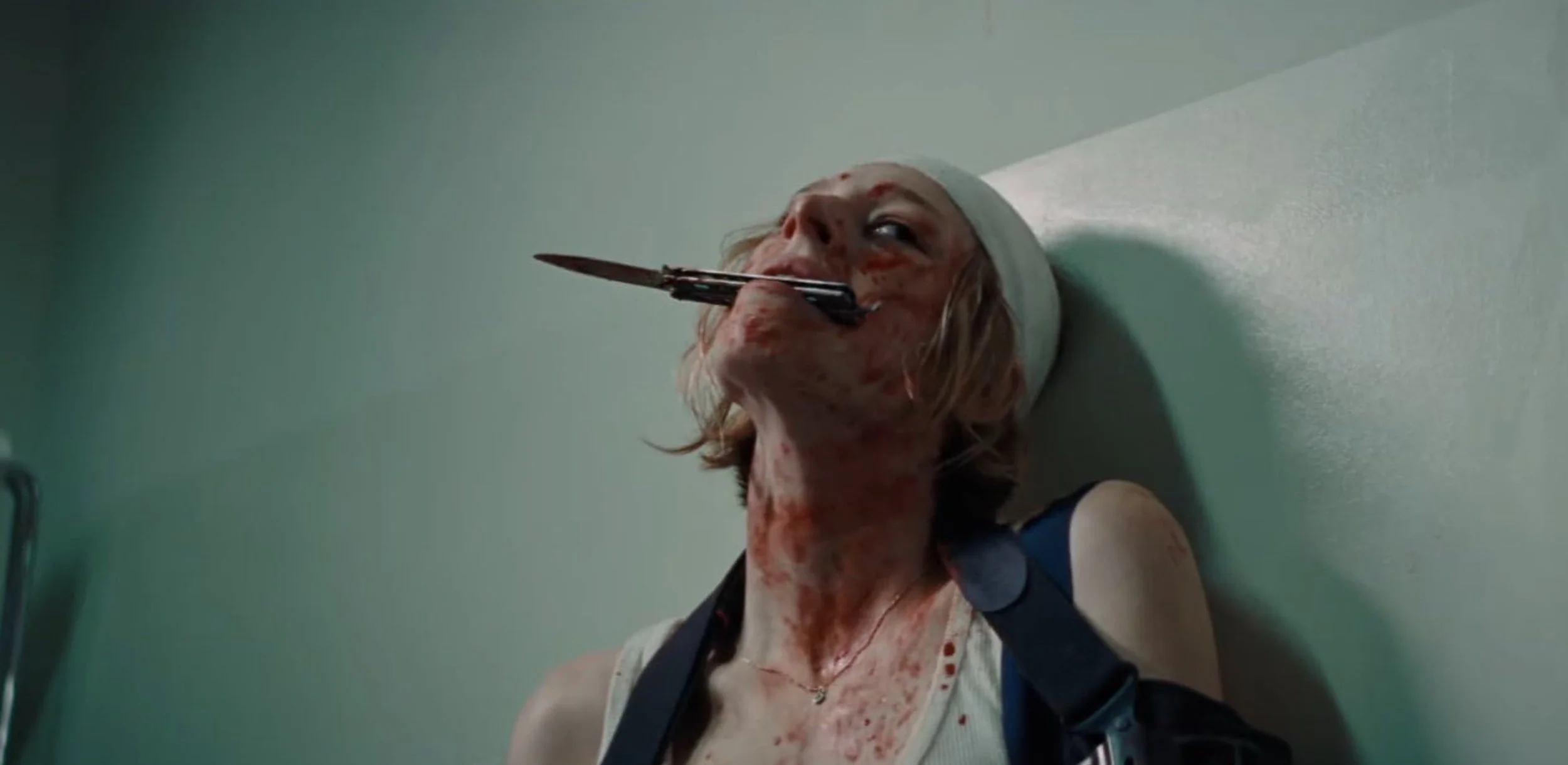
The movie struggles in some of its dialogue with inopportune moments carved out for telling rather than showing, while in other places, the opposite is true. In either case, however, neither is clear enough to help the audience feel one way or another. This is confusing, which conveniently adds to the complicated and layered plot, but unfortunately, it doesn’t read as intentional. These moments are quickly surpassed by the plot rambling toward the finish line, leaving holes in the development of the villainous characters. Likewise, the makeup and styling of the monstrosity is also disappointing. When we do get a reveal of the figure chasing Gretchen on her bike, it barely looks afflicted, which could be intentional, but doesn’t read as so, and therefore the film is forced to rely on other design choices to carry the horror: sound and set.
Few modern horror movies make use of sound design as it is most effective—another means to convey the narrative. Rather than an eerie backdrop to an already disturbing image, Cuckoo has developed its own signature sound that is crucial to the plot. I wish it had been paired with a scarier reveal, but even so, it’s the first film I’ve seen in a long time that may give Psycho a run for its money in this department. The backdrop of Cuckoo is equally stunning. The interiority of the resort is all clean lines and cool colors, creating a misleadingly calm and sterile environment. Yet, nothing of the plot and characters aligns with this imagery making for an effective contrast that mirrors Gretchen’s internal emotional state and the harsh reality in which she was dropped.
Schafer is a star. Her performance of a gritty, restless teenager turned heroic final girl is effortless. Part coming-of-age story (for both daughters), the plot of Cuckoo moves through her character as smoothly as water. We are never guessing her actions or motives. Every part of Gretchen is recognizable to anyone who’s experienced girlhood, and this is what carries the film from start to finish. She is vulnerable yet strong, sometimes too trusting, self-sufficient, lonely, horny, frustrated, afraid, sad, and above all else, resolved to gain her own freedom. By now we are used to the final girl taking her last swing at her killer. A perfectly timed, perfectly aimed shot that is a culmination of her pent-up rage, grief, and exhaustion. The final blow. Cuckoo takes it one step further with long, hovering shots of Gretchen staring at the horrific in the face. She looks it in the eye and then, unflinching, continues her plan. It’s not sociopathic in the ways that some action movies handle this type of grit. No, Gretchen is all determination, and she is fearless. Her slow and steady repetition of “I don’t think so” to the men arguing over her choices as they brandish guns in her face is equally terrifying and empowering.
In short, Cuckoo is as unique a film as its trailer suggests. Falling in line with the likes of Hereditary and Bodies Bodies Bodies, it is a movie that tackles expansive themes of sexuality, gender, family, and the nuances that an individual is forced to navigate while growing up in an increasingly unfamiliar world. Don’t sleep on Cuckoo.


WSB x Moving Picture Reviews is sponsored by the Pittsburgh Moving Picture Festival. The Pittsburgh Moving Picture Festival celebrates both the art of cinema and the rich motion picture exhibition tradition of the City of Pittsburgh. Our goal in this series is to highlight new and upcoming genre films and, wherever possible, to support local, independent movie theaters in the process.

Article Written by Theresa B
Theresa writes about the intersection of art & anthropology and gendered horror. She loves demonic possession, satan, and can be found on Letterboxd.

Other Articles You May Enjoy…


Revenge asks very little of the reader. Establish a wound. Point the wounded party toward whoever made it. We handle the rest quickly because the arithmetic feels good, and we have been practicing it since we were old enough to be treated unfairly. Scott Hawkins gives you that arithmetic early in Blacktail, then spends the rest of the book taking the calculator apart on the table in front of you.