Watching Ti West's ‘The House of The Devil’ on VHS
When we talk about the movies we watch—apart from whether we saw it in a movie theater or at home—we rarely dwell too long on the format we experienced. Did we stream it on a subscription service? Was it ad-supported? Was it on our phone or our laptop? Blu-Ray or 4K UHD? What was the atmosphere in the room? Though these parts of the experience are so easily overlooked, they can play a vital role in how we feel about a movie where sound and ambience play as critical a part in engaging us in the film as the spectacle on screen does. Most of the time, we’re looking for the biggest screen; the clearest picture; the most immersive sound possible to bathe ourselves in the world of the film. There are other times, though, where we aren’t chasing that escape into another world or story; rather, what we’re after is the actual feeling of watching a movie.
Horror fans seem particularly prone to this feeling—perhaps that’s one of the reasons why modern horror films so frequently become period pieces to the decades in which they were made. We love the nostalgia of watching movies set in times that we remember all too well.
One of the finest filmmakers at capturing periods-past in his films is Ti West, director of X (2022), Pearl (2022), and the upcoming MaXXXine (2024). Long before he tackled the grindhouse legacy of the 1970s or the golden age of Technicolor films, West made a Satanic-Panic-set thriller called The House of the Devil (2009), which I wanted to watch in the most authentic way possible—on the limited edition VHS release of the film from Gorgon Video.


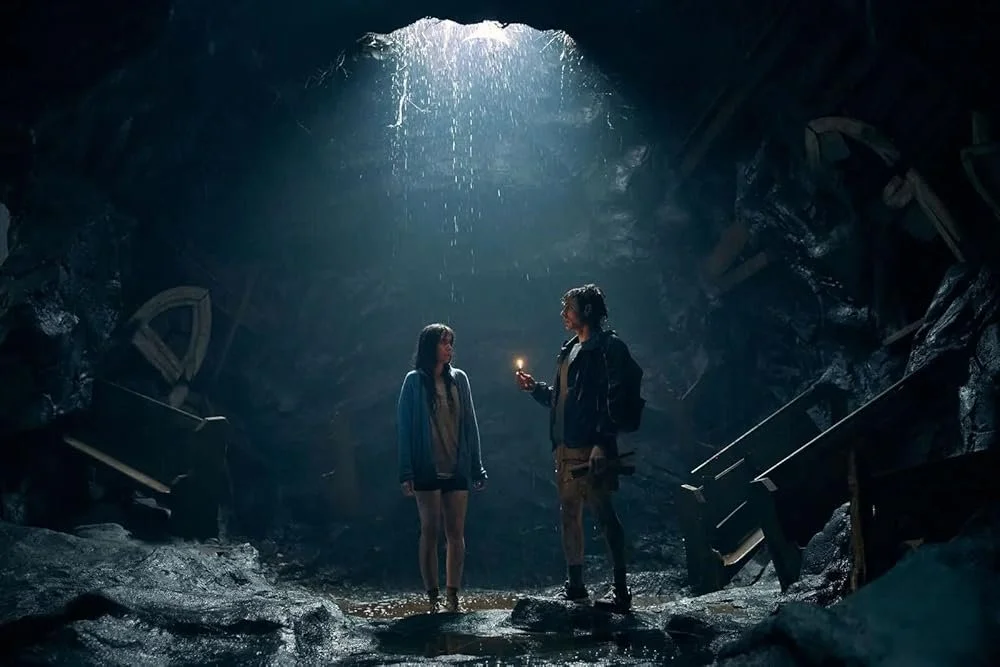
House of the Devil, 2009 Image via IMDB
Watching Movies the Old Way
Choosing to watch a movie on VHS—especially one made well into the rise of Blu-Ray and streaming, like The House of the Devil was—is never an exercise in quality or even convenience. When the VCR I have hooked up to my projector failed to play, I had to drag out an old TV/VCR combo to sit on the floor, and the experience was all the better for it; there’s something more intimate that goes beyond the clarity of the images or the sounds, something that feels personal between you and the filmmaker and the actors on screen.
Part of it, I’m sure, can be attributed to the reframing that has to take place in the transition from film to video cassette. Since most televisions before the plasma and LCD eras were in boxy 4:3 aspect ratios, nearly all movies had to be reformatted to account for the reduced real estate. Generally, this meant cutting off the sides and zooming in to fit the TV screen, making the image tighter. In The House of the Devil, it becomes most apparent early, when Samantha (Jocelin Donahue) is first exploring the house. The walls around her seem to swallow her. Every close-up of her face is magnified, the grain of the video softening the shadows around her. There’s more, though.
Maybe as horror fans, we’ve been conditioned to fear the staticky imperfections of video. From video-centric plots in movies like Videodrome (1983) and The Ring (2002), to countless found footage classics that rely on the aesthetic like the V/H/S franchise, no home video format has had an impact on horror like VHS has. In fact, it’s gotten to the point where we find ourselves in a strange feedback loop—video brought horror home to the masses, inspiring a generation of filmmakers to make it a focal point to their films, setting the stage for fans to long for the aesthetic in films that never had it to begin with.
The House of the Devil, though, deserves special dispensation in that category. For this film, like very few others, watching on an outdated, inferior format might actually enhance the experience of the film. Ti West’s mastery of the period piece extends beyond the other countless homages to '70s and '80s horror. The sets, the props, the hair, makeup, and soundtrack are all on point, of course. What sets West’s films apart is how he structures his films. The shooting and editing techniques he uses, his use of establishing shots and transitions, down to the tropes are all crafted to work in favor of the film’s period. For instance, the film’s use of an opening statement and its “based on true events” tag, harkens back to the infamous intro to The Texas Chain Saw Massacre. Its story of Satanic cults and ritual abuse recalls films like Rosemary’s Baby and The Omen, whose fictional depictions of ritualistic violence were taken all too seriously in the moral panic of the 1980s, and, though it’s not often included among other babysitter slashers like Halloween and When a Stranger Calls—especially the latter as The House of the Devil, like When a Stranger Calls, can be seen as a variation of the “babysitter and the man upstairs” urban legend.
Crafted as it is from the ground up to be as period-authentic as possible, Ti West probably never imagined that The House of the Devil would be enjoyed on an outdated format as functionally flawed as VHS. There’s just no benefit to be had compared to the myriad other ways we can watch movies today. That is—until we realize that it isn’t the movie that’s giving us the nostalgia we crave—it’s the act of watching it, itself. It takes us back to movie nights with our families under pillow forts and mountains of popcorn. It’s a friend, at a sleepover, sneaking an R-rated horror movie into the basement after their parents go to bed. It’s the whir of the VCR spinning up to rewind the Blockbuster rental you just brought home because the last person hadn’t done it for you, and it’s the endless jamming of the “tracking” buttons on the remote to fix the indecipherable image on the screen. There’s a comfort in recreating the physical acts that enamored us to film in the first place, even if it comes at the expense of our 4K screens and virtual surround sound bars and premium streaming services. Sometimes, it’s worth taking a step back in time.
Article by Ande Thomas
Ande loves the intersection of sci-fi and horror, where our understanding of the natural world clashes with our fear of the new and unknown. He is an independent member of the Society for Cinema and Media Studies and a supporting member of the Horror Writers Association. He writes about monsters and foreign horror and can also be found over on Letterboxd.

Other Articles You May Enjoy…

Filmmaker Bari Kang discusses Itch!, from its practical gore and zombie influences to filming in his own NYC store and directing his daughter.