
The Horrors of the Human in ‘Midnight Mass’
Two great vampire series graced our screens this year. The first, a Stephen King adaptation called Chapelwaite, based on his short story Jerusalem’s Lot, premiered on Epix, while Mike Flanagan debuted his third Netflix series, Midnight Mass, which itself bears a lot of inspiration from King’s works, though none directly. Jerusalem’s Lot, it should be noted, is one of the most rewarding short stories I’ve ever read, drawing on the lore already established in ’Salem’s Lot, King’s homage to Bram Stoker, and adding his own eldritch twist by way of H.P. Lovecraft. It’s an eclectic stew of influences that I couldn’t wait to see adapted for the screen. As it turns out, however, it was Mike Flanagan’s work that ended up being everything Chapelwaite aspired to. Midnight Mass is a masterfully crafted treatise on faith and forgiveness that uses its characters with more nuance than the Epix series, and as a result, is much more relatable on a personal level. The horror in Midnight Mass isn’t its vampire, though that is horrifying as well, but in its people—that an entire town of good, well-meaning families could be so easily convinced to turn on each other and their humanity. It’s a difficult but necessary pill to swallow in a post-COVID, post-QAnon world.
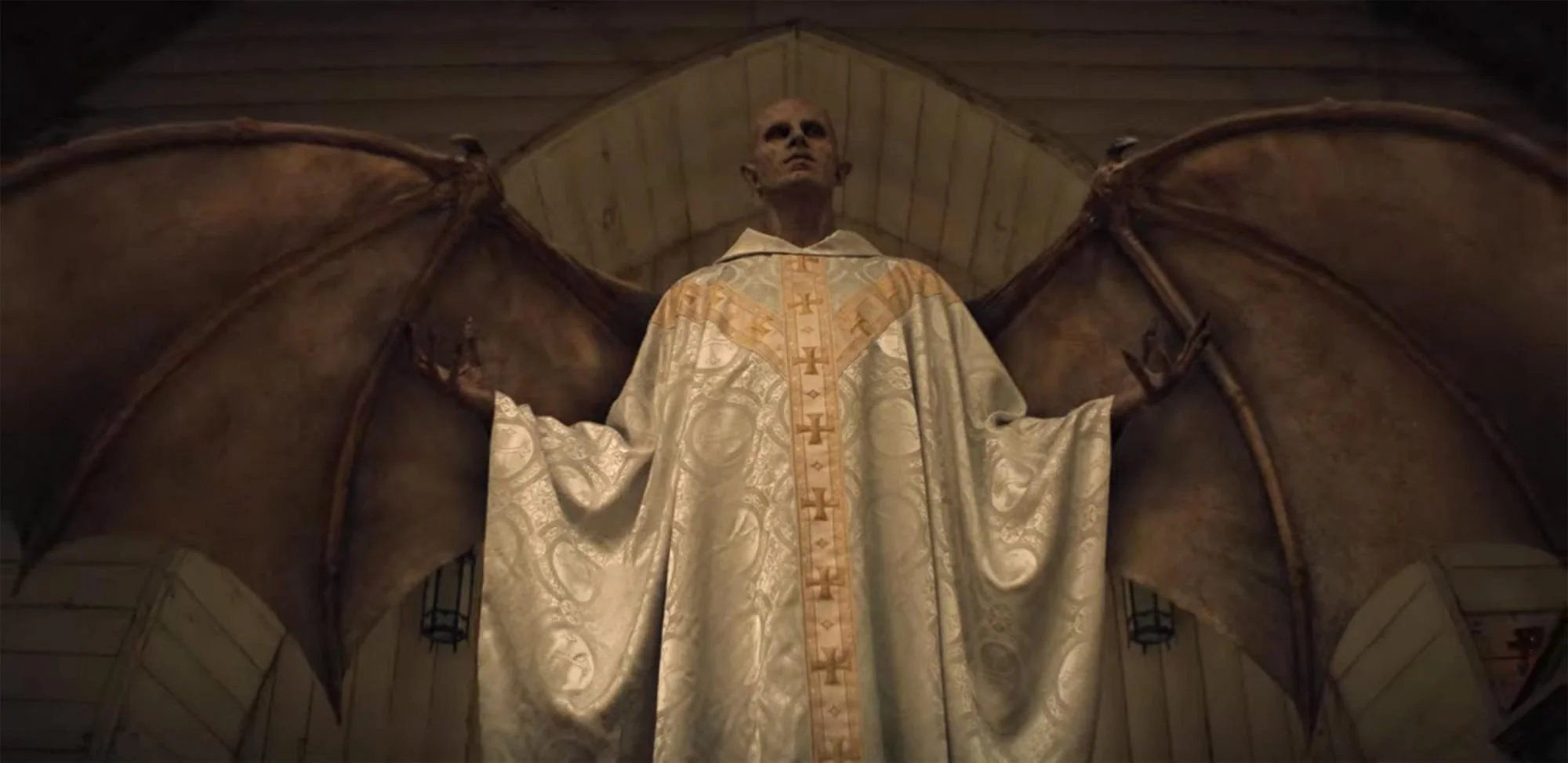
The series takes place on Crockett Island, a dying fishing settlement just off of an ambiguous “mainland,” though, if I were a betting man, I’d place it somewhere in New England. The town has been hit hard in recent years by fishing restrictions and quotas, not to mention a nasty oil spill, and so the quiet town decays as families move away to find better opportunities. Despite this, the narrative focuses primarily on a pair of lambs that once fled the flock, but have since returned—Erin Greene (Kate Siegel), who has taken over her late mother’s teaching position at the local school, and Riley Flynn (Zach Gilford), who, after seeing moderate success in the tech and finance worlds, is forced to move back in with his parents after serving four years for the murder of a young girl while driving drunk. The characters that fill out the town are refreshingly rich with their own stories—Bev Keane (Samantha Sloyan) is the zealous church administrator who seems to have her hands in all of the community’s doings; Sheriff Hassan (Rahul Kohli) and his son Ali (Rahul Abburi) are new to the island and at a disadvantage being the only Muslims in a deeply Catholic town; Joe Collie (Robert Longstreet) is the town drunk and pariah, after his “hunting accident” left Leeza Scarborough (Annarah Cymone) paralyzed and confined to a wheelchair; and of course, Father Paul (Hamish Linklater), the frighteningly charismatic preacher who must stand in for the church’s 80-year-old monsignor, who is recovering in the hospital after over-exerting himself on a sabbatical to Jerusalem. All of these stories and more are vital to the show’s identity, as each is given ample time to express their own trials and tribulations, beliefs and doubts—a feat that is nothing short of astounding, given the brief seven episode slate of the series.
There’s something so grounded about Crockett Island and its townsfolk. On the surface, it’s easy to recognize a number of archetypes in these people, but Midnight Mass parodies none of them. Every single character is identifiable as a real person, as real as anyone you or I know. Even Bev, overzealous as she is, has a firm basis in reality. At first glance, Bev comes across as slightly cartoonish—inspired, no doubt, by several characters in Stephen King works, like Carrie and The Mist—her homely appearance, prudish attitude, and air of superiority over other townspeople outs her as a potential villain, and rightfully so, but underneath the cliches lies a darker truth. Every pointed comment Bev makes at someone else’s expense, every veiled attack and every generalization or rationalization, every quote taken from scripture out of context, every single one—is one I’ve heard in real life, in real dialogue, in real churches. Bev Keane may be an amalgamated form, a concentrated stand-in for how the “outside world” views the Church, but it isn’t unwarranted. She represents the political gamesmanship that many millennials have cited as one of their main reasons for leaving the Church. She scratches out her power under the guise of charity and goodwill, confident that her authority has been granted by Providence. Cruel as she is, everything Bev does is from behind a tight-lipped smile, making her the most frustrating kind of villain and one, exaggerated as she is, that we have all known at one point or another.
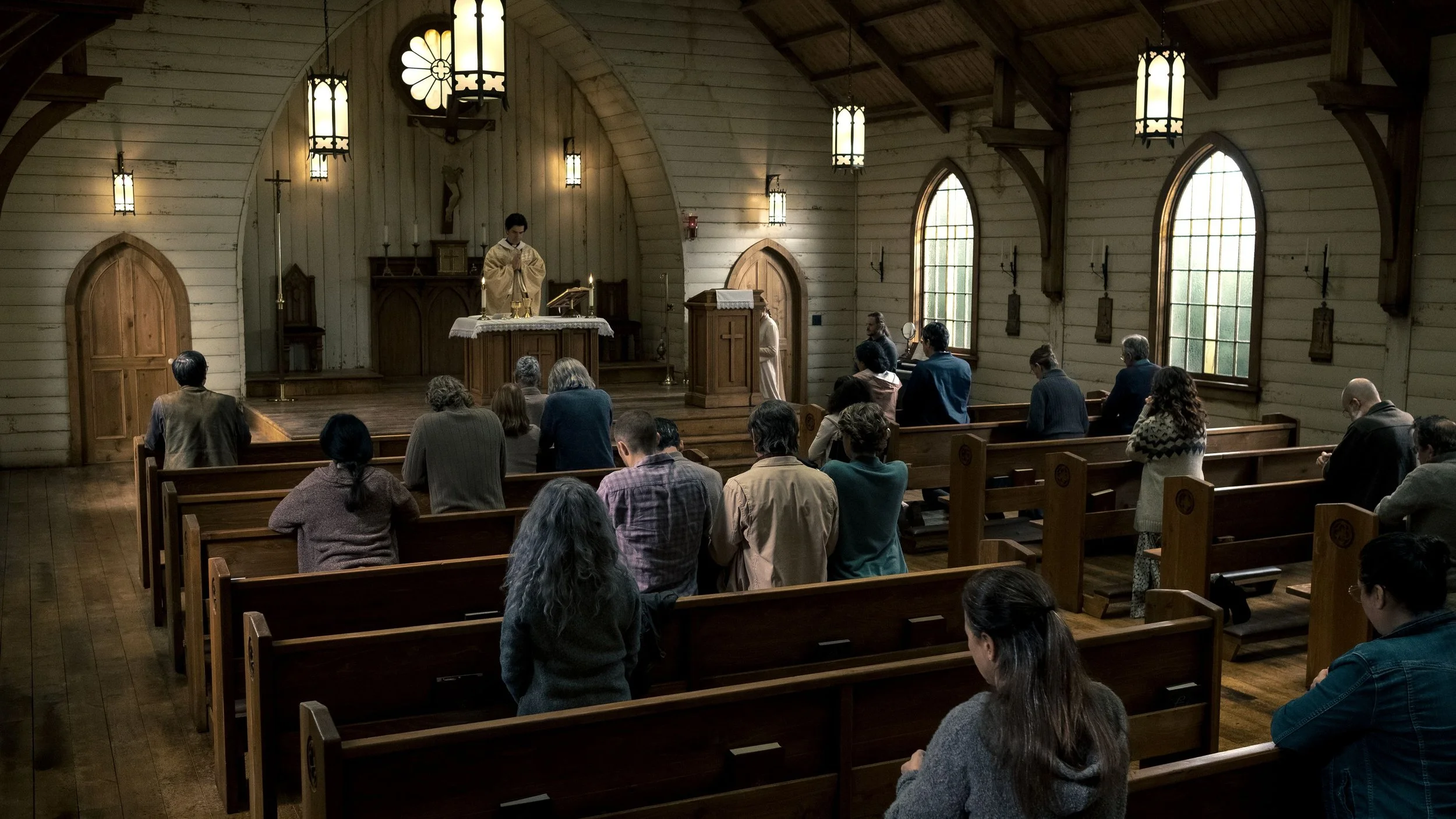
It’s this relatability that permeates Crockett Island, or the “Crock Pot,” as they call themselves. As each character takes their turn in the spotlight, we’re drawn into the pain of the situations they’ve been dealt, and to be sure, every single one of them harbors pain—whether it be regret, or resentment, or guilt. Riley, for instance, doesn’t go a single night without seeing the ghost of the girl he killed: red-and-blue emergency lights flashing in the shards of glass embedded in her road-rashed skin. Meanwhile, his mother struggles to make their home feel normal again, even as his father grapples with the resentment he feels for being forced to shoulder the burden of Riley’s sins, a burden that he feels responsible for as the family’s patriarch. In one of the series’ most powerful scenes, Leeza confronts Joe for the first time since his bullet severed her spine. In a heart-wrenching monologue, she wrestles with her call to forgiveness and how easy it is to harbor hatred for the man that stole her life from her. As for Joe, he is desperate for a way to forgive himself for the anguish he caused, unable to find it in the drunken squalor he’s confined himself to. The Crock Pot yearns for something to believe in—something that will ease their worries and give them reason to be optimistic about their futures, and Father Paul, it appears, is the blessing they all need.
When the Father arrives, he’s met, at first, with trepidation. After all, Monsignor Pruitt has stood at the pulpit for as long as anyone in town can remember. Soon enough, though, they warm up to the newcomer. He’s kind, well-spoken, and knowledgeable of his congregation. His sermons lift their spirits, making them feel proud to be members of such a tight-knit, hardworking community, and strengthen their faith that God has plans for the island. When his promises are affirmed by the miracles that begin taking place, the town seems to rally, appearing more alive than it has in years. But upon closer inspection, if you cast a more discerning eye on what Father Paul preaches, a sinister agenda starts to take shape. As he ingratiates himself to the congregation, Father Paul’s sermons become increasingly charismatic and, if you are looking closely enough, more extreme. Most importantly, though, even as you watch this taking place, it’s shockingly easy to find yourself empathizing with the town as they fall under his spell. Father Paul is a very affable character. There’s nothing inherently evil about him. On the contrary, most of what he says, especially when one-on-one with other characters, is sage advice. He clearly cares for the people of Crockett Island, which makes the rapid shift to extremism all the more devastating because by the time anyone realizes it, it’s already far too late.
It’s sort of a half-hearted joke at this point that Mike Flanagan loves his monologues and Midnight Mass is certainly no exception—in fact, it may be his most heavily laden script yet. But even in the melodramatic trappings of these lies so much natural truth that they hardly feel scripted at all. Very little of Flanagan’s dialogue is used to move the story forward, at least directly. Much of the plot moves around the characters, while their conversations are mostly used to convey interiority. The clear exceptions are, obviously, Paul’s sermons. After his introduction, around Lent, Father Paul takes a benign, if somewhat bold, approach to addressing his new congregation. He sprinkles a few admonitions and chastisements into his Easter messages, wondering aloud why the pews aren’t always as full as they are around the holidays. He speaks directly to the town’s woes and encourages them by praising their collective occupation as that of Jesus’s disciples. His grooming occurs gradually. As they become more comfortable around him, and especially as they begin to see tiny miracles take shape, Father Paul inspires loyalty in his flock. The combination of his charisma and charm with seemingly inconsequential miracles—inconsequential enough, in fact, that the characters don’t even mention them amongst themselves—prime them for the larger revelations to come. By the time Father Paul has Leeza rise from her wheelchair, the groundwork has been laid for, as Bev Keane puts it, a “full-blown religious revival.”
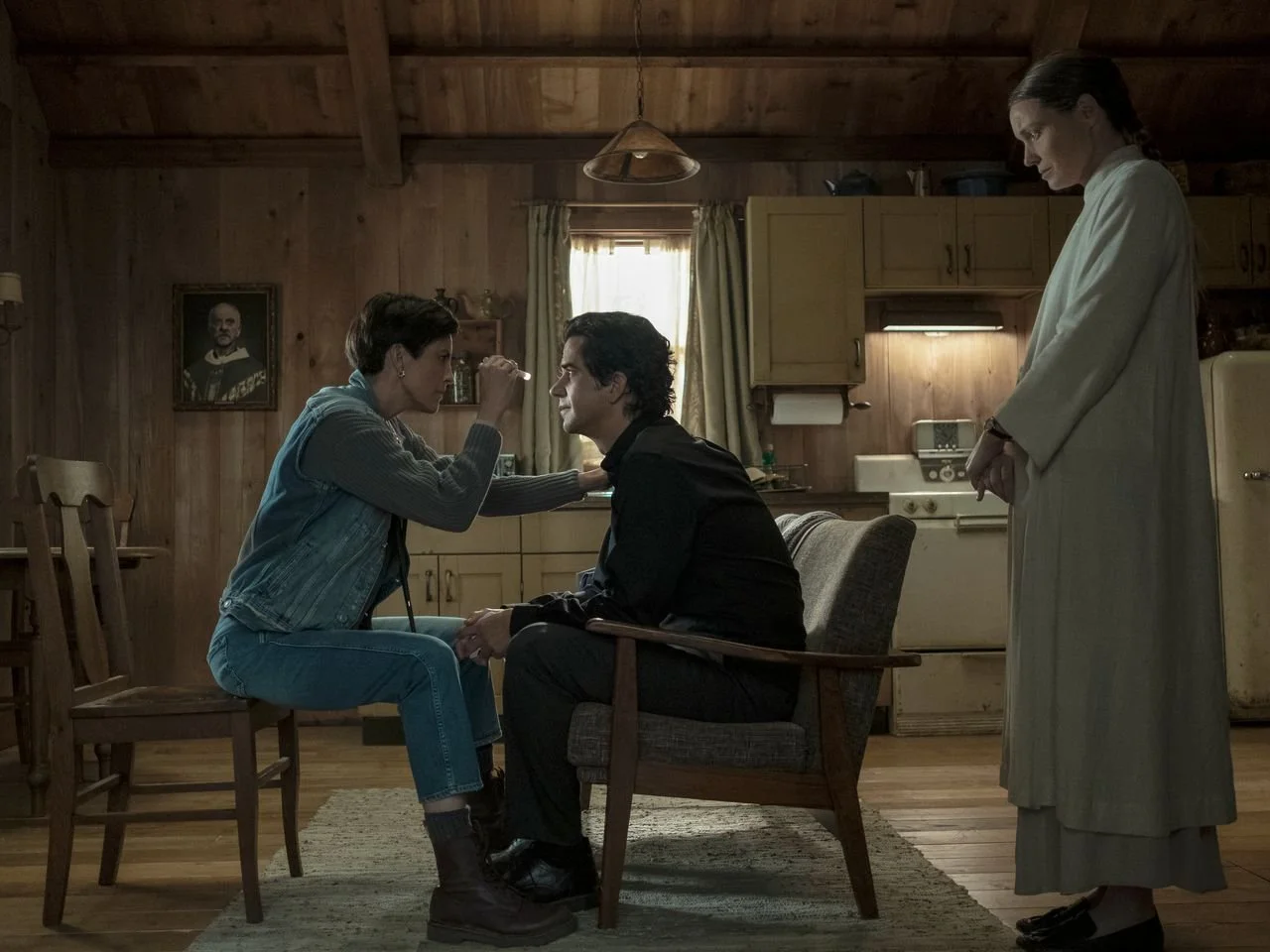
It is, of course, around this time that Bev begins to shift into overdrive, anointing herself as Father Paul’s confidante and herald. She becomes bolder in her assertions and almost rabid in her defense of Father Paul’s plans. What’s most alarming here is the deftness Bev shows for manipulating scripture to justify every single immoral act, buoyed by the faith the town already has in Paul. Hesitant as they are, no one dares spar with Bev with regard to her Biblical knowledge. Almost overnight, an intelligent, well-reasoned community became beholden to a religious zealot. It isn't necessary for her to be responsible for any of the miracles they’ve witnessed. Nor is it apparent that she even speaks for Father Paul. It’s simply enough that she displays enough confidence and control that she keeps them at bay while Paul prepares the masses for his “angel.” In this way, Bev eclipses Paul as de facto leader of the church. Having already been sufficiently placated by Paul’s gentle demeanor and feel-good messages, the town is left defenseless when met with Bev’s decisive ruthlessness. The tactic is one commonly used in cult indoctrination: First, the members are lulled by the love and sense of community before realizing they’ve willingly given up control.
The meekness with which the town of Crockett Island succumbs to Bev Keane’s extremism highlights Flanagan’s biggest strength in Midnight Mass. Taken on its own, it seems like the series would be primed to be an anti-religious diatribe, a blistering condemnation of the Church and its followers. And if it were only that, it would still be one of the greatest vampire stories of all time. Midnight Mass isn’t that, though. Through his characters, Flanagan makes strong arguments both for and against the Church, for and against the existence of God. Neither side is painted as inherently flawed. Families like the Flynns and the Scarboroughs each have different but equally valid reasons for their beliefs, as do Riley, Erin, and Hassan. And because each of these gets their chance to articulate their truths, without condemnation, Flanagan is able to bring each of them into focus and grant them all personhood. By giving a platform, not just to theism and atheism, but to the various reasons different people explore those beliefs, Flanagan is able to approach one of the most hotly divisive of topics, and he does it without preaching.
Midnight Mass is a terrifying series. It has a brilliant monster, loads of blood, and plenty of death to go around. The real terror, however, grips us by showing us how personal, how difficult, and how necessary forgiveness can be. It’s scary because it shows us how easily blind faith can be used to twist vulnerable people to do monstrous things. Most of all, though, it’s scary because it shows how fragile we are—both physically and emotionally—and how critical our support systems can be, particularly in times of great upheaval. I also meant it when I said that it is one of the greatest vampire stories of all time. Watch it—you won’t be disappointed.

Article written by Ande Thomas
Ande loves the intersection of sci-fi and horror, where our understanding of the natural world clashes with our fear of the new and unknown. He writes about monsters and foreign horror and can also be found over on Letterboxd.


Filmmaker Bari Kang discusses Itch!, from its practical gore and zombie influences to filming in his own NYC store and directing his daughter.