
Slayings in Suburbia: A Review of YOU, Season Three
Spoilers ahead!
Released just last month, Netflix’s psychological thriller You continues to bring its dark, stalker-narrated style to the screen for its third installation. Picking up right where season two left off, we see Joe (Penn Badgley) struggling to adjust to suburban life with his wife, Love (Victoria Pedretti), and their newborn baby in an upper-class suburbia just outside of San Francisco. Although Joe is now a co-parent and seems to be making the effort to change from his murderous past, there is something about his internal conflicts that kept me watching, just as in previous seasons where he was embarking on a new interest. While some people might sell their soul for the house to start a family in a financially-stable situation, all of Joe’s internal monologues reveal vague disgust and ultimately, fear. While the paternal instincts have kicked in and Joe feels the need to protect his son Henry and their makeshift family—though simultaneously feeling caged behind a white picket fence—he struggles the most with finding a connection and dealing with his new responsibilities.
And maybe, that’s what viewers kept watching for, too. Could it be that watching Joe struggle—a victim of his own doing and his own inability to kill Love—on the other side of his particular escapades is now a new sort of theatrical thrill? Ultimately, I believe so, just for the simple fact that the script has flipped for Joe and I want to know how long it’ll take for him to break the forced societal mold. How long can he really keep up the act? How long can he run from himself?
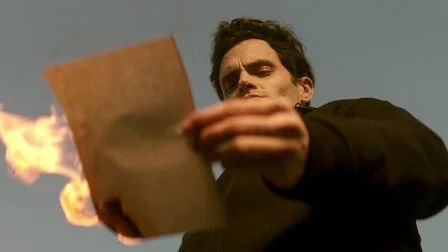
Certainly, the acting can’t be easy, especially when playing house isn’t nearly as fun as what they make it look like on the Hallmark channel. Where there should be a feeling of unconditional love, instead, Joe constantly assumes that his son hates him and that Love, too, is no longer attracted or interested. While the struggles of marriage and caring for a newborn can be shared amongst other couples, Joe’s form of dealing with the stress and pressure is not to focus on the person he or Love is, but who he must be for his family, for Henry. However, this plan turns faulty when Joe, in Joe-like fashion, discovers a new “you” to stalk (I mean, we knew it wouldn’t really take long). Unlike previous seasons, though, Joe can’t just go out whenever he wants to stalk his latest subject. He must take his opportunities as they become available to him, which again, makes the series a little more interesting.
Luckily for him, Joe’s first person of interest comes easy: the neighbor. Like him, she also shares the feeling of being trapped by her significant other and drops subtle hints of her interest in Joe. Another nice touch, considering Joe’s wandering fantasies, that previously, would leave a viewer questioning what was real and what Joe was manifesting to happen. Where the season begins to twist, though, is not with Joe liking them, or liking a person too much, or even liking them to death, but with Love. Unable to act as an individual, or a serial killer, having been plagued by fatherhood, Joe is constantly pulled back by remorse, possibly, or maybe just the domestic act of “settling down” and achieving what society defines as keeping up a healthy, happy marriage. It certainly doesn’t help to be surrounded by a community of judgmental suburban natives, constantly eyeing your actions and gossiping over your family’s past.
When Love discovers Joe’s new interest, though, shit really hits the fan. While both Love and Joe’s monstrous sides are talked about and the desire to start fresh is shared, the series continues to revolve around the act of running from themselves, more so than a story about starting over together. While the couple seems to love and hate one another, all things considered, it’s as if they’ll go whatever lengths it takes to keep them all safe, to keep them all together. From the first homicide in the series, to the second and third, it becomes clear that the murderous duo will have to keep covering up their tracks if they’re to continue living in their fairytale neighborhood without everyone figuring out who’s committed the recent slew of murders, let alone finding out about the ones from their past.
Taken by a whirlwind of action and situations I’m not quite sure the couple could have made it through untouched, I was again hooked by the series' ability to keep me watching for what would happen next. Though I wasn’t sure if I’d ever be able to sympathize with Joe’s character, the destruction and self-sabotage Love causes him only amplifies the inability to deal with the fact that the couple has fallen, or has been falling out of love, since the birth of Henry. Thankfully, most couples don’t go on murderous endeavors when happiness is absent in their home. Despite some scenes where I questioned the realistic likelihood of them not getting caught, the diabolical dance the two perform throughout the series I think shows us things about our main characters that we wouldn’t have been able to learn had they stayed separated or been killed off.
Article written by Destiny Johnson
Destiny writes about true crime and thrillers. She likes movies and stories that make you question the world around you, more so than what makes you jump.



Filmmaker Bari Kang discusses Itch!, from its practical gore and zombie influences to filming in his own NYC store and directing his daughter.