
‘M is for Miscarriage’ by Ti West - Movie Review
If you ever saw the horror-comedy anthology The ABCs of Death, one or more of the 26 shorts likely stuck with you in one way or another. The project was simple: Participating filmmakers from around the world were given one letter of the alphabet and free rein to select a word to create a story about, so long as it related to death. The collection first debuted at the Toronto International Film Festival in 2012 and was released to the public the following year. The outcome was so shocking and horrific that producers Ant Timpson and Tim League created a sequel in 2014. Then, in 2016, the same duo released a spin-off film alongside Ted Geoghegan.
M is for Miscarriage
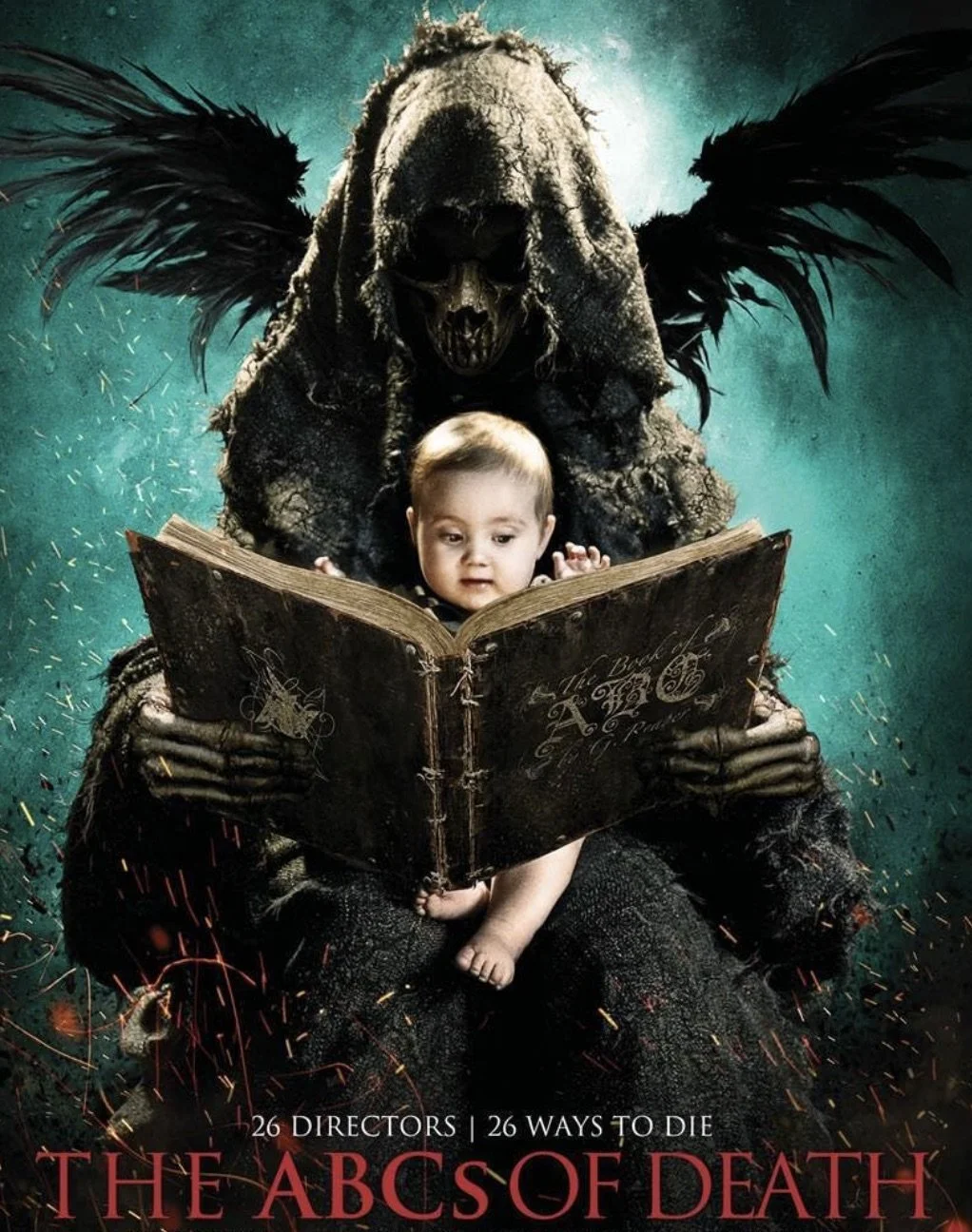
Image via IMDB
While there are many shorts that I would love to dive into, the one that sticks out the most to me now because of the political conversations America is having once again about women’s rights is Ti West’s M is for Miscarriage. In the very short film, we are thrown into a bathroom with a woman struggling to get her toilet to flush. Like anyone with clogged plumbing, the woman runs to fetch a plunger. It isn’t until she returns that the camera shifts its viewpoint to hover above the white porcelain, zooming in on bloody water filled with flesh-like bits until our entire screen is red. The first time I saw this, I was in my early twenties, and pregnancy was the last thing on my mind. The film was dark, but in my opinion, there were heavier hitters when it came to gore, suspense, or creativity in the anthology. However, in revisiting it nearly a decade later, there was one aspect that struck an even stronger chord for me: true crime.
Although no names are mentioned and there is no dialogue, the truth is that this scene has happened to women before—and continues to happen to women today. And while not a crime in any state—at least not yet—our country insists on making miscarriages the woman’s fault and punishing her for it. In an almost identical retelling of the short in 2023, author of The Pregnancy Police: Conceiving Crime, Arresting Personhood Grace E. Howard shared the story of an Ohio woman who miscarried while sitting on the toilet in her own home and whose fetal remains also clogged the plumbing. She was later charged with a felony, although the state’s “abuse of a corpse” laws fail to mention pregnancy, embryos, or fetuses. In this Planned Parenthood article, even more cases are cited for criminalized pregnancy loss.
As a woman who is beginning to consider the real-life implications of pregnancy and the current conversations surrounding my right to healthcare, I am terrified. This fear has only heightened with my recent diagnosis of hypothyroidism—a thyroid condition known to be a common cause of miscarriage. Did you know that 1 in 4 pregnancies end in miscarriage before 20 weeks? I think Howard might have honestly said it best in her piece referenced above: “Some may find the facts surrounding this miscarriage disturbing. Maybe we expect more reverence for fetal remains, or demand a particular emotional response from people who have experienced a miscarriage. It is telling that we often use the words ‘suffered a miscarriage,’ to describe their occurrence, when indeed, it is normal to experience a broad range of emotions in response to a miscarriage from deep sorrow to relief or even happiness.”
Because this is not about me, but about all women, we need to acknowledge that relief or happiness are emotions that can also be experienced from a miscarriage, too. This brings me full circle to M is for Miscarriage. Not once do we see the woman in this story panicked, disturbed, or even upset. In fact, she’s going about the incident as one might dispose of a regular bowel movement. Are we afraid of a miscarriage happening naturally; an event that you might not have even noticed if the toilet didn’t clog and you never looked when you flushed could be punishable if discovered? Is it in the woman’s display of a lack of emotions, or does it bring about a fear of the situation as a whole? Has anyone ever actually thought of what the protocol for something like this even is? In such a short frame, we are all left uncomfortable, uneasy, confused, and even disturbed. But, why? Our character is unbothered—maybe we should be, too.
In many of our reviews of Ti West’s films this month, contributing writers dissected how incredible he is at capturing eras in time. Watching this short film among features like X and The House of the Devil, I am convinced that his style has never been absent from any of his projects. Putting myself back in a time when Vine was on everyone’s phone and shitty homemade films were popular, I can’t help but think now that West did what he does best. He captured an era, but also a topic that’s been debated for decades. Who would have thought that years after this film was created and Roe v. Wade was overturned we would finally be thinking that the one-minute-and-some-change-long film would no longer be scrutinized as one of West’s biggest failures, but ironically, ahead of its time.

Article by Destiny King
Destiny is a supporting member of the Horror Writers Association who’s been working in B2B publishing for nearly a decade. Her favorite horror subgenres are true crime, found footage, and psychological thrillers. Find her on Letterboxd.
Other Articles You May Enjoy…


Filmmaker Bari Kang discusses Itch!, from its practical gore and zombie influences to filming in his own NYC store and directing his daughter.