
The Critics are Wrong: Long Live ‘The Bride!’ [Movie Review]
Forgive me, Maggie, for I have sinned. When I heard the news that you were making a film about Frankenstein’s bride, I shrugged. When the first trailer dropped, I rolled my eyes. In Hollywood’s insatiable appetite for proven IPs, I thought 1935’s Bride of Frankenstein was a curious choice, but it wasn’t an outlandish one. Guillermo del Toro just released his own Gothic take on Shelley’s novel after all, so why not reimagine James Whale’s sequel to his own classic adaptation? It wasn’t until the second trailer that I began to lean forward in my seat. This wasn’t going to be a rehashed tale of Frankenstein and Pretorius joining forces, inexplicably transplanted into 20th century America. This was beginning to look like Sid & Nancy. This was Bonnie and Clyde. Or more accurately—this is Nancy. This is Bonnie. This is The Bride!
As celebrated a character as she is, it’s easy to forget just how little we get of The Bride. Including her dual role as Mary Shelley in the film’s prologue, Elsa Lanchester’s performance hardly breaches six minutes on screen. But The Bride’s appearance at the film’s climax, her stilted, uncanny movements and vocalizations, and her striking costuming combine to create one of the most iconic characters in horror history. It should be noted then, that this female character—again, one of the most iconic in horror history—is voiceless. In a film that is dripping with commentary on gender and sexuality in a way that was decades ahead of its time, this paragon of women in horror never utters a word. Maggie Gyllenhaal would not repeat that mistake.
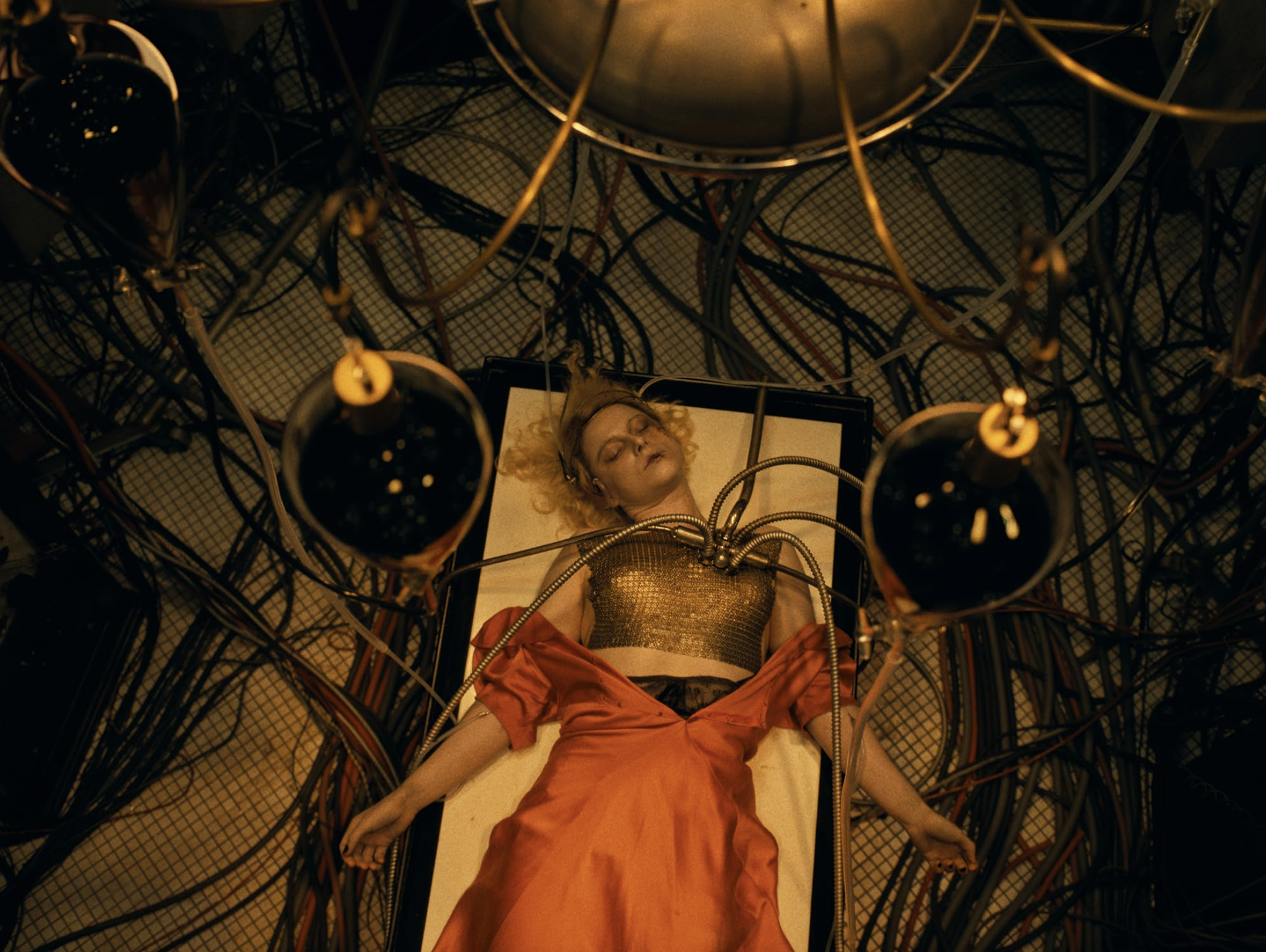
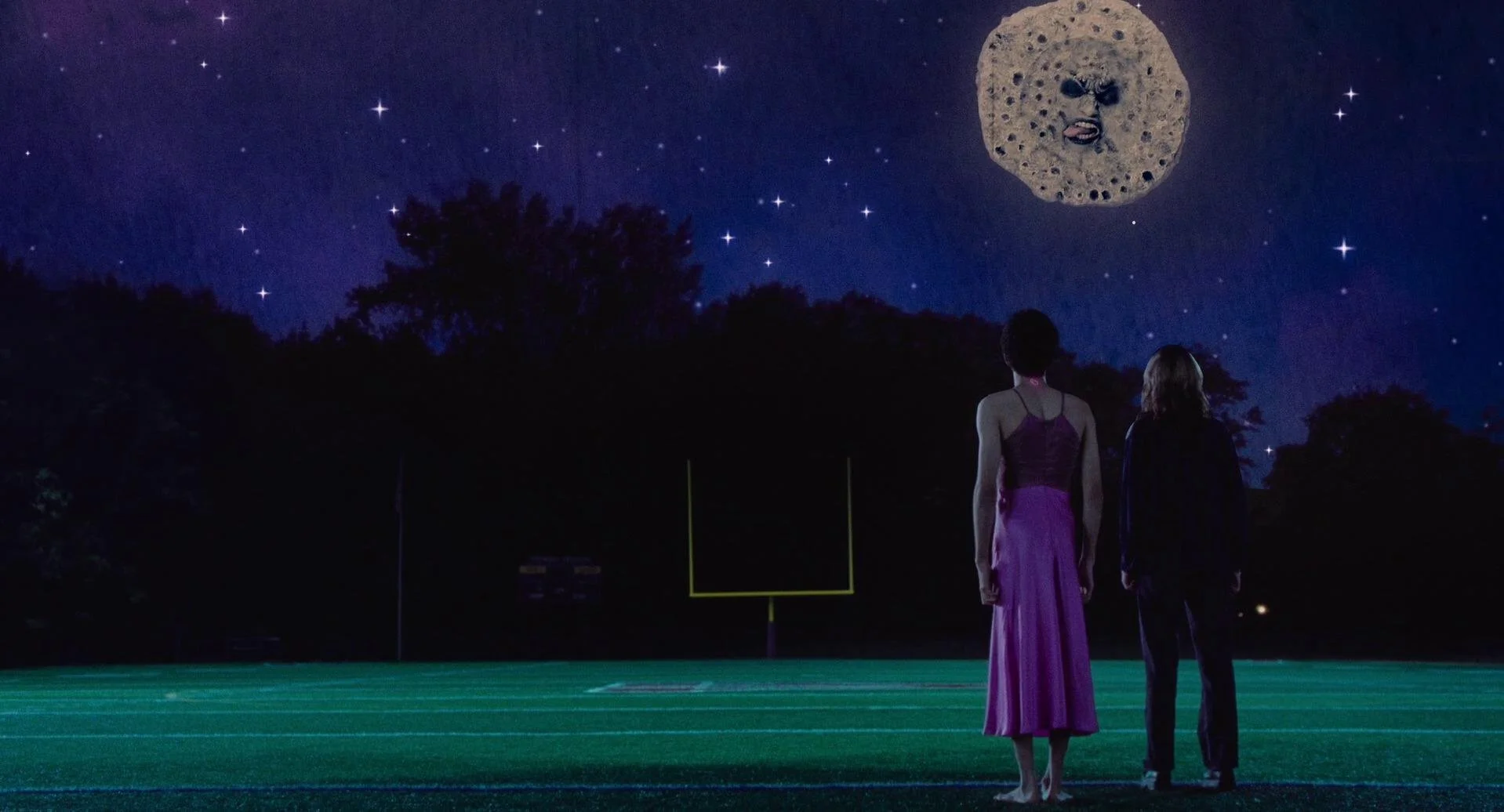
Jessie Buckley in The Bride! image via IMDb
Similar to its 1935 counterpart, The Bride! also opens with a scene featuring Mary Shelley. And like Elsa Lanchester before her, Jessie Buckley (Men, I’m Thinking of Ending Things) also does double duty in her role as both Shelley and The Bride. This time, though, it is very much Buckley’s film. This is a cast that includes some very big names: Christian Bale, Annette Bening, Penélope Cruz, Peter Sarsgaard, Jake Gyllenhaal, to name a few. But Buckley, hot off her Oscar-nominated performance in Hamnet, outshines every one of them. So much is asked of her in the role; not the least of which is a schizophrenic shifting of personalities as the spirit of an irreverent Shelley infects and possesses the body of Ida, a mob moll in 1930s Chicago, and whose untimely death sets her up to be “reinvigorated” by Dr. Cornelia Euphronious (Bening) and Frank (Bale), who is desperate to alleviate the penetrating loneliness he has endured after over a century of wandering.
Far from the almost birdlike anxiety of Lanchester’s Bride—or the clumsy relearning that comes after the “birth” of most iterations of Frankenstein’s monster over the years—Buckley’s version asserts her will early and often. “I would prefer not to,” she tells Euphronious, who is anxious to perform tests on her creation. The phrase becomes a defiant motto for The Bride, who wants to live hard and fast, and on her own terms. Unlike films like Yorgos Lanthimos’s Poor Things (2023) though, The Bride! doesn’t suffer from the “Born Sexy Yesterday” trope, in which a fully grown woman with an infantilized mind experiences life’s vices and pleasures in an almost fetishistic way. Despite her amnesia, The Bride knows what she wants, she’s aware of the dangers of the world around her, and she is absolutely unafraid of standing up for herself. With Frank in tow, who until this point had lived life in the shadows, eager to avoid attention at all costs, the pair become a bona fide “Bonnie and Clyde” power couple of willpower, making their mark across the Midwest and leaving death and destruction in their wake.
So why is it set in the 1930s? Gyllenhaal has said that initially, she wanted the film to be set in the Civil War era, but that she moved it forward to allow Frank to have his movie star hero, the Fred Astaire-like Ronnie Reed (Jake Gyllenhaal). But the time shift lends much more weight to the story than just the birth of cinema. For one thing, it reinforces the Bonnie and Clyde influences, and allusions to both the real-world crime couple and the 1967 film about their lives are plentiful throughout The Bride!
The Bride, herself—in both her first life and her reinvigorated one—is very much a flapper at heart, unabashedly eschewing the expectations of everyone she meets. Frank, on the other hand, can easily serve as a stand-in for the maimed veterans of World War I, for whom David J. Skal (in his book The Monster Show) partially credits for the success of the Frankenstein franchise, which became “a cultural dumping ground for the processed images of men blown to pieces, and the shell-shocked fantasy obsession of fitting them back together again.” His prominent scars elicit reactions from empathy to ridicule, but one witness describes him to police as “a trench soldier.” “How do you know that,” they ask. “That scar.”
By setting the film in 1930s Chicago, then, Gyllenhaal smartly stitches the film’s themes and disparate parts into a cohesive and magnificent whole, much like the creations of Drs. Frankenstein and Euphronious. And as with the complex relationships in Whale’s Bride of Frankenstein, The Bride! challenges viewers to dig deeper, to look beneath the surface for connections that might not be immediately apparent, and it does so without coming across as pedantic or pretentious. It’s unafraid to lean into the camp that makes Whale’s film so timeless—but rather than jars of homunculi and wailing crones, The Bride! instead delivers a punk rock attitude and dance choreography that would have Bob Fosse grinning. It’s a bold vision, it’s stylish, and it’s a masterpiece of moviemaking.
Article by Ande Thomas
Ande loves the intersection of sci-fi and horror, where our understanding of the natural world clashes with our fear of the new and unknown. He is an independent member of the Society for Cinema and Media Studies and a supporting member of the Horror Writers Association. He writes about monsters and foreign horror and can also be found over on Letterboxd.
Other Articles You May Enjoy…
![[Movie Review] Avalon Fast’s ‘CAMP’ is the Latest in the New Wave of Transgressive Filmmaking](https://images.squarespace-cdn.com/content/v1/5d3e481bc5a6e40001b215a8/1782401219629-WQRPE1S2P04BE4SNHMJ2/mPAUB3_Q.jpeg)
![[Movie Review] Izabel Pakzad’s ‘Find Your Friends’ Debuts on Shudder](https://images.squarespace-cdn.com/content/v1/5d3e481bc5a6e40001b215a8/1781905520911-HKI5I64EQ6F19X0Q08A8/fyf-amber.jpeg)
![“Don’t Go in the Water”: Jennifer Van Gessel’s ‘Water Horse’ [Movie Review]](https://images.squarespace-cdn.com/content/v1/5d3e481bc5a6e40001b215a8/c8fc4742-1c98-46fc-bd57-db70f7556053/water-horse.jpg)
The Land Down Under has a way of making its landscapes feel—deliciously hostile. In Wake in Fright, the scorched outback is the biggest threat of all; in Wolf Creek, the miles of empty road are essentially accomplices. In Mia’Kate Russell’s Penny Lane is Dead, however, the outback gives way to a beach house, but make no mistake—the beach is no less terrifying than the bush.