
Women In Horror: Elaina Walters (Girl After Dark) Interview
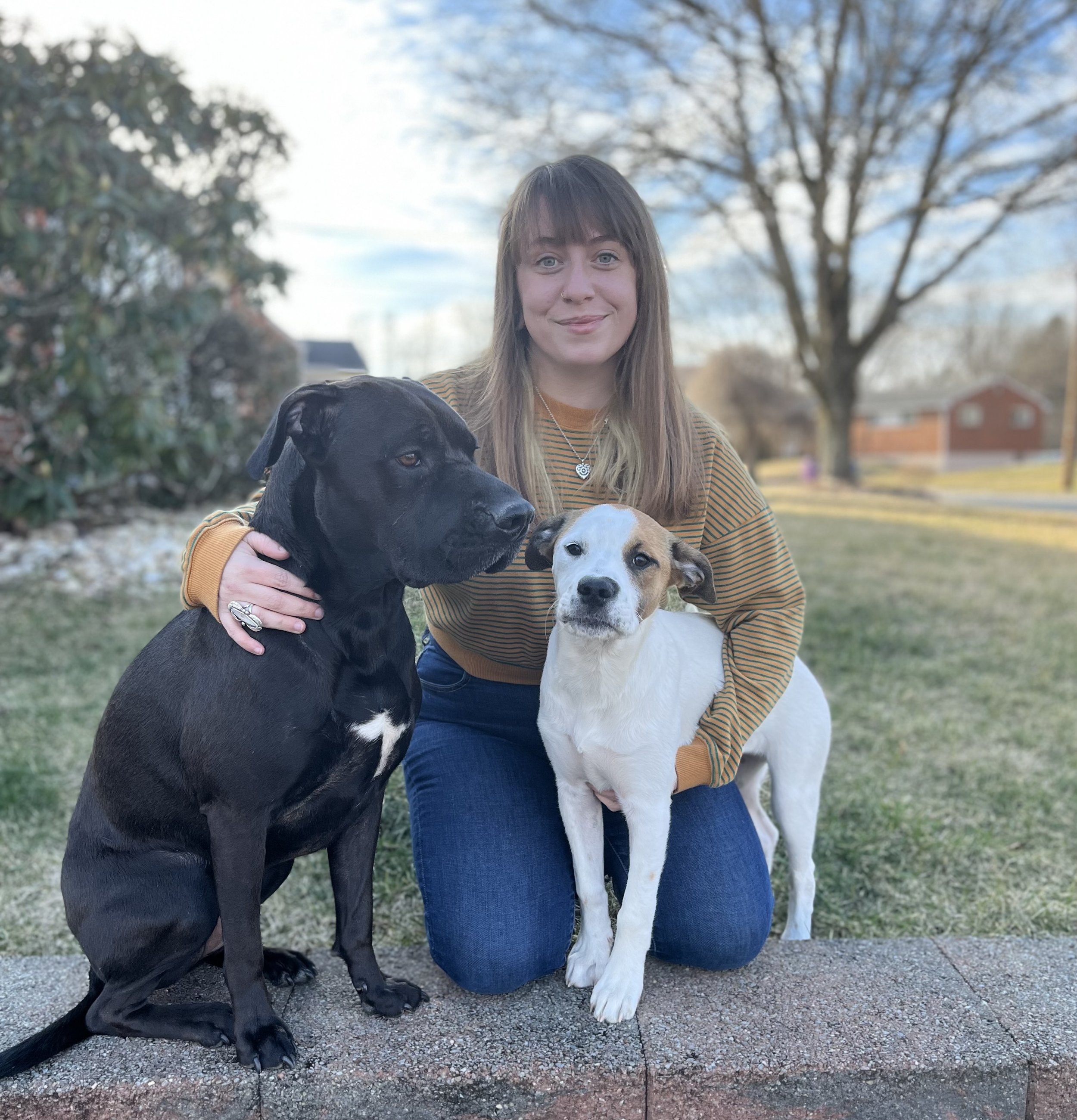
Elaina Walters, otherwise known as Girl After Dark (@afterdarkelaina), is a horror hostess/event coordinator and filmmaker who thrives in turning screenings, festivals, and late-night gatherings into unforgettable celebrations of the macabre. As part of Women in Horror Month, What Sleeps Beneath is celebrating women in Pittsburgh who are keeping the spirit of the horror community alive. In a city where the genre is deeply rooted, from serving as the location for classic horror movies to being home to the University of Pittsburgh’s Horror Studies program and archive, locals know that horror has always been more than just a story in a book or on a screen.
Built on film festivals, screenings, events, and conventions, we’re thrilled to focus on the women who bring horror fans together for the strange and spooky. We had the pleasure of catching up with Elaina to talk about building a horror community, hosting horror events, and what it means to represent women in these spaces today.
This interview has been edited for length and clarity.
WSB: What first drew you to hosting horror-related events and movie screenings?
GAD: I think it started when I was in my undergrad and trying to fund my short films. I would find myself doing events to fundraise, and then eventually I started working at Mr. Smalls, and I did the Mr. Smalls Horror Film Festival for the first time in 2024. And it was a huge success. It was supposed to be just confined to the cafe in the basement, but all of our marketing was being engaged with a lot, so we decided to move it to the theater. And ever since then, I’ve been doing a lot of events. I’m also just kind of really entwined with the punk scene and the horror scene, so I’m kind of like the mom of it all. So it’s easy to create events so I can bring everyone together.
WSB: Being involved in horror events, do you find that horror spaces curated by women feel different than some of the horror events that are male-dominated?
GAD: Totally, totally. I think being a woman in general, you’re more comfortable with the grotesque because so much about how our body can evolve and move and sag and change is kind of horrifying in itself. And I think women are more drawn to some of the disgusting. But also, for me personally, as a woman, I’m a very outgoing type of person. So I think that I personally make horror events more welcoming, maybe. I’ve heard that I’m kind of charming. But yeah, I think so. I think a lot of male-dominated events also have a lack of contribution. I really love to collaborate, and I really like other people’s hands being a part of whatever I’m doing.
WSB: What do you think makes a horror film perfect for a watch party rather than a solo viewing?
GAD: Okay, so for a horror movie to be better for a watch party, I think that it’s necessary to have some bit of silly, you know, the perfect horror movie in general should be able to combine at least a little bit of comedy with the horrifying aspects. But for it to be a perfect collaborative viewing experience, I do think that there has to be a little bit of the silly. Like for my screenings, I’m often drawn to playing things that have, like Vincent Price, because to some extent, there’s an absurdity to it that makes it really fun for people to speak over the movie, if that makes sense, and to engage with it. And I think the movie has to be relatable in some way, you know, I mean, that also goes in with the silly, but a lot of the best absurd horror movies make for great collaborative viewing because they’re relatable and the horror of it isn’t too detached from something that the collective group can experience.
WSB: When you’re picking the “silly,” does that help when you’re choosing a theme for horror events?
GAD: Oh, hell, yeah. Even like The Love Witch, for example, one of my criticisms of that movie is that I do think the ultra-femininity of it can kind of make it a little too silly at points and take away from the meaning that Anna Biller was trying to portray. But whenever you add a tea party and a lot of lace, and you’re in a bunch of frills, I think that makes it better to experience whenever there are parts of the movie that don’t hit as well. Yeah, I do think that’s important.
WSB: What do you think horror allows women to express that other genres don’t?
GAD: Yeah, so like I was saying earlier, I think that women naturally kind of have to bend and break into certain molds to be able to fit into society in general. And I think that the more grotesque side of horror is something that, for a lot of women, isn’t even that grotesque at all, and kind of familiar and something relatable. Even like true crime, for example, statistically, viewers are mostly women. And there are theories that it’s kind of like watching a play-by-play of survival, right? Like how I see this, you know, it’s less scary whenever I walk down the street. I think for women, a lot of times, whenever women tackle horror, that kind of play-by-play is done—if that makes sense. How do I say this? Whenever women tackle horror, it gives perspective to a lot of the mundane daily things that we deal with.
WSB: Keeping that going and how women connect with horror, and your response to that, do you find that those types of conversations tend to come up after the credits have rolled at your events? Are there women who come up to you? And what do those conversations look like?
GAD: I mean, I think a lot of the ways that I personally empower women in horror are my relation to it, right? After the credits roll, a lot of times I see girls talking to themselves. A lot of the people who show up to my screenings are women, and they come in groups and they wear their cutest outfits. And then they sit there, and they watch some of the most horrifying things that you can imagine. So I think in general, having something like a “girl after dark,” right? A concept of a woman who exists in shadows and dominates horrifying spaces. I think that alone has encouraged at least a few women in my life to kind of take up space in those shadows too.
WSB: Have you ever programmed a film that completely surprised your audience’s reaction?
GAD: Oh, I feel like when I played The House on Haunted Hill, I think that a lot of people don’t watch movies like that anymore. And it’s funny because that movie has a plot twist that wouldn’t even be considered a plot twist these days. But at the end, Vincent Price is operating the skeleton on a wire, and the entire audience really enjoyed that. So I think sometimes what can be surprising about the movies I play is how much is overlooked and what is classified now as vintage horror. I think that there’s still a lot yet to enjoy in it. So I think people always find themselves surprised that they’re not more bored at the screenings than they otherwise would be. And like I was saying, like the absurd silly, like whenever you're allowed to talk and throw popcorn and yell and laugh, I think that that also provides a kind of buffer.
WSB: What has been your most memorable watch party moment, do you think?
GAD: I think my most memorable moment for me personally was when we screened Sinners as a surprise screening for Black History Month. And I—and this happens to me all the time—I had technical issues, as I always do. So it’s a widescreen movie, and there are these big black bars on the film, and I’m trying to fix the projector, and then I have the whole audience of people eating their popcorn. And I remember the bags of popcorn as I’m trying to figure it out, slowly getting smaller, like with less stuff in the box. But everyone was so cool. And I think that I was able to lean into my mistake and make it something, like I said, like a laughable moment. And I think that it made my audience feel like they were a part of the experience alongside me. So yeah, I would have to say that: whenever I totally biffed the screening out first.
WSB: Have you seen friendships or a community kind of form through your watch parties?
GAD: Yeah. Um, so I have kind of a crew of regulars now who come to see my movies and that’s really cool. And they’re all very different types of people. Uh, I have like, one of the things that I always worry about is that I’m going to get a lot of men who come to my screenings just from the nature of me being a young girl. Um, but no, I get like all sorts of different people. I have all ages, and there are little crews that come. All my friends go, and they aren’t even into horror. So it’s definitely a broad spectrum of people, but I’ve definitely been seeing a community form out of it.
WSB: What’s one horror trope you love and one you’re tired of?
GAD: So I’m trying to think of a trope I’m tired of. My favorite trope is always going to be the final girl. I feel like that was a huge shift in cinema whenever we went from focusing on the big scary slasher to the girl who’s living through the big scary slasher. I think that the final girl is constantly being reinvented in beautiful, cool ways. I mean, every year now I feel like you see a new iteration of the final girl that’s better than the last. I think for a time, possession horror was getting a little tired, but now, we don’t even see that as much. Honestly, I’m still trying to think of a trope that I’m tired of. I think in general, all of the—and this isn’t necessarily a trope—but I think all of the remakes are getting a little tired. Like the newest additions to the Scream franchise, I think the sixth one was okay, but the fifth and newest one, I’m a little disappointed by, which is disappointing because that’s one of the best examples of the final girl. I think, like, bringing back different versions of the Universal Monsters is very cool, but now I feel like we're doing a lot.
WSB: If you could design your dream horror event with no budget limits, what would it look like? And since you’re a filmmaker, what would be your dream movie to make?
GAD: So my dream event, my dream event, right? Picture this. We’d be in a beautiful big church, much like the one I’m in: Mr. Smalls. And I’d have an organ player. I would have candles. See, my vision is always what it would look like, right? I would have candles coming down from the ceiling. Oh my gosh. So, actually, one of my dream ideas that I’m working on, aside from what it would look like, I want to do a live screening of a silent film and have live bands play over it. That’s less of a dream. That’s something that’s going to happen. But yeah, I’m pretty sure the one I want to do is Nosferatu. I want to get like 10 bands to go through and play over a silent film. So I guess the dream part’s always the venue. The dream parts are always like what it would look like, what would the space be like? So I guess if I could do that anywhere, I would do that at like, I don’t know, like maybe like the Biome or something. Like it’s not going to happen, but that would make it more dreamlike.
WSB: As a filmmaker, is there a project that you’re working on? Is there something that you really wish you had time to work on?
GAD: I have been writing this feature since I was in undergrad, and it’s actually not a horror. It’s more like a drama. It’s called Whispers of Romance. So that’s just something that I work on by myself that I always have in my pocket. But I’m trying to do a horror series in Pittsburgh right now where me and a few others have weekly episodes where we release like an anthology of sorts. So I have a crew together, and we’re working on that right now. We’re hoping that’ll be around the time of my next film festival.
WSB: Where should people tune in? YouTube? Social Media?
GAD: Always follow me on social media. But a huge thing is that I have a few shorts on YouTube. I won’t be doing that again. I like for horror to be accessible, but I’m trying to encourage people to show up in person. So I plan on getting like a mailing list together, or maybe a website, something more private. And then I want to do weekly screenings in person, maybe monthly. We’ll see. But we’re going to shoot through the whole season and then figure out how we want to release it. I think it’d be cool if I had physical copies. I just want to stay away from YouTube. I just really want to encourage people to go back into engaging with filmmakers and kind of generating more of a scene. That’s really the whole thing that I try to do is generate a scene around horror cinema here in Pittsburgh—specifically here in Pittsburgh. That’s also, I don’t want to play it on YouTube. I don’t need anyone anywhere else to know who I am. Just come here.
WSB: Yes, come to the City of Bridges. Hang out with us. We got Iron City and all that good stuff.
GAD: Yeah! My favorite joke is, What does the yinzer say on his deathbed? IIII ssseeeee lliigghhtt.
Article written by Destiny King
Destiny writes about true crime and thrillers. She likes movies and stories that make you question the world around you, more so than what makes you jump.
Other Articles You May Enjoy…

Filmmaker Bari Kang discusses Itch!, from its practical gore and zombie influences to filming in his own NYC store and directing his daughter.