
The Serpent's Skin (2026) [Movie Review]
When Alice Maio Mackay was 16 years old in Adelaide, South Australia, she released her first feature film, So Vam, which was then acquired and distributed by Shudder. Just two years later, she was already releasing her third and fourth films. Now, at 21 years old, she’s about to release her sixth venture, The Serpent’s Skin. It’s also her best.
Co-written with frequent collaborator Ben Pahl Robinson, The Serpent’s Skin stars Alexandra McVicker (Castration Movie Anthology II) as Anna, a trans woman who escapes her hometown to live with her older sister Dakota (Charlotte Chimes), where she meets Gen (Avalon Fast), a tattoo artist with whom Anna shares certain psychic powers. As a fast romance blossoms between them, Gen inadvertently unleashes a powerful demon through a tattoo, and it’s up to them to stop him.
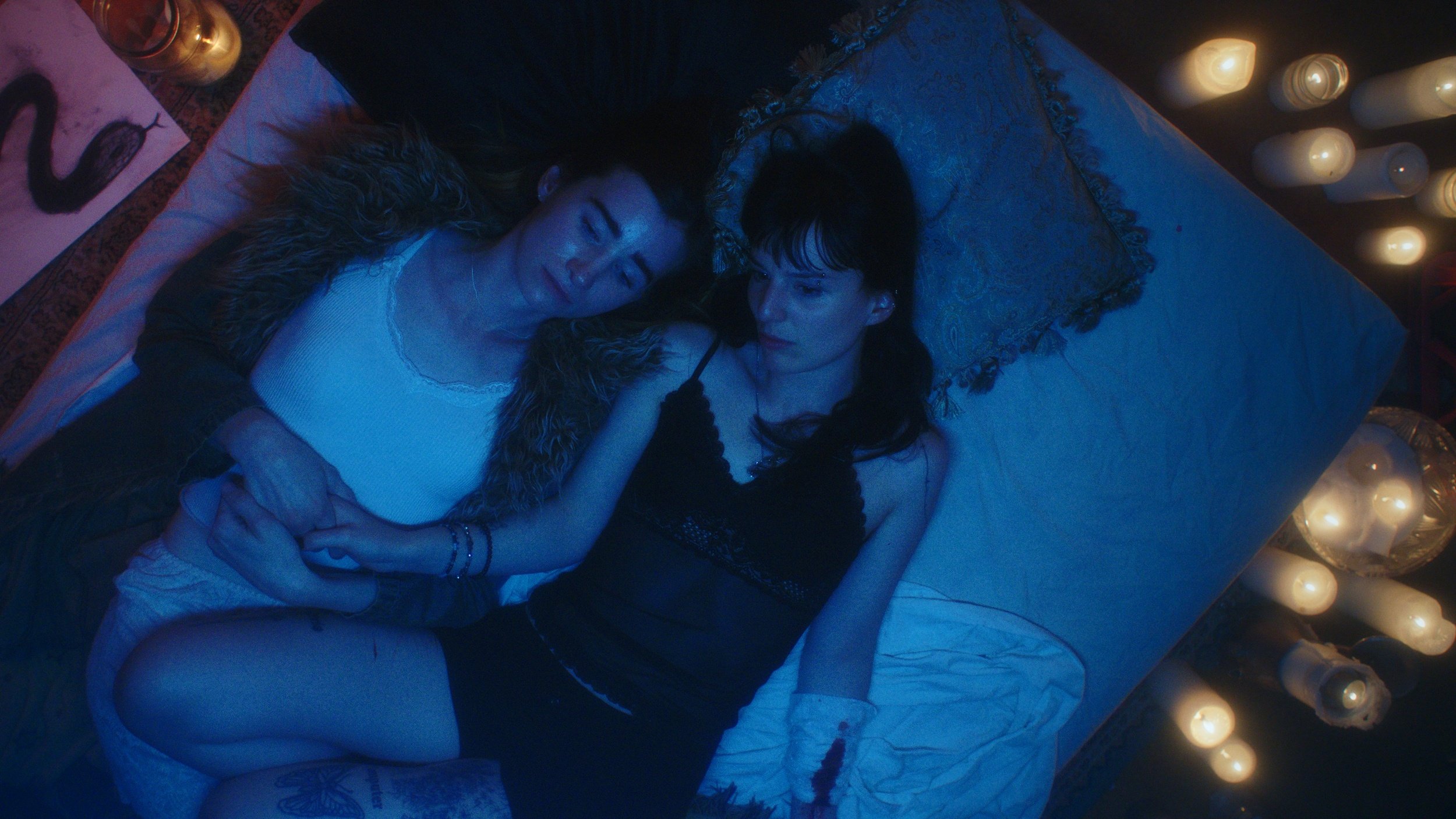
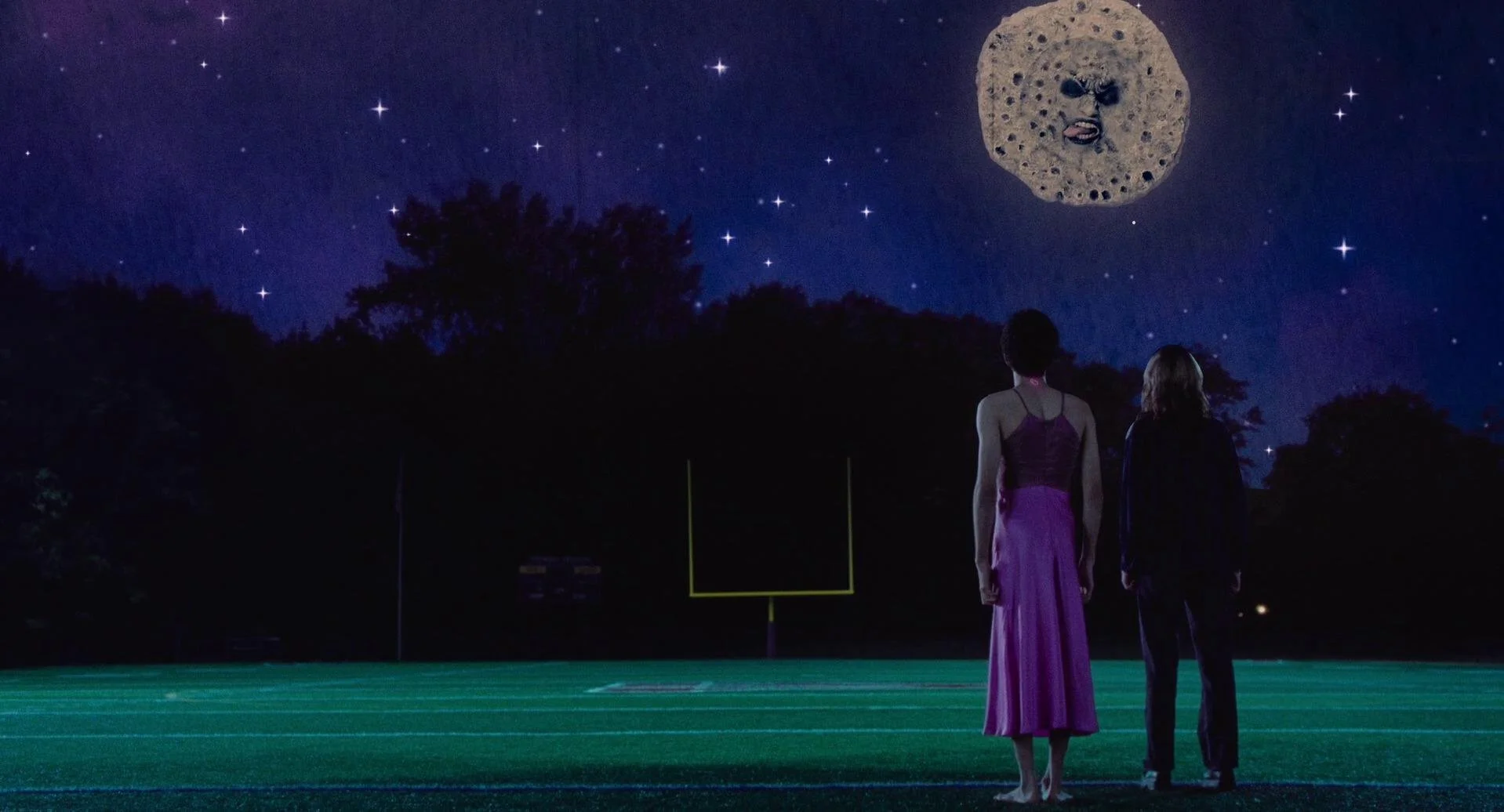
Anna and Gen in The Serpent’s Skin (2026).
This idea of summoning a demon through the accidental ritual of tattooing is forever interesting to me. It’s a brilliant angle that inverts the typical tack seen in franchises like Constantine, Supernatural, or Peter Brett’s The Warded Man, which build on the historical and religious significance of tattooing as protective wards or blessings. Here, the tattoo is imbued with power, but it’s a malevolent one brought to life by users of a power that they don’t fully understand.
One of my favorite tropes—or rather, my favorite variation of a trope—is adding arduousness or diligence to magic. When casting a spell is as simple as pointing a magic wand and saying a few words, the stakes feel significantly lowered. On the other hand, when spellcasting becomes a struggle, like in films like The Boxer’s Omen (1983) or A Dark Song (2016) or even (and I’m about to show a facet of nerdiness I don’t think I’ve ever shown on this site) the “Cost of Magic” story arc in Jason Aaron’s 2015 run of the Doctor Strange comics, magic is physically, mentally, and spiritually strenuous, costly, and even dangerous for the user. It adds tension in just using one’s supernatural powers, forcing characters to weigh the benefits of their actions in ways that the former don’t need to consider.
Though Anna and Gen aren’t shown seriously struggling with their abilities or dealing with the corrupting influence of their power, the themes that Mackay explores through them feels much closer to that more punishing type of magical world. Gen’s summoning is accidental—which may go counter to the idea that it’s inherently difficult to do—but the characters address this by discussing, not only intent, but the possibility that she unwittingly tapped into a force she didn’t know existed and inscribed the symbol in just the right way to give it potency, alluding to their connection and draw to something beyond our realm. The film plays as sort of a trans Scanners, where Anna’s powers disrupt and attack the brain waves of her attackers, before it branches off into a radical Buffy-inspired adventure of apocalyptic potential. But the story is less of a playground for marginalized characters giving their oppressors a due comeuppance, rather it forces them to learn the rules of their world on the fly, realizing that their actions have consequences and dealing with them as they learn.
Like each of Mackay’s films, The Serpent’s Skin is stylish as hell, but it’s quick to not draw itself into a box. From the graffiti punk aesthetic of the opening credits to the rave culture and indie vibe mixed with acid rock visuals, The Serpent’s Skin is an amalgamation of influences that shouldn’t mix. But they do. Nothing feels out of place as the film jumps from style to style, seamlessly stitched together by the discordant, always interesting editing of Vera Drew (The People’s Joker).
Most prominent of these influences, though, is that of Gregg Araki (The Doom Generation, Nowhere). Mackay’s works have been compared to Araki’s before, and rightly so—she regularly cites him as one of her biggest inspirations. But Araki’s style is all over this film—a surreal, dreamlike quality envelops every scene; brightly colored lights beam over the characters; and, like Araki’s films have done with homophobia, The Serpent’s Skin tackles transphobia head on, unapologetically and with no room or patience for subtlety. And why not? We live in frightening, dangerous times where subtlety is more easily ignored than it is appreciated.
Where subtlety does come in, though, is in Alexandra McVicker’s portrayal of Anna. There’s a precision in every line of dialogue McVicker delivers. Anna has an air of shyness about her, but, as Dakota points out shortly into the film, that aloofness is giving way to something bolder as Anna finds herself in her newly discovered abilities and in the friends she meets through Gen. Her cadence is mesmerizing, drawing viewers into every scene, giving Anna a gentle mysteriousness without sacrificing the control she wields throughout.
Most impressive of all though is the fact that between all the clouds of inspiration, bright rays of originality still manage to cut through. In a content climate where imitation is the rule and not the exception, The Serpent’s Skin is its own thing entirely—staying true to its homages while delivering a movie that feels fresh, current, and destined to be a comfort film for a generation.
Ultimately, The Serpent’s Skin is less about the wielding of an unknown power than it is about coming to terms with the power that exists within you. At one point, when describing what they’ve done, Gen tells Anna:
“Imagine life is like a video game where we’re not just players. We can hack the game, fuck around with the code or whatever they call it. But hackers can screw up a game, right? They can make it do weird things. Glitch up and make new things.”
It’s a film about figuring out who you are and understanding where you fit into the bigger picture; about recognizing your potential in a world that wants nothing more than to stamp it out. It’s about blossoming; coming out of your cocoon; shedding skin. But whether you’re a flower or a butterfly—or a serpent—I think we can all relate to Anna’s closing line: “My life is so fucking weird.”
Article by Ande Thomas
Ande loves the intersection of sci-fi and horror, where our understanding of the natural world clashes with our fear of the new and unknown. He is an independent member of the Society for Cinema and Media Studies and a supporting member of the Horror Writers Association. He writes about monsters and foreign horror and can also be found over on Letterboxd.
Other Articles You May Enjoy…


Nicholas Pineda’s Infirmary starts quietly. There is, of course, the almost obligatory disclaimer at the front that identifies the footage we’re about to see as wholly true and part of an ongoing investigation, but that’s not the unsettling part.