
Extremely Wicked, Shockingly Evil and Vile
Film: Extremely Wicked, Shockingly Evil and Vile (2019)
Director: Joe Berlinger
Cast: Lily Collins (Liz Kendall), Zac Efron (Ted Bundy)
Synopsis: Based on the book, The Phantom Prince: My Life with Ted Bundy by Elizabeth Kloepfer (Liz Kendall), the movie visualizes the unwinding truth about Ted Bundy’s murders, told through the eyes of his longtime girlfriend.
In the first scene of the film, dim prison lighting shines on who we can assume are Liz Kendall and Ted Bundy, meeting in a small cement block visitation room, separated by glass, chains and guards. Although Ted is the only one in shackles, one could guess that the matching orange/prisoner-like attire isn’t a coincidence.
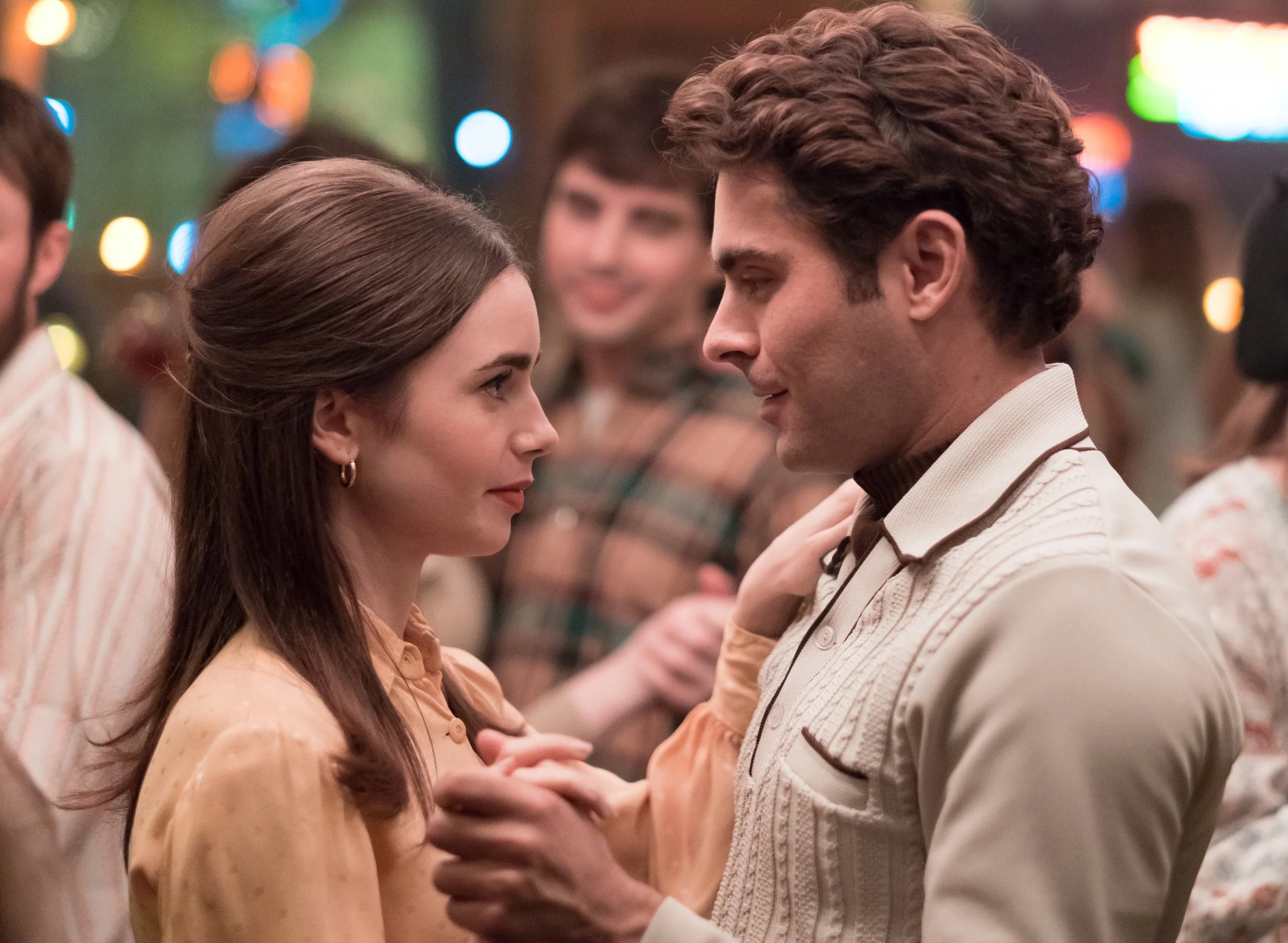
Moving backwards, we are taken to before Bundy’s incarceration and are quickly captured by Zac Efron’s portrayal of Bundy’s iconic charisma and seemingly gentle nature. In comparison with Bundy’s presence on death row to what Liz believed him to be, what sells us in the beginning of the film isn’t his bar room flattery or “love at first sight,” but his willingness to stay with a single mom, cook breakfast and help take care of Liz’s daughter, Molly. Even by today’s standards, we can unfortunately predict that such a polite, attractive and considerate person isn’t easy to come by.
Following the opening scenes, we are fast-forwarded through memories, the growth and development of their relationship together, and a 6-month period of news reports on how girls and young women were being attacked and murdered in the King County area. The change in what are supposed to be old family films and actual archived news segments grow more frequent, showing Molly getting much older than when Bundy and Liz first met. However, the family side shows no signs of doubt, only happiness—only what a “normal” family at the time should be.
That is until we finally see Ted get caught (for the first time) in Utah in 1975. From flash news, phone calls, a sketch and newspaper reports, doubt has finally sprouted in the mind of Liz Kendall, or so that’s what we’re shown. But, with his words and adapting personality, Bundy eases Liz’s concerns and keeps doing so throughout every charge, chase and conviction.
If one had never educated themselves on the Ted Bundy murder cases or even watched the Netflix limited series, Confessions With A Killer: The Ted Bundy Tapes (which was also directed by Berlinger), you might actually believe Bundy was innocent throughout the majority of the film. But, if you picked up on the physical attempts to alter his appearance during a lineup for an escaped victim case, if you noticed his extreme confidence and considered his talk-about way with things, especially to Liz, you might have suspected something had to have been wrong all along.
One might even want to consider Molly’s obsession with thresher sharks as a correlation to her mother’s obsessive certainty about Bundy. Both ultimately loving nature’s most notorious killers.
If that wasn’t enough, or too far-fetched, think back to the animal rescue scene. Not the awkwardly funny part where Liz bypasses Carole Ann Boone (Kaya Scodelario), but the scene where Liz and Bundy are checking out the cute rottweiler. There is no adorable doggo talk from Bundy, just cold staring. A look that threatened the dog, caused him to become aggressive as if to protect himself, even though the two were already separated by a fenced cage. They say animals have a sixth sense, but it is clear when Bundy is flirtatiously barking at Liz in the next scene, she never thought anything of it, causing the viewer to follow her role of denial.
Shortly after Bundy is moved to face charges in Colorado in 1977, we see Liz finally succumbing to the reality that Bundy may have convicted these crimes. Although she continues to have the slightest amount of faith and exiles herself from her friends and family, her love and hope for Bundy has begun to deteriorate.
Overall, I think Berlinger successfully portrayed the life that Liz brought herself to live through, and finally leave, as that was the intent of the film. But, by filming from Liz’s perspective, did it take away from the fears Bundy created during his occupation as a serial killer?
I unfortunately have to say, yes. Because we are watching from Liz’s denying point of view and various courtrooms, there is a build-and-tear-down cycle of what is happening and why it can’t really be happening, or why we should believe it is.
“We want to be able to say we can identify these dangerous people. The really scary thing is, you can’t identify them. People don’t realize that there are potential killers among them. How could anyone live in a society where people they liked, loved, lived with, worked with, and admired could the next day turn out to be the most demonic people imaginable?”
We even end up feeling the guilt and pain of finding out Liz had given his name to police during the Lake Sammamish murders, as well as her drinking habit and depression, ultimately caused by feelings of the world working against her.
Although the film proved to be more of a work of drama than horror, the fear lies in the truth of what could be the bigger picture to Liz: The fear of everything you thought you knew—what you trusted—was false. It’s like having the ground below you disappear and once that happens, you have to put the pieces back together. What’s even bigger and more gruesome here, is the faked life wasn’t just someone who maybe had another wife and child, this, what seemed to be average and even romantic guy, was murdering women Liz’s age and younger, mutilating them, assaulting them, hacking them up and leaving them.
The movie never delivers that fear-for-your-life expectation, not until the very end when in confessing to Liz, Bundy recounts his murder weapon––a hacksaw––as a response to a photo of a decapitated Jane Doe. Various sexual and violent imagery is flashed and gone before we can grasp the scene where Bundy is actually dragging the woman in question into the woods.
If that isn’t enough to make your skin crawl, true fear should breathe into your soul when the haunting list of deceased victims appears on the screen. As a woman, we still have daily fears of harassment, abduction, sex slavery, assault and murder. That list has only continued to grow for us, regardless of the hand its received by.
Because Berlinger directed both the Netflix movie and documentary series, I decided to pull the first and last quotes from both films he chose to feature. My reasoning: the movie picks up right where the series leaves us. From asking how someone could live with knowing a killer was among them, to showing the life of what that might have actually been like. In stating that only some people have the imagination for reality in the beginning of the film, we learn that Liz eventually sees the truth.
article written by Destiny Johnson
Destiny writes about true crime and thrillers. She likes movies that make you question the world around you, that keep you wondering, curious and even fearful.


Filmmaker Bari Kang discusses Itch!, from its practical gore and zombie influences to filming in his own NYC store and directing his daughter.