While Jurassic Park clearly contains elements of the horror genre, it tends to be categorized as a science-fiction adventure film, which is fair. When the film was released in 1993, the idea of cloned dinosaurs certainly felt like a sci-fi conceit, and escaping the park was as much of an adventure for paleontologist Dr. Alan Grant as it was for the audience. Nevertheless, horror undeniably lurks in the tyrannosaur paddock as the power goes out, and in the face of game warden Robert Muldoon when he realizes that the Velociraptors have outsmarted him. Horror even exists for Grant in the first half of the film every time he finds himself in the presence of children. This notably and swiftly shifts in the latter portion of the film, when Grant’s character completely transforms from a man who is actively child-avoidant into a surrogate father to Tim and Lex. This change in Grant is best explained by viewing Jurassic Park through the lens of ecohorror, which reveals Grant’s journey to be less about character growth and more about his absorption into something beyond himself: Nature. Nature will continue to be capitalized in this argument due to its agency in the film. The parallel between Grant’s proxy-fatherhood and the adapted fatherhood of the dinosaurs on Isla Nublar reveals Grant’s character arc as merely a temporary byproduct of Nature’s reclamation of the unnatural.
The Dinosaurs as Unnatural Monsters
Jurassic Park “spares no expense” establishing the park’s dinosaurs and Alan Grant as unnatural beings. The unnaturalness of the dinosaurs is largely justified by virtue of their being typical horror monsters. Building on the work of Mary Douglas, Noël Carroll characterizes the monsters of horror films as impure and unnatural. He clarifies that “Things that are interstitial, that cross the boundaries of the deep categories of a culture’s conceptual scheme, are impure … objects can raise categorical misgivings in virtue of being incomplete representatives of their class” (Carroll 55). Jurassic Park’s dinosaurs fit firmly into this notion of incompleteness, starting with their fragmentary genetic material. Along with the film’s characters, we learn that the dinosaur DNA was obtained from mosquitoes that had been preserved in amber, but that the genetic code was incomplete. The park’s geneticists chose to fill in these gaps with frog DNA, thereby creating something entirely new: a dinosaur-frog hybrid that does not exist exclusively as a single creature.
Carroll further elaborates on the unnaturalness of horror monsters through portraying them as “unnatural relative to a culture’s conceptual scheme of nature. They do not fit the scheme; they violate it. Thus, monsters are not only physically threatening; they are cognitively threatening. They are threats to common knowledge” (56). This is all true of the dinosaurs. They are undoubtedly a physical threat with their imposing statures, teeth, and claws. These relic creatures rationally should not be on this island, but somehow they are. They are displaced both temporally and geographically, and further, most of them were never meant to coexist. Dilophosaurus lived 95 million years ago in Arizona during the Early Jurassic Period (Pim 186); whereas Velociraptor flourished in the Late Cretaceous Period roughly 71 to 75 million years ago (283). This displacement only further cements the dinosaurs’ interstitiality, particularly given their monstrous hybrid-clone existence. They do not belong in this time period or with each other. They do not belong on Isla Nublar or with humans; and still they exist.
Our friend Dr. Ian Malcolm solidifies the unnatural existence of the dinosaurs and the very act of their creation during the film’s lunch scene, where park founder and entrepreneur John Hammond has gathered his assemblage of experts prior to their tour of the park. Malcolm largely functions in the film to speak on behalf of Nature and to point out the plethora of crimes that the park’s bioengineering firm InGen actively commits against it. While Hammond is expecting accolades, he is clearly exasperated by the unease expressed by his guests, and that of Malcolm in particular. Malcolm accuses Hammond of “a lack of humility before nature,” and firmly asserts that “Dinosaurs had their shot, and nature selected them for extinction” (Jurassic Park). InGen’s disregard for Nature’s authority appalls Malcolm: “What’s so great about discovery? What you call discovery, I call the rape of the natural world” (Jurassic Park). Not only does the presence of these dinosaurs exist as a violation against Nature, Malcolm views the very means of their resurrection as a violent and penetrative assault.
Sam Neill’s Alan Grant and the “Unnatural” Bachelor
The film frames Grant through a different kind of “unnaturalness”: the biological and cultural expectations of marriage and children. According to Laura Briggs and Jodi I. Kelber-Kaye’s reading of Jurassic Park and Gattaca, both films promote the creation of a nuclear family through “a polarization of ‘natural’ and ‘unnatural’ reproduction, where heteronormative nuclear family-making is considered ‘natural’ and cloning and genetic manipulation (falling within the realm of science) are ‘unnatural’” (94). Following this argument, if the dinosaurs are unnatural because they were produced through cloning, then Grant’s refusal to settle down and biologically reproduce renders him equally unnatural.
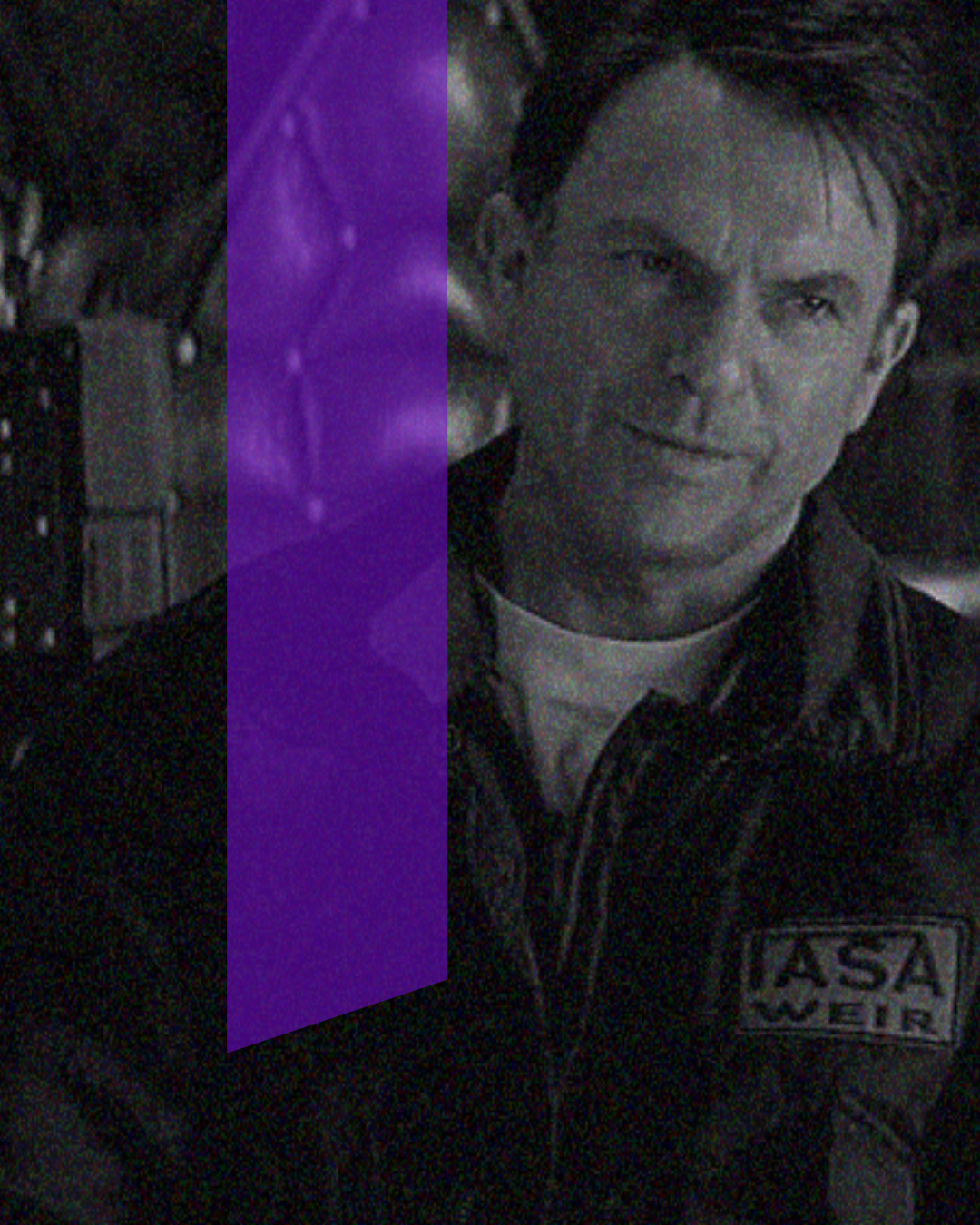
Grant’s native habitat is at his Montana dig site, a place of no commitment and, more importantly, no children, where he proudly presides over the remains of dinosaurs past. Within the first several minutes of Grant’s introduction, the film establishes his dislike of children. When a boy mocks the Velociraptor, Grant verbally eviscerates the terrified child with glee. Neill plays the scene with delighted precision, bending to the boy’s height, lowering his voice, and watching the color drain from the boy’s face as he describes the raptor’s brutal hunting methods. His aversion to children seems to be a sticking point with Grant’s partner and colleague, paleobotanist Dr. Ellie Sattler. Sattler is looking for some semblance of stability with Grant, including—potentially—a future with children. In an interview with Variety, Laura Dern discussed how she and Sam Neill were prepared by director Steven Spielberg regarding Grant and Sattler’s connection: “He [Spielberg] definitely worked with both of us on the relationship. And he was very specific about it. We were in different places in our lives, and he was never gonna settle down. She was a serious scientist who was also gonna want a commitment, and a life that wasn’t just at a dig site” (“Jurassic Park According” 04:30). Grant is clearly content with his bachelor lifestyle, and he has no interest in marriage or children. His focus remains on what is extinct.
Grant clearly has reservations about Hammond’s experiment on Isla Nublar, but he is undoubtedly thrilled to see living versions of the extinct creatures that he has spent his entire adult life studying. He collapses in awe and wonder when gazing upon the Brachiosaurus, and is both amazed and concerned while holding a newly hatched Velociraptor. Unfortunately for Grant, before the start of the full park tour, Grant’s beautiful dinosaur weekend is abruptly ruined by the unexpected arrival of Hammond’s grandchildren, Lex and Tim. While Grant desperately strives to distance himself from these foreign entities, Sattler leverages every opportunity to force them together into a proxy nuclear family. Grant’s exasperated face says it all in every manufactured scenario. When Tim corners Grant, proudly clutching Grant’s book and citing Grant’s own research, Grant appears wildly uncomfortable and has no interest in connection. He flees the vehicle and manages to contain Tim in another car. His relief is short-lived, as Lex is waiting for him with a request to ride together. The camera cuts to Sattler, a sparkle in her eye and a grin on her face. Grant stares her down, nodding in disgust over her ulterior motives. When Lex later trips near Grant, he reaches to help her and Lex refuses to release his hand as they walk.
These moments all serve to repeatedly reinforce the fact that this is a man who does not like children, let alone want any of his own. This is what makes Grant’s drastic and sudden character change especially noteworthy. At roughly the 56-minute mark of the film, Grant has returned from checking in with the other Ford Explorer following the power outage; Malcom asks the obvious question:
GRANT: Their radio is out too. Gennaro said to stay put.
MALCOLM: The kids OK?
GRANT: I didn’t ask. Why wouldn’t they be?
MALCOLM: Kids get scared.
GRANT: What’s there to be scared about? It’s just a little hiccup in the power.
MALCOLM: I didn’t say I was scared.
GRANT: I didn’t say you were scared.
MALCOLM: I know.
Yes, Malcolm is obviously scared. But he himself is a father, which explains his inquiry into the welfare of the children. He knows that if the adults are scared, then the children are definitely scared. Meanwhile, it never occurs to resident child-hater Dr. Alan Grant to even ask about the kids. It is simply a power outage in an electric-fence-dependent dinosaur park, which is objectively unscary for children. Regardless, Grant is still apathetic at best towards the kids at this point in the film. Interestingly, the change in his character occurs instantaneously as the Tyrannosaurus rex breaks free of her pen. This occurs at approximately the 61-minute mark, which is the halfway point of the film. Grant leaps into action as a protective father figure when just five minutes prior he had no consideration regarding Tim and Lex’s wellbeing. Through the lens of ecohorror, Grant and the dinosaurs’ survival following this release into Nature is dependent on their naturalization, willing or otherwise.
Ecohorror and the Collapse of Control
The unnaturalness of Grant and the dinosaurs aligns with key characteristics of the ecohorror subgenre. Jurassic Park undeniably fits within ecohorror’s tendency to show humans meddling with Nature, only to be subsequently punished for their actions (see The Island of Dr. Moreau, Splice, Deep Blue Sea, etc.). Stephen A. Rust and Carter Soles explain that ecohorror is more than Nature seeking revenge, and they highlight the subgenre’s propensity towards blurring the lines between humans and non-humans (509–510). Catherine Pugh takes that a step further in her discussion of the Jurassic Park franchise, where she observes that not only does Nature rebalance itself following human interference, but it does so through destabilizing humans. Pugh elaborates:
The human must be removed from hierarchical power and hegemonical control. The environmental message of the films advocates rebalancing Nature after human intervention. Nature therefore becomes monstrous to draw attention to the need for balance and rewilding: if humans refuse to correct their mistake, Nature will. (89)
This reframing of ecohorror as Nature rebalancing and obscuring the boundaries between man and animal is vital in the transformation of Grant and the dinosaurs. Both are unnatural creatures in the environment in which they have found themselves, and Nature strives to rectify this through rebalancing.
The T. rex escape is the turning point of the film, as the removal of the electric fences separating the dinosaurs from the humans has also removed the humans’ hierarchical superiority. Christy Tidwell’s discussion of the subgenre highlights that humans are often reluctant to acknowledge our place in the natural world. She writes: “Although we know that humans are animals, we often avoid classifying ourselves with other animals and define ourselves and our humanity in contrast to their animality” (Tidwell 45). With the barrier of classification gone, humans are just another animal, and to take it even further, just another prey animal. The fences manufactured superiority, and their failure renders both humans and dinosaurs as merely animals living in the wild, except now the dinosaurs have the evolutionary advantage.
Not only have the human/nonhuman lines been blurred, but it is this blurring that sets Nature’s rebalancing in motion. This begins with the naturalization of the unnatural dinosaurs and the “unnatural” Alan Grant because, well, “life finds a way” (Jurassic Park). Advancing Pugh’s argument of rebalancing and rewilding, Grant and the species survive through the acceptable “natural reproduction” established by Briggs and Kelber-Kaye: the dinosaurs breed, and Grant adopts a fatherly role in a facsimile nuclear family.
Dinosaur Reproduction and “Natural” Fatherhood
The park’s chief geneticist Dr. Henry Wu explains early in the film that all of the dinosaurs have intentionally been created as female, and thus, “There is no unauthorized breeding in Jurassic Park” (Jurassic Park). And yet, there appears to be plenty of unauthorized breeding following the park’s operational breakdown, largely due to that pesky frog DNA. After discovering that the dinosaurs are breeding, Grant explains, “some West African frogs have been known to spontaneously change sex from male to female in a single sex environment” (Jurassic Park). Interestingly, this corresponds to an actual study that was published in 1989. Michael Crichton finished writing the novel Jurassic Park in 1990, and he was known to regularly read specialized research articles for the purpose of situating his fiction into reality (Diaz-Santos). In reality, the frogs in question actually changed sex from females to fully functioning males (Grafe and Linsenmair 1024), which is the case in Crichton’s book as well (Crichton 420). The use of frog DNA here creates a real-world natural impetus for some of the dinosaurs to spontaneously change to male. This modification was purely necessitated by the need to breed. The dinosaurs had to become males, namely to become fathers, in order for the species to survive.
Briggs and Kelber-Kaye argue that “these science fiction stories suggest that genetic manipulation is ‘unnatural,’ and call for a return to romanticized ‘natural’ motherhood” (92). They go on to assert of Jurassic Park that “cloning, the best-selling book and blockbuster movie profess, is a dangerous breach of the nature/technology boundary, and produces monstrous mothers who breed without the benefit of males” (96). While the film certainly does classify cloning and the creatures produced from it as unnatural, this argument does not address that the very products of this cloning adapt in order to reproduce naturally through Nature’s rebalancing. The dinosaurs do not breed in the absence of males; they become males so that they can reproduce naturally. If the film is calling for a return to natural motherhood, it is simultaneously advocating for natural fatherhood.
Echoing this need for fathers is the transformation of Dr. Grant, who has found himself in the same situation as the dinosaurs. Alone in the wilds of Isla Nublar, Grant has himself rapidly changed into a proxy-father for the vulnerable Lex and Tim. This parallel is highlighted during the scene in which Sattler and Muldoon are searching for survivors following the T. rex escape. Sattler notices that one of the Ford Explorers has been pushed over the nearby cliff. When she makes it to the vehicle, which has landed at the bottom of a tree, she knows that Grant and Tim survived because she sees their footprints in the mud walking away from the vehicle. Tim has survived through Grant taking on paternal duties. Similarly, Grant realizes that the dinosaurs have bred after he and the children happen upon a dinosaur nest with egg fragments scattered about. They see the tiny footprints exiting the nest, and we know that these dinosaurs will survive through their offspring. In the same way, Lex and Tim survive the park because Grant is forced to assume fatherly responsibilities.
Grant’s “fatherhood” is a bit more nuanced than the dinosaurs’ reproductive change. Both developments follow the collapse of the park’s artificial systems, but while the dinosaurs become naturalized through biological reproduction instead of cloning, Grant’s naturalization is dependent on his fathering the currently parentless children, whose survival depends on his proxy parenthood. Grant treats the children as his own starting with the T. rex escape and through the end of the film. He saves them from the T. rex and protects them from the other dinosaurs roaming the park; he navigates them back to the Visitor’s Center; and he delivers iconic dad humor. From faking his own electrocution to dubbing his young charge “Big Tim, the human piece of toast,” Grant has inevitably become the proxy father of these kids (Jurassic Park). When the trio reunites with Sattler, they become a piecemeal nuclear family: two parents and two kids. Nevertheless, even Sattler, who wanted this outcome, appears jarred by Grant’s transformation. On the helicopter ride home, Sattler sits across from Grant as he sleeps with his arms around Lex and Tim. Sattler and Grant make eye contact, and he flashes her a boyish grin. Sattler smiles back, but it does not quite reach her eyes. She got what she wanted, but it is not how she wanted it. This metamorphosis was forced on Grant by Nature in a very particular set of circumstances. And that is why the change does not last.
The change in the dinosaurs is a permanent one. If they continue to mirror the West African frogs from the study, the transformed dinosaurs will remain male and presumably produce more offspring (Grafe and Linsenmair 1028). Moreover, the dinosaurs do not have the option of going back to their natural habitat; that habitat has not existed for 65 million years. Nature absorbs them as much as it can. They are still unnatural, but they become progressively more naturalized to their new environment to the point where their presence in the existing ecosystem has created something new. According to The Dinosaur Protection Group, a promotional website created for Jurassic World: Fallen Kingdom, following the events of Jurassic Park, the abandoned dinosaurs had essentially created a novel ecosystem and had formed territories around the island. They survived in the wild from 1993 until Isla Nublar was repurposed for the creation of Jurassic World in approximately 2003. At that time, the surviving animals were captured to be used as attractions in the new park (Rodriguez). The dinosaurs thrived in this new environment until their recapture, showing that Nature has successfully rewilded them, largely through the creation of fathers.
Grant After Isla Nublar
Subsequent films in the Jurassic franchise show that Grant’s fatherly turn is fleeting once he is returned to his native territory. Back in Montana, far from the influence of Isla Nublar’s Nature, Grant reverts to his bachelor lifestyle. We know that after the events of the first film, Grant and Sattler ended their relationship. In Jurassic Park III, which came out and takes place in 2001, Sattler is married to someone else and has two children. Grant is once again devoted to his work, only this time he is not even in a relationship. When he finds himself tricked and transferred to Isla Sorna (Site B), Grant is tasked with locating 12-year-old Eric Kirby, which he does and dutifully reunites the boy with his parents. Grant develops a connection with the boy, but it lacks the warmth and affection that he shared with Lex and Tim. Nature is not trying to absorb him here. This island, which served as the primary breeding location for Jurassic Park’s dinosaurs, had been abandoned in 1995 due to a hurricane, and the dinosaurs on Isla Sorna had long ago been naturalized. Grant is an outsider here and not a part of Nature’s rewilding this time around. And it shows.
By the events of Jurassic World Dominion in 2022, Grant is still a work-obsessed, single, childless man. However, by the end of the film, he and Sattler reunite as a couple. Sattler is now divorced, and her children are grown. With the threat of fatherhood gone, Grant is finally willing to commit to Sattler. Grant’s refusal to become a biological father does not kill him; he will live out his life, presumably with Sattler by his side. But Sattler’s genes will live on through her children after her own death, and Grant’s will not.
The opposite is true of the dinosaurs. Through becoming males, the dinosaurs were able to become fathers and reproduce naturally, thus marking their full absorption into Nature. At the time of Dominion, the dinosaurs are thriving in the wild all over the world, at least in part through their naturalization. In a world where biological reproduction is considered natural, Grant’s refusal to have children results in his genetic death. In that regard, the ecohorror of Jurassic Park is Nature’s revenge, as refusing naturalization results in extinction.
-
Briggs, Laura, and Jodi I. Kelber-Kaye. “‘There Is No Unauthorized Breeding in Jurassic Park’: Gender and the Uses of Genetics.” NWSA Journal, vol. 12, no. 3, 2000, pp. 92–113. JSTOR, www.jstor.org/stable/4316764.
Carroll, Noel. “The Nature of Horror.” The Journal of Aesthetics and Art Criticism, vol. 46, no. 1, 1987, pp. 51–59. JSTOR, www.jstor.org/stable/431308.
Crichton, Michael. Jurassic Park. Ballantine Books, 2012.
Diaz-Santos, Gilberto. “Recreating Facts and Documenting Fiction: The Legacy of Michael Crichton’s Narrative.” ILCEA, no. 47, 2002, https://doi.org/10.4000/ilcea.15033. Accessed 17 Aug. 2026.
Grafe, T.U., and K.E. Linsenmair. “Protogynous Sex Change in the Reed Frog Hyperolius viridiflavus.” Copeia, no. 4, 1989, pp. 1024–1029. https://doi.org/10.2307/1445989.
Jurassic Park. Directed by Steven Spielberg, Universal Pictures, 1993.
“Jurassic Park According to Jeff Goldblum, Laura Dern and Sam Neill.” YouTube, uploaded by Vanity Fair, 27 Apr. 2022, www.youtube.com/watch?v=LOmlwXM61RQ.
Jurassic Park III. Directed by Joe Johnston, Universal Pictures, 2001.
Jurassic World Dominion. Directed by Colin Trevorrow, Universal Pictures, 2022.
Pim, Keiron. Dinosaurs: The Grand Tour. The Experiment, 2016.
Pugh, Catherine. “Swallow You Whole: The Jurassic Park Franchise, Eco-Horror and the Devouring Gothic.” Cinergie – Il cinema e le altre arti, no. 24, 2023, pp. 87–99. https://doi.org/10.6092/issn.2280-9481/16748.
Rodriguez, Zia. “A History of Dino-Ethical Misconduct.” Dinosaur Protection Group, dpg.ingen.locker/reports. Accessed 16. Aug. 2026.
Rust, Stephen A., and Carter Soles. “Living in Fear, Living in Dread, Pretty Soon We’ll All Be Dead.” Interdisciplinary Studies in Literature and Environment, vol. 21, no. 3, 2014, pp. 509–512. JSTOR, www.jstor.org/stable/26430358.
Tidwell, Christy. “Spiraling Inward and Outward: Junji Ito’s Uzumaki and the Scope of Ecohorror.” Fear and Nature: Ecohorror Studies in the Anthropocene, edited by Christy Tidwell and Carter Soles, The Pennsylvania State University Press, 2021, pp. 42–66.
Article by Dana McCall
Dana McCall has an MA in Literary and Cultural Studies from Carnegie Mellon University. She loves the works of Stephen King and Garth Marenghi, and has an unnatural obsession with awkward taxidermy. After prematurely devouring Pet Sematary at age 12, Dana developed a crippling fear of Orinco trucks and a passion for reading and writing about horror. Dana is also the proprietor of The Black Cat Tarot, which you can follow at @the.dana.arcana.
Other Articles You May Enjoy…
Jurassic Park’s dinosaurs begin breeding when the park loses control. At the same moment, Alan Grant becomes responsible for Lex and Tim. Dana McCall examines how the film links reproduction, caregiving, and the idea of a “natural” family—and where that parallel breaks down.