
Monsters vs. Ghosts: A Guide to Writing a Horror Screenplay
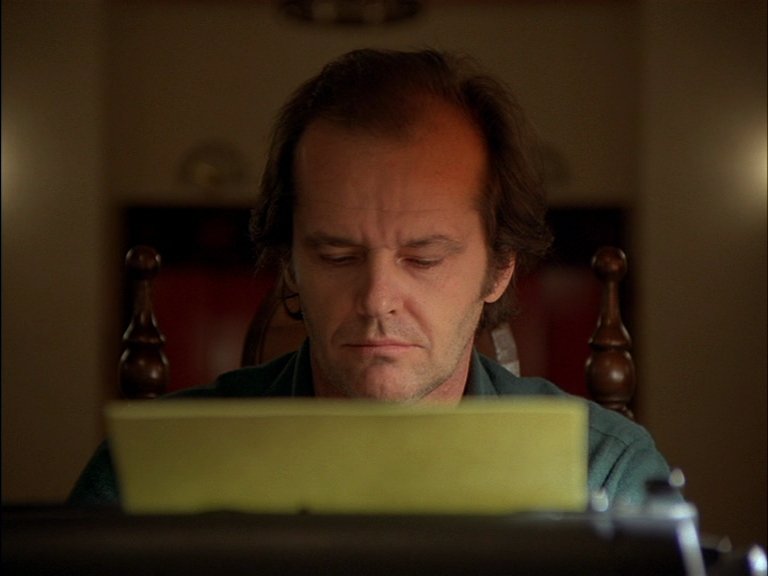
Jack Torrance (Jack Nicholson) sits at his typewriter in The Shining (1980). Image courtesy of film-grab.com
"The most important thing in a horror movie is logic, that you must know why the people go from here to there and why do they do this. You can’t trick the audience.”
—Vincent Price, Parkinson, 1972
Far be it from me to quibble with Mr. Price, but current horror screenwriting appreciation (at least from casual web contributors—which Mr. Price clearly wasn’t) tends to focus on the analysis of the logical aspects of horror. Those films rooted in the aggressive approach—not those at the eerie end of the spectrum. It’s all “How to Write a Slasher Movie in 12 Easy Steps” and not much else.
Frequently, modern horror screenwriting bounces between two main pillars of approach:
Aggressive Confrontation
Eerie Exploration
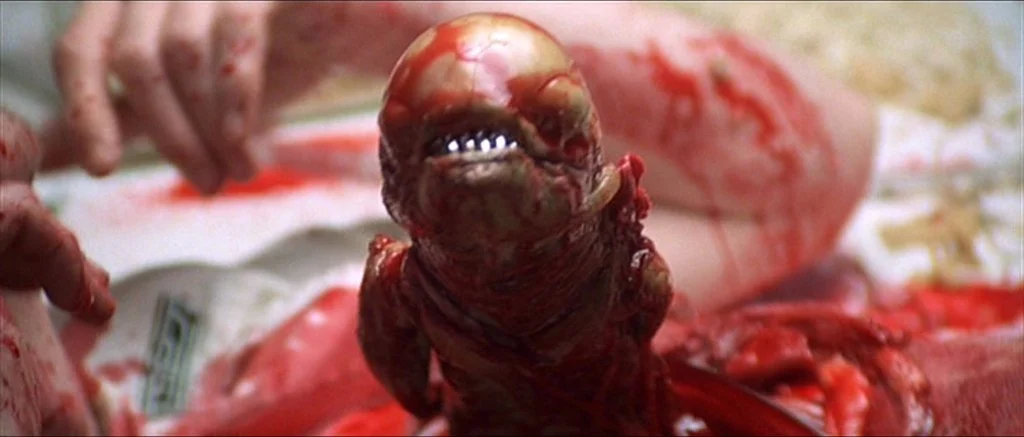
Although, horror stories are often not exclusively one thing or another—it can be argued that haunted house narratives like Alien (1979) and The Shining (1980) start with eerie exploration and end with aggressive confrontation. I will however, for our purposes, compare these two approaches to horror narrative to see how they differ and how they match up side by side.
The Definitions for this Purpose
The key components of an Aggressive Confrontation are a story which makes you feel uncomfortable, keeps you there and features a definite break in what we consider “reality” with extreme violence and bloody deaths. The narrative follows a logical progression of cause and effect with external consequences.
The key components of Eerie Explorations are the same but with uncanny mystery and dark secrets aplenty instead. The narrative doesn’t focus on cause and effect and follows an illogical progression with internal consequences.
Aggressive Confrontation is more… what is it and we must 100% kill it now!
Eerie Exploration is more… what is it, we can’t kill it, so let’s contain it/send it back from whence it came.
Below are the common “family” beats of Horror, though I much prefer genre markers as a term. These markers can be shifted around to a point—but I present them in the most straight-forward order—and for simplicity’s sake, it’s useful to think of Aggressive Confrontation as the realm of monsters and Eerie Exploration as the realm of ghosts. If there are key differences in the Eerie Exploration column, they will be both bold and italicized.
Note: We are not going into “slasher movie” territory today (or anywhere else). Monsters and ghosts are enough for this short article. Sadists and psychopathic killers—those insufferable narcissists—can wait their turn.
|
|
|---|---|
I - Aggressive Confrontation |
I - Eerie Exploration |
| 1. Prefers to Open Fast: The monster arrives in a spectacular fashion. Sometimes the evil can arrive as early as the first three pages to give everybody a quick jolt and hook them in. | 1. Prefers to Open Slowly: Showing the ghost early is a risky strategy unless you are going for a super aggressive, modern ghost. However, showing the tragic death of the person (via a prologue), who becomes the ghost is a legitimate introduction, so they can start fast too. |
| 2. Establish the Rules of the World, Players, and Problems: We establish the players, their story-relevant problems, and who/what holds the power. Theirs are interpersonal dynamics—we are following a group as this type of horror is only as good as its victims. The group ideally will have different but relatable characteristics. This differentiates the players quickly and will guarantee personality clashes once the pressure is on. | 2. Establish the Rules of the World, Player, and Problems: The ghost story is all about the slow-burn reveal of new information. It creeps along—all melancholy, sadness, loss, and poetic images. There's an individual dynamic to this kind of horror—we are following one person. The individual can have the luxury of not being like someone we know. The slow reveal of the protagonist's character is a key part of the story. |
| 3. What's "Off": Something is wrong, leading to a warning. This is ignored or it's just too unclear. Nothing seems to have gotten worse, so they carry on. | 3. What's "Off": Something is wrong, leading to a warning. A common beat for all horror. However, we are going to start to see some differences from here on. |
| 4. Bad Decision: Someone makes a big mistake due to a character flaw/weakness/naivety/ignorance/moral dilemma/under the guise of "progress of humanity" and awakens the evil. | 4. The Time Has Come or Bad Decision: Can be the same. However, it's different with a "family curse/being cursed" narrative or when someone has died and has now returned. If so, there's an overwhelming sense that the time has come "to face the music." |
|
|
II - Aggressive Confrontation |
II - Eerie Exploration |
1. First Disaster/The Evil Strikes Hard: A very good time to kill off one of the cast ... in a really dramatic fashion.
|
1. First Disaster/The Evil Strikes Softly: Someone is put in danger, but not necessarily killed. |
| 2. Character and Plot Lock-In: The threshold has been crossed, the transgression made, the evil has hit hard. We now establish that there is no way of turning back, either by...
Character Lock-In—Something personal has set the evil and the characters on a collision course, and/or Plot Lock-In—The point of no return. They cannot run away; somehow the bridge home has been burned and the stakes are established. |
2. Character and Plot Lock-In: Key difference here is the ghost definitely wants "you" (the individual) for some reason—but there's still the mystery of exactly why. The "presence" is slowly revealed as a warped dark mirror of the protagonist, clearly establishing the Character Lock-In.
Now the tricky matter of the Plot Lock-In. Why don't they just run away? Therefore, the ghost should be very mobile and stalk the characters everywhere. There is no place to hide. |
| 3. High Tension Debate: Tensions run high. The group finds a safe spot to argue amongst themselves. They need power/control over each other and influence over the evil. Searching for clues/ways to control the situation. An option here is to introduce a "past sin" for the P.O.V. character (the point-of-view character who gets stronger and who we slowly start to follow—final girl, anyone?). This past sin is somehow relevant to the situation. | 3. The Uncanny Meandering: The ghost story here isn't as active as the monster story. It prefers to be in mystery mode and leans more into the uncanniness of the evil. We establish that this can't be rational, probably either a spirit or the result of a mental breakdown in the main character. We may now know of the existence of dark secrets that will guide our exploration of the mystery—a form of deeply personal "haunting" from the protagonist's past. |
| 4. Make a Logical Plan: The group establishes the nature of the threat, what they know, their best guess about the evil, and then debate what exactly is to be done: destroy it or send it back (fight), run away (flight), suspend it (freeze), or reason with it (fawn). Searching for "rough rules" (weaknesses, limitations, and patterns of behavior) they have discovered that will help defeat the monster. Rules create hope and you always need hope that the plan will work. The plan selected is the most logical, based on the evidence they have. | 4. What can we do with the Illogical? As one cannot use logic, we must seek out unorthodox, possibly mystical ways to deal with the evil. Goals aren't always important narrative drivers here—often the engine of the story is reacting to the mystery. Therefore, the protagonist is complex, tortured, and mainly "passive." They are controlled by the evil. It's the character's fate and not necessarily the fate of the story world.
a. Give it what it wants. b. Contain it. c. Send it back. d. Banish it. e. Run away and hope it doesn't follow (but we know it definitely will). |
| 5. The Mid-Point Fail: The first plan (and the most logical) fails somehow and/or a key character death occurs. | 5. New Information: If a mystical plan is formed here—it fails too. Most likely something significant happens to "up" the jeopardy and increase the strangeness, or we learn about the ghost's motivation/back story. We are still in the "I don't know what's real and what's not" phase. |
| 6. Isolation: The players become more separated either through location (e.g. ascending or descending to a dark place), differences of opinion, or slow mental breakdown. They split up. | 6. How will the Ghost Attack? Gradual unease, building dread, then longer glimpses of the terror until finally we must decide how the ghost will attack. If the ghost can't form a physical presence, it must either scare you to death or cause its victims to have an accident/fatal mistake. |
| 7. The Evil Slowly Takes Control: Inventively kills the characters off, maybe one by one, in twos, an entire group in one go... or the evil infects/maims/takes over the players. It doesn't kill them, but hideously transforms them. | 7. The Evil Slowly Takes Control: The evil won't be ignored or denied, lurking in those dark corners, a shadowy parallel bleeding more and more into rational reality. If this pattern is expertly done, then the screenwriter will have hit the jackpot as this is a tricky task. Sometimes, a new ghost will appear to keep the fascination going or we may have a single subplot that allows some breathing space. |
| 8. Technique Dump/Pressure/Ticking Clock: The evil expands/changes shape/sheds its skin. There's almost praise for the monster now amongst the group—especially if there's a betrayal by a character. This creates a debate of who or what the real evil is.
The options become progressively worse in order to pace out the kills. Safe spaces turn out to be unsafe. Also, adding a form of twisted sexual release or sexual tension is a good device to deal with the second act drag. In fact, this is a good place to sling in all types of screenwriting techniques, including... a ticking clock. If that hasn't been introduced early, it will be introduced or reinforced now and will become critical to the story. The overwhelming pressure will lead one of the players to begin a mental breakdown—but not the P.O.V. character. |
8. A Dark Secret/Missing Information Revealed: Ultimately, the key to the protagonist's journey is that in some way, they are actually haunting themselves. At this point in the story, it's common for the somebody who is keeping a dark secret to succumb to terrific pressure and reveal it.
As internal angst is driving the main tension, we now approach the protagonist's mental breakdown. The key weakness of the ghost movie is the amount of credible narrative techniques that can be used. Most second act techniques are based on cause and effect. Here, we have one last move left. If monsters have a ticking clock, ghosts have a melting clock. The ghost story can still go "full dream logic" and visit those classic anxiety nightmares—like the heavy-footed escape from a pursuer or not being able to find a room. |
|
|
III - Aggressive Confrontation |
III - Eerie Exploration |
| 1. Second Plan: The formulation of a "second and more desperate plan," or the "do or die plan." Must go into the lion's den and face the beast. | 1. Not usually present. |
| 2. More Powerful Evil: The evil accepts the challenge, but this time is more powerful and the odds are overwhelmingly in their favor. | 2. Transformation/Redemption: If the ghost hasn't already displayed new powers/changed form, this is the last moment to do so, whether in final malice or in the final release of their curse...... |
| 3. It's Hopeless: The lowest point for the P.O.V. character. All is lost... backed into a corner... not dead, but certainly finished. | 3. Not usually present. |
| 4. Double-ending Showdown: You must be clever to outwit the evil. The monster dies once—may be resurrected—then must be destroyed again. Maybe requiring a final sacrifice to seal the deal...
...but remember the shark must blow up in the end. We need a big spectacular finale for maximum satisfaction. |
4. The End: Ideally explain a little, but not a lot. The seven best endings are:
a. It's real. b. It's imagined. c. It's ambiguous. d. I'm mad. e. I'm dead. f. "Take me instead!" for the active protagonist. In some way, the main character will sacrifice their own life for what they believe to be the greater good or trade places with the evil. g. Transcendental: The protagonist and the evil fuse together to form a new presence. They become one in a state of communion, whether voluntary or not. |
Conclusion
Between monsters and ghosts, the horror family DNA is first established, and then the subtle mechanics of the particular story type take over. As not to muddy the already murky water—popular sub-genres like Slasher, Home Invasion, Body Horror, Cults and even Dark Fairy Tales (you know—evil hags with bad dental plans) didn’t even get a look in. My sources tell me the Devil was upset about missing the cut too.
The current advice out there is to start all horror screenplays with a quick scare (in the opening three pages) and one every ten pages thereafter—seemingly no matter the sub-genre. At worst, this becomes a rushed gluttonous feast of dread, revulsion and jump scares, quickly making a mainstream audience reach for the antacids. There are plenty of quality scare moments (eleven—if you’re interested) in Alien (1979) but its opening is considered too slow by contemporary standards. It seems like nobody takes the time to even set the table anymore. The main question a horror screenwriter needs to ask is if they turned down the horrifying elements, would it still work as a compelling story?
Ideally, the unique nature of the evil should dictate the shape of the story. A high-tension debate within a group about the nature of the evil (leading to a very logical plan that will go very wrong), though not impossible, seems like an ill-fitting progression to a traditional ghost story. It just feels a little wrong. However, that marker can easily exist in a “haunted house” type narrative if we have a monster problem instead—in fact, it’s almost necessary to reinforce the world's logic. Okay, Mr. Price. You win.
If you want to avoid all this exhausting rule-following nonsense on screenwriting websites—you can use the chart above to assist in mixing the two camps. Start with the Eerie and switch to the Aggressive, a popular option if you want to avoid the formulaic—but a warning here: The other way around is a lot trickier to pull off. It’s about a complimentary flow of ideas and techniques that are right for the story. The audience mercilessly tracks narrative missteps and falseness, so observing the “feel” of genre and sub-genre parameters keeps the train on the tracks. You can’t trick the audience.
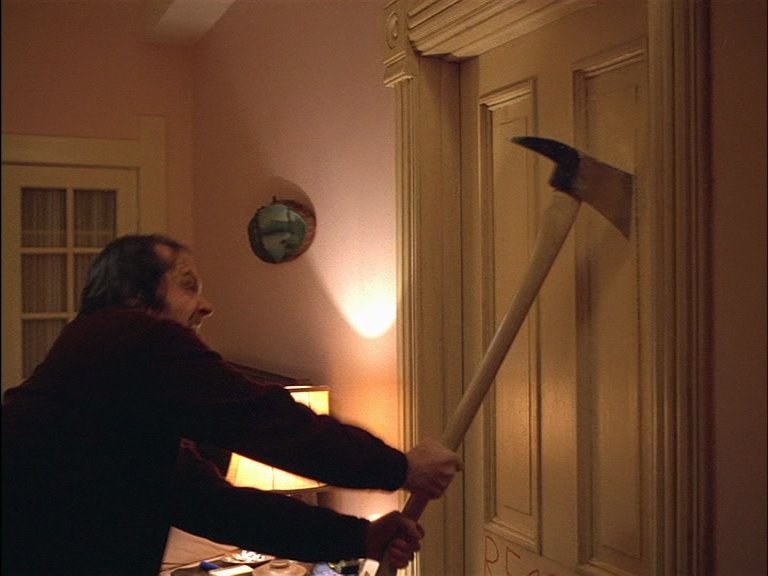
In conclusion, there’s a tried and true method to all this sub-genre madness as long as paradigms and rules don’t ultimately become your story’s straitjacket. Just remember, there’s a good reason why Jack Torrance starts off with a typewriter and ends up with an axe… or maybe that’s just writers for you.
For a breakdown of how the elements discussed above fit into a broader narrative, see our guide on the horror structure paradigm.
Article written by Arran Crawley
Arran Crawley currently has two ghost story screenplays on the Film Festival circuit, so far, they have won 4 awards and placed in several finals. These include wins at “Best Short Screenplay” at the Ethereal Horror Fest 2022 and “Best Dark Drama Feature Screenplay” at Austin After Dark—Fall 2022. Ever since he relocated to Canada in 2015, Arran has worked with emerging filmmakers, several film festivals (including Vancouver Asian Film Festival) and is the former Program Coordinator at the Calgary Film Centre.
You can follow his progress on Instagram - arrancrawley

Filmmaker Bari Kang discusses Itch!, from its practical gore and zombie influences to filming in his own NYC store and directing his daughter.