
Review: My Friend Dahmer
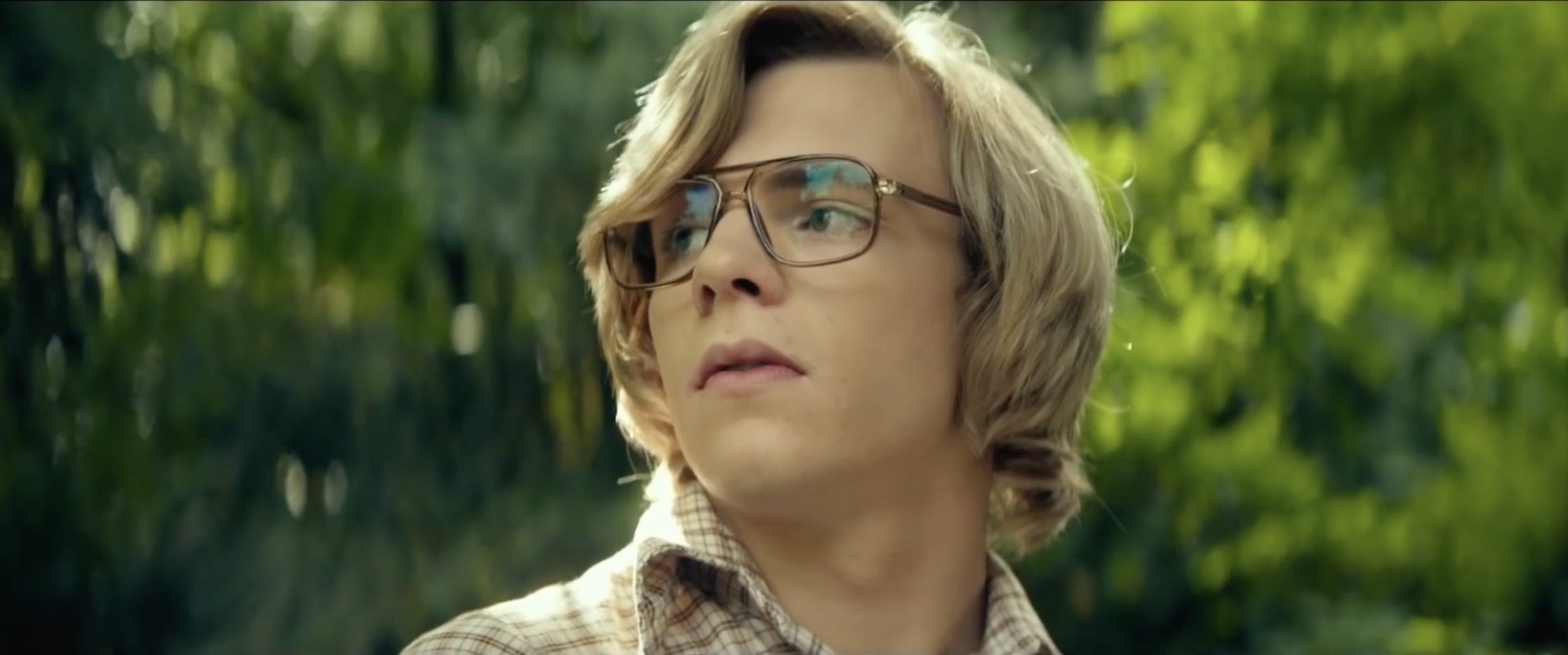
Ross Lynch as Jeffrey Dahmer in My Friend Dahmer.
Film: My Friend Dahmer (2017)
Director: Marc Meyers
Spoilers ahead. Sorry, not sorry. I need to talk about everything.
After watching My Friend Dahmer, I felt full of questions. But at the same time, I got it.
I empathize with Dahmer’s rejections and being practically invisible. I understand being weird. I actually sort of relate to him having a dead animal obsession—strange then, although now it’s practically a common hobby.
I mean really, I love taxidermy and bones. And that’s where it all started for Dahmer—roadkill and acid—according to the film based on Derf Backderf’s graphic novel, My Friend Dahmer (2012). Backderf was a high school friend of the real Jeffery Dahmer, literally. Shortly after discovering his murderous path and of his death in 1994, Backderf began working on a non-fiction graphic novel about him.
Maybe that’s what won me over the most in the film: Ross Lynch’s look and impersonation of the dark and strange teenager full of angst and confusion as featured in the novel. Even if you can’t relate to ever being a weird kid, did you ever meet a true stranger? Someone you just couldn’t pin? There are just, feelings—intuition if you will. Like when a deer can sense danger, when their ears rise and they realize they are being hunted. That’s what Backderf felt and that’s what the movie aims to make us feel.
From the outside looking in, Dahmer’s life and interests were set up to be almost perfect, in that he had a chemistry-obsessed father and didn’t have to buy flesh-eating beetles or something. However, the interest wasn’t welcomed and Dad didn’t want a son-like-father situation.
Maybe you’ve never had a friend who you thought wanted to kill you, but you recognized their emptiness and the uncomfortable unpredictability. You don’t know enough about them to know what they would or wouldn’t do, what they are capable of. What do they even like? How do they feel? No one asks Dahmer if he is alright. Not until it’s too late.
Bogged down by the lab, Dad wants Jeffery to be a tough guy—lift weights and date girls. Neither of which interested Dahmer, as he was already extremely fond of an attractive male runner who ran past his house every week and hated the guys who lifted weights at his school. Plus, dead animals were already his thing.
As the movie presses forward, we learn that Dahmer’s mother has very manic tendencies, to say the least. From hiring an interior designer who suffers from cerebral palsy—who Dahmer would later make friends with by acting in spasms like he too, suffered from the disorder—to telling her family to eat her raw chicken dinner mistakes, randomly buying a car and skipping town to avoid her ex-husband at their eldest son’s high school graduation.
Seeing as Dahmer’s life at home was a personal hell, things seem to perk up when he finally makes friends who don’t get beat up every day. Although they seem to be a bunch of rude jokesters, Dahmer plays along; I think just so he doesn’t have to feel alone anymore.
“Cut us open and we are all the same.”
But that’s not enough to fill the void of family. After losing his lab-like shed, Dahmer still desires to know what makes up the insides of things and people. How do their bodies work? What color are their stomachs?
Prior to writing this review, I was carving pumpkins with my little brother and all I could think was, “I know my pumpkin’s insides look the same as his pumpkin’s insides. But, if I would have gotten one of the weird green pumpkins, would they have had seed-ridden green goo inside instead of light orange?” I creepily understand Dahmer’s curiosity, but cut us open and we are all the same. As any studies would have revealed, had he just done the research.
I guess things are always better experienced in person.
Especially for our main character. We find out that his secret crush is a local doctor. Dahmer makes an appointment and can’t help getting what we can assume to be a boner while getting a physical—which he asked for after saying he came in for a cough. Creating peak sexual fantasies runs in parallel with Dahmer’s growing need for violence. Instead of collecting roadkill, Dahmer has begun to trap and kill animals himself, revealing pleasured expressions—the same face as when he’s with or thinking of the doctor.
In one scene, Dahmer almost kills a dog. Someone’s pet, their fur child, their family. He lets the dog go. However, later we can assume a Dahmer succumbs to a loss of control as two children discover what appears to be his aftermath—blurred intestines hanging from some kind of animal in the woods. As the viewer, although we can’t make out what the animal was, I still hope it wasn’t a dog. I’m a dog mom, is that obvious?
Anyway, like I said, the void isn’t filled and what had been sort of working for Dahmer was quickly losing its touch. He began to drink, played Russian Roulette with the high school’s nutty drug dealer, let himself be used for a paid mall prank and just after graduation, would live alone.

He’s starting to break and no one can see it but us, the viewers. Backderf didn’t really see it until after the fact either. Do any of us really, though? Maybe now, yes, what with research and the interest of serial killer histories. What makes a murderer, right?
I think in relating what would be a precursor to the life of a serial killer—similar to what we see in Netflix’s Mindhunter—the movie serves a great justice. Before the victims, the film still captures Dahmer’s darkness. He makes you feel uncomfortable and uneasy. We can relate and it’s scary. We want to help and it’s weird. I always want a happy ending, but the scariest thing is that it won’t end well. It was real.
We don’t even see the first victim’s death, but just like the mystery animal in the woods, we can assume the future is not bright for the hip hitchhiker Dahmer picks up in our final scenes. It was just the night before he was ready to kill one of his “best friends,” but also “enemy” in a way, with a baseball bat. Life as an alcoholic was the spark that lit the fire within him. He had his dad’s car and he was going to find out what was inside. Himself and others.
This movie is truly something of a biographer’s art. I feel educated and empathetic, but also dirty and uncomfortable. This movie makes me feel like I need a shower and also reminds me to be more observant of my surroundings. The world isn’t a safe place, then or now. And we are still continuing to learn and teach. How can this behavior be cured? How can it be prevented? Is it something inside that can be taken out?
Article written by Destiny Johnson
Destiny writes about true crime and thrillers. She likes movies that make you question the world around you, that keep you wondering, curious and even fearful.




Filmmaker Bari Kang discusses Itch!, from its practical gore and zombie influences to filming in his own NYC store and directing his daughter.