
Movie Review: Relic (2020)
Spoilers Ahead!
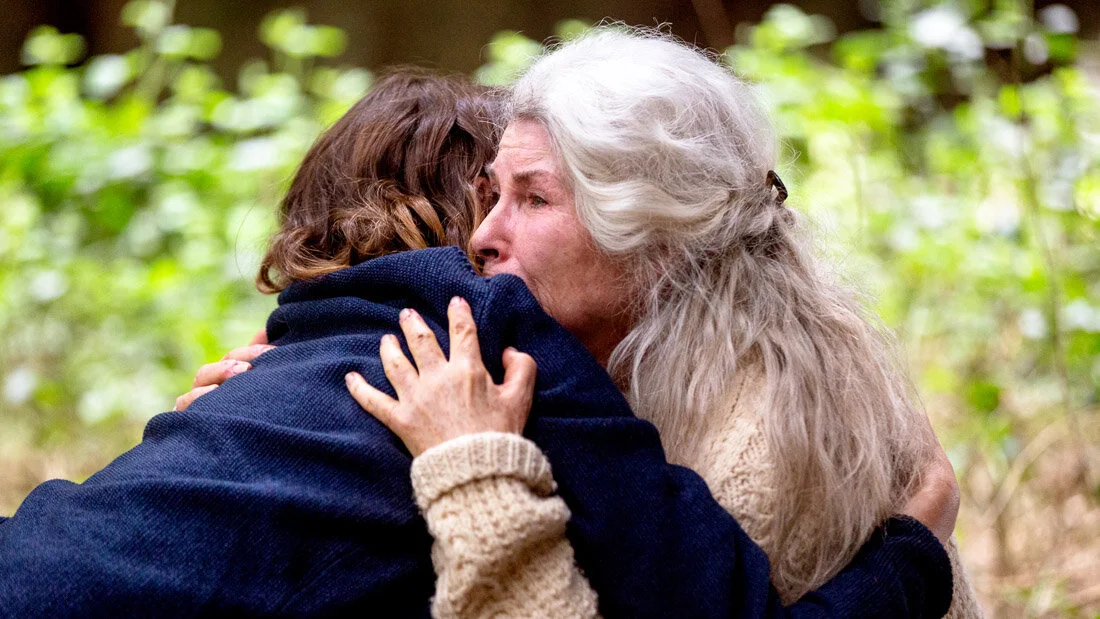
After watching Relic (2020), directed by Natalie Erika James, I was initially left feeling unsatisfied, with unanswered questions. Now, that’s not to say that the movie didn’t do its job by evoking thought or scaring me. It’s more I felt stuck in a strange horror movie limbo, wishing I knew just a little more to make that lasting connection.
At the beginning of the film, we are given just enough information to sense that something is about to go terribly wrong. Opening on what seems to be the holiday season, an elderly woman (Edna [Robyn Nevin]) goes about her empty home. We are taken through camera shots of fading lights and decorations, observing the still and muted sounds of a slowly overflowing bath and lurking shadows.
In the following scene, we’re forced to piece together that Edna has disappeared, and her daughter Kay (Emily Mortimer) and grown granddaughter Sam (Bella Heathcote) have traveled to assist local search parties to find her. While many questions circle in my mind within just the first few minutes, much of my curiosity is focused on why I should care about this older woman in the first place. I know nothing about her, yet something about the film wants me to care that she is missing, even though we later pick up that Edna and Kay’s relationship isn’t the strongest of mother-daughter bonds, and neither is Kay and Sam’s. The feeling of dread we’re introduced to in that first scene felt unbalanced with the lack of compassion or purpose due to these distant relationships.
Putting that aside, we are shown snapshots as to what Edna’s state of mind is like. From the somewhat alarming Post-It Notes reminding her to take her medicine or flush the toilet, to the rotten fruit, hoard-filled rooms and mold littering the empty house, one might first think she has dementia. This hunch is only confirmed when Edna does return—not found by a search party volunteer—but on her own with no explanation of her whereabouts other than she supposedly “went out.” For the most part, Edna looks fairly unharmed, with nothing but a bruise on her chest and some blood on her nightgown. To her, things are normal, and she’s even annoyed at the fact that such a fuss has been made over her whereabouts.
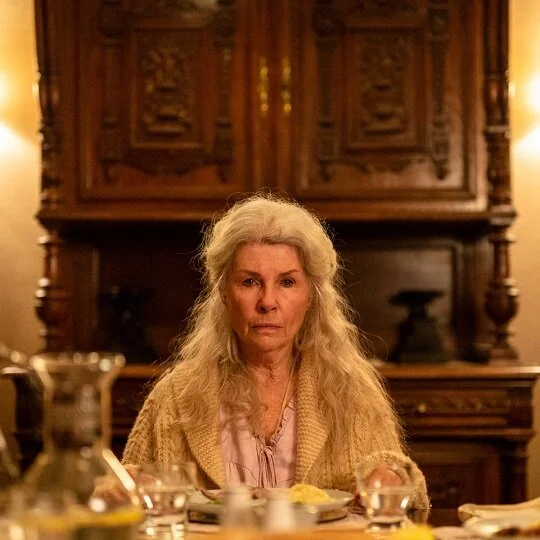
As the movie progresses, one can sense the slow burn of what it might feel like to watch the slow decline of an aging loved one—let alone decide what to do next and how they will be cared for. In learning more about our characters in these small instances and encounters, it doesn’t come as a shock when work-obsessed Kay wants to just put Edna in a home and let her mind deteriorate while supervised. Sam, on the other hand, also distant and not very close with her mother, offers to move in with her grandmother and take care of her, herself.
That is, until Sam, too, is the victim of her grandmother’s withering mind. However, something still isn’t right; the anger and the bruise that has now appeared to grow don’t add up. Somehow, the pieces are eventually placed where the viewer can no longer point all the blame on Alzheimer’s disease, but that something more sinister is swallowing Edna whole. On a crumpled Post-It, we find a darker note written by Edna: “DON’T FOLLOW IT.”
In the house, a relic reveals its presence and the similar story of a previous loved one, ultimately losing their mind alone. As the shots of the house grow longer, as shadows twist and quiet begets uneasiness, it starts to feel as if some type of monster could be lurking around every corner or behind every door. Eventually, Sam and Kay begin to look for it in the haste of discovering Edna is no longer herself, only to also be trapped by its walls. The final scenes are like something out of Mark Z. Danielewski’s House of Leaves, where the home’s interior goes beyond its overall measurements.
While I’ve found that the house itself stands as a strong metaphor for Edna’s condition, in its claustrophobic tendencies to what feels like its curse. I am still curious about the stained glass window, however. For that to have importance, I am left questioning what or why this relic was powerful and overtaking. I think this is ultimately where the horror lacked and where our connection was cut short.
Could the film still be chalked up as one of the most terrifying interpretations of dementia? That the relic holds the haunting story of the decomposition of a human mind? Maybe. I’ve found that in this thought, I’m slightly more accepting of the movie because whether you are living in fear of not being able to remember your routine or loved ones, or you're a loved one watching them forget you, the pain and suffering are quite great. The guilt and despair of having no right answer and ultimately no solution is very unsettling.
Article written by Destiny Johnson
Destiny writes about true crime and thrillers. She likes movies and stories that make you question the world around you, more so than what makes you jump.


Filmmaker Bari Kang discusses Itch!, from its practical gore and zombie influences to filming in his own NYC store and directing his daughter.