
Documentary vs. Drama: Telling Charles Cullen's Story
Today, as well as in my youth, I always appreciated movies that opened with the credits, “based on a true story.” The idea of learning something new easily sparked an interest in me. Whether it was a battle in WWII or the life of a famous drug dealer, I thought it was interesting how directors chose to capture what actually happened and fun to unearth the details they chose to create to enhance the story. Often, this would involve telling the story from a different angle or perspective to get the message across. Or, if there wasn’t a message or lesson, simply observe the decisions they made, from script to cinematography choices, to make the story a more memorable one.

The Good Nurse via IMDb.
Late last year, Netflix released Capturing the Killer Nurse, a documentary about serial killer Charles Cullen—as well as The Good Nurse, the dramatized version of the same story—just two months apart from one another. The streaming platform did something similar in 2019 when it released Conversations with a Killer: The Ted Bundy Tapes and days later, shared Extremely Wicked, Shockingly Evil and Vile with its subscribing audience. And while dramatizing (or thillerizing?) true stories has never been above the film industry—and can even be valuable—it often requires craft storytelling to help viewers understand why things happen the way they do.
However, when storytelling flops and you’re left with a two-hour languid film that you can hardly survive the ending, what purpose does it serve, exactly? And even more concerning, does it distract from the researched documentary where investigators, associated parties and victims’ families took time to tell the entire story both truthfully and openly? This article will look at the good and the bad of true crime storytelling, but it will be up to you to decide if any films based on true events are actually worth the watch.
In The Good Nurse, director Tobias Lindholm (The Hunt, 2012) took the approach of telling the story from the perspective of a close outsider. Instead of focusing on Charles Cullen (played by Eddie Redmayne) and imagining where it all may have started, the film follows Amy Loughren (Jessica Chastain), a coworker and friend who was oblivious to Cullen’s crimes until his patient records were brought to her attention by criminal investigators. Up until that point, the film tries its best to make a case for Loughren and Cullen’s friendship. Some could call it humanizing, but the reality of the matter is that sometimes you really don’t know the person next to you, so it makes sense to start at a place where the viewer gets to ride along for the unveiling of the truth.
To reflect on the director’s decisions in the film, I could tell that in retelling the story, Lindholm didn’t just want to recount the catching of Cullen, he also wanted to emphasize the stakes with which every party associated with the killer were already battling. In the friendship between Cullen and Loughren, the director makes a point to shoot scenes in lowly lit areas where secrets are shared and connections are made. Most notably, Loughren’s heart condition and her lack of health insurance—make keeping her job as a nurse incredibly crucial. We’re also made aware that both single parents love their children, however, Cullen does not live with his. Aside from these details, there isn’t much we get to learn about our characters; there is no depth to consume or background to connect to. Sure, we get it; we can pick up on the scenes cueing the drama, the darkness. But, what makes us care about their individual situations for the sake of this movie? Not much, unfortunately. In fact, the only truly chilling moment, or where I thought the director did a great job exploring what things might have felt like for Cullen, was the opening scene. However, for viewers unfamiliar with the story, they might not pick up on what’s taking place until much, much later.
And while none of the above comments is a stab at the actors’ portrayals of their characters, it’s just that I find the screenplay to hinge so much on the true crime story itself, that it lost its ability to explore areas of untruth that could have made the viewing experience more enjoyable, or possibly more meaningful. To me, that is most, if not the entire point, of making a movie based on a true crime. Instead, we are shown a flatline film whose only beating heart was the race against the hospital Loughren had to make, not just every day to keep her heart condition a secret, but to uncover what Cullen was doing despite being pressured by the hospital not to assist the police with their investigation.
Taking that and comparing it to the documentary Tim Travers Hawkins (XY Chelsea) put together, one might wonder that if the release dates were reversed, would Lindholm have even bothered? I don’t mean to be harsh, but the two films are truly so similar in the events and characteristics that they highlight, that it becomes difficult to get something meaningful from the thriller that we didn’t already get from the documentary. Even as a lover of true crime, I can still appreciate when a director is trying something new with the story and sadly, that mark was missed here.
Do I think The Good Nurse took away from the documentary? Certainly not. I just hope that if people are really interested in learning about the facts, they’d give the documentary a chance, as Cullen’s interviews are just as, if not more chilling, than his big opening in the theatrical version. I believe that the science behind it all, the knowledge of his uncovering, and worse, the hospitals that passed him along for their own protection were hard-hitting. Most of all, learning that Cullen was not a serial killer looking to help the weak, tired, and sick from living a life of misery, but an actual murderer, playing God in a place where people went to get better, but in reality, might never go home if under his care.
Article written by destiny johnson
Destiny writes about true crime and thrillers. She likes movies and stories that make you question the world around you, more so than what makes you jump.

Other articles you might enjoy…
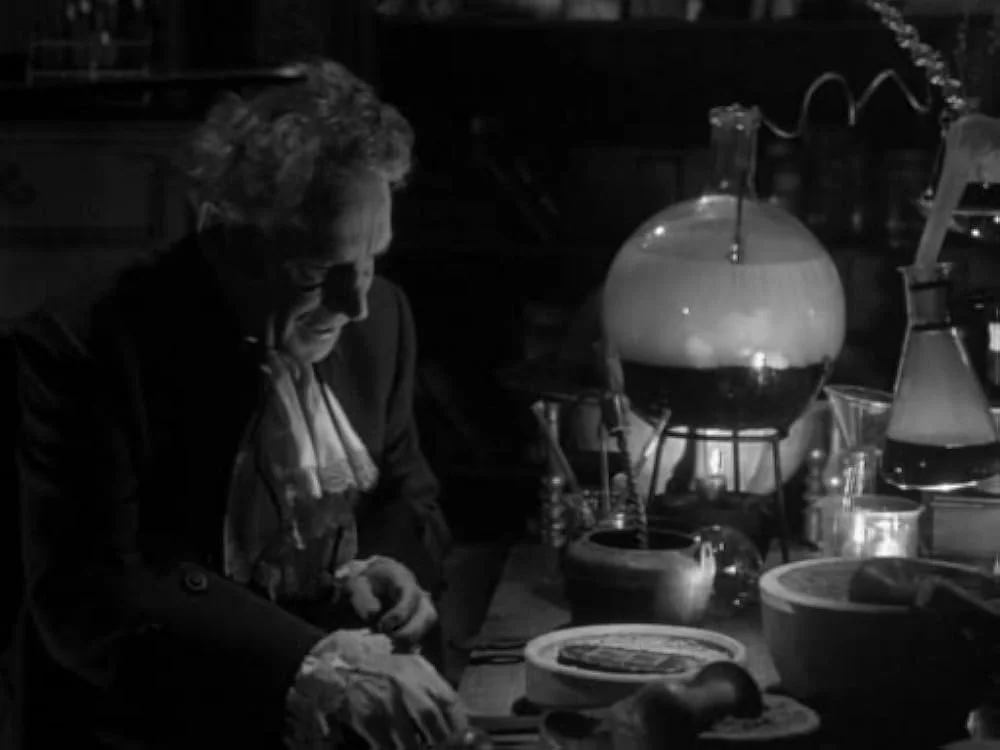

This column was created to give proper notice to the motion picture’s kith and kin: the television drama. Each installment, we’ll closely examine a stalwart story from the land of anthology horror. Why? Because as you’ll soon find out, they are all small, dark wonders unto themselves. This episode: Night Gallery’s “Pickman’s Model.”