[Movie Review] Steven Boyle’s Debut Film ‘The Demon Disorder’ Coming to Shudder
Coming to Shudder on September 6, The Demon Disorder marks the directorial debut of long-time special effects expert Steven Boyle, whose credits in makeup and effects departments include 30 Days of Night (2007), Daybreakers (2009), What We Do in the Shadows (2014), and Love and Monsters (2020), to name only a few. His pedigree in creature design sets a high standard for his new film, co-written by Boyle and Toby Osborne, to match, but it turns out he’s more than up to the task.
The Demon Disorder stars Christian Willis as Graham Reilly, whose estrangement from his brothers Jake (Dirk Hunter) and Phillip (Charles Cottier), following the death of their father George (John Noble), comes to an abrupt end when Jake arrives unannounced at Graham’s auto shop, to tell him that Phillip is suffering from the same affliction that befell their father. Graham’s reluctant return to the family’s farm in the Australian outback kicks off a journey of reconciliation and recompense for a man who wanted nothing more than to leave his family history behind.
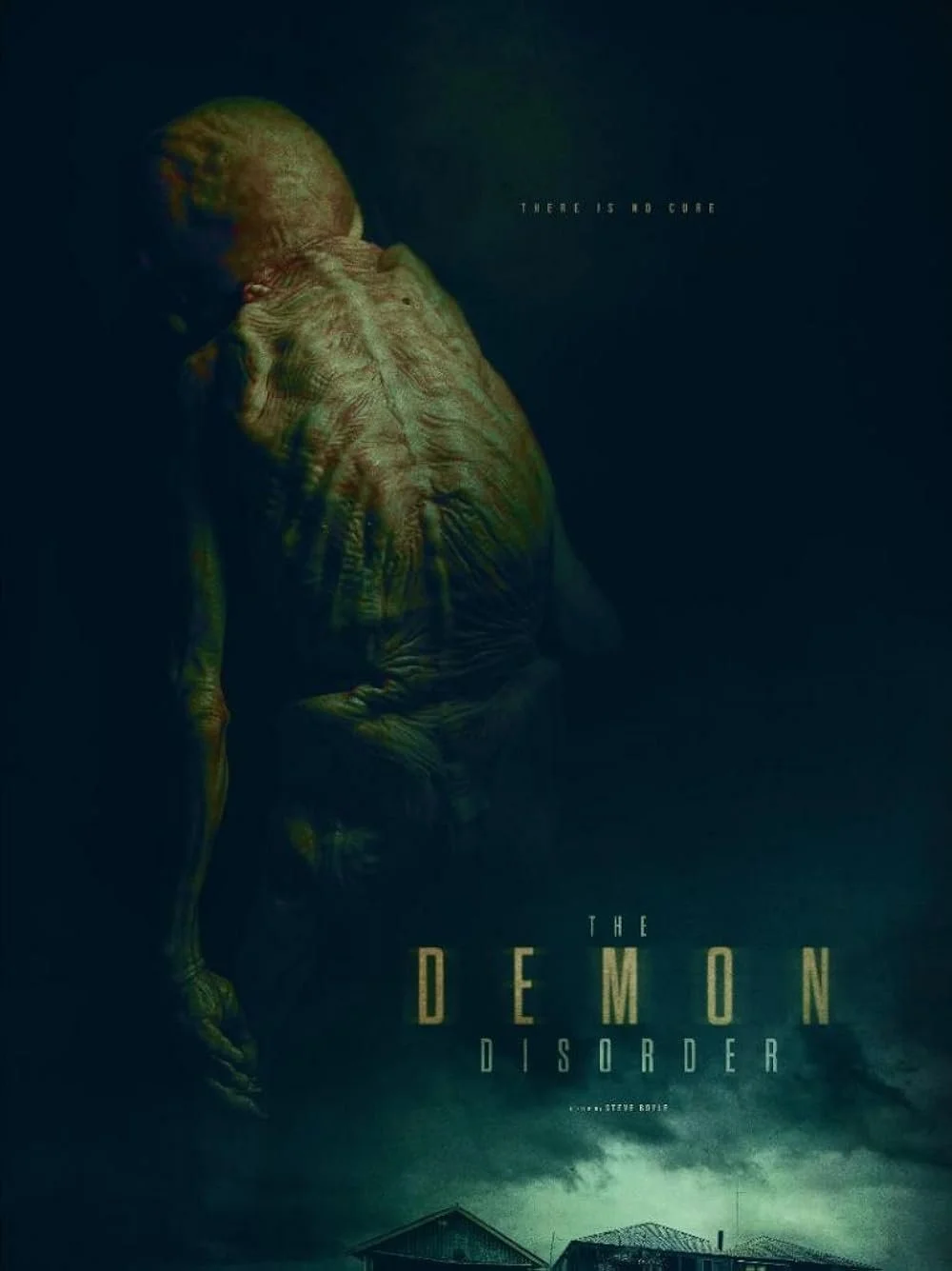
Image courtesy of IMDb.
If that synopsis seems more fitting for a dark family drama than for the debut film from a visual effects wizard—that’s fair. But over the course of the first act, that’s very much how this plays out. Apart from an opening sequence that shows off some promising practical effects, much of the movie’s first half is spent wading into the Reilly family’s past, meting out as little information as possible, so as to avoid spoiling the movie’s secrets. I’m a strong opponent of unnecessary exposition, but I have to admit to feeling the movie start to drag as the confusing dynamic between the three brothers plays out. As Graham reacquaints himself with his siblings, having lost all sense of authority he might have once had with his younger brothers, it looks as if Graham feels more in the way than anything else, as Jake and Phillip go about their daily routine. Intercut sporadically with flashbacks of their father confined to his bed, it’s hard to see how Phillip, youngest of the three, and still actively doing chores around the farm, could be suffering the same fate. But once things change, they change fast.
The second half of the film, and the third act, in particular, stands out from the first in every way. No longer concerned with holding its secrets close to the chest, The Demon Disorder is able to lean heavily into what gives it its name. The creature effects start out small but are impressive as hell, blending body horror and parasitic horror with ease, making sure to use plenty of bloody goo all the while. The creature designs, in their various forms and stages, are all fresh and equally bizarre, and the transitions are handled beautifully. One set piece, especially, was well worth the wait, though it’s best to leave as much unsaid as possible until you see it for yourself.
The most impressive part of The Demon Disorder isn’t just that the practical effects and makeup are terrific—they are—but that Boyle and his team manage (on their small budget) to use CGI, not to replace puppets and prosthetics, but supplement them. You’d be hard-pressed to find another film in its budget range that so confidently combines its effects departments in a way that complement each other so well. When the fully-formed creature finally emerges, the effect rivals countless bigger pictures that might not have the eye that Boyle has for giving his creatures the respect they deserve.
Even though The Demon Disorder comes close to stalling in its early stages, the patient build-up pays off in the end, delivering a solid feature, a notable monster, and a good sense of humor. At 85 minutes long, it frontloads its plot development enough that it frees itself to let loose in the end, which is what most audiences will remember when the credits roll.

Article Written by Ande Thomas
Ande loves the intersection of sci-fi and horror, where our understanding of the natural world clashes with our fear of the new and unknown. He is an independent member of the Society for Cinema and Media Studies and a supporting member of the Horror Writers Association. He writes about monsters and foreign horror and can also be found over on Letterboxd.
Other Articles You May Enjoy…
Filmmaker Bari Kang discusses Itch!, from its practical gore and zombie influences to filming in his own NYC store and directing his daughter.