
6 Women Horror Directors You Should Know
Women in Horror Month, which has grown in popularity as a celebration in horror circles over the last several years, is formally known as an international grassroots initiative that highlights the contributions of women across the genre’s film sphere. Though What Sleeps Beneath is not directly associated with this worthwhile endeavor, we wanted to celebrate Women in Horror Month with a list of six women directors you should know. These women have made ground-breaking films to truly frighten the viewer. With ideas from terrifying teenagers to monstrous mothers, each of these directors tackle horror in a distinctive way, making for unique voices in the genre.
Theresa’s recs
Ana Lily Amirpour is an Iranian-American director famous for her debut feature A Girl Walks Home Alone at Night (2014), the story of a feminist vampire who stalks her victims like a cat waiting in the shadows. Perversely human with equal parts fear, disgust, and suspense, this film is an iconic and refreshing new look at the classic vampire.
A Girl Walks Home Alone at Night is a black-and-white film that expertly uses light to transform the cinematography. It’s full of strange scenes that hone in on her isolation, but gives us little context as to why she is alone. The girl gliding on a skateboard in a cloak, dancing in her bedroom alone, and lots of walking to nowhere are painfully long looks into everyday life for a character who is anything but ordinary. And yet, the specific lighting in these scenes engulfs the viewer in a constant state of curiosity and suspense—shadows so black they feel like voids, and light so bright that it blinds—building our expectations only to contort them.
Packed full of complex female characters, A Girl Walks Home Alone at Night doesn’t shy away from strained familial relationships. Between the girl, the absent mother, and the sex-worker, these women rotate between being different kinds of caregivers, often elusive and with their own agendas. Functionally and thematically, this is a film by a woman for women. A Girl Walks Home Alone at Night is dripping with a dark and enticing atmosphere, and mixed with mundane references to life in a poor community, it ensnares the viewer in an unsettling and confusing world. In 2019, Amirpour announced that she was remaking a version of the 1993 film Cliffhanger. While there isn’t a release date yet, it will surely be one that you don’t want to miss.
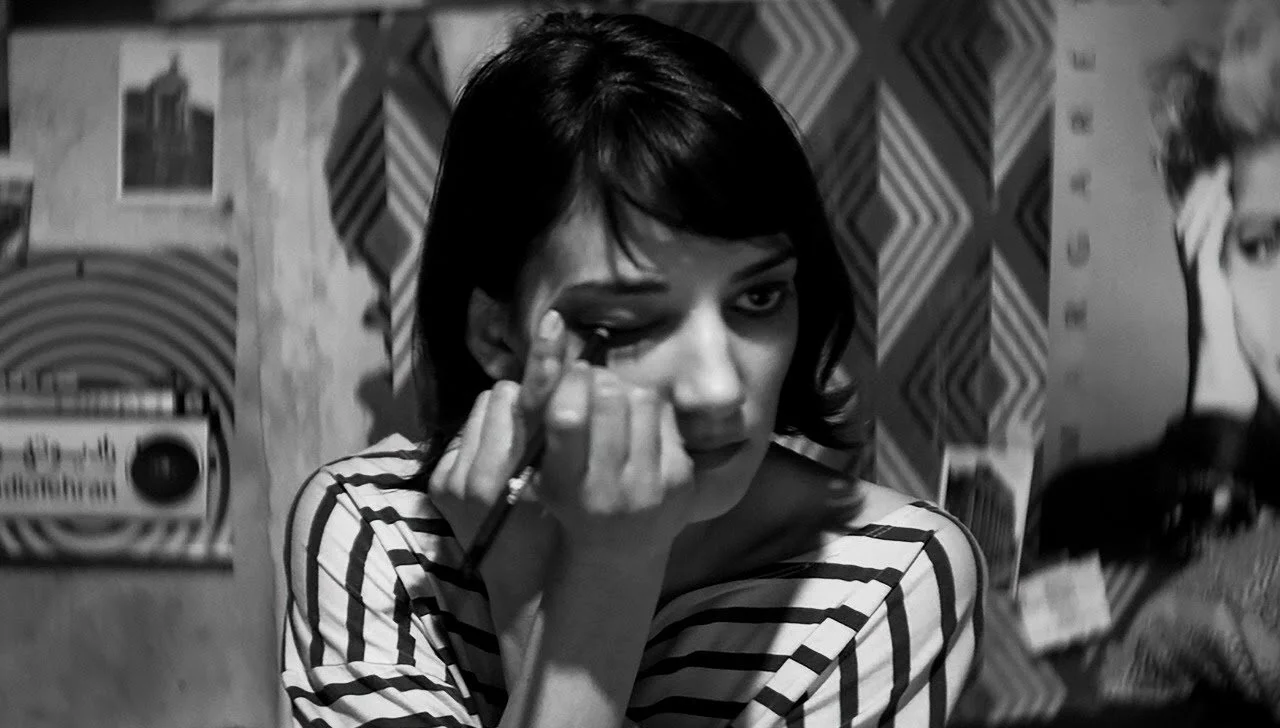
A Girl Walks Home Alone at Night, image via IMDB
Laura’s recs
Touching on the critically important intersection of the power of fairy tales and how stories can help us deal with reality, writer and director Issa López took the horror world by storm with Tigers Are Not Afraid (2017). A several-time literary award winner, López draws upon an experientially diverse background to fuel her work: with two years of archaeology studies in school, she switched gears into film directing and screenwriting, going on to pursue graduate-level studies in dramatic writing. López’s distinguished career includes, but is certainly not limited to, winning the National Novel Award granted by Mexico’s Institute of Fine Arts and Literature, and writing a number of TV shows that achieved among the highest audience ratings in prime-time TV for the country.
Tigers Are Not Afraid introduces viewers front and center to the trauma children deal with in the Mexican Drug War. A film guided by the literary tradition of magical realism, Tigers follows a group of orphaned children in a War-torn city, focusing on the fairy tales of Estrella (Paola Lara), a thoughtful, smart young woman. Estrella’s imagination intersects with and directly impacts reality as her own mother goes missing, and faced with hunger, Estrella takes shelter with a group of other children. The city’s ghosts implore Estrella to bring a dangerous gang member to them, and armed with only three wishes granted to her by her teacher, this brilliant young woman must work with her friends to hold on to hope, meaning, and fight to survive trying circumstances.
Tigers Are Not Afraid is a beautifully shot, compassionate study of the importance of stories and how much we need them—and how much they need us—in incredibly trying circumstances. The interplay of light and shadow in Tigers, along with brilliant cast performances, remind us that beauty can exist, even in danger—even in the dark. Many, myself included, see a thematic connection in the horrors of fairy tales with Gullermo del Toro’s own Pan’s Labyrinth, among other works. Praising López’s film, Del Toro announced shortly after the release of Tigers that he would be working with López in the future.
Looking to the future—when we can all safely go to the movies again—I’m very excited to see Nia DaCosta’s Candyman. Though I have not seen DaCosta’s other work, which includes the crime thriller Little Woods (2019), I’m sure she’ll bring a wealth of expert directorial and storytelling experience to the next iteration in the Candyman saga.
Destiny’s recs
Director of cult classic Jennifer’s Body (2009) Karyn Kusama and American screenwriter Diablo Cody both deserve recognition as Women in Horror. While the movie they collaborated on didn’t take off as originally planned—now criticized as a “forgotten female classic”—the film has since received well-deserved praise for its ability to tackle difficult topics such as violence against women, the rape-revenge fantasy, toxic female friendships, and even unspoken queer longing, all the while encouraging empowerment and accountability.
When the film first came out, previews and word of mouth insinuated that the movie was geared for straight guys as some adolescent sex fantasy—much of the reason why the film failed so miserably. At its core, Jennifer’s Body follows the friendship of two polar-opposite girls: quiet, nerdy Anita (Amanda Seyfried) and hot cheerleader Jennifer (Megan Fox). Following the night of a rock show where the girls get separated, Jennifer returns possessed by a demon and hungry for human flesh. She begins to hunt boys, luring them with her sex appeal, and only Anita, or “Needy,” can stop her.
Filled with unique slang and told solely from a female’s perspective, Jennifer's Body definitely has a lot to say about sexuality vs. sexual assault. However, hidden beneath a blanket of bad marketing that drew crowds only interested in Fox’s sex appeal and not so much the horrific events her character went through or committed against others, the movie was ahead of its time in fostering these conversations for and about women. Before women were speaking up in the 2018 #MeToo movement, Jennifer’s Body was insisting that people pay better attention.
Another name fans of horror should know is Lynne Ramsay, a Scottish film director known for We Need to Talk About Kevin (2011). An adaptation of Lionel Shriver’s novel, the movie retells a mother’s horror of coming to terms with her troublesome son, Kevin—a psychopath from birth—who is the shooter in the Columbine-style attack on a school in a rural American community, a very real and difficult topic Ramsay focuses on with the killer’s mother, Eva (Tilda Swinton) as she questions her own role in the tragedy and her unattached relationship with her son.
Through this, Eva is portrayed as this sort of “unsympathetic character,” but only because she embodies the rejection of being a mother all together. Seeing that she's hostile to herself and the choices she’s made, the viewer can tune into the regret Eva feels about where she’s ended up in life as they’re pulled back and forth through the family’s timeline. Simultaneously, it is almost as if we’re searching for answers to Kevin’s madness alongside her, and not just highlighting her possible flaws as a mother. However, instead of answers for his heinous acts, we witness Kevin’s sadistic behavior towards Eva specifically—something that is believed to have been seeded at birth.
In tackling this extraordinary story of a cursed mother, Ramsay successfully portrays the unsettling deterioration of Eva’s mind, almost like an approaching mental breakdown. And who wouldn’t break down in the event of their child killing other children? Or what could be arguably just as tragic: being forced into motherhood?
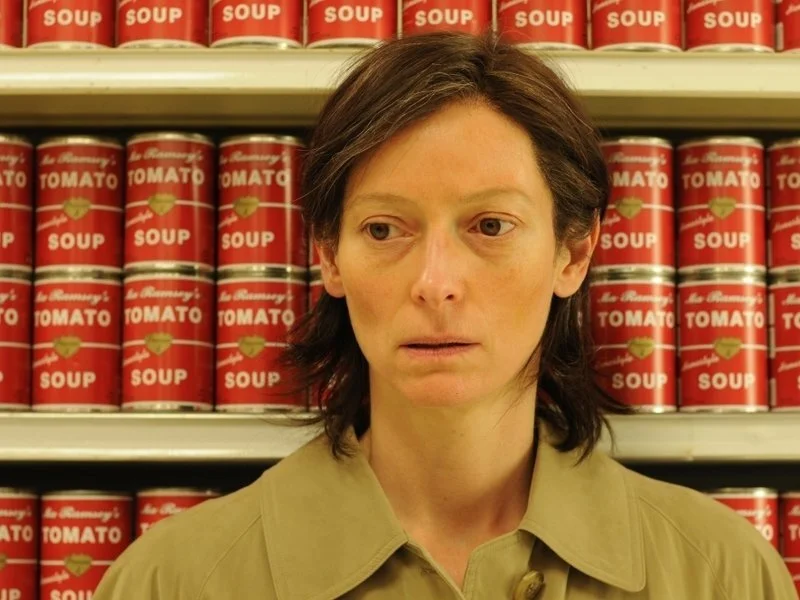
We Need To Talk About Kevin, 2011
Ande’s recs
In a discussion about women in horror, I would be remiss not to mention Jennifer Kent. Director of the meme-magnet film The Babadook, Kent’s debut feature, based on her own short film, quickly pushed her into the spotlight. A unique commentary on the power of grief to control a family, The Babadook captivated audiences with excellent performances—including Noah Wiseman’s talent for making an entire generation never want children—and an original monster that unexpectedly became an LGBTQ+ icon. Grief is a common theme to tackle in the genre, but what sets The Babadook apart is its realistic depiction of a mother-son relationship strained by depression and its willingness to admit that trauma never truly goes away—it shapes who we become. The film forces its characters to learn to live with their monster in a healthy way.
Kent followed up The Babadook with a gripping rape-revenge thriller, The Nightingale. The film is an extremely difficult watch that follows an Irish convict, Clare (Aisling Franciosi), in the Tasmanian penal colony in the 1800s. After a group of British officers commits a shocking act of violence against her and her family, Clare embarks on a brutal (and graphic) quest for vengeance. Though it’s been criticized for its depiction of Australian Aborigines, The Nightingale is still a strong entry in a traditionally male-dominated subgenre and plants Jennifer Kent firmly in the circle of horror directors to watch for years to come.
If you want to learn more about women in horror, make sure to check out:
And make sure to listen to @blackwomenarescary wherever you find podcasts!
Article Written by WSB
What Sleeps Beneath is a labor of love. You can support us by reading our articles, telling your friends about us, and donating to the magazine. Visit us on facebook and instagram @what_sleeps_beneath.

Other Articles You May Enjoy…

Filmmaker Bari Kang discusses Itch!, from its practical gore and zombie influences to filming in his own NYC store and directing his daughter.