
Celebrating Independence with American Indie Horror Films
In celebrating the U.S.’s independence, we’ve decided to highlight some of our favorite, and in most cases, iconic American indie horror films. Produced outside of big-name film studios, these movies tend to have a certain flare that breaks the cycle of traditional horror movies and gives us something to appreciate and contemplate. The American indie scene is alive and well, and has a lot to offer that satirizes and critiques the States’ self-image.
Destiny
The Devil’s Rejects (2005)
Dir. Rob Zombie

The Bay, 2012
Over the years, this movie has long been on my list of favorites and go-tos when it comes to American indie horror films. While Rob Zombie has directed a lot of off-the-wall films, such as House of 1000 Corpses (2003), The Lords of Salem (2012), and 3 From Hell (2019), just to name a few, The Devil’s Rejects has always stuck out to me. With the use of craftily written news reports and criminal backgrounds, this movie inspired an instant desire to research into who the Firefly family might have been based on. There is just something about the history of a could-be horror, similar to The Texas Chainsaw Massacre (1974) or The Blair Witch Project (1999), that makes us terrified but still curious for more information about the story behind the film itself. With Devil’s Rejects, we are captivated by the history, the ongoing action, and the acts of terror that define each of the story’s extremely iconic and evil characters.
The Texas Chain Saw Massacre (1974)
Dir. Tobe Hooper
In reading my first American indie horror movie highlight, one wouldn’t be surprised that I also chose to bring Texas Chain Saw into the mix. Starting from its original debut and even throughout many of the sequels and remakes, this story’s franchise still makes me cringe when I hear a chainsaw in the distance. Just as Hooper intended with his original feature, many first-time viewers were tricked by his portrayal of raw realism, believing that his story of a crazed butcher and cannibalistic family were real people who had killed as if it were an ordinary part of life to survive. The icing on the cake of this film is undoubtedly the story's madman, Leatherface, as his quickness and craft immediately place us in a mindset of real-world violence, coming at you at any given second.
Laura
The Bay (2012)
Dir. Barry Levinson
Taking place over a Fourth of July weekend in the late 2000s, The Bay is a found-footage flick that doubles as both tourist horror and commentary on the fragility of ecological systems: Water is life. Mess with the water supply, and you mess with the very foundations of life itself. (A warning we would do especially well to heed with the heatwave plaguing the Pacific Northwest as of writing, and with much of the U.S. stuck in the chokehold of a drought.)
The Bay flashes between different narrative threads, from a pair of oceanographers investigating reports of high levels of toxicity in the Chesapeake Bay to footage of tourists and Claridge residents enjoying the holiday weekend and beyond, highlighting human folly as the mayor prioritizes the economy over the wellbeing of people. The Bay is a fun watch on its own merits, but also highlights the importance of what the horror genre is capable of doing best: emphasizing awareness of issues on an emotional level, in a way the viewer can personally engage with. Like the killer picking off the irresponsible teens in any number of slasher flicks, The Bay serves as a nearly decade-old warning for humankind: Take care of the Earth, or prepare to get your shit checked.
They’re Watching (2016)
Dirs. Jay Lender, Micah Wright
Nothing quite puts the “horror” in “HGTV” like They’re Watching, another found-footage flick (noticing a pattern, here?) that follows the crew of a home-improvement show into rural Moldova, where a beautiful artist has converted a rundown house into something even more gorgeous. But, between an unexpected encounter with a funeral that puts the locals on high alert against the team, and something that the artist is hiding, They’re Watching features a cast of characters that will have your nerves on edge.
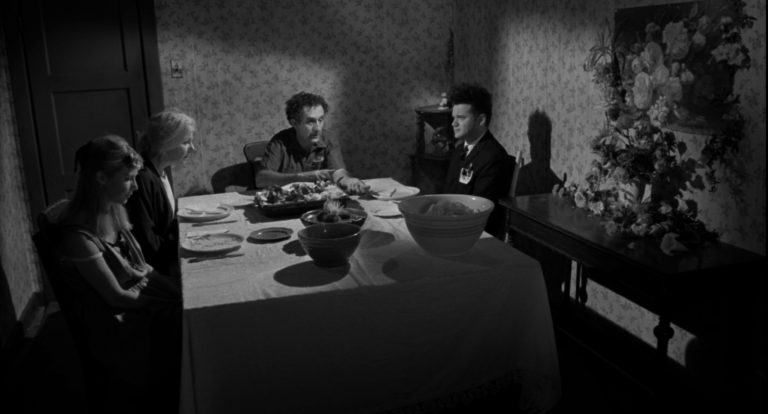
Eraserhead, 1977
There’s something to be said for the collision of reality TV and rural beliefs in They’re Watching, but also the loud, brash, frankly obnoxious presence of Americans in a quiet village with residents who would much rather be left alone. (Commentary on American imperialism, anyone?) Like in many such horror movies, these American characters continuously fail to pay attention to—let alone cultivate an ear for—local social cues, and accidental transgressions threaten to blow up in their faces. They’re Watching is a genuinely fun romp of a watch, especially for those of us who are deeply fond of stories like The Blair Witch Project.
ANDE
Eraserhead (1977)
Dir. David Lynch
There’s no doubt that indie producers have generated some of the most enduring horror films in cinematic history. Even the most hallowed franchises in horror got their start independently. But if I were to dive deeper, I’d kick myself for not mentioning David Lynch’s nightmarish debut feature, Eraserhead. Started as a project while studying at the American Film Institute, Eraserhead had a notoriously difficult production, taking several years to film and requiring regular cash infusions by Lynch, his childhood friend, as well as his lead actor. Essentially, the film is about the fear of parenting. Henry Spencer, played by Jack Nance, is unexpectedly thrust into fatherhood when, at a family dinner with his girlfriend Mary, it is revealed that Mary has just given birth. Henry is introduced to his child, a deformed lamb-like swaddled tightly in gauze. The child’s painful screams eventually drive Mary away, leaving Henry alone with the inhuman child.
Boosted by its maddening and intrusive sound design, Eraserhead is a surreal experience and truly a nightmare on celluloid. In what would become somewhat of a hallmark for Lynch’s career, mysticism regarding the meaning behind the film and dozens of stories have sprung up surrounding the story’s inception. For instance, Lynch once recalled that the film only came together when he opened a Bible, read a single verse, then closed it—though he no longer remembers what the verse was. Spencer’s bizarre baby has also been a source of speculation—Lynch has never revealed the methods used to achieve the effects, stating only that he thought the puppet “was born nearby.” Whether or not you believe Eraserhead reveals a deep, existential truth about the human psyche, or that it’s a meaningless bucket of hogwash, it is still a fascinating film to behold and deeply deserving of its place on this list.
Evil Dead 2 (1987)
Dir. Sam Raimi
If you were to ask me what I thought the anti-Eraserhead was, the horror film that exists on the complete opposite spectrum without leaving the confines of this list, Sam Raimi’s Evil Dead 2 would definitely make the shortlist. A half-sequel, half-remake of Raimi’s The Evil Dead, Evil Dead 2 is an uproarious horror-comedy starring the legendary Bruce Campbell as Ash who, once again, must brave the woods and fight off demons, deadites, and his own right hand. The film was produced ahead of Raimi’s intended sequel, Army of Darkness, because his new financier, Dino de Laurentiis, wanted a movie more akin to the original, rather than Raimi’s medieval setting for AoD. In order to connect the new film to the original, Raimi was forced to retcon his own movie because the distribution rights of The Evil Dead prevented him from using his own work as an introduction to his new work. So they re-shot a recap of the first film and built a new film with a similar plot around it. The happy consequence of this was that Raimi was able to use his increased budget to amp up his effects, adding the gory sheen that he couldn’t afford in his first go. I’m hesitant to call the sequel a better film than The Evil Dead, but I would put them on a level playing field, so why settle for one when you can watch them back-to-back this weekend?
Article written by The Academic Horror Writers League
What Sleeps Beneath is a labor of love. You can support us by reading our articles, telling your friends about us, and donating to the online magazine.

Filmmaker Bari Kang discusses Itch!, from its practical gore and zombie influences to filming in his own NYC store and directing his daughter.