
Nostalgia and Horror: An Interview with Grafton Tanner
Horror is haunted. By reboots, canceled projects, actors who have passed, movies that should have left more of a mark. But, more than anything, horror is haunted by nostalgia—nostalgia for the ’80s and the way things used to be done, the vision of directors who are now gone. But, author Grafton Tanner asserts, there is another way nostalgia has appeared: in how franchises and film sagas alike treat time, story and context.
Tanner, who studied at the University of Georgia and graduated with degrees in English and Film Studies, and has his master’s in Communication Studies, has held a number of jobs throughout his career, ranging from a middle school teacher to working on a haunted trail. He is also a musician, working with his band Superpuppet.
In his writing, Tanner examines nostalgia, neoliberalism, education, and Big Tech, and his work has appeared in The Nation and the Los Angeles Review of Books. Babbling Corpse: Vaporwave and the Commodification of Ghosts (2016), his first book, dives into vaporwave (a genre of music defined by chopped and remixed samples of lounge music, R&B, and smooth jazz from the ’80s and ’90s) and how the genre subverts the electronic ghosts present in the nostalgia industry. In his next book, The Circle of the Snake: Nostalgia and Utopia in the Age of Big Tech, which is being released on December 11, Tanner explores nostalgia further, arguing that the current focus is a byproduct of the attention economy.
What inspired your interest in researching nostalgia and Big Tech? How has horror cropped up in these spaces?
I’ve always been interested in learning about how people lived in the past. But I never really felt the pangs of nostalgia until I moved to college, away from my friends and family for the first time. I had never considered how my identity was bound tightly with a sense of place until I left home. I’m a musician by trade, but I couldn’t take my drum set with me to college. Something so simple—the ability to play drums every day—defined my identity more concretely than I had ever imagined, and I didn’t realize it until it was gone. Without that daily privilege I was completely lost, but eventually I became curious: what is this that I’m feeling?
A year or so later, I started a band with some friends, which I can say absolutely saved my life. The first day we got together we created a Facebook page, and that started me off on this years-long process of learning how to promote a band—which is to say, promote the brand of a band. I had never networked across social media, and I found it extremely disheartening. There is something particularly unsettling about constant promotion across social networks, like I’m creating this immaculate surrogate to exist in place of me. It’s always been very eerie to me. Most days, I spent more time promoting the music than writing it. This was around 2010, and everyone I knew loved Facebook. But I was always suspicious of it. It made me feel terrible. When I first read the studies that hinted at Facebook’s unique ability to erode mental health, I felt like someone had finally revealed a great and terrible truth.
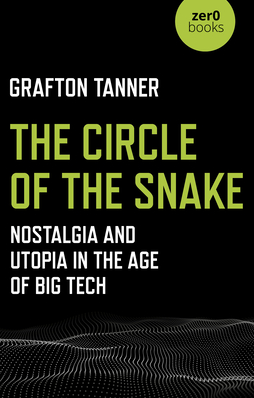
These experiences—suffering from intense nostalgia and getting sucked into the promotional grind of social media—inspired me to probe more deeply into how they’re related. Over time Big Tech grew even bigger, and nostalgia saturated the culture. Because nostalgia, like anger, is legible to tech algorithms, it circulates widely across networks, and it spread like wildfire throughout the 2010s. At first, cultural feedback loops generated nostalgic content like M83's "Midnight City" and Taylor Swift's 1989. But then Donald Trump weaponized the emotion to create his "Make America Great Again" campaign, which set off a trend of demagogues like Jair Bolsonaro and Viktor Orban inducing nostalgia to spread fascism.
Has the commodification of nostalgia had a significant impact on horror? From this intersection, have you seen hauntological influences on the genre?

Absolutely. To me, the 2014 David Robert Mitchell film, It Follows, really succeeds at pairing horror with late twentieth century hauntology. I write at length about it in The Circle of the Snake. The gist is, the film isn’t set in a distinct time period, and there are no smartphones or apps because, as Mitchell once said in an interview, including them would have dated the film. The movie seems entirely knocked out of time, but it is certainly not set in anything closely resembling the digital age. And the score is by Disasterpeace, this chiptune/synthwave artist known for creating 80s-sounding synth music. It all coheres to give this vaguely ’80s stalker movie vibe, but the world of the film is drab and static, unlike the vibrant world of Stranger Things, which presents the recent past as a museum of pre-digital curiosities. I’ve always considered It Follows to be the inverse of Stranger Things.
With the rise of Big Tech and the horrors related to personal, species, and planetary wellbeing that have come with it, have the symptoms of these things influenced the genre?
These large-scale disasters are difficult to narrativize, perhaps none more so than climate warming. Between Big Tech’s manipulation of individuals and the collapse of environments, it feels very much like we are helpless, like entities are controlling us without our consent, and there’s nothing we can do about it. Almost like we’re characters in some narrative written by someone else. To me, The Cabin in the Woods really captures that spirit well: the organized institutions of torture and exploitation to appease even larger forces.
Re-watching the film recently, I marveled at how well it has held up, with one exception. In the end, the remaining two characters conclude that humanity probably needs to be destroyed, to give someone else a chance since humans so thoroughly screwed everything up. They light up a joint and smoke while the world ends. In 2012, this was very much a common sentiment: humans are the problem and there’s no hope to fix what we’ve broken. We should just give up and let it all burn—which, re-watching the film, is actually a very selfish way to throw in the towel on society. Climate warming isn’t caused by all humans but by a select group: western capitalist elites like the Koch brothers, the Waltons, Hugh Grant of Monsanto, and other billionaire tycoons. Specific industries—server farms, airlines, the concrete industry, oil, agribusiness (to name only a few)—are the destroyers of the earth. And the choice of giving up really isn’t an option, at least not a progressive one. Yes, climate warming is a runaway train at this point, but groups like Wretched of the Earth and Extinction Rebellion are rightly refusing to give up.
Though reboots remain, can both cinema and horror still break boundaries in an authentic way, and by extension help develop the image of what comes next for both storytelling and the future?
Definitely, but it’s hard to create narratives in a hyperconnected world. To go back to It Follows: no smartphones in the world of the film means that characters cannot use them to stop the violent entity. There are no online forums where victims can share ideas about how to defeat it. All the characters have is each other.
So storytellers have a few decisions to make. They can either create horror stories that are set outside any recognizable time period, like It Follows, which allows for the threats to terrorize characters without the connectivity of digital technology. Or they can try to incorporate technology into their narratives (which can be hard—who wants to watch characters stare at computer screens all day?). Or they can reboot the past and tell stories set in periods before the present day, featuring horrors that are either easy to defeat or at least easy to define.
What movies or books would you recommend for those who want to better understand the potential impact of these elements on the genre?
If you want to read about how difficult it is to narrativize climate warming, check out Amitav Ghosh’s The Great Derangement: Climate Change and the Unthinkable. He details just how hard it is for writers to think the unthinkable destruction and complexity of the carbon economy. I would be remiss if I didn’t suggest starting with Eugene Thacker’s In the Dust of This Planet, which was instrumental in getting me to think about unthinkable horror (his book, Infinite Resignation, is also crucial reading for these dark times). I’m convinced James Bridle’s New Dark Age: Technology and the End of the Future is a work of horror. It has to be one of the scariest books I’ve ever read, and it ties all of these themes together.
Also, Uzumaki really captures the spirit of living with the threat of absurd, almost intangible horror. It’s a terrifying manga series about a town cursed with the image of the spiral, which shows up in various physical and supernatural guises, each more horrific than the last. It’s such a strange setup, but Junji Ito takes it to grotesque extremes, illustrating just how pervasive and dreadful such a fantastic scenario would be.
Finally, if you haven’t fallen down the rabbit hole that is Alan Resnick’s This House Has People In It, you must. It’s an excellent work of horror that crosses multiple genres: surveillance art, infomercials, the absurd. The characters exist in this programmed state, glitching and talking in these trite soundbites, as if they’re trapped in some game controlled by a higher entity. Many of the Adult Swim shorts are surreal in the best way, but This House really takes the cake.
This interview has been edited for length and clarity.
You can learn more about Grafton Tanner, his writing, & his music here
Interview by Laura Kemmerer
Laura tuned into horror with an interest in what these movies and books can tell us about ourselves and what societies fear. She is most interested in horror focused around the supernatural, folklore, the occult, Gothic themes, haunted media, landscape as a character, and hauntology (focusing on lost or broken futures).

Filmmaker Bari Kang discusses Itch!, from its practical gore and zombie influences to filming in his own NYC store and directing his daughter.