
‘Itch!’ Interview: Bari Kang on Practical Gore and Making Horror a Family Affair
After directing two crime thrillers, Bari Kang decided to make a horror movie. Which is a good thing for us gorehounds, because what he made was one of the most visceral takes on the plague/zombie subgenre that I’ve seen in a long time.
Kang’s body horror film Itch! follows Jay, played by the filmmaker himself, who picks up his daughter (Kang’s real-life daughter) from school after she bites another student and refuses to explain why. Meanwhile, reports emerge of a syndrome that causes uncontrollable scratching. By afternoon, Jay has locked down his small NYC discount store, sheltering customers, employees, and a pair of potential robbers from the plague outside.
This interview has been edited for length and clarity.
WSB: How did you go from an MBA to directing two crime thrillers, and then Itch!?
BK: I think the MBA thing was more obligatory. I wasn’t too excited about it, but my family was pretty set on me becoming some type of professional. I didn’t become a doctor or any of those cliché things that brown people do. And my dad was like, “Why don’t you get an MBA?” And I was like, “All right, I’ll think about it. Let me see if I can get into a good school.” And I did. I got into Columbia, and I was like, “All right, I’ll go for it.” So that’s how that happened. But I graduated right before that meltdown we had in ’07. The job market wasn’t looking too good. Later I got into acting, which led me to writing and directing because it took me over a year and a half to realize, after auditioning for a long time, that it’s a tricky industry. So I didn’t want to just sit around auditioning, and I just decided to write some stuff. And then, of course, I couldn’t find any good directors that wanted to work for whoever this guy is. But I’m better for it. It all kind of made me better.

Bari Kang’s Move from Crime Thrillers to Horror
What was it that made you dip your toe into the world of horror?
Out of necessity. So my first film, Lucky, was very much an experiment just to see: Can I even do this stuff? Here I am talking about being an actor and getting leading roles, but what if I’m just shit? It was kind of watchable, and it did okay. It had some nice reviews, some really bad reviews, some mixed stuff, but I could see that there’s something here that I should put some more energy into—kind of hone the craft and work on it. And then I said, “I need to make a better film, now that I know how to go about it.” I still had a lot to learn. I still have a lot to learn.
Then I made what I thought was a very good film with Scrapper. We made it for a few hundred thousand, but it looked like a million-dollar movie. The script was tight, everything was great, but when it came to distribution, it was one thing after the other. First, it came out during COVID. So the festival route kind of blew up. Then my distributor filed for bankruptcy and took the whole ship down with them. I learned that it’s really hard to break through. But I’ve always heard people talking about horror; there’s a lot of community there. People really show up. They appreciate it. It’s easier to get heard. And then my wife, who helps me with all this stuff, was telling me I should try something different. But I was like, I don’t want to do this anymore at all. I was pretty disillusioned. But I got an idea, and I said, “Okay, let’s try a horror film. Let’s just make a movie to have fun.” You know what I mean? Let’s just do it for that. And I did.
Was it easier to get distribution for Itch! than your last one?
I don’t know if it’s very easy to get distribution for anything, to be honest. What is the deal? Are they giving you some money? What are they going to do with it? Even though this film I made cost much less than my last film dollar-wise, a lot of blood, sweat, and tears went into it. But yes, the film seems to be more valuable to the market even though it might not be a superior product, if that makes sense. I think there’s just more demand for genre films of this nature. I kind of mix and match a couple of genres. There’s drama in it. There’s a little bit of thriller in it, mystery, but yeah, just giving it that touch of horror does help set it apart, especially during the festivals. We played a lot of really good festivals and that was a really cool experience. That’s when I realized there’s something here.
The Origins of Itch! and Filming in His Own Store
What was it about itching and scratching that made you want to make it the prime feature of this plague that’s killing everybody?
Yeah. So, the store is my store. That’s my livelihood. That’s what I do. And, something like that kind of happened where this crazy customer came in, and they were just freaking out about being bitten and scratching, and I was like, “Man, I think it’s bed bug lady or something.” But it just sat with me, that idea. I was like, “That’s interesting. What if she couldn’t stop, and what if that’s something trying to spread and that’s how it spreads? Zombies, instead of biting, maybe that’s how it spreads.” You see somebody scratching and all of a sudden you feel like you need to do it. I thought the idea could be interesting on a psychological plane. I started writing, and it kind of morphed into this father/daughter dynamic.
Did you bring any other experiences from your retail life to the film?
I’m just trying to run a tight ship, see where we can get extra value. Coming from the world of retail, brands are the same as generics. The stuff inside is the same. It’s just labeled differently. DPs, for example, you might have 10 feature credits on your resume, but there might be someone better than you who has none, but they’ve done amazing work; it’s just not a feature. So I translated that from our experience as a small business owner. It’s not always about what looks good on paper. How to get things done on the cheap, I suppose.
Did you have to film Clerks-style, keeping the store open during the day and then filming at night?
That’s exactly what we did. But the only difference being it kind of worked for us because I just wrote that into the story, like the lockdown. The shutters come down, and you can’t tell if it’s day or night outside.
While writing, did you revisit some of your favorite zombie or plague movies?
Yes and no. I looked at one or two, and then I stopped because then I was like, “Wait, I’m going to end up just rehashing stuff.” And I’m sure I did that anyway, just because of that whole collective mind thing that just kind of recycled a little bit. But it’s how you go about it, I suppose. After the fact, I went and I watched a lot of stuff. But, yeah, all those classics were already there in my head from having seen them. But I did watch The Mist right before, to understand how to go about it in that confined space.
Do you have any favorite horror films that you go back to?
I love Dawn of the Dead. And of course the whole 28 Days Later trilogy. I definitely love that. There’s a lot. The Thing, Assault on Precinct 13. I don’t know, is that considered horror?
I’ll accept it. You did a lot yourself on this movie. How did you balance all your roles and stay sane?
I think, honestly, I do all that because I have to. I wish a lot of the time I didn’t have to. It’s just if you’re expecting other people to wear multiple hats, you’ve got to do it yourself as well and lead with that example also. I suppose when you’re making it, again, it’s like tunnel vision. You just want to get through it. I don’t know if I was sane or just knew I had to get through it. And I’m sure there are some mental scars, but it seems to be worth it.
Making Horror with His Daughter
What was it like directing your daughter?
It was a little scary at first. I’m very happy that’s the way it turned out, and I’m very happy we shared that, but it was never planned. When I realized I wasn’t going to be able to find a child to do this without having to go a union route, it was like, it’s got to be my kid. Then I had to go back and rewrite the character. That’s why I said, “Okay, she’s so traumatized that she doesn’t even talk.” I took a gamble on that. And I think it worked. Drove me crazy, of course. Having your kid there, you’re worried about them, and then that’s another thing you don’t need, but I’ve got to say if I get nothing else from this experience, that shared journey on that film with her was invaluable. I’m really glad we did that.
Do you think that added some emotional weight to some of your scenes together?
Definitely. For me, because it was pretty easy to just imagine your own kid. There she is. And she was seven, so she was still very—I don’t know if you have kids—but once they get to nine, 10, it’s chatterbox. But she was still very quiet during that time, and things would affect her, so it was very easy for me to tap into that. I think early on she was just a bit shy and scared about what’s not real. Once she realized this is pretend, they’re playing, then she had a blast from that point on, and she was totally into it.
Creating the Practical Gore and Sound of Itch!
The gore was awesome. Who did you collaborate with on that?
That was a young lady named Mariana Guzman Corrales. She is really good. And it was all practical, all on set, a bunch of experimentation and things like that. I learned two lessons. If you want to see 10 as being the top, go for 100, and then maybe it’ll look like 10. And that’s true. So, better to go overboard than trying to be too realistic and then the audience is like, “Wait, what was that?” I remember she was making these scratches and I said, “That’s huge.” A person can’t scratch themselves that big. And then I made her make it small, and then in hindsight I was like, “She was right. I should have had it big.” If you can keep it simple, not everything has to be pools of gushing wounds. She was once demonstrating something to me on FaceTime about a gag. She was showing me a test with just a little bit of latex, and then peeled it off, and I was like, “Wait, what is that?” She goes, “That’s nothing. That’s just glue.” But I was like, “That looks like you’re pulling your skin off.” And I was like, “That’s creepy as fuck.” Then we started doing that, and she started adding color to it, and it was the simplest thing. It ended up being the weirdest thing and the most disturbing thing, and it was so simple, but we didn’t discover that until later.
I guess you had to clean up some fake blood stains before the customers came back.
Yeah. Yeah. The flies came because you know that fake blood is like sugar.
You did a great job of building the story outside of the store with the social media posts and radio spots. How did you know when to turn things up until we get to the full-blown, worldwide apocalypse?
I had it on paper, so I think it comes back to the map, which in this case will be your screenplay. How do I make this small, primarily one-location film? How do we bring it into this apocalyptic world that’s crumbling outside? Nowadays we use social media.
At the same time, if I had to do it again, maybe I would have introduced one or two more characters looking at their phone and maybe seeing someone that they know kind of losing their mind. But I feel like, as far as information, just give as much as is necessary, and then you can refine it in the edit and see if I need more here or I need less. You can always cut down, but it’s difficult to add in.
The music in the film really has a way of getting under your skin. What was collaborating with Fashion. like?
Yeah, it was very easy. The hardest part is finding the people. I usually insist that unless they have a huge body of work, can they score one scene for me? Not even a scene, maybe like a 30-second clip. And then I give my references. This is what I’m going for. I had a very clear reference for this one. I usually use my reference in our early cut so that they can see what we’re trying to do. And then I’ll say I want this but don’t copy it, obviously. You need to bring your own stuff to the table here. But on this one, Fashion. did a great job. I told him I wanted that kind of retro ’80s horror film John Carpenter vibe, and if we go more modern, It Follows was a big one. I was like, “That’s the vibe we’re going for.” But I think what you were also referring to was that creepy stuff. So that’s actually our sound design artist. He also came up with these sounds. So whenever somebody started scratching or was doing something really freaky, he would throw that in there, and then the music would fall into the background, and his sound design would come into the foreground. But it all blended so nicely in the end that you don’t know what you’re listening to anymore. You don’t know if it’s the effect, if it’s the sound design, or if it’s the music, and it all works.
What’s next for you?
I’m actually thinking of doing something with vampires. I mean, I’m waiting to see how the world is going to react to Itch!. I know it’s out, but it’s only out on VOD. I think it’ll be exciting to see what happens once it’s on some more streaming services where people don’t have to pay, because yeah, it shouldn’t cost five dollars to rent a movie. I would love to develop this world more, but only if the people want to see it. I think I’m kind of drafting this father/son movie this time. I’ve got a boy. He just turned eight. And he was like, “Daddy, I wasn’t in the movie.” I was like, “I know. Yeah, you were tiny.” And he’s like, “Am I gonna get one?” I was like, “I don’t know. Let’s see if I can make some money back.” We’ll see.
Article by Pat King
Pat King has had short stories, essays, and a novel published in various places online and in print. As P.S. King, he’s had two short film scripts produced, as well as directing several experimental videos. He is the former film editor at CulturedVultures.com.
Other Articles You May Enjoy…
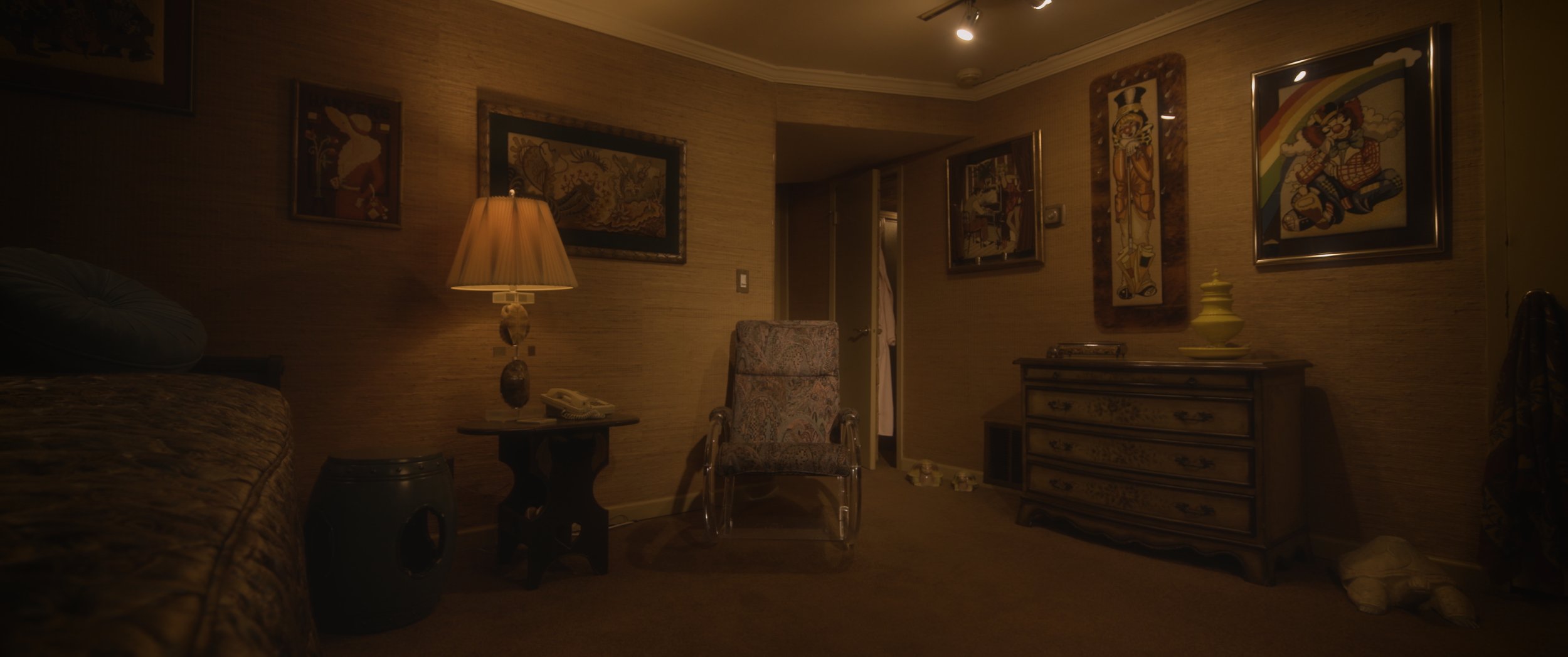

Filmmaker Bari Kang discusses Itch!, from its practical gore and zombie influences to filming in his own NYC store and directing his daughter.