The Mummy's Curse: Novels that Revive the Victorian Egyptology Craze
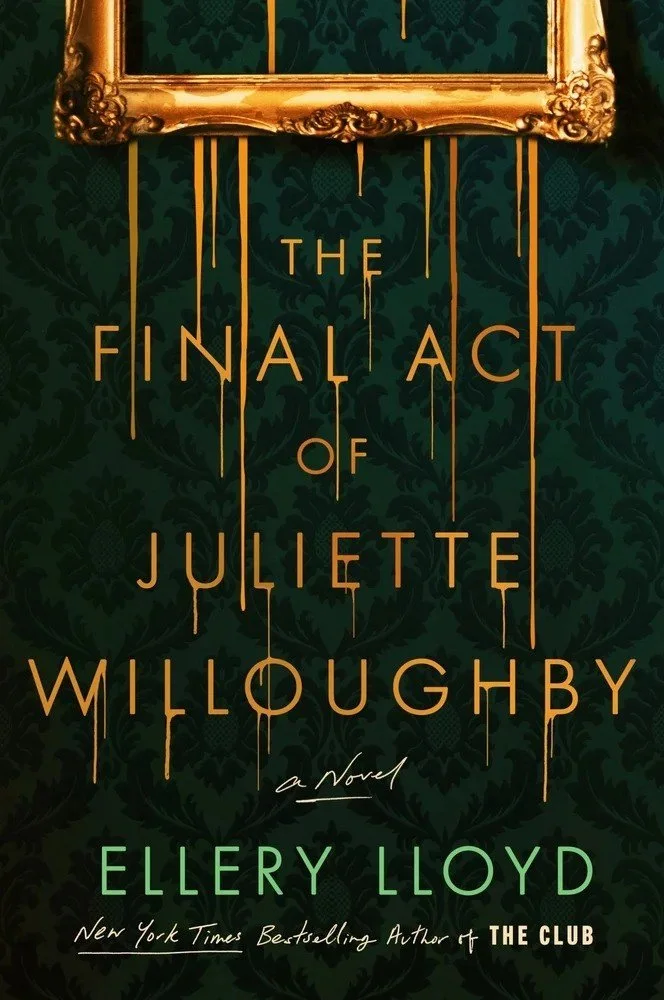
Novels about art works, and novels about archaeology, have something of the ghost story in them. The Final Act of Juliette Willoughby, by Ellery Lloyd, and Nephthys, by Rachel Louise Driscoll revive the long-standing trope of the mummy’s curse.
Paintings with hidden meanings, lost masterpieces and the subterfuge of fakes have all inspired writers of fiction. The obsessiveness of artists, the gloss and darkness of paintings, and the huge sums of money which power art collections, are strong themes. The way that works of art link us to the past also gives a sense of the uncanny.
The Final Act of Juliette Willoughby is told across time, with artifacts from Egypt brought to 19th-century Britain, a diary from the 1930s, reminiscences of Cambridge in the 1990s, and the culmination of events in 2020s Dubai.
A painting thought to be lost reappears. It is from the surrealist movement in inter-war Paris, and makes use of ciphers, disparate scenes, and references to mythology. The painting then gets a doppelganger—a second version of it turns up, almost but not quite the same. The doubling of images is an intensely surrealist theme and draws the novel’s protagonist into authentication dramas.
The painting exists in two versions, and the lives of the people who created it, rediscovered it, and tried to market it also exist in disparate self-creations. Two of the characters are people who have disappeared—like the painting itself—and are thought to be dead. The barrier between life and death, and memories of those who are gone, are made enigmatic when the past resurfaces.
In an article for CrimeReads, Ellery Lloyd (the pen name for a writer couple) comments on the Egyptomania of English Country House designs in Victorian Britain. The British used Egyptian antiques as decorations with a sense of exotica. The Egyptian symbols, appropriated by an imperial power, still had the ability to haunt their owners, and stories about curses and the supernatural abounded. This insight provides part of the background of the novel.
The Final Act of Juliette Willoughby also puts a fictional artist in a historical framework, with references to interwar thinkers such as André Breton. The story line shows some of British culture’s engagement with the Middle East, starting with the fascination with Pharaonic Egypt. Then in the 21st century the drawcard is the wealth and power of the Gulf States, where the pace and opportunities are underlaid with a fear of their opaque power structures and draconian legal systems.
The Final Act of Juliette Willoughby is intriguing from first to last. Was the Willoughby estate cursed because of its collection of Egyptian artifacts? It depends how one interprets the story…
Nephthys, by Rachel Louise Driscoll, is an Egyptology tale set in the 19th century. Clementine Attridge is one of two daughters of an English collector of Egyptian artifacts. She travels to Egypt to resolve the misfortunes and displacement which have devastated her family. Having grown up studying hieroglyphics, and playing at being Egyptian goddesses with her sister, Clementine has an imaginative and scholarly link with Egypt. She travels down the Nile, moving through a landscape determined by British imperial borders and populated by Egyptians who are critical of their overlords. Also, there are the ominous presences of the dead, the immortals and the deities.
In Nephthys women’s experiences are foregrounded. The two sisters at the center of the story take up archetypal roles which lead back to the mythology of ancient Egypt. The river, the tombs, the crocodiles and the winds from the desert all provide a sense of menace. But the real risks to Clementine’s life and dignity are closer to home. In Nephthys, stories about the supernatural are deftly linked to portrayals of the exploitative ways of British colonial explorers.
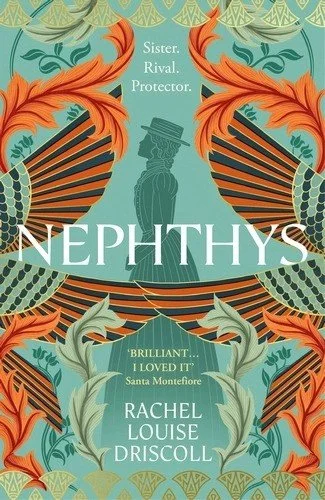
The initial drama is unleashed when Clementine is instructed by her father to read an inscription during the unwrapping of a mummy. The mummy turns out to have a grotesque form—it is an individual body with two heads. There is also a perfectly preserved amulet carved from red jasper, a stone once believed to be synonymous with the blood of Isis.
Driscoll unwinds the story with more sensitivity than the Victorians who gaped at ancient Egyptian corpses. She makes a subtle and undulating narrative out of the familiar trope of the cursed artifact.
Nephthys can be compared with another recent novel in the spooky Egypt genre. In 2021, Nicholas Meyer, the well-known author of The Seven-Per-Cent Solution, brought out another Sherlock Holmes pastiche, The Return of the Pharaoh: From the Reminiscences of John H. Watson M.D.
Return of the Pharaoh takes on the late-Victorian era with zest, and sends Watson and Holmes around Egypt, amid dissolute English aristocrats and vengeful locals. Readers of Return of the Pharaoh and Nephthys will find two themes in common, although the stories in these novels are very different. Both have a scene where characters get trapped in an ancient tomb and both have a scene where the desert wind—the khamseen—sweeps in and stops all human journeys. There is the fear of ruins and built structures and the fear of the natural forces of the desert. Humans get buffeted by both.
Out of the Past
How did the spooky Egypt theme get started, and where does it lead?
Maria J. Pérez Cuervo, writing in the Fortean Times (Dec 2019), set out the historical background to the stories of mummy curses which circulated in the late Victorian era. Imperial Britain had seized full control of Egypt in 1882. At the same time, a fashion started for social gatherings where a mummy was unwrapped. This was a desecration of a corpse and of the religious rites which had set it to rest. Awareness of this, Pérez Cuervo suggests, helped to create a fear of curses: “Was this a fear of ghosts or a fear of the colonial other?”
Ancient Egyptians had a different notion of death to that of the explorers who crowded into Egypt from the 1820s onward. The afterlife of their ancient culture was unnatural and fascinating.
The colors and monuments and outlines of ancient Egypt, and the everlasting persistence of mummies, made Egypt a topic of interest so great that it exceeded academic knowledge. While civilizations such as Sparta, Athens, and Rome were known through the clear paths of organized reading, ancient Egypt came to recognition through being awakened from the dead. Explorers entered tombs and found preserved corpses thousands of years old. Ancient Egypt was always going to be spooky.
Novels about Egyptology were already an established genre when Marie Corelli published Ziska: The Problem of a Wicked Soul in 1897. Such novels spin a story from the interaction between explorers, collectors, and relics. Marie Corelli was exactly the type of sensationalist author to take up spooky Egypt, but she recognized the political background. A character in her novel dryly commented that:
“we settle ourselves in Egypt … to dress and dine and sleep and sniff contempt on all things but ourselves, to such an extent that we have actually got into the habit of calling the natives of the places we usurp ‘foreigners.’ We are the foreigners; but somehow we never can see it. Wherever we condescend to build hotels, that spot we consider ours.”
The 19th century novelists who wrote the early spooky Egypt tales lived in a society where unwrapping mummies was a well-known event. They related directly to these displaced and plundered dead bodies. A character in The Gates of Kamt (1907) by Baroness Orczy, described: “the feeling of delicious horror that crept over me when first I absolutely touched one of the mummies with my hand.” The spooky Egypt tales tried to make this thrill lasting and explicit on the page.
It is noticeable that spooky Egypt novels in the late 20th century leant more towards supernatural forms of disquiet, while recent works tend to tie the story to the horrors of colonial exploitation.
Michael Asher’s The Eye of Ra, published in 1999, drew upon folklore, speculative history, and tales of the star maps of the pyramids. It also includes the luminous legend of the oasis of Zezura. It is a story which draws in supernatural themes, as well as science fiction. The Eye of Ra is a compelling novel which thoroughly updated the spooky Egypt genre. Likewise, Anne Rice’s 1989 novel, The Mummy, or Ramses the Damned, went all out on the curse of the mummy tradition and has a reanimated corpse escape from a museum display to create havoc.
As a genre, spooky Egypt is firmly in the field of popular literature. But it relates to larger political questions and to our ability to understand the past through material remains. These are big questions and this genre can attract writers of talent.
Shop the books mentioned in this article!

Article written by Thérèse Taylor
Therese Taylor is a historian and has published on religion, life writing and literary mysteries. Currently, she is working on a novel about the death of Virginia Woolf. She is a member of the Bibliographical Society of Australia and New Zealand.
Other articles you may enjoy...
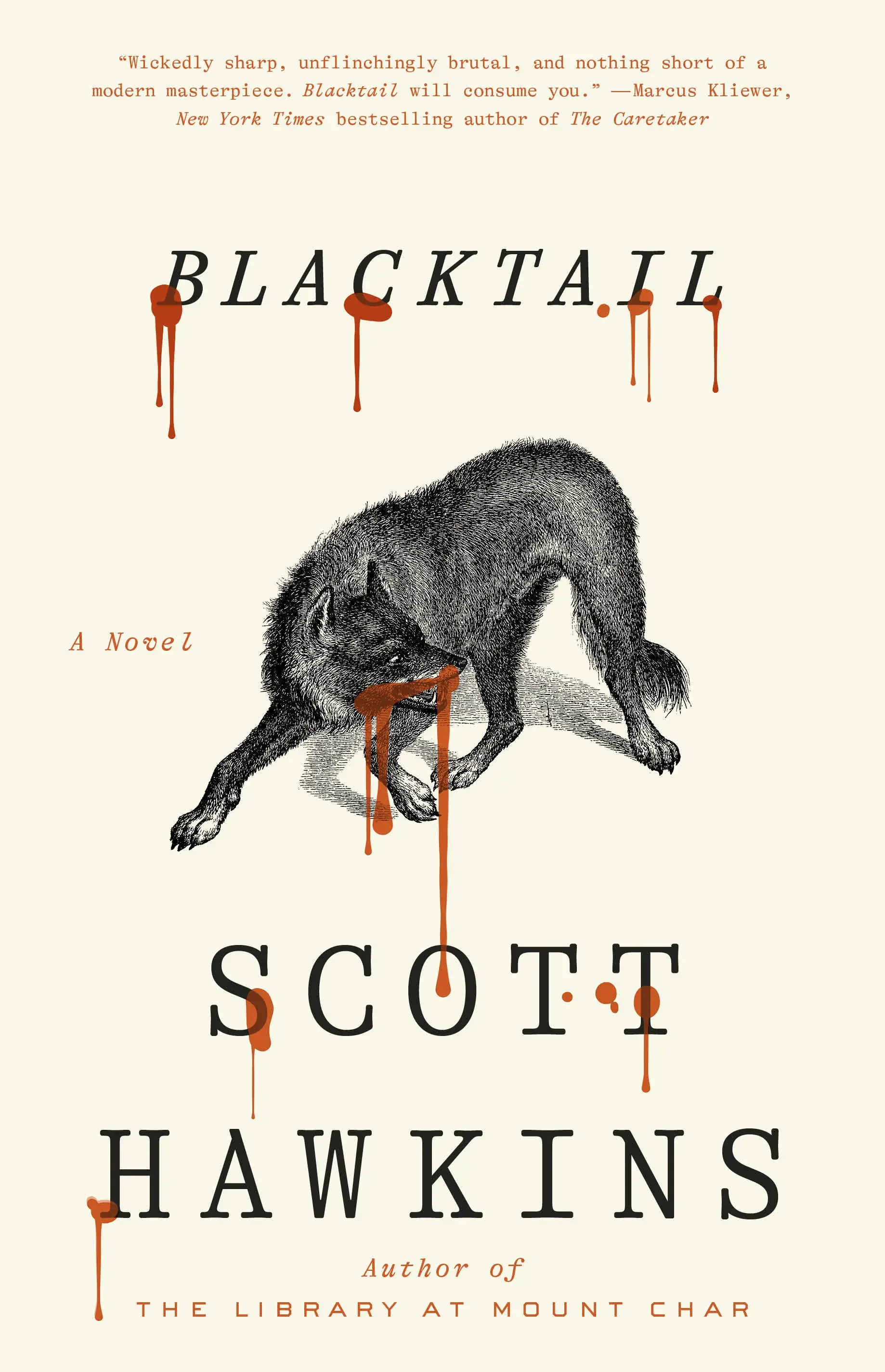
Through a blend of horror studies, philosophical analysis, and aesthetics, Ordinary Horror: The Aesthetics of Deformation from Leopardi to Ferrante by NYU professor of Italian studies Andrea Capra explores undiscussed nuances in contemporary and canonical Italian literature alike.