Upcoming Horror From Women Authors
Never in my lifetime has it felt so important to recognize the contributions of women—in my own life, in my community, and especially in the genre we all love. So for International Women’s Day, and as a kick-off article for our celebration of Women in Horror Month, I want to highlight some of the most exciting and highly anticipated horror books of 2025 written by women authors, but I also don’t feel like I can stop here. This is only the beginning.
There are much more to come in the weeks that follow, but still, it won’t be enough. So humbly, I’m asking something I don’t ordinarily ask of our readers directly: Buy these books. Borrow these books. Request these books. Post, share, and review these books. Not only are women under attack in this country, but books are, too—especially those with controversial topics and themes, violence, and queer characters. Support these people in any way you can because the horror community is a much richer place with them in it, and I (a cishet white man) owe them and the two wonderful women with whom I share editorial duties at What Sleeps Beneath, everything I am able to offer.
Agustina Bazterrica, trans. Sarah Moses: The Unworthy
For years, no book has drawn my eye on the stacked tables of Barnes & Noble more than Agustina Bazterrica’s Tender is the Flesh. Her dark, dystopic novel about a zoonotic virus forcing society into a late-stage capitalistic hellhole of dehumanization and cannibalism was so enticing to me, and I must have picked it up and set it down dozens of times before finally pulling the trigger recently and I’m glad I waited, if only because I don’t have to wait at all for her next novel, which came out this week.
In The Unworthy, Bazterrica shifts focus from a butcher of “heads” to the equally bleak tale of an “unworthy” sister in a secretive religious sect who is forced to confront her past, as well as some difficult truths about the Sacred Sisterhood. If The Unworthy is anything like Tender is the Flesh, I expect Bazterrica to take very real issues of our world, push them to the extreme, and ask if we like the direction we’re moving—but I suspect we won’t.
Cassandra Khaw: The Library at Hellebore
Cassandra Khaw is cool as hell. They write tabletop and video games, have been published in everything from Clarkesworld and Uncanny Magazine to Ars Technica and Nature, and—oh yeah—has also collected a slew of horror and fantasy award nominations for their fiction, both short and long, and a Bram Stoker Award for Superior Achievement in a Fiction Collection with Unbreakable Things in 2022.
Prefer listening to your books? Support WSB by buying these books and more at Libro.fm!
This July, though, fans of books about magical schools that hope to move on for good from She Who Shall Not Be Named will get their chance—particularly if they thought the school should be less Boy Meets World and more Battle Royale. The Library at Hellebore follows Alessa Li, who is kidnapped and forcibly enrolled in “the premier academy for the dangerously powerful.” What she isn’t told is that upon graduation, the faculty hunt down and eat the graduates. Khaw’s latest promises to be gory, visceral, and heart-poundingly punk, and I can’t wait for July 22 when it launches.
K.P. Kulski: Silk and Sinew: A Collection of Folk Horror from the Asian Diaspora
K.P. Kulski is the Bram Stoker-nominated Hawaii-born, Korean-American author of historical horror fiction like House of Pungsu and Fairest Flesh, which retells the story of Lady Elizabeth Báthory. She is a veteran of both the U.S. Navy and Air Force and a former college professor of history, and her work has also been peppered throughout some of my favorite anthologies of recent years, like A Conjuring for All Seasons: An Anthology of Witch Lore and the Strangehouse anthologies by women of horror: Not All Monsters and Chromophobia, both edited by Sara Tantlinger.
With Silk & Sinew: A Collection of Folk Horror from the Asian Diaspora, Kulski brings together more than 20 authors of folk horror—a keyword that immediately drops it onto my list of must-reads for the year. Promising to spotlight stories from cultures with impossibly ancient roots, born from centuries of struggles: migration, colonization, Westernization, and fetishization, Silk & Sinew is sure to offer some of the best folk horror I’ll have read in a long time.
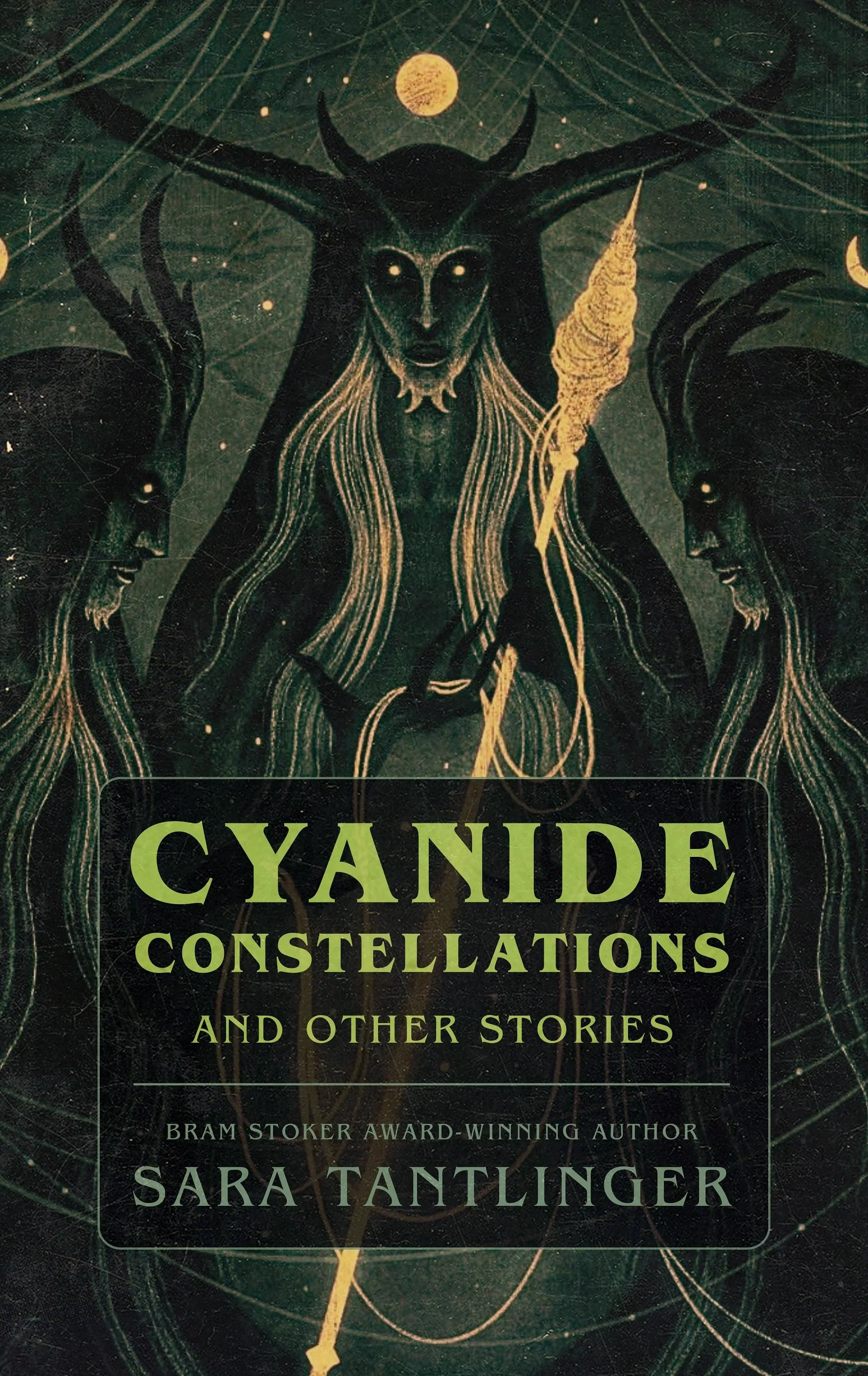
Sara Tantlinger: Cyanide Constellations and Other Stories
Speaking of Sara Tantlinger, the award-winning poet and author of The Devil’s Dreamland: Poetry Inspired by H.H. Holmes and of the Stoker-nominated To Be Devoured and editor of the anthologies mentioned above, Tantlinger is also the co-founder of our very own Pittsburgh chapter of the HWA, which, with any luck, might grant me early access to her newest work (ahem, hint…).
Cyanide Constellations and Other Stories, due out in October from Dark Matter, will explore the relationship of nature and horror, the cosmic and the unknown. The collection includes four new stories, including one I’m most looking forward to—a novelette inspired by Nathaniel Hawthorne’s Rappaccini’s Daughter—but even beyond that, the cosmic and the natural realms have always felt inextricably linked and since plant-based horror is such a rapidly growing interest of mine, I can’t wait to dig into these stories.
Tanya Pell: Her Wicked Roots
In a bizarre twist of coincidence, Tantlinger’s The Revenge of Rappaccini’s Daughter isn’t the only story inspired by Hawthorne’s short story coming out this October. Tanya Pell, author of Cicada, part of Shortwave Publishing’s Killer VHS Series, is releasing Her Wicked Roots, a queer retelling of Hawthorne’s tale.
In search of her missing brother, Cordelia Beecher finds her way to Edenfield, an estate owned by Lady Evangeline, a botanist who has committed herself to rescuing young, traumatized women from “man’s world of wicked desires and deceits.” Lady Evangeline hires Cordelia as a maid, but she soon suspects that Edenfield is hiding something. Considering its source material, I’m sure that Her Wicked Roots is going to feature some diabolical horticultural horror, which is why I’m so looking forward to learning more about the manor at Edenfield.
Catriona Ward: Nowhere Burning
For fans of horror literature, Catriona Ward hardly needs an introduction. In 2016, her debut novel Rawblood won the British Fantasy Award for Horror Novel. So did Little Eve, her second novel—and her third, The Last House on Needless Street. With a bevy of other wins and nominations to her name, Ward has had an immediate and lasting impact on the horror community.
Billed as being perfect for fans of Yellowjackets (and aren’t we all), Ward’s upcoming novel Nowhere Burning is set on an abandoned ranch in the Rocky Mountains where Riley and her brother Oliver run away to, hoping to join a rumored clan of feral children squatting there, but Riley soon realizes that bunking with the Nowhere Kids might not be the paradisiacal sanctuary she was hoping for.
Emily Carpenter: Gothictown
I don’t have any connection to the South. No family, no fond experiences—but for some reason, I’ve always been partial to the Southern Gothic. Midnight in the Garden of Good and Evil, Sharp Objects, Eve’s Bayou, The Beguiled, The Night of the Hunter—there’s something so terrifying about calm, quiet settings masking sinister secrets.
Emily Carpenter has built a career out of exploring these secrets in hidden, isolated settings. Her thrillers, like Until the Day I Die, Every Single Secret, and Burying the Honeysuckle Girls, all seem to share those dark Southern secrets, and Gothictown looks to continue the trend. A restauranteur moves her family to a small town in Georgia, only to discover a darkness lurking. The synopsis adds Shirley Jackson’s The Lottery to its list of comparisons, making Gothictown an unmissable book for me.
Gretchen McNeil: They Fear Not Men in the Woods
Gretchen McNeil is the mind behind Get Even and Get Dirty, the YA thrillers that were adapted into a Netflix series in 2020, and the #MurderTrending books, as well as a number of standalone novels.
Now, for fans of Midsommar, the aforementioned Catriona Ward, and Sarah Gailey, McNeil is taking readers into the forests of rural Washington in They Fear Not Men in the Woods, where Jen Monroe’s father, a forest ranger who crossed the logging industry, has gone missing. Seven years later, his remains have been found, and Jen finds herself in the same woods that took her father, and what she finds there might not let her leave.
Sarah Gailey: Spread Me
Not to go mentioned without having something of their own in the pipeline, Sarah Gailey’s new novel, Spread Me is due out in September from Nightfire. Gailey is known for their American Hippo series, Magic for Liars, and Upright Women Wanted. They’ve been shortlisted for a number of Hugo Awards, Nebula Awards, and nominated for four Locus Awards.
In Spread Me, Kinsey, a researcher at a remote research outpost discovers a strange specimen buried in the sand. Once inside the station, however, things start going haywire and the normally controlled environment begins burning with temptation.
If that sounds like a seductive version of a certain 1982 John Carpenter film to you, that’s exactly what caused my ears to perk up so quickly. You don’t just go making references to The Thing and expect me not to take notice.
T. Kingfisher: What Stalks the Deep
When I first read T. Kingfisher’s What Moves the Dead, a fungal horror retelling of Edgar Allan Poe’s The Fall of the House of Usher, I was obsessed. Here was a book that was somehow able to merge classic literature with body horror and myco-horror, infusing it with modern identity politics without sacrificing the fluidity one would expect from Gothic horror. When the sequel, What Feasts at Night, came out last year, I ate it up. Never in a million years did I expect another Alex Easton story so soon.
Now, far from kan (the Gallacian language contains seven sets of personal pronouns, including ka/kan, which is reserved only for soldiers, regardless of their sex assigned at birth) home country of Gallacia, Easton begrudgingly visits America, where kan friend’s cousin has gone missing near an abandoned West Virginia coal mine that may or may not be haunted. Mycelia, moroi, and now Appalachian horror? Is T. Kingfisher reading my diary?
Article by Ande Thomas
Ande loves the intersection of sci-fi and horror, where our understanding of the natural world clashes with our fear of the new and unknown. He is an independent member of the Society for Cinema and Media Studies and a supporting member of the Horror Writers Association. He writes about monsters and foreign horror and can also be found over on Letterboxd.
Other Articles You May Enjoy…
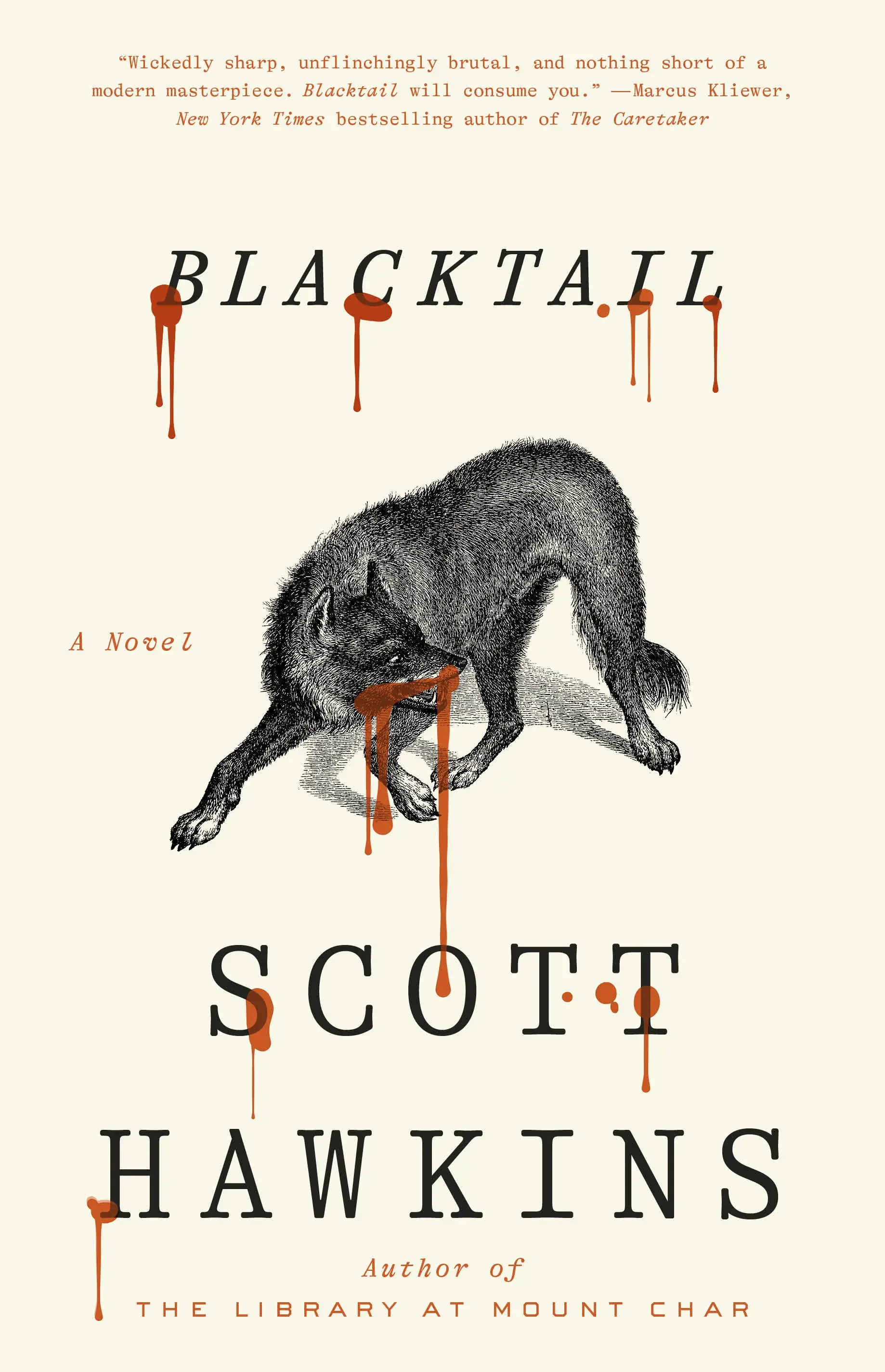
Through a blend of horror studies, philosophical analysis, and aesthetics, Ordinary Horror: The Aesthetics of Deformation from Leopardi to Ferrante by NYU professor of Italian studies Andrea Capra explores undiscussed nuances in contemporary and canonical Italian literature alike.