
The Dangers of Selfishness: A Review of Gabe Torres’ The Windigo
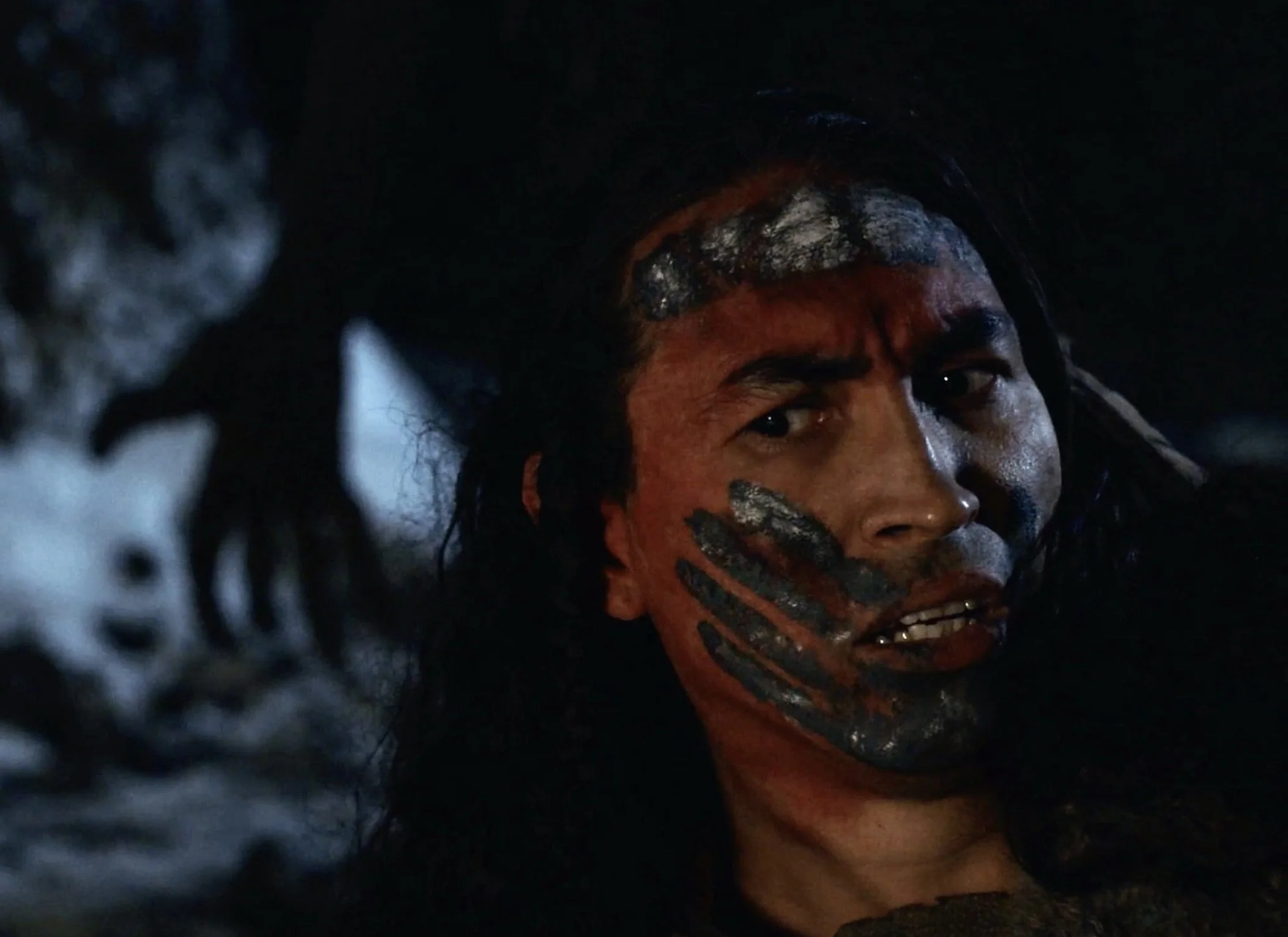
Tatanka Means in The Windigo, image via IMDB
We’re all guilty of prioritizing our own needs from time to time. The act of choosing ourselves and chasing our desires can be empowering—especially for those who have a reputation for being selfless. However, when a person repeatedly chooses themselves above all else, they can quickly build up a negative image. No matter where you find yourself on this spectrum, selfishness represents an unspoken rejection of the expectation that what we do for ourselves should never outweigh what we do for others; it can manifest in various forms and degrees.
According to the spiritual belief of Indigenous peoples who lived across the northeastern seaboard and inland regions, especially around the Great Lakes and St. Lawrence River, the Windigo (also spelled as Wendigo or Weendigo) is seen as the spirit of winter and a warning against selfishness. While beliefs about the Windigo differ, generally, the spirit is thought to be a terrifying creature that craves human flesh without end. If someone encounters a Windigo, they risk being eaten or even being transformed into one themselves. In Gabe Torres' The Windigo, Ry—a Native American teenager (Marco Fuller)—is threatened by meth dealers and pushed to summon the ancient demon in an attempt to protect his family. But, in failing to listen to the warnings of his grandmother (Casey Camp-Horinek) about the Windigo, Ry's desperate act unleashes a bloodthirst that threatens them all.

Teenage selfishness seems to be a common characteristic of the age-specific demographic—even in modern Native American culture. While most adults will see an outburst in selfishness during this time, it’s all part of the transition teens face while trying to figure out who they are and what they want, often putting themselves first in defining and creating their version of independence. While it's a normal part of growing up, the transition isn’t always an easy one—especially for our story’s protagonist Ry. Seemingly uprooted from his life by his mother Claire (Tonantzin Carmelo), the two of them, along with his sister (Fivel Stewart), move to go care for their grandmother. Just like any film featuring an uprooted teen, you can imagine the frustration.
While the setup was engaging, especially with the family dynamics and their clash with the remote setting, the additional twist of having to deal with the meth dealers adds a unique connection to the protagonist's heritage and revenge plot. Of course, as the title suggests, our shining star of the film is undoubtedly the Windigo itself. Compared to other representations of the folklore, such as in The Ritual or Pet Sematary, this one really stood out to me. Crafted by over a dozen individuals, the Windigo is unveiled to us, almost in stages—from learning how it is summoned, to discovering the deeper connections between it and Ry. I genuinely feel that when it comes to films like this, if our creature of interest is revealed too soon or too late, the film has to find a way to keep the viewer engaged. While I’ll admit that there were some areas where the plot felt predictable or some scenes felt a little over-the-top, the Windigo’s portrayal was on point. Despite the drawbacks mentioned, The Windigo excelled at delivering a healthy mix of creature action and gore, making it enjoyable for fans of this genre.
Article by Destiny King
Destiny is a supporting member of the Horror Writers Association who’s been working in B2B publishing for nearly a decade. Her favorite horror subgenres are true crime, found footage, and psychological thrillers. Find her on Letterboxd.

Other Articles You May Enjoy…


Filmmaker Bari Kang discusses Itch!, from its practical gore and zombie influences to filming in his own NYC store and directing his daughter.