
CONSTRAINT AND LICENSE IN ‘CAT PEOPLE’: 1942 and 1982
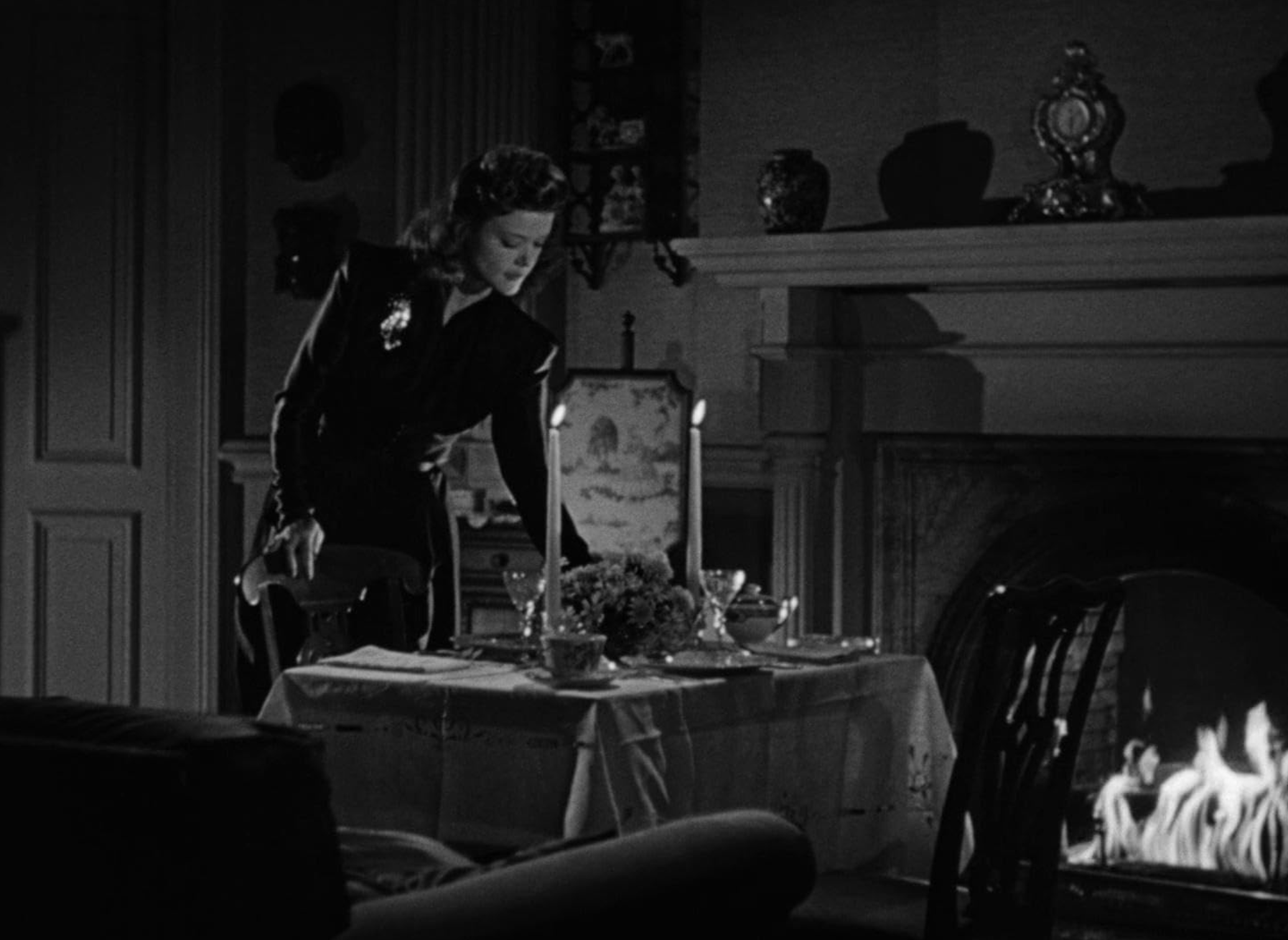
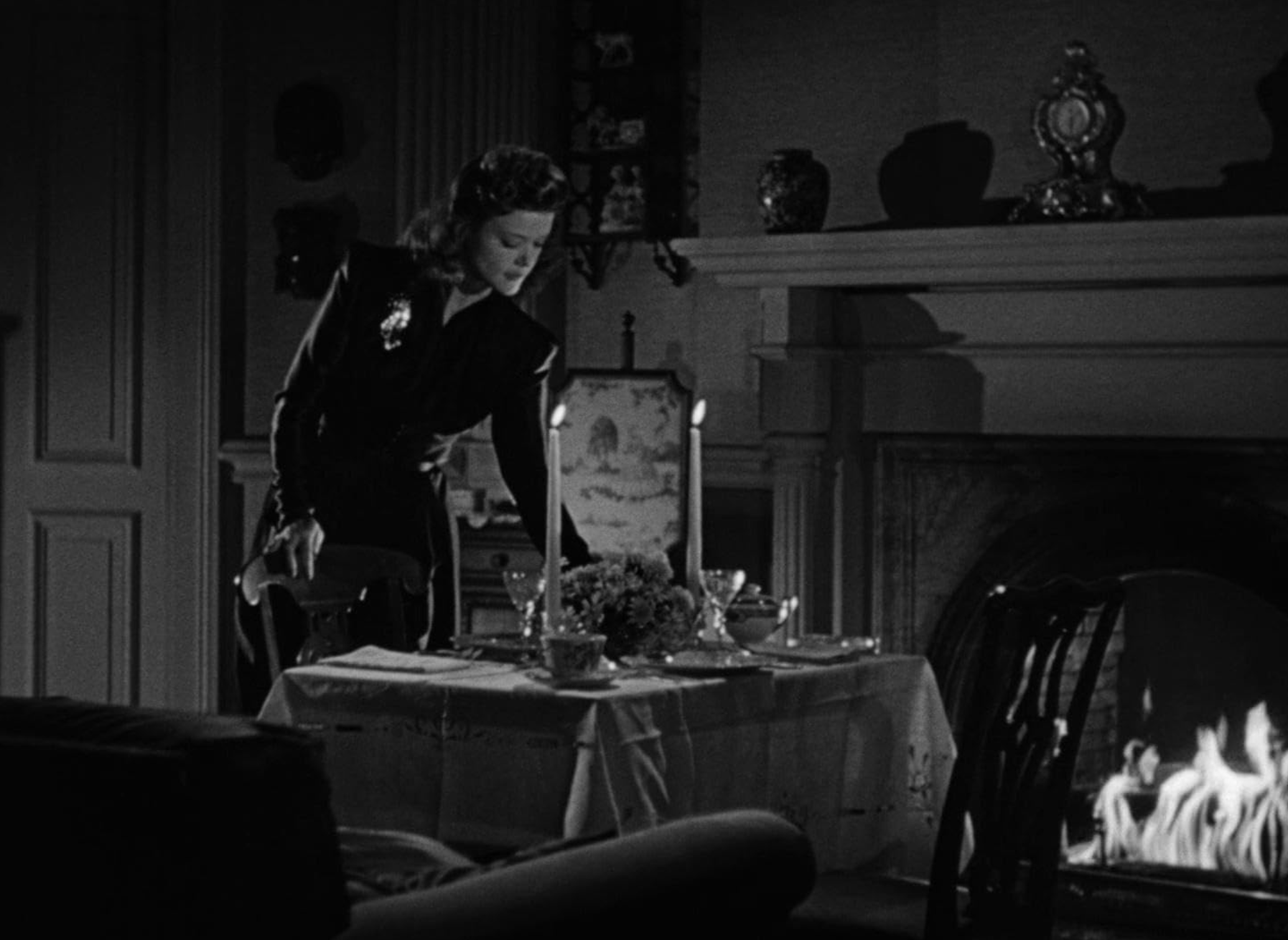
Simone Simon in Cat People (1942).
A gulf of forty years separates the 1942 release of Cat People from its 1982 remake. Much changed during that time. The US fought three major, sustained wars; the population increased from 135 million to 231 million; American society moved closer to justice thanks to the civil rights movement; and the country settled, not without reservations, into its role as the world’s dominant superpower.
Nearly as seismic as those changes were certain cultural liberations, including those blossoms that eventually broke through the gray concrete slab known as the Hays Code. The code, in place from 1934 to 1968, was ostensibly voluntary. In reality, filmmakers stayed faithful to it or their pictures didn’t get released. Fidelity, in this case, meant among other things no “licentious or suggestive” nudity, no profanity, and no depictions of interracial relationships. In a slight concession to reality, the code permitted the display of a husband and wife in bed together, but only if at least one foot stayed firmly planted on the floor.
The code notwithstanding, brilliant films were made during this time, not least among them the original Cat People (directed by Jacques Tourneur and produced by Val Lewton). Despite content restrictions, and despite the burdens of a small budget and low expectations, Cat People emerged as a great early horror film—one sharp enough to draw blood.
“I like the dark; it’s friendly.” —Irena Dubrovna, Cat People (1942)
It begins in a zoo, as Irena Dubrovna (Simone Simon) sketches a caged panther. Soft-featured and pretty, Simon was an inspired choice; no one would ever take her for a vicious beast. (As an aside, though, the FBI kept her under surveillance during production, given her relationship with Duško Popov, a double agent who later served as an inspiration for James Bond). She’s observed by Oliver Reed (Kent Smith), a handsome stranger, who enters her life with the smoothness of the right key entering the right lock.
Oliver is American; Irena, Serbian. When she tells him a story of her people—of how, in the middle ages, they turned from Christianity to witchcraft—he’s dismissive. It seems clear that he thinks such stories belong to the Old World. In America, psychiatry has replaced religion.

He surprises her with a kitten, but the kitten can’t stand her. Together, they go to a local pet store to replace it; sensing her presence, the animals become frantic, deepening our sense that something’s wrong with her. Later, she tells Oliver that she’s descended from ancient, evil people, and that passion—erotic passion, clearly—would transform her into something awful. He marries her anyway. Theirs is an affectionate marriage, but not physically; they never even kiss.
Meanwhile, unbeknownst to oblivious Oliver, his assistant, Alice (Jane Randolph) harbors feelings for him. Irena, gifted with womanly intuition (or at least the power of observation), knows the truth. One night, she follows Alice. As she does, the film cuts back and forth between each of them: Alice looking first unworried, then concerned, then anxious, then deeply afraid. An inhuman howl blends into the arrival of the bus that saves her. It’s a brilliant sequence.
Even better is the scene in which Alice swims alone in the basement pool of her hotel. Shadows bounce along the walls. The growls of an unseen animal echo. It’s dizzying, even disorienting. We feel certain that at any moment a panther will leap into the pool and tear into Alice’s throat. Finally, Alice screams. As she does, Irena turns on the light and asks what’s wrong. Alice later discovers that her robe has been torn to shreds.
We know by now that Irena’s fears about her own nature are justified, but the men in her life continue to dismiss them. Dr. Louis Judd (Tom Conway), the psychiatrist Irena has been seeing at her husband’s insistence, tells her that the “hallucinations” she’s been experiencing approach insanity, and that he has the power to go before a board and have her put away for observation. Later, after he advises Oliver to divorce her—advice Oliver is determined to take—Dr. Judd passionately kisses Irena (careful here, the Hays Code would advise). Perhaps he does so to show her that her concerns are unwarranted—or, more likely, he does so because she’s beautiful. Regardless, it results in his death.
Will Irena let Oliver leave her for Alice? Over her dead body, which is exactly how it happens; Oliver, telling his new love that Irena never lied to either of them, leads her away from Irena’s lifeless body, literally moving on from a woman who had pledged herself to him.
Never graphically violent, the film is nonetheless shocking, especially in the stalking and pool scenes. Never graphic sexually—not the barest inch of customarily hidden skin is exposed—it’s nonetheless erotic. The heart of the film is the fear of female sexuality, the sense that, if women were to give in to their carefully repressed urges, they would throw society itself into chaos.
Studio executives, treated to a pre-release screening, were not impressed. During a test screening for audiences, cast members fretted. Their nerves were not helped by the fact that the film was preceded by a Disney cartoon about a cat, during which some audience members meowed. They meowed, too, when Cat People’s title came onscreen, but before long the dark, daring film moved them to silence.
Years later, Roger Ebert wrote about Cat People as part of his Great Movies series of columns. Pointing to the film’s modest budget, its simple sets, few special effects, and short running time, he wrote that it was “constructed almost entirely out of fear.” Martin Scorsese, among the greatest of all directors, said that “in its own way, Cat People was as important as Citizen Kane in the development of a more mature American cinema.”
The film would inspire any number of others, few of which would approach its subtlety or artistry. In 1981, it was announced that a remake would be made. By then, the Hays Code was long dead. Having slipped the leash, what horrors would this new version inflict?
“I love you. Kill me.” —Irena Gallier, Cat People (1982)
A good omen, to those wondering if the new film would be worthwhile: Paul Schrader was to direct. Schrader had written Taxi Driver (1976) and Raging Bull (1980)—hard, gritty looks into the tortured heart of masculinity. And he’d directed Blue Collar (1978), a rust-belt comedy/drama starring Richard Pryor, and Hardcore (1979), a thriller starring George C. Scott. Both were well-reviewed.
Schrader made it clear that he didn’t find much to admire about the 1942 film. “I don’t think much of [it],” he said. “It was interesting in its use of shadows and so forth, but I didn’t find it very good.” Perhaps unsurprisingly, his version—from a script by Alan Ormsby which included uncredited additions by Schrader himself—departed radically from the original.
It begins in an orange-red desert landscape. Bones poke through the sand. A leopard sits under a skeletal tree. People walk across the cracked desert floor. A woman is bound to the tree, where a great cat first circles and then embraces her; later, she is led to a cave where a black leopard waits. A sense of sacrifice hangs in the air. Then, the camera focuses on the woman’s face, and it transitions to the face of Irena Gallier (Nastassja Kinski), a modern woman walking, as if lost, through an airport.
Soon she’s found by her brother, Paul (Malcolm McDowell), who, as a child, was confined to psychiatric wards. He takes her home, where he lives with his Creole housekeeper, Female (pronounced “Fee Molly” and played by Ruby Dee). Throughout, the film will remind us that it’s set in New Orleans, tossing in references to chicory coffee and the French Quarter; it’s more committed to establishing a sense of place.
Soon we’re following a demimondaine named Ruthie as she enters a run-down hotel, strips to lingerie (something the Hays Code would never have allowed), and has a one-sided conversation with her ostensible client. But what she’s really there to meet, although she doesn’t know it, is a great cat. The cat attacks her (liberating her breasts in the process—another reminder that the Hays Code was no longer in effect), mauling her foot. Not without incident, the police, accompanied by a trio of hardy zoologists, subdue and capture the creature.
Irena awakens to discover that her brother isn’t home, a clue to the viewer that her brother is bad news—if we needed any clues, that is (McDowell always looks a little scary). In the first real tribute to the original film, Irena goes to the zoo, where she sketches the captive black leopard. She’s still sketching after the zoo closes, when Oliver (John Heard) discovers her there. They get to know each other. He offers her, not a ring, but a job; still, it’s clear he likes her.
We see Joe (Ed Begley, Jr.), one of the zoologists, at work, spraying down animals through the bars of their cages. He sings “What’s New Pussycat” as he goes along. That jauntiness is a clear sign that something brutal is about to happen. It does. In a particularly gruesome scene, the leopard tears off Joe’s arm. Joe bleeds out. In a perhaps overly artful moment, a spray of blood pumps across the floor and onto Irena’s feet.
Paul is the leopard, of course. He kills because he can. Nor is that his only divergence from conventional morality. He also tries to seduce his sister. “I’m the only one who can touch you,” he tells her, “and you’re the only one who can touch me.” Irena, escaping, runs into the police; she debates telling them what she knows, but stops herself. But a police dog has scented something unusual in their residence. A gruesome array of corpses is discovered. Paul, now missing, must be a serial killer. They theorize that he feeds his victims to the leopard.
And so it goes, feverishly mixing sex and violence. There are some gestures toward the 1942 film—a stranger approaches Irena, saying, “Mi hermana!” for instance. The swimming pool scene is recreated, but this time the swimmer (the pneumatic Annette O’Toole) is topless. (Four women are seen partially or fully nude in the course of the film; sometimes the nudity, particularly of Irena, seems justified, while at other times it’s gratuitous). If anything, those gestures serve to remind the viewer of what a strong departure this is from the original source material.
Is it effective? Sometimes. Giogio Moroder’s electronic score, for instance, is moody and atmospheric. One scene, in which Oliver performs an autopsy on the black leopard, thrums with dread. And Kinski brings a haunted innocence, as well as an unearthly beauty, to her role.
Ultimately, though, the film takes itself too seriously. Near the end, Oliver discovers the body of a good friend; learns Irena was responsible for the death; resists her pleas for him to kill her; and, when she begs him to make love to her, ties her up and dutifully pumps away. It’s at this point (if not well before it) that the film strays irretrievably far from reality. If nothing else, is the man immune to performance anxiety? For all its pretensions, Schrader’s film is ultimately a pretentious one, and somehow more dated than the version released forty years earlier.
The death of the Hays Code was hugely beneficial to the art of film; had that not happened, we would never have had The Exorcist, The Shining, or Alien. But to compare the two versions of Cat People reminds us of at least two truths: The freedom to make unrestrained films doesn’t mean you’ll make good ones; and great art can flourish despite—and sometimes, even because of—restraint.
Article by John Kissane
John Kissane writes about arts and entertainment in west Michigan, where he lives with his family. An assistant editor at Centipede Press, he has a keen love of the macabre and magisterial. Kissane’s profile photo was illustrated by his very talented daughter.
Other Articles You May Enjoy…


Rebekah Faubion’s adult horror debut delivers the bloodshed promised by its “good for her” premise, then asks whether justified anger can become permission to control and punish. Its inherited-trauma metaphor is stronger than its softened final reckoning, but that moral tension gives the revenge story weight.