
“There is Still Time”: Self-Annihilation in ‘I Saw the TV Glow’
In The Concept of Anxiety (1844), Søren Kierkegaard defines anxiety, broadly speaking, as the sensation that people experience when we become aware of our own existential responsibility. Our lives are shaped by the choices we make and the choices we refuse, and therefore, the ultimate accountability for any individual’s life falls squarely on that individual’s shoulders. Similarly, we sometimes become aware of alternative possibilities—different routes that our lives could have taken—if only we had made different choices. By making some choices, others become forever closed to us; our lives unfolding as an ever-growing tree of mutually exclusive branches.
With all that in mind, I watched I Saw the TV Glow for the first time recently, and I think I’m still recovering.

Glow, directed by Jane Schoenbrun (We’re All Going to the World’s Fair), was released in 2024, and has built up a not-undeserved reputation as being the modern trans horror film. Its protagonist is Owen (Justice Smith), a timid individual with no close relationships, cannot look other people in the eye, and doesn’t appear to be able to understand or articulate his emotions. Owen bonds with an older girl, Maddy (Jack Haven), over a shared love of the fictional TV series The Pink Opaque. The show is mocked and derided by Owen’s abusive, hyper-masculine father as being “for girls,” so Maddy supplies Owen with videotapes of the show to watch in secret.
Eventually, Owen’s mother dies of an illness and Maddy vanishes. Owen is left alone in the world, his only human connections being his father and his boorish colleagues at a local cinema. His life is unfulfilling, repetitive, and devoid of meaning, and his only solace is rewatching his old tapes of Opaque.
After nearly ten years, Maddy re-emerges and makes contact with Owen. She claims that, following a near-death experience, she has realized that the events of Opaque are real and that Owen and Maddy are actually Tara and Isabel, the protagonists of the series, trapped in an illusory prison. Maddy/Isabel tells Owen/Tara that in order to escape, they must be buried alive. Maddy/Isabel takes Owen/Tara to a secluded location to do just this, but Owen/Tara panics, attacks Maddy/Isabel, and flees, stating “If you don’t think about it, it can’t hurt you.” The two never see each other again.
Twenty years later, Owen/Tara, now suffering from advanced asthma and working a menial position in an overstimulating nightmare of an amusement arcade, collapses during a child’s birthday party, begging for help from their unresponsive colleagues and screaming for their mother. They retreat to a bathroom, where they cut open their chest with a box cutter, revealing their insides to be composed entirely of TV static. They lurch through the arcade, apparently healed, offering feeble apologies to anyone they encounter—none of whom acknowledge them—as the film ends.
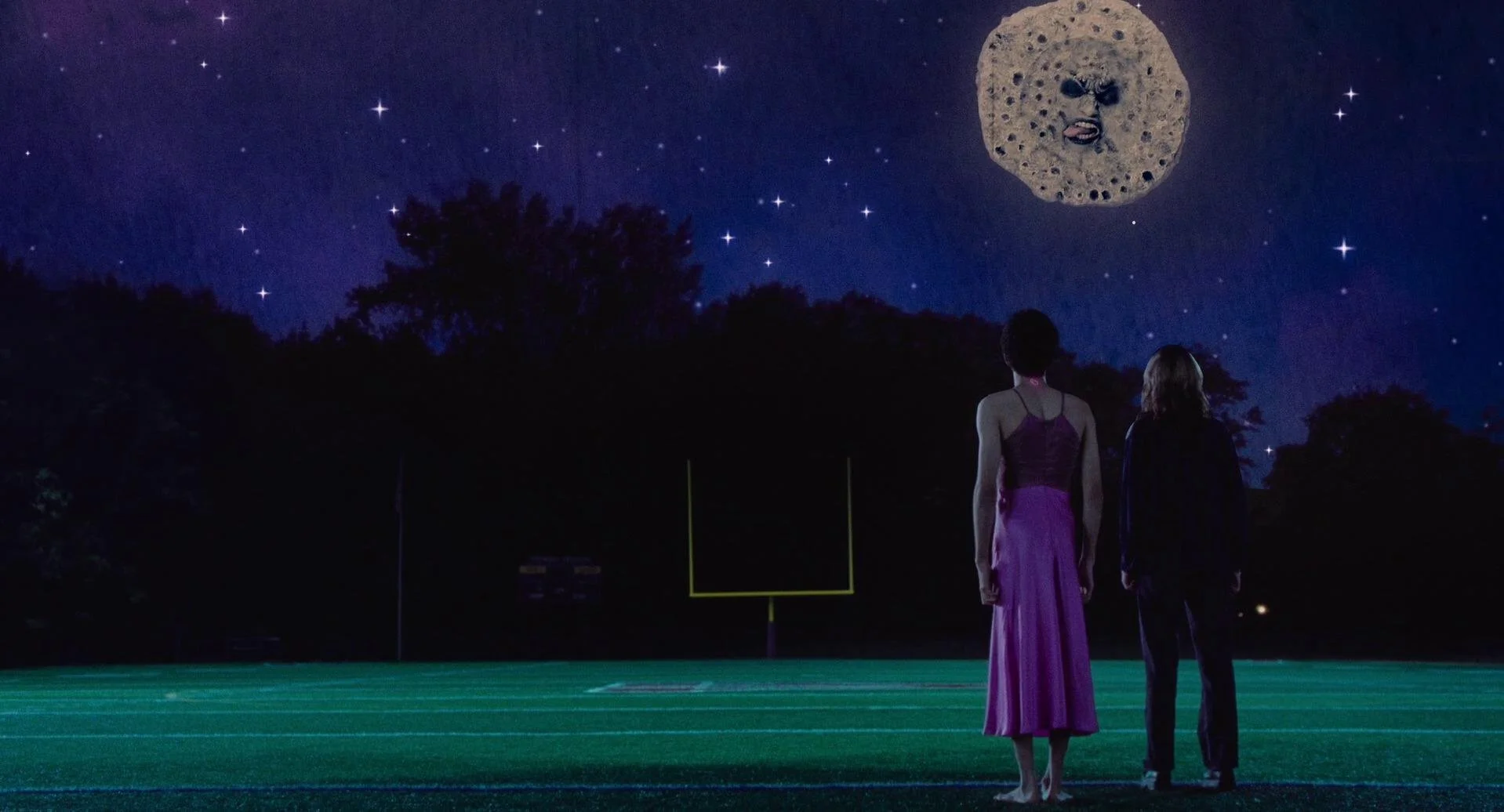
Schoenbrun has made it clear that Glow is intended as an allegory for the transgender experience, particularly the “egg crack” moment; the point at which a trans person realizes that they are trans. Owen’s alter-ego, Tara, is a young, feminine woman. Owen/Tara demonstrates a near-total detachment from their body and their physical desires; when asked by Maddy/Isabel if they are attracted to girls, they respond with “I like TV shows.” A recurring flashback shows Owen/Tara wearing a dress and appearing comfortable and happy doing so, while Maddy/Isabel, an open and proud lesbian, looks at Owen/Tara with an expression that could be read as romantic or sexual desire.
Glow is not a typical horror film. It doesn’t really do “scares.” There are certainly disturbing sequences—the aforementioned box cutter scene and Owen/Tara’s harrowing breakdown and subsequent punishment from their father after watching the final episode of The Pink Opaque being particular standouts. But Glow’s horrific sensibilities are rooted in a particularly existential sense of dread that takes its cue from Kierkegaard’s ideas of anxiety. If your choices shape your life, and you hold responsibility for your choices, what does it mean when you consistently make self-destructive decisions based on fear?
While never stated outright, it is very heavily implied that Maddy/Isabel is correct; that The Pink Opaque is reality, and the world in which Tara exists as Owen is fake. Owen/Tara is explicitly told that their life is a lie and that there is an escape route—though admittedly a terrifying one—and they still choose to retreat back into the deadening monotony of the life they know. They choose freedom from responsibility over happiness and truth. How many of us, the film asks, would do the same, even if we knew we were making the wrong choice?
It is this interrogation of existential choice and responsibility alongside its clear status as a trans allegory that makes Glow so deeply unsettling to a queer audience in general, a trans audience in particular, and me specifically.
My “egg crack” moment came in July 2025, just over a month before my 35th birthday. Though it largely felt like getting struck with a lightning bolt from behind, it would be wrong to say that it had actually come from nowhere. I had been very tentatively engaging with non-binary and genderfluid identities for a few years prior. When I say tentative here, I really mean tentative: This experimentation largely amounted to wearing some eye makeup, asking very close friends to refer to me with she/her pronouns (but only if it came up, and only if it wasn’t too much trouble to remember), and wearing clothes that to me felt visibly, terrifyingly feminine but were in reality still mainly masc-coded. This cautiousness continued into the early months of my transition into a woman. As I came out, I reassured everyone I knew that I wasn’t going to change my name, or enforce new pronouns strictly, or seek any kind of substantial physical change, or become a meaningfully different person in any noticeable way.
All of this turned out to be untrue, so why did I insist on it so strongly? Part of the answer is ignorance. I didn’t really know what I wanted out of my transition other than to feel more like a woman; I didn’t know what kinds of clothes I wanted to wear, what I wanted my body to feel like, or how I even wanted to consider my identity. It felt safer to cling to the idea that because I didn’t know, it was better to deny. It was better to stick to what I knew, which is the second part of the answer—fear. One only has to have a cursory look at the headlines over the last few years to see that life as a trans person hasn’t been much fun lately, but that’s not really the kind of fear that I’m talking about.
Transition is always a risk. One simply cannot know which parts of one’s life will survive the process. Relationships might rupture beyond repair, jobs and communities might collapse, one’s entire sense of self might transform beyond all recognition. While the scale varies from one person to another, transitioning still constitutes a huge upheaval of how a person
understands themselves and relates to the world around them. Everything they know about themselves and the world around them stands to be changed, or lost, entirely.
That is terrifying, and really, who can blame anybody who falters at the last moment and retreats from the precipice? But Glow suggests a reality that correlates with my own experience. Once you become aware of the truth of your own identity, you cannot make it untrue; you can either accept it, or repress it once again, this time with the conscious knowledge of doing so. I chose the former; Owen/Tara chooses the latter, and their choice destroys them. To bring Kierkegaard back in, Owen/Tara chose self-annihilation over personal truth, because they could not handle the crushing weight of the responsibility they would have had to carry.
The terror that stayed with me after the credits rolled on Glow came from watching Owen/Tara’s life gradually descend into misery and loneliness because of their continual refusal to make the scary decision. Watching them felt like seeing an unnerving alternate version of myself; one where I continued to ignore the signs and retreat into safe, soul-crushing monotony. My life may not necessarily have become as hellish as Owen/Tara’s, but I would never have been truly happy.
Yet, despite the gloom, Glow offers a striking message of hope. In the final sequence, where Owen/Tara cuts their chest open, the wound is bloodless, they suffer no pain, and their face cracks into a blissful smile. More clearly, after Owen/Tara flees from Maddy/Isabel following the revelation, they run home over a graffitied section of road. In bright pink letters, in Maddy/Isabel’s handwriting, it reads—
There is still time.
Yes. I may have come late to life, but I am here now, and there is always still time.
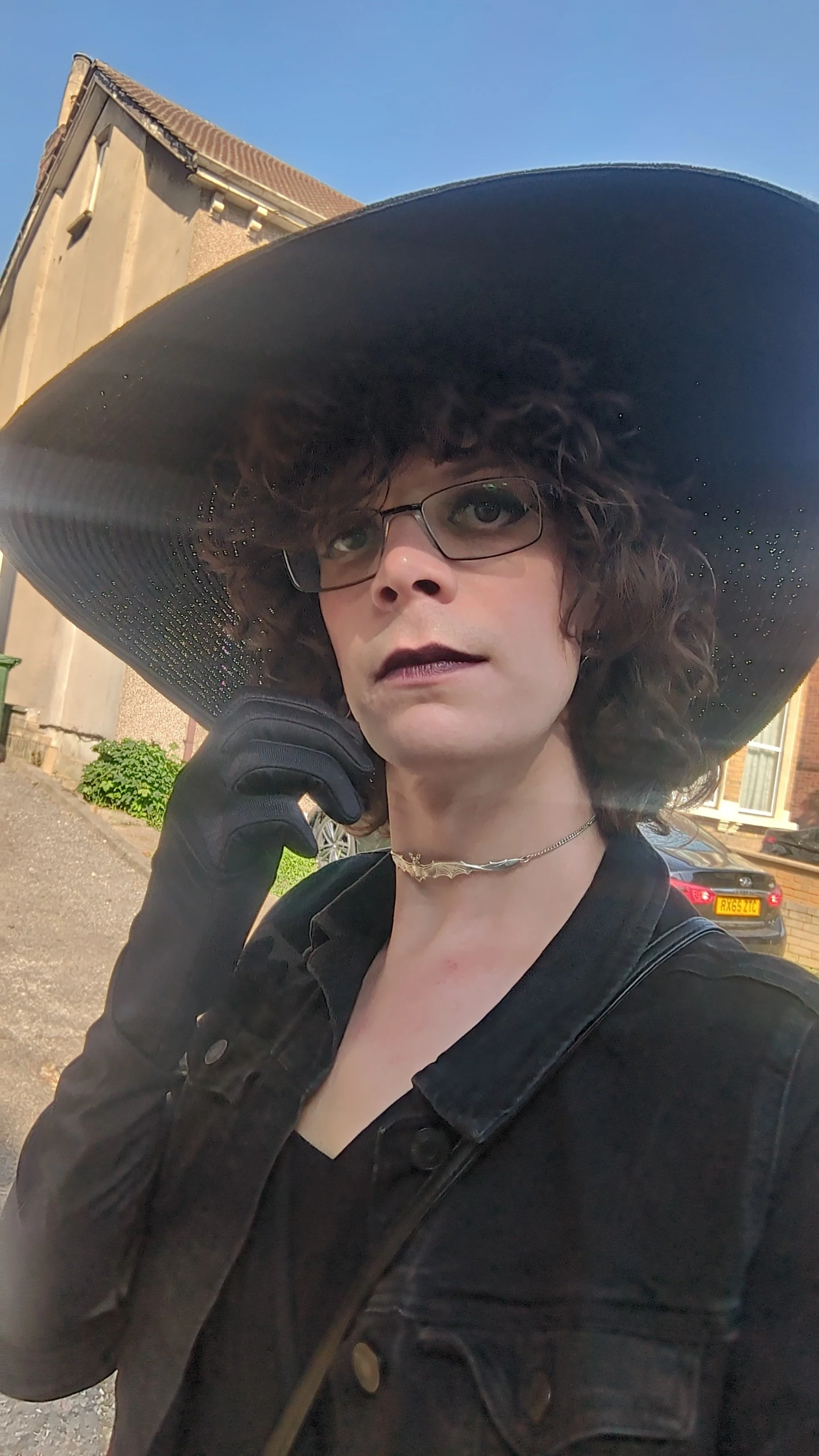
Article by Mina Wynter
Mina Wynter is a transgender and neurodivergent therapist, writer, and lifelong horror fan, currently living in London. She writes across multiple genres and styles, and her work focuses on themes of grief, love, queerness, and the glorious messiness of the human condition.
Other Articles You May Enjoy…


Nicholas Pineda’s Infirmary starts quietly. There is, of course, the almost obligatory disclaimer at the front that identifies the footage we’re about to see as wholly true and part of an ongoing investigation, but that’s not the unsettling part.