
Fact or Fiction: Bears as Super-Predators in Animal Horror Cinema
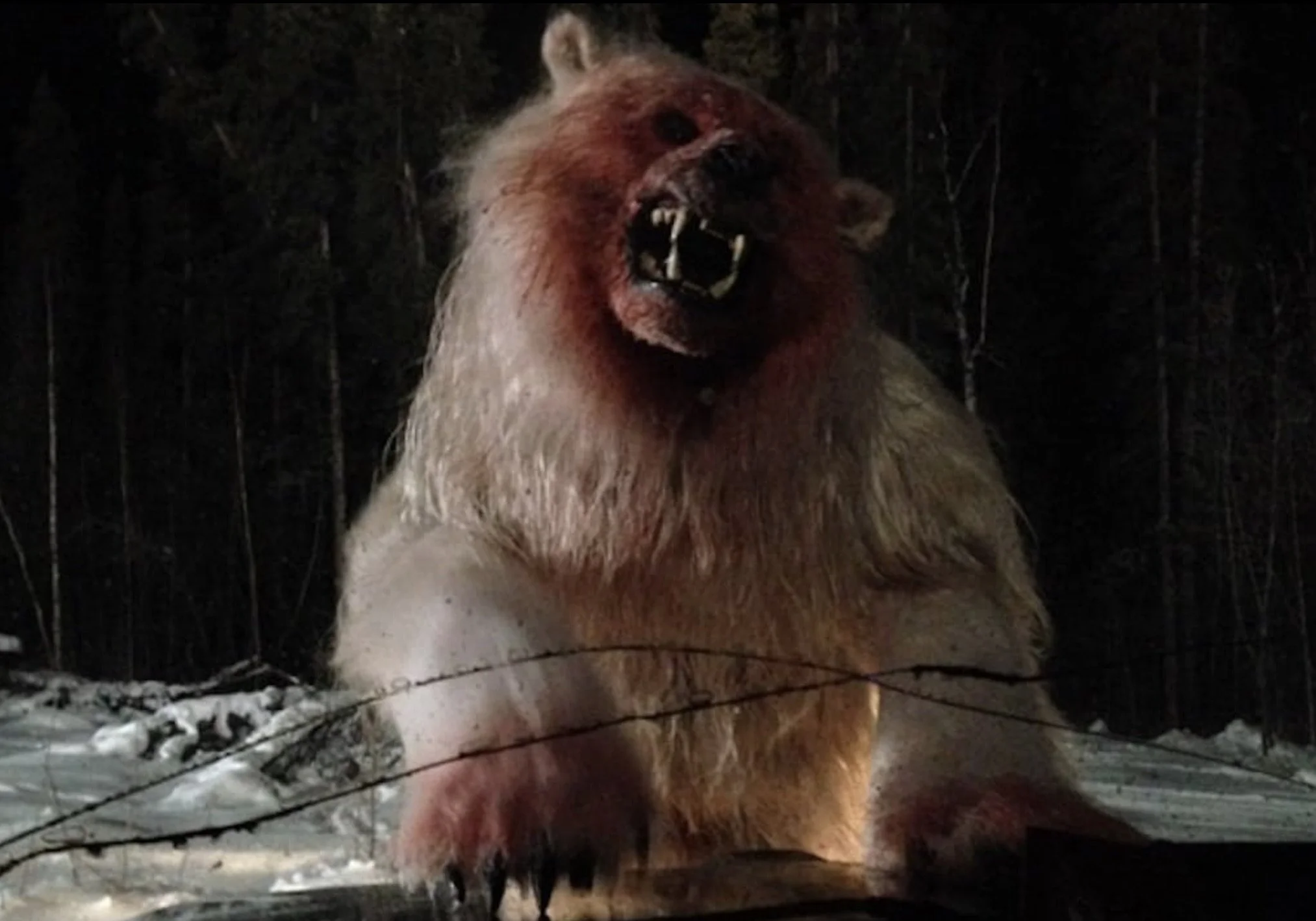
Unnatural (2015) image via IMDB
Throughout installations one and two of this series I’ve explored real-life encounters and fictional portrayals of bear attacks. Despite being a niche topic in the horror realm, so much can be said about how every story shared—whether via book, podcast, film, or other media format—impacts our relationship with the species. Rather than continue down this rabbit hole, in this final installation, I will be examining two films where unnatural elements introduced by humans have made bears even more dangerous and unpredictable; in trying to control bears and their habitats, the characters’ outcomes have only been made more horrific by the filmmakers and perhaps, further influenced our fear of the species.
Previously, the raw, visceral realism of The Revenant (2015) and Backcountry (2015) to the primal terror portrayed in Grizzly (1976) or The Edge (1997), have set the stage for our inherent fear of bear attacks in the wilderness. Despite exaggerating the size and aggressive behavior of bears in most cases, these films are still rooted in nature’s true forms and rely heavily on the animal’s sheer power and unpredictability to scare its viewers. As noted in part two, this well-established trope represents humanity’s vulnerability in nature, and in some cases, its misunderstanding of it. Although speaking about Aussie horror films in his essay, Michael Fuchs writes in “‘They are a fact of life out here’: The Ecocritical Subtexts of Three Early-Twenty-First-Century Aussie Animal Horror Movies”:
This failure to understand nature takes on an entirely different meaning within the context of the movies’ narratives, for the human characters step into worlds whose rules they simply cannot grasp. … Although the movies feature local guides who are more accustomed to moving in wild nature, they are, at the end of the day, just as helpless as the urbanites when confronted with nature’s overwhelming force (p 49).
Despite our vulnerability or misunderstanding of nature that put ourselves or our film’s characters in these situations with bears, films released over the last decade have shifted beyond non-fictional influences. By introducing external substances or attempting to control the bear with scientific modifications, like in Cocaine Bear (2023) and Unnatural (2015), new animal horror cinema featuring bear attacks further exaggerates natural behaviors to the point of absurdity, creating a heightened sense of horror while shining light on other cultural anxieties.

In Cocaine Bear specifically, we see the true story of a black bear who ate a duffel bag full of cocaine in the 1980s dramatized for both laughs and scares. This dark comedy creates a hyper-violent, drug-crazed creature, attacking anything and everything in its path in a relentless pursuit of more cocaine in what was otherwise a tragic and bizarre incident. In shifting entirely from the bear’s natural fury, filmmakers took a bear high on narcotics as a method for increasing the tension of an unpredictable, murderous animal on the loose. This exaggeration not only heightens fear of what’s happening but also serves as a commentary on the extremes of modern entertainment. With audiences drawn to the spectacle-driven nature of films that push the boundaries of believability, Cocaine Bear becomes a metaphor for the excesses and dangers of drug culture, with its unnatural aggression and relentless pursuit of a high serving as a darkly humorous commentary on addiction and its effects on our society.
Where Cocaine Bear still utilizes a bear’s physical power enhanced by human-developed substances and society’s accidental tampering with nature, Unnatural takes a different approach by delving into the intersection of horror and science fiction and our intentional tampering with nature and the environment. Taking place in a remote location in the Alaskan wilderness, a genetically modified polar bear is the central antagonist, with its monstrous nature being the direct result of a scientific experiment gone wrong. Designed to be bigger, stronger, and more aggressive, the genetically enhanced bear goes on a killing rampage and is seemingly unable to be stopped. The film uses this premise to explore the unintended consequences of scientific overreach, drawing on classic science fiction themes of humanity’s arrogance in attempting to control nature. In short, the monstrous bear represents the failure of human intervention and the dangers of playing God.
The distinction between real and human abomination highlights a key difference in the types of fear these films evoke. The former taps into our primal fear of nature’s uncontrollable power, while the latter plays on more modern anxieties about scientific experimentation and the unpredictable consequences of manipulating the natural world. When we look at this series as a whole and compare the films, it becomes clear that modern bear-attack films often prioritize entertainment and shock value over authenticity. In The Revenant and Backcountry, the bear attack scenes are notable for their meticulous realism. The bears behave as they would in the wild—either looking for food or being protective of their cubs, both ferocious in their desire and defense, but not solely motivated by malice or bloodlust. The horror here comes from the fact that this type of encounter could happen to anyone.
In contrast, Cocaine Bear and Unnatural are more concerned with creating spectacle. The bears in these films are not just dangerous animals; they are exaggerated super-predators. This shift reflects a broader trend in the film industry, where the emphasis is on creating visually arresting, high-concept scenarios that prioritize shock and entertainment, which has a significant impact on the audience’s viewing experience. While The Revenant, Backcountry, The Edge, and Grizzly evoke a sense of dread rooted in the reality of nature’s dangers, films like Cocaine Bear and Unnatural offer a more detached, thrill-seeking experience. The horror in these films comes not from a fear of real-world encounters but from the spectacle of seeing a familiar threat—bears—taken to extremes. This evolution in bear attack films further mirrors broader trends in horror cinema, where the genre increasingly blends with others—science fiction, comedy, satire—to explore complex cultural themes. In this way, bear attack films have become more than just tales of survival; they are vehicles for examining the consequences of humanity’s attempts to dominate and control the natural world.
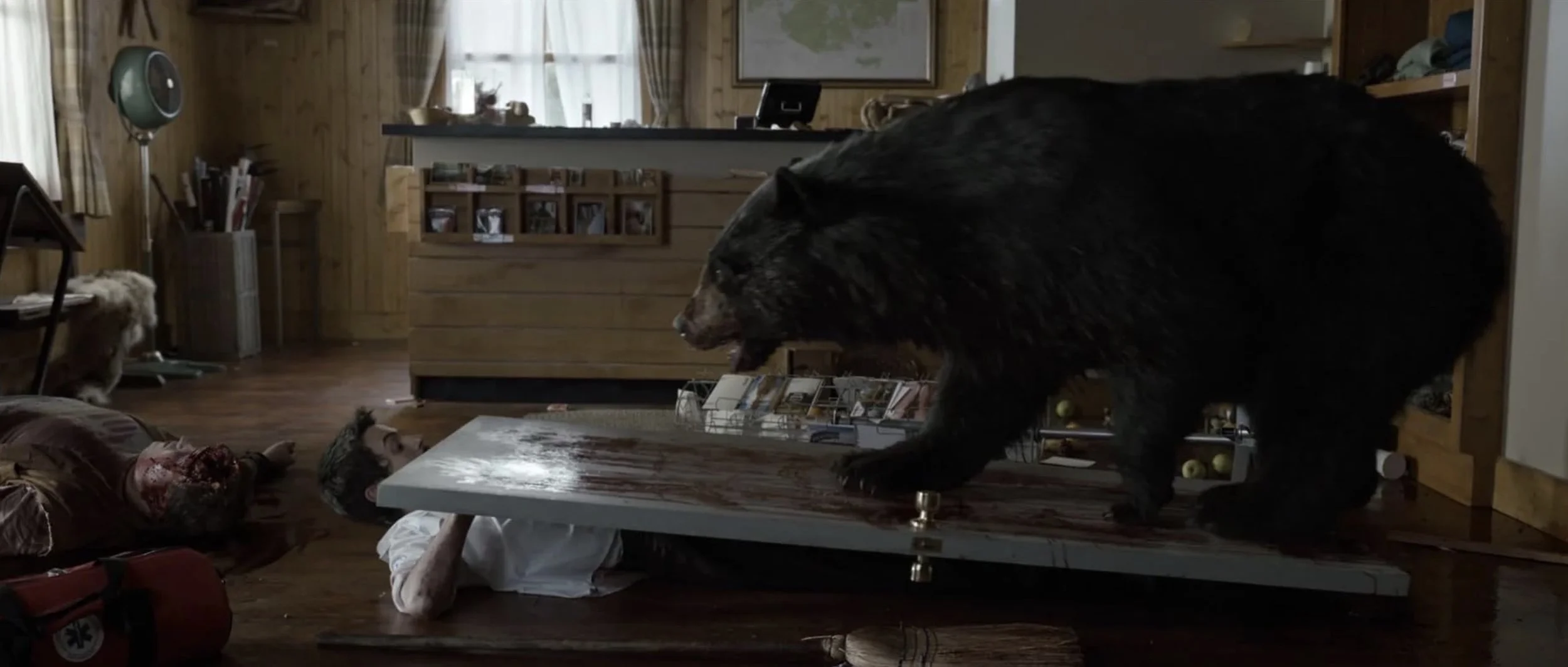
Scott Seiss in Cocaine Bear (2023) image via IMDb.
Additionally, the themes explored in bear attack films can also be seen in the ongoing cultural conversation about the relationship between men and women, particularly in the context of violence and self-defense. Much like how bear attacks in films highlight the unpredictable and brutal nature of the wilderness, narratives about male violence against women often emphasize the physical power imbalance and the need for self-defense tactics. Consider the recent Man vs. Bear Tiktok debacle, where discussions about whether women’s fears of men are exaggerated mirror debates about the exaggerated portrayals of bears. Statistically, men attack women much more frequently than bears attack humans, yet the brutality of both types of violence leaves a lasting impact on the psyche. Furthermore, don’t you think it’s a little ironic that similar strategies recommended for encountering a bear—being aware of your surroundings, avoidance, making loud sounds, and fighting back as a last resort—are also often cited in advice for women defending themselves against male attackers? In exploring the evolution of bear attack films, we can see parallels in how society views male violence: Both bears and men are often depicted as uncontrollable forces of nature, and the tactics for survival are eerily similar. Just as modern bear attack films have exaggerated the threat for entertainment value, cultural narratives about male violence can sometimes seem exaggerated, but the real fear they evoke remains potent.
In conclusion, bear attack films have evolved from realistic portrayals of nature’s dangers to more fantastical and exaggerated depictions, reflecting modern anxieties about human overreach, excess, and loss of control. Whether through satire, dark humor, or science fiction, these films offer more than just thrills—they serve as a lens through which we can examine our fears about the world we have created and our place within it. And perhaps, in comparing these exaggerated cinematic threats to real-world dangers, we can better understand the complexities of fear, survival, and power dynamics in both the wilderness and human society.
-
Brockway, Elizabeth Hunt. “The Man vs. Bear Conundrum Sparking Viral Meltdowns.” The Daily Beast, The Daily Beast Company, 27 Apr. 2024, www.thedailybeast.com/the-man-vs-bear-question-sparking-viral-tiktok-meltdowns.
Fuchs, Michael. “‘They Are a Fact of Life out Here’: The Ecocritical Subtexts of Three Early-Twenty-First-Century Aussie Animal Horror Movies.” Animal Horror Cinema: Genre, History and Criticism, Palgrave Macmillan, London, 2015, p. 49.
King, Destiny. “Immersed in Grizzly Bear Country: My Trip to Alberta After Reading ‘Mauled’” (2024) whatsleepsbeneath.com, www.whatsleepsbeneath.com/archive/mauled-book-review. Accessed September 2024.
King, Destiny. “True Nature Contained: A Bear’s Primal Terror In Animal Horror Cinema” (2024) whatsleepsbeneath.com, www.whatsleepsbeneath.com/archive/backcountry. Accessed September 2024.
OneGoodDad. “Choosing Bears over Men: Chances of Being Attacked by a Bear Are 1 in 1.2 Million. Chances of a Woman Being Abused by a Man Are 1 in 3.” One Good Dad, 6 May 2024, thejasongreene.com/choosing-bears-over-men/.
“Staying Safe around Bears.” National Parks Service, U.S. Department of the Interior, www.nps.gov/subjects/bears/safety.htm. Accessed Sept. 2024.
Article by Destiny King
Destiny is a supporting member of the Horror Writers Association who’s been working in B2B publishing for nearly a decade. Her favorite horror subgenres are true crime, found footage, and psychological thrillers. Find her on Letterboxd.