
Thomas Ligotti wrote that “the highest aim of the realistic horror writer is to prove, in realistic terms, that the unreal is real” (120). Nowhere is this sentiment embodied so well as in internet horror fiction, colloquially known as creepypasta (a name riffing on the act of copying and pasting stories across multiple forums, i.e. copypasta, and an homage to the genre’s collaborative storytelling roots).
The premise of creepypasta is rather simple.
You read a story. It is presented as though it might be real. Now, as we all know, everything on the internet is fake. Except for when it isn’t. And so if anything on the internet can be fake, then it’s quite possible that anything you see could be true.
Creepypasta commit to this sentiment by being presented with some degree of verisimilitude. That means being posted on forums and wikis where just about anyone can contribute, borrowing formats that are not typically associated with traditional fiction writing. Stories can be told through multiple forum posts with different users, via comments on someone else’s post, or in piecemeal blogs spread out across months or even years. It helps that creepypasta often inhabit the same online spaces as any other internet post. Many of these stories are found on the same platforms and websites where you are just a few clicks away from someone’s relationship woes or movie opinions.
For many readers, this unusual presentation can contribute to a heightened sense of immersion, but the unique format and placement of creepypasta means they are more just a digital version of epistolary fiction (which is far from new). The most popular space in recent history is the subreddit r/nosleep, but creepypasta’s long history can be charted across wikis, forums, chatrooms, and all the way to the earliest Usenet messaging boards. With very little moderation on many of these online spaces (especially in the early days), creepypasta writers were free to explore their creativity in strange and exciting ways. The genre is bursting at the seams with nightmares that are original in both subject and presentation, and writers are able to take part in experimental and collaborative storytelling that would not be possible without the unique technology of the internet.
It’s not possible to provide a comprehensive list of all creepypasta. It’s as ever-evolving as the rest of the world’s widest web, recently gaining notoriety and spilling beyond online spaces into feature films and series like Parsons’s Backrooms, Trevor Henderson’s upcoming Siren Head, and Kliewer’s We Used To Live Here. But for this primer we have put together a short list of some of the more seminal, thought-provoking works in the genre.
This is not a comprehensive list. Priority was given to stories with a significant impact on the overall genre. Some stories are listed simply because they were extremely popular, and it would be hard to discuss creepypasta without including them. Others were included because they achieved something special with the format (while also being fairly popular in their own right). The only stringent criteria was that stories should still be available to read online as it seemed unfair to recommend a story you couldn’t go on to find or buy for yourself (sorry to any fans of “The Spire in the Woods”).
Still, this list is a great place to start, and with any luck you’ll find yourself going down a long, cavernous rabbit hole full of terrifying stories—all of which will promise you that they are true.
Some might even be able to keep that promise.
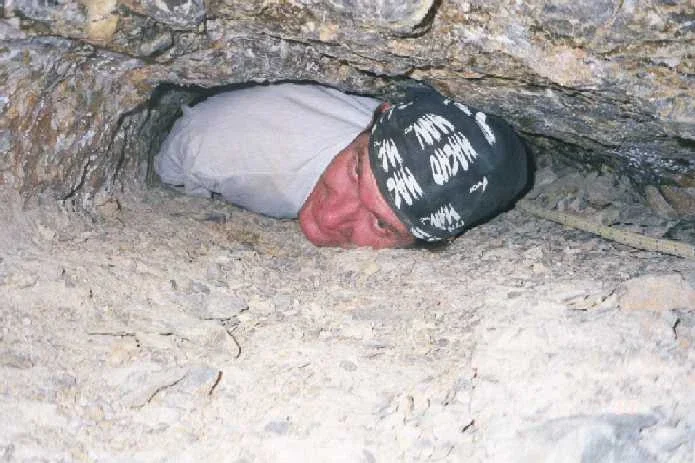 “Ted the Caver” exemplifies what it feels like as a child to come upon a particularly daunting hole. A dark pit. Something that has you wondering how far it goes and what might live inside. Sometimes, as a child, you might excavate one of these holes. You roll over a log or overturn a stone and find something that frightens or disgusts you: a swarming sea of woodlice or a centipede as long as your hand, curled around the half-rotten carcass of a bird. Influential experiences that make one wonder what else might be hiding in the dark parts of the Earth.

Filmmaker Bari Kang discusses Itch!, from its practical gore and zombie influences to filming in his own NYC store and directing his daughter.