
Shudder Original: Frewaka (2025) [Movie Review]
One of the things that horror does well is help us to reconcile with our past, whether it be our personal histories or the histories of our nations and cultures. Aislinn Clarke understands this. Her debut feature film The Devil’s Doorway (2018) tries to come to terms with Ireland’s sordid (and shockingly recent) relationship with the Catholic Church’s notorious Magdalene Laundries—workhouses for an estimated 30,000 so-called “fallen women,” the last of which didn’t shut its doors until 1996. Whether The Devil’s Doorway was successful in its critique or not, Clarke has more to say, revisiting the topic in her new (mostly Irish language) folk horror Fréwaka.
Fréwaka stars Clare Monnelly as Shoo (short for Siubhán), a primary care worker tasked with looking after Peig (Bríd Ní Neachtain), a recovering stroke survivor who exhibits signs of dementia and delusions, and who finds herself mixed up in a supernatural struggle between realms. Before going there, however, Fréwaka opens with a pair of scenes that help set the tone of things to come. First, in 1973, a band of cone-shaped-straw-mask-wearing mummers lead a flower-laden goat to crash a wedding. They look for the bride who, having wandered drunkenly out the back, spies the goat. When the groom comes looking for her, all that’s left is her wedding ring. In present day, meanwhile, Shoo, along with her pregnant fiancée Mila (Aleksandra Bystrzhitskaya), begin to sort through her mother’s belongings after her recent suicide.

The film’s commentary on the Magdalene Laundries, while still something Irish and Catholic people must reconcile with, is much more nuanced than Clarke’s previous effort. Here, it’s whispered that Peig had been a survivor of the Laundries in town, but there’s no concrete proof. Peig, for what it’s worth, claims (in so many words) to have been taken, not by Catholic nuns, but by the fae. And finally, we reach the crux of where my love for this film is rooted. I’ve long awaited a horror film that takes the fae as seriously as they deserve. Fréwaka does, and it layers it on top of a tale, not only of national guilt, but of a multi-generational mother-daughter story. It is, in essence, what I was hoping we’d get from last year’s The Watchers, and so, so much more.
To start, Fréwaka appears to hit all the necessary folk-horror tropes: a character gets sent to a remote rural community, the locals are unwelcoming, reluctant to show her where she’s staying and suggesting that she’s better off turning around and going home, a group of mysterious, hooded figures seem to be lurking behind every corner, and there’s a goat that won’t stop staring. But beyond those familiar trappings, this is a world that feels real. The beliefs of this community, if they believe at all, aren’t talked about—ever. Everything must be inferred through their actions and through Peig’s own obsessive habits and paranoid ramblings. Their unwelcoming attitude toward Shoo never comes across as the cloak and dagger machinations of a death-cult, but rather as the distrust of a tightknit community that rarely has good interactions with outsiders. Take away the supernatural underpinnings of the story and it is still an effective folktale.
Keep the supernatural elements, however, and Fréwaka shines. The film lays the superstition on thick but it never feels patronizing. For every door painted red and mirror kept covered, there’s never a clear “teaching” moment where Peig lays out all the rules for Shoo and the audience. But the innocuous effects of Shoo’s breaking the seemingly arbitrary rules, whether purposefully or by accident, are more than enough for Shoo to begin questioning herself.
Beyond Peig’s superstitions, justified or not, lies the film’s more important reckoning. In a bonding moment between the two leads, Shoo asks Peig what it was like “down there,” to which Peig responds: “A madhouse. A famine village. A laundry house. A coffin ship. A field, poisoned with blight. A street full of blood and bullets. Hundreds of bodies piled into a septic tank… Punishment.”
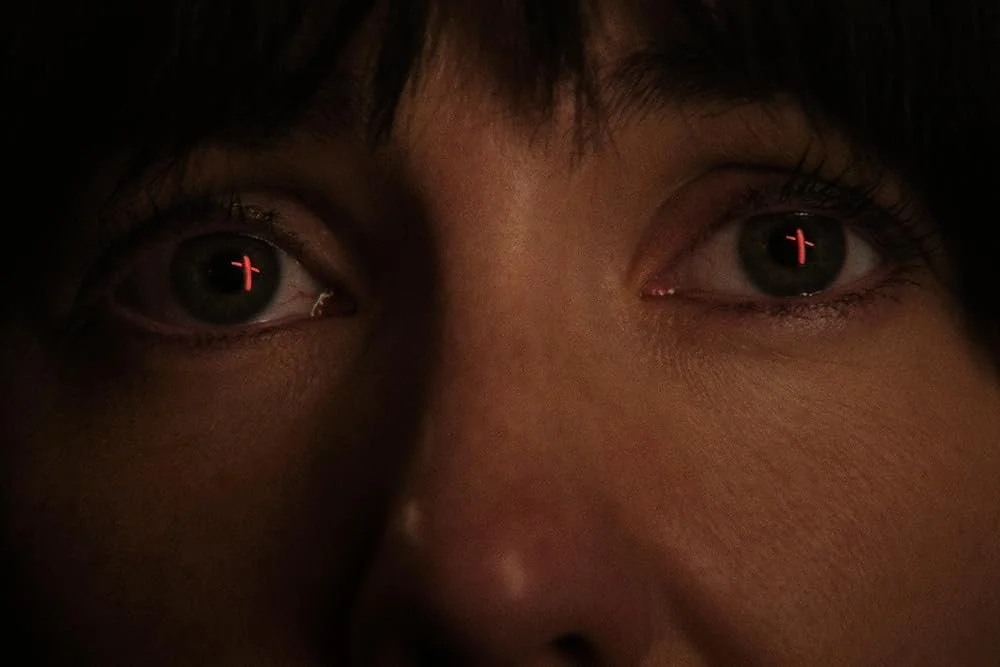
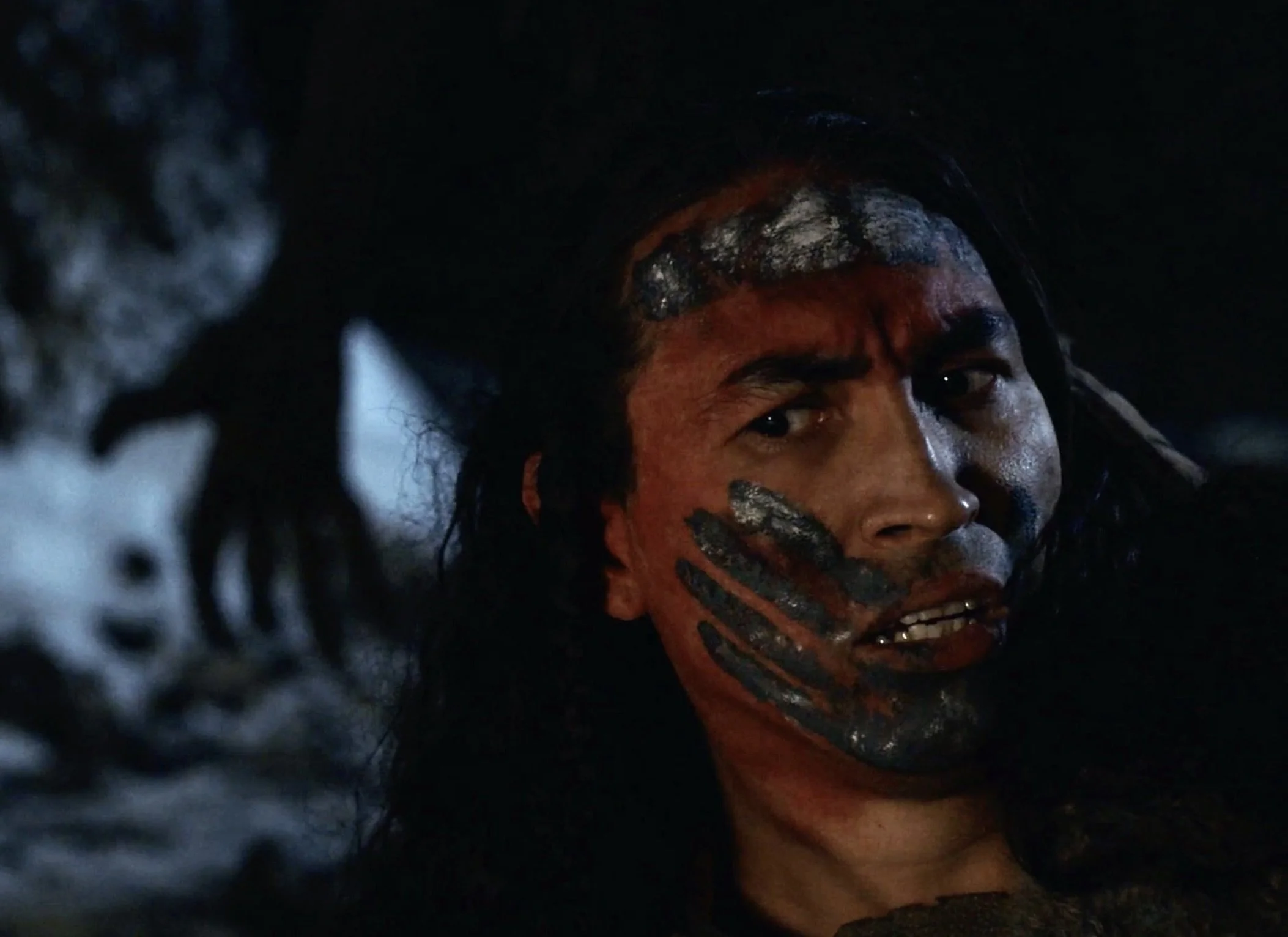
Image courtesy of IMDb.
Apart from being an incredibly vivid, evocative way to describe the hell she had been subjected to, each and every one of Peig’s descriptions are tied directly to events in Ireland’s past—moments of hardship, of oppression, of shame. Fréwaka’s fae are more than mischievous spirits; they are the albatross hanging around the neck of a nation. Unfortunately for Peig and Shoo, it is they and women like them who will bear the brunt of the fae’s attention because, as Peig observes, “Births, marriages, deaths. Those are thin places. Thresholds. That’s what they like.” When Shoo retorts that men get married and die too, Peig continues, “[it’s] women’s work. Women do the death work—and for weddings—especially in Ireland. The wedding, the birthing, the nursing and the keening.” It falls on women, it seems, to be stewards of the thresholds between realms.
This “woman’s burden” is compounded by the fact that Shoo is supposed to be in mourning for a mother with whom she had a fractured relationship with at the best of times, not to mention Shoo’s and her wife’s own impending motherhoods. Peig also reveals that, before being whisked away on her wedding night, she too had been pregnant, though, when she was returned to her husband, she returned alone. These narratives and subplots complicate the story but don’t muddle it and, by the end, actually add a bit of clarity to the weighty themes. Fréwaka isn’t content with the dark whimsy normally attributed to faery tales—it’s a statement on our ability to internalize and justify unfair systems and it’s a warning of a capability we’d rather believe we didn’t have—a willingness to turn a blind eye to injustice, even within our own neighborhoods.
Fréwaka is available now on Shudder.
Article by Ande Thomas
Ande loves the intersection of sci-fi and horror, where our understanding of the natural world clashes with our fear of the new and unknown. He is an independent member of the Society for Cinema and Media Studies and a supporting member of the Horror Writers Association. He writes about monsters and foreign horror and can also be found over on Letterboxd.
Other Articles You May Enjoy…
![Haunters of the Silence (2025) [Movie Review]](https://images.squarespace-cdn.com/content/v1/5d3e481bc5a6e40001b215a8/1767991310102-2LDQRQ0B2MD95WKUOJEM/haunters-of-the-silence-poster.jpg)
![Shudder Original: Frewaka (2025) [Movie Review]](https://images.squarespace-cdn.com/content/v1/5d3e481bc5a6e40001b215a8/1745585803192-XNB8A5ZAFGMPUQLTTBYR/frewaka.jpg)
Revenge asks very little of the reader. Establish a wound. Point the wounded party toward whoever made it. We handle the rest quickly because the arithmetic feels good, and we have been practicing it since we were old enough to be treated unfairly. Scott Hawkins gives you that arithmetic early in Blacktail, then spends the rest of the book taking the calculator apart on the table in front of you.