
“Come Outside and Play”: Our Top Horror Picks for Springtime
It’s officially spring which means a greater balance of sunshine and outside activities, as well as those rainy thunderstorms that are perfect for a scary story. The cemeteries grow greener, the dead are reborn, and something about the season just makes you want to get out there. In welcoming Mother Earth’s blooming period, we’re looking at horror movies that make us think twice about venturing into the great outdoors.
Destiny’s Picks
Deliverance (1972) | Dir. John Boorman
Whether you can hear the banjos playing after reading this title or not, this list couldn’t be published without at least mentioning John Boorman’s Deliverance. Based on James Dickey’s novel and adapted by the writer himself, the movie follows four friends (Jon Voight, Burt Reynolds, Ned Beatty, and Ronny Cox) on a canoe trip in rural Georgia. However, like most folks from out of town in these types of adventure-gone-wrong flicks, the guys aren’t welcomed by the local hillbillies, and later find themselves fighting for their lives. While the movie is famed for its gruesome rape scene and quotes like “Squeal like a pig, boy!”, it tests its characters and its viewers far beyond that. In a story that successfully strips civilization and safety from these men, they are forced into a game of survival of not just river rapids, but against the savagery that’s been bestowed upon them. Through a lot of blood, sweat, tears, and self-exploration, the viewer is poised to watch who makes it back home and who doesn’t.
Backcountry (2014) | Dir. Adam MacDonald
Sticking with movies that put our characters to the test to survive, we also have one of my personal favorites: Backcountry (2014). The movie is loosely based on the real-life story of a hiking trip gone wrong for software developer Mark Jordan and his wife, Dr. Jacqueline Perry at Missinaibi Provincial Park in 2005. The film adaptation follows Canadian couple Alex (Jeff Roop) and Jenn (Missy Peregrym) as they begin their own hike––a cover-up trip, you might say. We learn quickly of Alex’s intentions to propose. While there are many mistakes and bad calls that can be scrutinized, as I wrote in my review of the movie last year, Backcountry still holds in its portrayal of an ultimately traumatizing experience through a constant, silently building panic and flash-violence. There is no doubt, Backcountry reminds you that you are a visitor in Nature, and why it is so important to be prepared before venturing into the unknown wilderness.
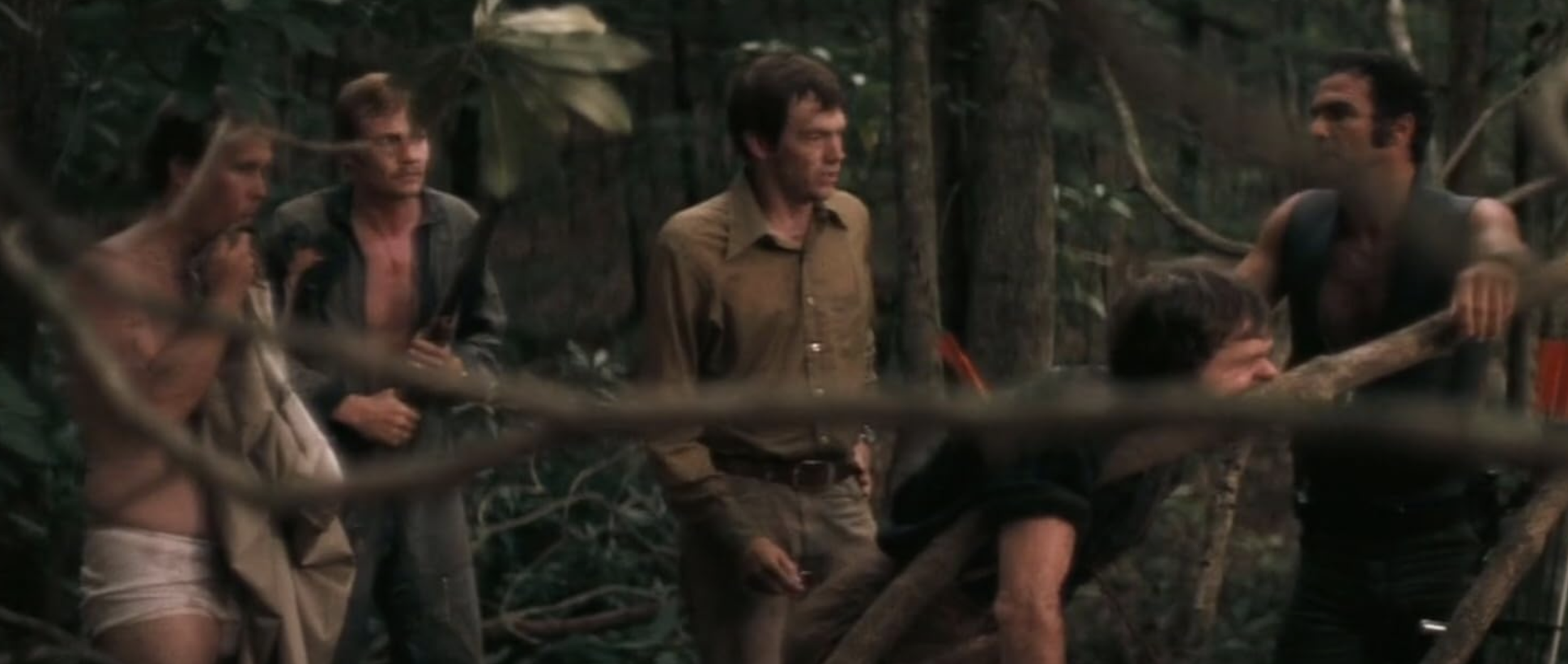
Deliverance, image via IMDB
Theresa’s Picks
The Blair Witch Project (1999) | Dirs. Daniel Myrick & Eduardo Sánchez
Who can forget the truly horrifying The Blair Witch Project? This ground-breaking film set the stage for what found footage horror could (and should) be with some truly incredible acting and very clever cinematography.
The movie follows three young filmmakers as they set out to record a documentary on the infamous Blair Witch, a local, legendary brutal witch who dwells in the woods. It’s not too long before the kids are hopelessly lost hiking in the wilderness. They lose the map, start hearing unnatural things, and find all kinds of strange markers placed around their campsite every morning. When one of the three goes missing, it becomes clear that the movie won’t end with them getting out alive.
What makes Blair Witch so strikingly terrifying is that it doesn’t really show anything. There’s hardly any gore, zero jump scares, and a whole lot of talking. In fact, what makes the movie so special is that the entire thing is shot through the crew’s video cameras, making the viewer constantly present in the scene with them. Watching the film means that you’re always in first person, always experiencing the plot in real-time as if you’re there, building up suspense for almost two straight hours with no release. If you’re looking for some real gore, then this isn’t the film for you, but whatever it may lack in show, it more than makes up for in fear. Throughout the story, we’re stuck wandering around in the woods with these film students, feeling the dread and tension at every turn for every sound they can’t distinguish and every trail they can’t find. Part supernatural horror, part wilderness horror, The Blair Witch Project expertly combines two very different fears of the unknown.
The Descent (2005) | Dir. Neil Marshall
Another film to get you reconsidering your springtime climbing trip is The Descent, directed by Neil Marshall. The film follows six women embarking on a caving trip, two of whom have a messy and tragic past. Although caving sounds scary enough, the women come to find humanoid creatures in the cave that hunt them as they try to find their way out. What first seems like a wilderness horror film turns quickly into a monster-survival story. The film is focused on confined spaces with limited escape—an unusual and interesting way to frame the fears of the outdoors. And the film’s ending hones in on this point, allowing the viewer to seriously rethink how they interact with the great outdoors. What makes The Descent great is it’s unyielding brutality of the monsters. There is no escape here.
Unfortunately, the backstory behind the women cavers (and what drives their decisions for survival) isn’t all that interesting. It suggests a patriarchal view on female friendships which I find both frustrating and boring, but if you’re looking for a good monster flick with a great ending then this is the film.
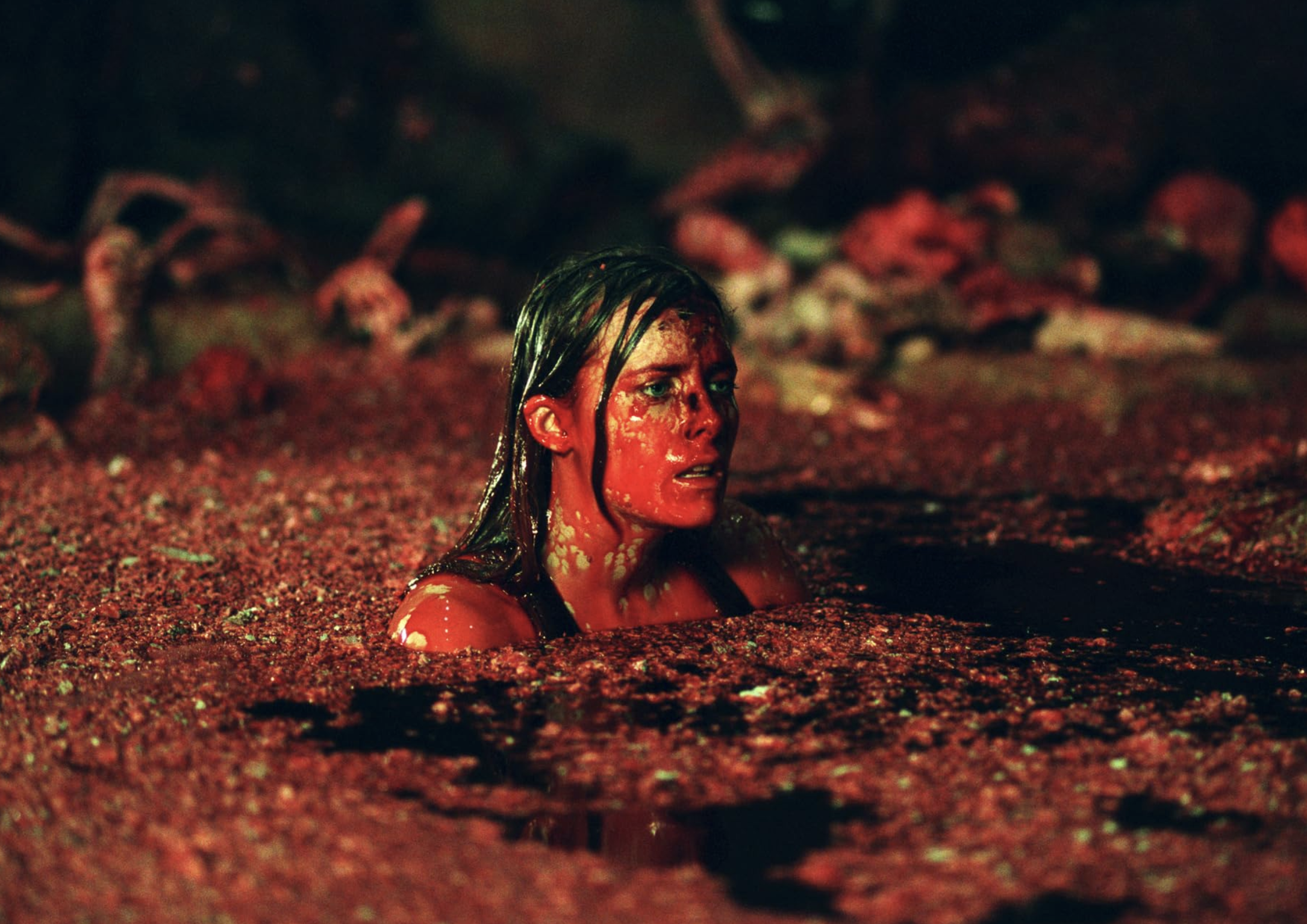
The Descent, image via IMDB
Laura’s Picks
The Wall (2012) | Dir. Julian Pölsler
Though likely not seen as a horror movie in the traditional sense, The Wall, based on the 1963 novel by Austrian author Marlen Haushofer, is a meditative examination on who we truly are, both on vacation and at the end of the world.
On vacation with friends at a hunting lodge in the Austrian Alps, the protagonist, whose name the viewer comes to know as Die Frau and played wonderfully by Martina Gedeck, elects to stay at the lodge once her friends, Hugo and Luise, decide to travel into town for a stop at the pub. Come the next morning, however, our protagonist realizes that her friends have not returned. Deciding to walk out to the village to see what’s happened to them, with her friends’ dog Lynx as a companion, she encounters some unfathomable obstacle that must have descended during the night: an invisible wall. Neighbors on nearby properties are frozen in time, and all that she has is herself, a hunting lodge, and Lynx.
Narrated from the protagonist’s perspective through a retrospective report she’s taken on the burden of authoring, The Wall takes horrifying circumstances, which Die Frau guesses could be a weapon of some sort, and becomes a study of quiet, meditative living.The Wall also beautifully underscores the importance of our dependence on each other, our animals, and the Earth itself. Spring is a time for both striving for fertile ground and fighting to flourish where we are planted.
Gretel & Hansel (2020) | Dir. Oz Perkins
To me, spring has always been a time for fairy tales and celebrating the strange things that slumber in the earth awakening as the season continues to warm. Gretel & Hansel, directed by Oz Perkins—who is cultivating a growing following in horror circles because of his work in The Blackcoat’s Daughter and I Am the Pretty Thing that Lives in the House—lives up to its name by turning the fairy tale on its head, leaving the viewer with some horrifying but incredibly important questions related to unexpected subjects.
Intended as young-adult horror, Gretel & Hansel tells the story of siblings stuck in dire straits: When their mother descends into madness, they must find their own way in the woods, eventually coming across a home full of food and potential terror in the form of a witch named Holda.
Though Gretel & Hansel didn’t leave much of an emotional impact on me, there is still much to enjoy as the film flowers in its own way, much like spring. Alice Krige does an absolutely magnificent job playing the witch Holda, her presence moving fluidly between menace and amusement. Cinematography, by Galo Olivares, is also beautiful, leaving older viewers with the emotional impression of the fairy tales we read when we were younger, using golden light, long shadows, and always retaining a dreamlike quality. (I also imagine Perkins himself had something to do with this.) Something else I have a feeling Perkins had a hand in is the film’s focus around food: Though this is an essential part of the original fairy tale, how the film’s story centered around food and bears this out raises some horrifying questions about how little we know about where our own food comes from, and what it takes in terms of lives and labor to get to our dinner tables.

Long Weekend (1978) image via IMDB
Ande’s Picks
Willow Creek (2013) | Dir. Bobcat Goldthwait
Bearing more than a few similarities to The Blair Witch Project, Bobcat Goldthwait’s Willow Creek features protagonists that aim to make cryptozoological history: They want to find Bigfoot. Jim (Bryce Johnson) is an avid believer in the elusive beast, while Kelly (Alexie Gilmore) is more or less entertaining her boyfriend’s enthusiasm. As the couple hikes in search of the location of the infamous Patterson-Gimlin footage, strange occurrences slowly increase in intensity, culminating in an excellent eighteen-minute uncut scene that is worth the price of admission alone. Though the film struggles somewhat in its attempt to add to the genre that was pioneered by its forerunner, it still manages to differentiate itself enough to be an effectively intense viewing experience, and likely the best Sasquatch-centered film available.
Long Weekend (1978) | Dir. Colin Eggleston
Australian horror is too easily overlooked, given the bloodlust the Outback seems to have for human inhabitants, and Long Weekend takes full advantage of the savage environment. Peter (John Hargreaves) and his wife Marcia (Briony Behets) are taking a weekend in the remote Australian bush to try and stem the bleeding of their failing marriage. Their efforts, however, are soon derailed as both inexperience and selfishness lead to unfortunate encounters with their surroundings. Far from your run-of-the-mill “man vs. nature” horror tale, though, Long Weekend is steeped in symbolic imagery that conveys its message without feeling too preachy. It plays with the kind of existential terror that may not have a lumbering hairy hominid to focus your attention, but will still make you think twice before setting up your camp at the dead end of an unmarked trail.
Article written by What Sleeps Beneath
WSB is a labor of love. You can support us by reading our articles, telling your friends about us, visiting our Bookshop page, and shopping our merch. Thank you for being part of the horror community!

Other Articles You May Enjoy…


Filmmaker Bari Kang discusses Itch!, from its practical gore and zombie influences to filming in his own NYC store and directing his daughter.