
40 Weeks And About To Pop: Horrific Children That Actually Scare Me About Becoming A Mom
Okay, at the time of writing we were about one week and six days from our due date—but who was counting?! I honestly couldn’t handle another demonic unborn baby movie or ridiculous pregnancy horror film that left me utterly disturbed. The more I explored this subgenre, the more I realized I wasn’t really going to find something that scared me about the state I was in, just that I would be more scared by the ways filmmakers were incorporating additional elements that tied to pregnant people. It seemed that these additional elements, the possession, the stalker, the circumstances surrounding the pregnant woman were the real terror or threat to her pregnancy.
In the end, being pregnant, to me, is scary enough in itself. You’re told not to worry, yet you now have all these restrictions (all at different trimesters), you have countless tests, the results of which could affect how you handle the rest of your pregnancy, tests to see if you’ll need antibiotics during birth, tests that the baby is growing correctly, tests that they’re healthy, vaccines to protect them, decisions to make about their arrival and the care they’ll receive, decisions to make about yourself and what you want—from your pregnancy, your labor, and your life which is literally about to change forever. Show me a horror movie that’s raw and goes through those hardships and the loss of your own bodily autonomy and I’ll promise you more women will be afraid of that than of a possessed demon baby. What women go through is incredible and shouldn’t have to take a step to the side for something more horror-affiliated to be scary.
And don’t get me wrong, there were some actually terrifying pregnancy horror movies I watched throughout this series. However, let’s just say that the vast majority missed the mark for me. Maybe as more threats are being made against women’s rights to choose we’ll see a resurgence in horror of what actually makes being female horrific. Until then, I’ve shifted gears. With Gage on the cusp of arrival, I thought it might be fun to explore scary children in horror movies, because hey, why not?
Emily Callaway | Hide and Seek (2005)

Although it’s been years since I actually watched the film, I can still vividly remember the impression Dakota Fanning made on me while playing the part of Emily Callaway in John Polson’s Hide and Seek. In the wake of her mother’s suicide, Emily and her father (Robert De Niro) navigate thier grief and trauma together. Seemingly innocent, Emily creates an imaginary friend for dealing with the horrific event, Charlie. But, just as you would suspect in a horror movie, Charlie causes Emily’s behavior to become increasingly erratic and disturbing.
Concerned about her mental health, her father begins to speculate about her relationship with Charlie, only to find that the boy he can’t see is a mirror for his own alter ego and reveals the truth of how his wife really died. A truly twisted story, for both father and daughter, I couldn’t help but shake the impression the event ultimately left on Emily and how disturbed she had become. It is a reminder of how fragile and innocent children are—and how easily that innocence can be destroyed.
Charlie Graham | Hereditary (2018)
From the opening scenes of Ari Aster’s Hereditary, viewers can tell that there is something odd about Charlie, setting a level of uneasiness for the film that only grows. From her quiet and strange clicks, to caring for the corpse of a bird she beheaded, it’s not exactly hard to recognize that Charlie is a strange child, but a mystery to pinpoint why she’s this way, especially when compared to her brother who otherwise seems like a normal teenager.
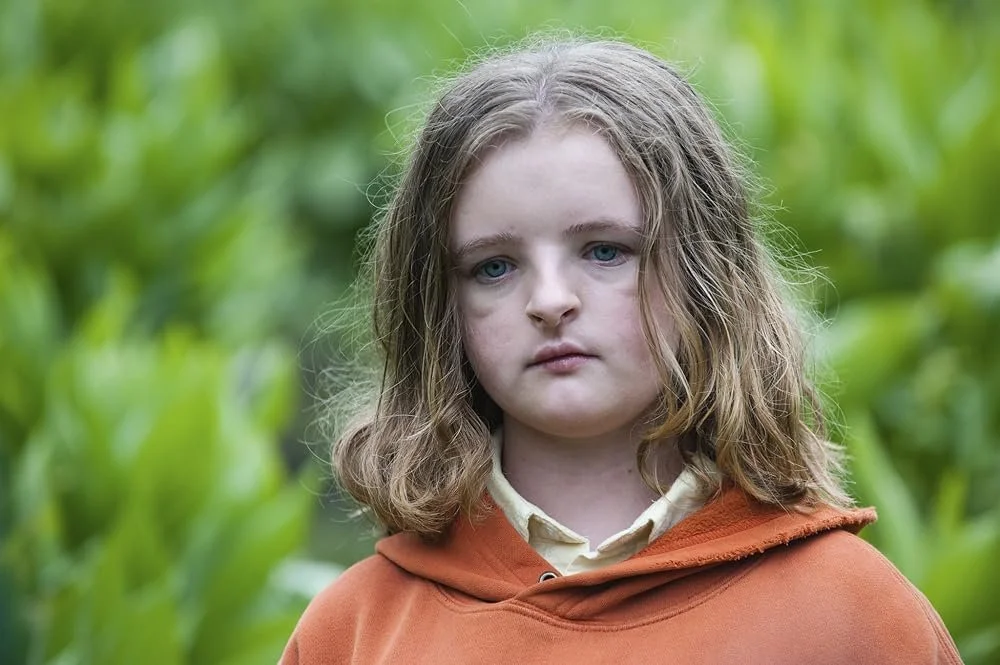
Millie Shapiro as Charlie in Hereditary.
As a soon-to-be parent, it makes you wonder what is hereditary and what might have happened to Charlie in her adolescence that aided in the development of these characteristics. Given the film’s title, I think the viewer is invited to make their own assumptions—pieces to a different puzzle certainly come together later, but I won’t derail from why Charlie specifically scares me. Because despite what I’ve pointed out, it’s not that she’s strange or different. It's actually her allergies. Wow, I know. How bland. But seriously, as a soon-to-be mom, I wonder what, if any, health issues Gage will have once he’s born. My mind can’t even begin to think about how stressed I’m going to be when we decide to give the kid peanut butter for the first time. I feel kind of insane, but it’s something you have to think about. And then, if your child does have an allergy, how can you ensure that the parents/caretakers/whoever are going to know to check every meal and child-to-child interaction.
Obviously in Charlie’s case this is taken to the extreme… hence being genuinely terrified.
Henry Evans | The Good Son (1993)
Again, another film I haven’t seen in years but still chills me to my absolute core when I think about it. In this movie, Macaulay Culkin plays Henry Evans, the evil opposite of his heroic cousin, Mark Evans, played by Elijah Wood (which, what a solid duo, I might add). When it comes to disturbed children, I think that Henry might take the gold. From dropping a dummy at the top of an overpass into oncoming traffic to trying to kill his little sister, Henry has a long list of truly horrific acts that make you wonder if there was ever a childlike innocence to him.
At least for me, in this state, I can’t help but recall Sir Francis Galton’s nature versus nurture theory. Did something happen to cause Henry’s moral compass to completely flip upside down? Or was he born that way—destined to be a psychopath? Most of us believe that so long as you raise your child with love and care, they’ll turn out alright. Then you watch movies like this and wonder if anything you could ever do would prevent a child from becoming someone like Henry.
Gage Creed | Pet Sematary (1989)
For those who know we’re naming our son Gage, I just have to set the record straight: I did not pick his name! And I can honestly share that my husband, who was the one to suggest and push for the name, has never actually seen (the original or the remake) or read Pet Sematary. Shocking, I know, but it’s the truth. I, however, can’t deny that when he suggested it, I was secretly thrilled. While I wasn’t aiming to have our son share the same name as one of Stephen King’s characters, it seemed rather fitting to some degree. It was the first King book I read in high school and was one of my favorite horror films for many years—heck, it might still be.
Although Gage isn’t necessarily scary in either telling—at least until the very end—what happens to him is devastating and every parent’s worst nightmare. When I think about Ryan’s and my adventurous nature, and my own close call as a child crossing a busy road bustling with coal trucks and speeding cars in front of my parent’s house when no one was looking, I get a lump in my throat. Of course I want our son to be curious and eager to explore, but I can’t imagine him getting away while we’re distracted and something horrible happening as a result. It makes me feel nauseous, uneasy, and hollow. He’s not even here yet and already those feelings are much stronger than the empathy I thought I was feeling when experiencing this story in my adolescent and young adult years. I have a feeling that our parents were right when they told us we wouldn’t know until we had kids of our own, the anxiety and worry they felt consistently, without waver.
Article by Destiny King
Destiny writes about true crime and thrillers. She likes movies and stories that make you question the world around you, more so than what makes you jump.
Other Articles You May Enjoy…
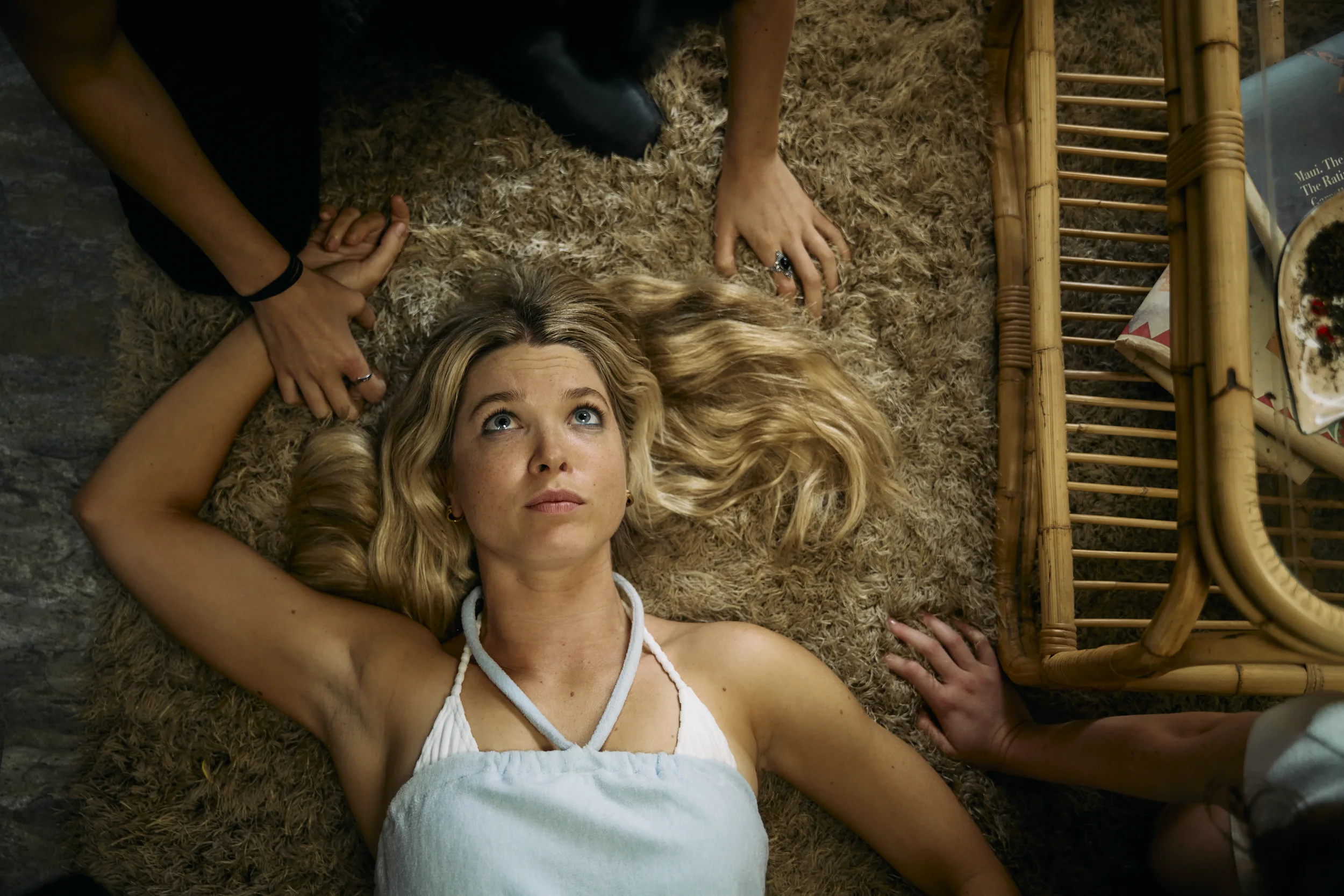
![[Movie Review] Avalon Fast’s “CAMP” is the Latest in the New Wave of Transgressive Filmmaking](https://images.squarespace-cdn.com/content/v1/5d3e481bc5a6e40001b215a8/1782401219629-WQRPE1S2P04BE4SNHMJ2/mPAUB3_Q.jpeg)
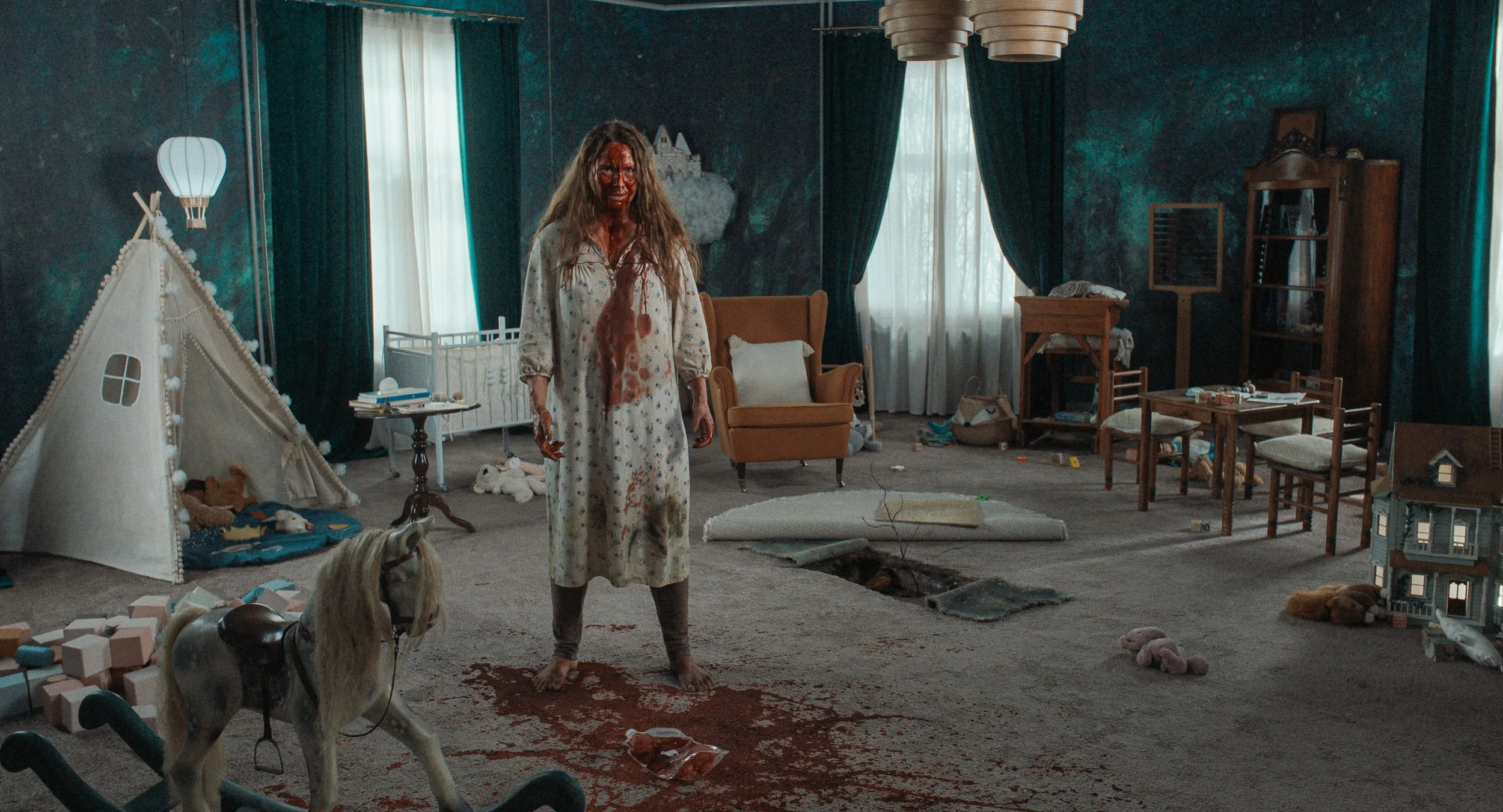
![[Movie Review] Izabel Pakzad’s “Find Your Friends” Debuts on Shudder](https://images.squarespace-cdn.com/content/v1/5d3e481bc5a6e40001b215a8/1781905520911-HKI5I64EQ6F19X0Q08A8/fyf-amber.jpeg)

Are you tired of searching for works that describe transgender experiences accurately, let alone with complexity or compelling messiness? Want to read some horror stories that were written by and/or for trans people? Curious about this newfangled term “trans horror” and wondering where to start? Hopefully, this brief primer will be useful to you.