[Book Review] Hear Us Scream: The Voices of Horror Volume II
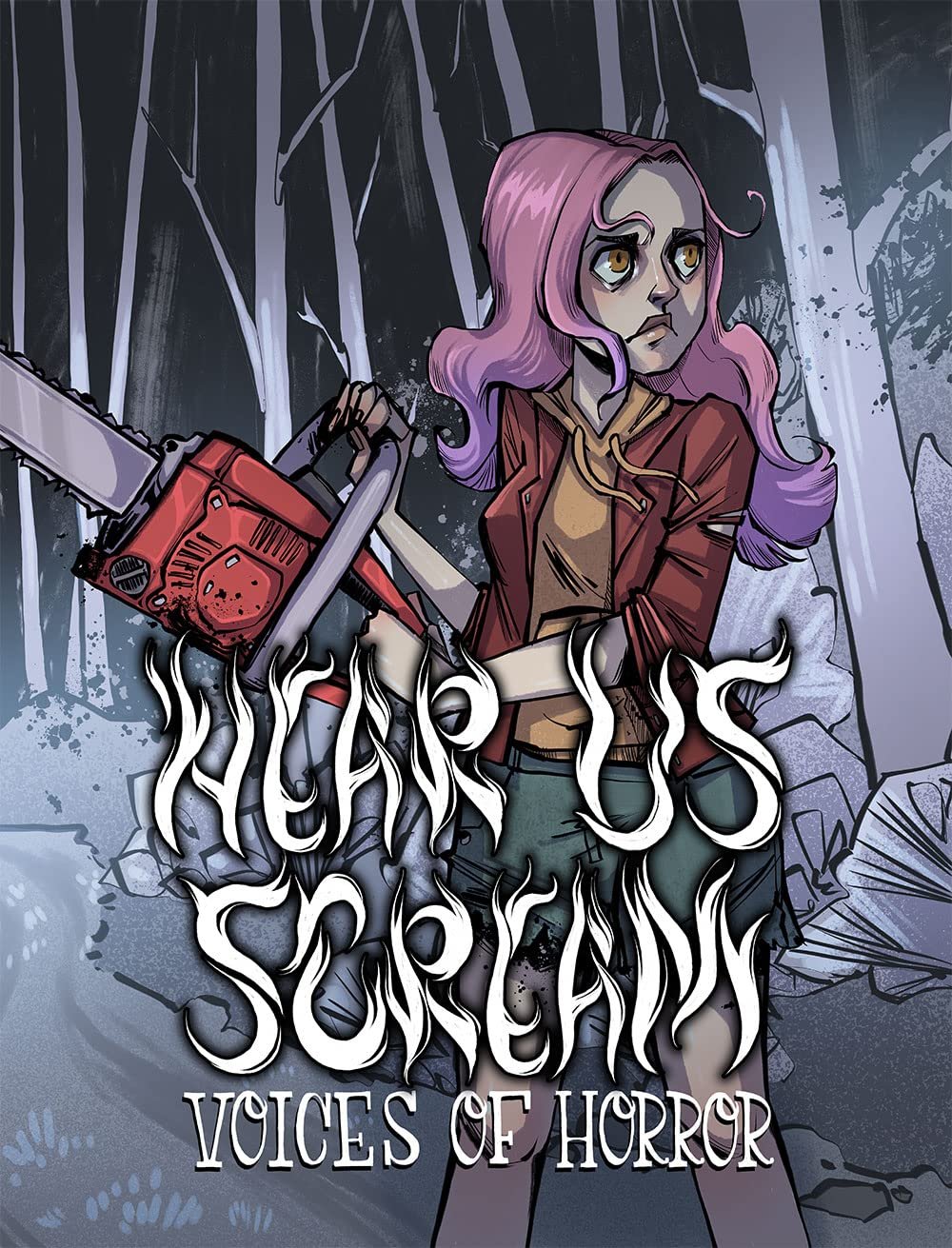
Few things in life are as certain, for a horror fan, as having to answer the question, “Why would you watch things like that?” It’s a deceptively difficult question to answer, and one that I’ve spent an unholy amount of time contemplating, myself. Hear Us Scream: The Voices of Horror Volume II, a collection of over 30 personal essays by women and non-binary horror fans, seeks to deliver a range of diverse answers to that question. By highlighting these voices, and in particular, by using their series as a way to boost otherwise marginalized perspectives, The Voices of Horror proves that no matter who we are or where we come from, horror can be a warm and welcoming community. Hear Us Scream: The Voices of Horror Volume II is a powerful testament to horror’s ability to reach out and touch the people who need it, often in the times they need it most. For these authors, horror goes beyond the thrill of blood and gore and the imaginative ways a writer can kill off their characters. As Laurel Hightower writes in the book’s foreword, “Horror is our world, our language, and through it we can know ourselves and one another.”
If there’s one theme that courses through the genre of late, it’s that grief is an adversary from whom none of us are immune, and the power it holds can be suffocating. From The Babadook (2014) and The Night House (2020), to Hereditary (2018) and Midsommar (2019), grief has been a dominating force in contemporary horror. In some of The Voices of Horror’s more affecting essays, we are graciously shown the deep and varied impact of grief. In “Every House Sits atop a Burial Ground,” for instance, Mae Murray learns to find herself through grieving characters like John Russell in The Changeling (1980) and Louis Creed in Pet Sematary (1989/2019). For Alice Collins and Tracy Gossage, on the other hand, in “A Personal and Incomplete History of the Magic of Horror Hosts” and “When We Aren’t the Final Girls,” respectively, horror is a salve to treat the pain of losing a loved one—an interest once shared, taking on the new role of memorial. Jackie Jardine, meanwhile, draws strength from seeing these grief-stricken characters battle their monsters for her own battle with chronic illness.
These essays are powerful because grief is an emotion that we can all relate to, even if our reactions to it are vastly different. Other chapters, though, draw on experiences that I, for one, have not had to struggle with, and made me appreciate them all the more. In Amber T’s “Break the Nose of Every Beautiful Thing: Navigating the Body Dysmorphia Through Horror Cinema,” for example, the author describes her body dysmorphia by way of films like Carrie (1976), In My Skin (2002), and Possession (1981), among others. Contextualizing complex issues like body dysmorphia through well-loved movies, whose characters and stories are identifiable in many ways, adds a unique level of understanding.
Others, including “Experimental Surgeries and Magical Girl Ghosts: A Look at Trans Feminine Horror Pre-Reagan,” by Laura TH Riordan and “Give Me Back My Hand: The Transgender Evil Dead,” by Logan-Ashley Kisner, offer convincing trans readings of films like The Bride of Frankenstein (1935), Eyes Without a Face (1960), Curse of the Cat People (1944), and The Evil Dead (1981), which—again—are directions I’d have never thought to explore. In “My Body, My Body and Me,” by Lor Gislason and “Lycanthropic Tendencies: A Story of Blood, Pain, and Ginger Snaps,” by Molly Henery, whose thoughts on Hellraiser (1987) and Ginger Snaps (2000), respectively, were eye-opening in ways that deeply affected me. Sometimes I worry, particularly with films as important to me as these ones are, that I might find myself a bit jaded to readings that aren’t my own—not out of malice or arrogance (intentionally, at least)—but out of the conviction of having spent so much time building my own walls with the texts. These, then, are the siege engines I didn’t know I needed to break down those barriers.
Still others take personal approaches to broader philosophical themes. Lakkaya Palmer describes in “Reclaiming the Monster Within” how reading the works of Laura Mulvey and Barbara Creed and seeing films like Get Out (2019) led her to embrace the “monstrous” within, a symbol, not of fear and oppression, but of authenticity and strength. In “Don’t Be Afraid to Let Your Body Die,” Tori Potenza uses the works of David Cronenberg and his consistent themes of human evolution and identity to explore their own relationship with identity and how posthumanism has begun helping them reconcile their anxieties. At the other end of the spectrum, Betsy Nicchetta’s “From the Safety of My Couch” uses the nuanced depictions of Christianity in Mike Flanagan’s Midnight Mass (2021), as a means of healing the wounds left by her own departure from the church.
These examples are just scratching the surface of what The Voices of Horror Volume II has to offer. If I’m being honest with myself, on receiving the veritable tome that makes up Volume II, I had fully expected to hop around to the most interesting sounding titles until I felt like I had enough of a grasp to represent the book well. I’d never read it all in time, I thought. But once I began, I couldn’t bring myself to skip a word. Whether you are a horror fan looking to step outside of your own experience with the genre or you’re grappling with your own difficulties and need to know you’re not alone, Hear Us Scream: The Voices of Horror Volume II is an excellent place to start. To get a copy for yourself and to support the great work they’ve done and are continuing to do, head over to the link below.
Article written by Ande Thomas
Ande loves the intersection of sci-fi and horror, where our understanding of the natural world clashes with our fear of the new and unknown. He writes about monsters and foreign horror and can also be found over on Letterboxd.