
Paganism and Santa Claus: How Films Have Explored an Alternative Christmas
Paganism has long captured the imagination of filmmakers, offering a wealth of mythological and ritualistic elements to explore on screen. From ancient folklore to nature-based spirituality, movies about paganism delve into humanity’s relationship with the mystical and the natural world.
Films like The Wicker Man, Pan’s Labyrinth, and Labyrinth incorporate themes of ritual, transformation, and shadow selves, painting vivid landscapes that balance the sacred and the sinister. Whether presenting dark conspiracies or whimsical fairy tales, these movies bring pagan concepts into the spotlight, inviting audiences to engage with themes of death, rebirth, and the timeless connection between humans and nature.
These films frequently portray elements of paganism through symbolic storytelling. The Wicker Man showcases ritualistic practices tied to the harvest, while Pan’s Labyrinth uses fairy tale archetypes to explore moral lessons and spiritual tests. In Labyrinth, the journey through the Goblin King’s maze represents personal growth and the confrontation with one’s inner shadows.
Other films, such as Princess Mononoke and My Neighbor Totoro, reflect Shinto and animist influences, highlighting humanity’s impact on the natural world and the spirits that dwell within it. Each of these movies uniquely adapts pagan motifs, blending mythology, morality, and magic in compelling ways. Whether it’s the haunting atmosphere of The Wicker Man, the dark beauty of Pan’s Labyrinth, or the heartfelt connection to nature in Studio Ghibli’s works, these movies offer a window into the primal and spiritual aspects of human experience.
What Does Christmas and Paganism Have in Common?
Many classic Christmas traditions have deep roots in pagan history, blending the sacred and the celebratory. Decorating trees, a beloved Christmas custom, originates from Roman Saturnalia and Germanic winter solstice traditions. Romans adorned outdoor trees with ornaments symbolizing their gods, while Germanic tribes honored Odin with fruit- and candle-decked evergreens. Over time, these customs merged, creating the iconic Christmas tree we cherish today.
Feasting with loved ones also stems from pagan practices. During winter solstice celebrations, pagans marked the end of the agricultural year with communal gatherings, sharing food and drink to stave off winter’s gloom and foster joy. Similarly, gift-giving and hanging stockings owe their origins to ancient customs. Romans exchanged small gifts during Saturnalia for luck and prosperity, a practice that evolved into modern gift-giving.
Stockings, on the other hand, trace back to the Norse god Odin, whose legend inspired children to leave treats in their boots for his horse Sleipnir, earning gifts in return. Even the jovial image of Santa Claus reflects this blend of traditions, combining the generosity of St. Nicholas, the bearded Odin, and modern commercial reinventions. These interwoven rituals reveal how Christmas preserves the spirit of joy, connection, and gratitude found in its pagan predecessors.
Christmas Horror Films That Capture the Spirit of Paganism
When it comes to holiday films, Christmas horror movies with pagan undertones offer a refreshing twist on the festive season. Far from the saccharine cheer of traditional Christmas cinema, these films explore the darker, ancient roots of yuletide traditions, blending folklore, mysticism, and fear into compelling stories.
They invite audiences to consider the duality of light and darkness during the winter solstice, a time when celebrations of renewal and abundance often carried an edge of caution and reverence for the unknown. Whether through monstrous depictions of Santa Claus, cursed advent calendars, or folkloric creatures like Krampus, these films reflect a primal connection to the earth’s cycles and the rich tapestry of pre-Christian mythology that underpins the modern holiday season.
Rare Exports: A Christmas Tale (2010), dir. Jalmari Helander
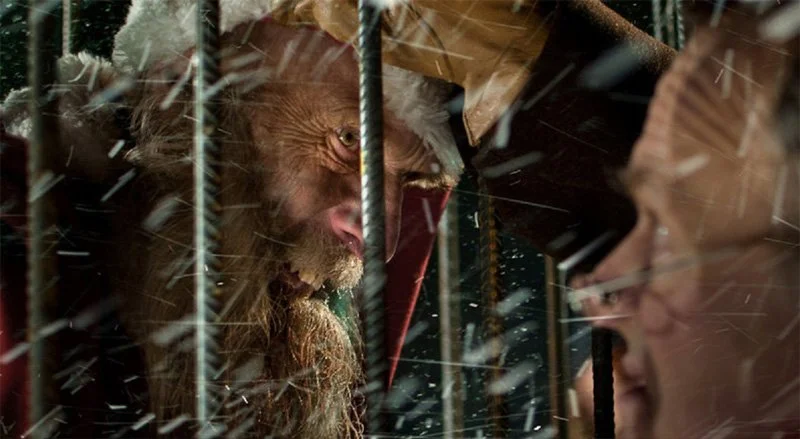
Rare Exports: A Christmas Tale, image via IMDb.
Rare Exports reimagines Santa Claus by drawing on his darker, pagan origins to create a chilling and inventive horror story. Set in the remote Korvatunturi region of Finland, the film portrays Santa as a terrifying figure imprisoned in ice, with monstrous elves working to release him. Rooted in ancient Nordic folklore, the story reflects traditions from Finland’s Yule celebrations, where goat-masked figures symbolized both abundance and fear. These figures, precursors to the modern Santa Claus, often carried brooms to discipline misbehaving children, blending elements of fertility rituals and winter solstice customs. Rare Exports transforms these folkloric elements into a darkly humorous and unsettling story.
The film’s portrayal of Santa merges ancient pagan themes with modern horror, offering a unique take on Christmas mythology. It highlights Finland’s cultural history, where the figure of Santa evolved from Joulupukki—literally “Yule Goat”—a tradition that persisted in rural areas into the early twentieth century. By setting the story in Korvatunturi, long regarded as Santa’s true home, Rare Exports grounds its fantastical tale in a distinctively Finnish context.

The Advent Calendar (2021), dir. Patrick Ridremont
Patrick Ridremont’s The Advent Calendar blends festive iconography with deeply unsettling themes. The film follows Eva (Eugénie Derouand), a former ballet dancer navigating life with a disability, who receives a cursed advent calendar with sinister powers. The film’s daring juxtaposition of holiday cheer and horror makes it deliciously compelling. Vivid colors and ethereal lighting evoke a surreal, almost magical quality, while the film’s brutal violence and psychological intensity ensure audiences are kept on edge. Its ability to link Christmas traditions like the advent calendar with dark, otherworldly forces sets it apart as a unique seasonal offering.
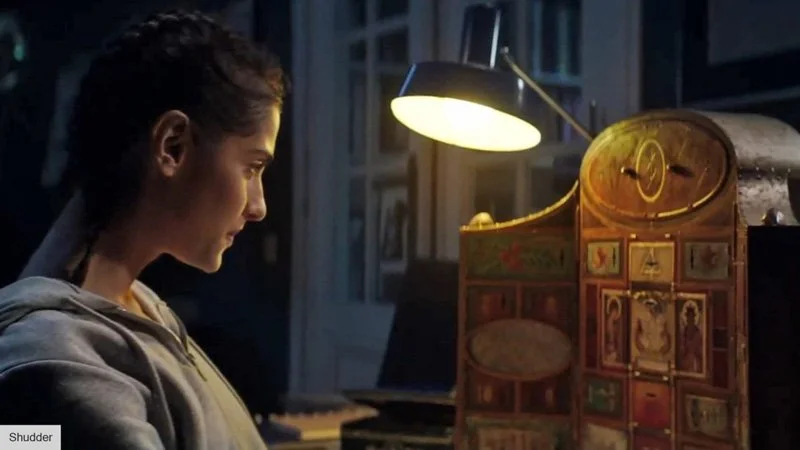
The Advent Calendar, image via IMDb.
Beyond its seasonal appeal, The Advent Calendar delves into pagan themes, emphasizing cycles of sacrifice and renewal that resonate with ancient solstice traditions. The advent calendar itself, with its numerological significance and ritualistic demands, serves as a metaphorical gateway between the material and the spiritual, much like pagan celebrations of the winter solstice.
The film’s exploration of ableism and societal cruelty toward the disabled echoes the darker aspects of communal rituals—forcing viewers to confront harsh truths about human behavior. At the same time, its connection to pagan roots reinforces themes of transformation and survival, where Eva must navigate her desires, limitations, and the moral cost of her choices. By weaving together the macabre and the mystical, Ridremont creates a Christmas film that is both deeply unsettling and profoundly reflective of the holiday’s pre-Christian origins.
Krampus (2015), dir. Michael Dougherty
Michael Dougherty’s Krampus is a standout holiday horror-comedy that transforms Christmas cheer into a chilling tale of family dysfunction and supernatural terror. The film masterfully balances its satirical humor with genuinely unsettling scares, making it an entertaining yet eerie alternative to traditional seasonal fare.
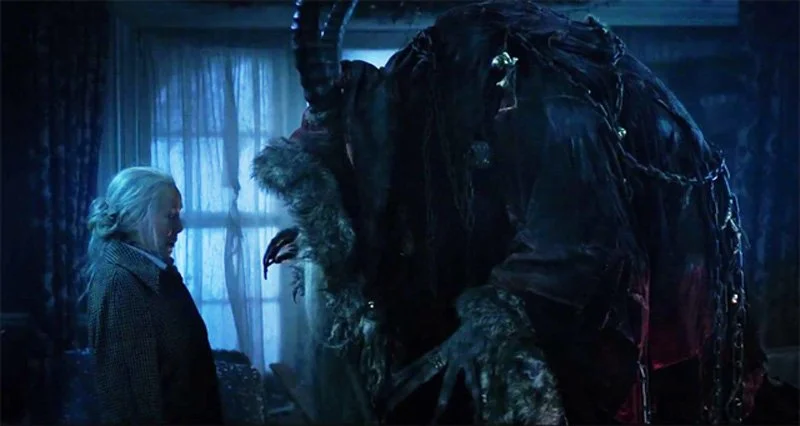
Krampus, image via IMDb.
The story follows Max (Emjay Anthony) and his fractious family as they unwittingly summon Krampus, the dark counterpart to St. Nicholas, by losing their holiday spirit. What ensues is a blizzard-trapped siege filled with horrifyingly imaginative creatures—sinister snowmen, demonic toys, and malevolent elves—that lead up to the terrifying appearance of Krampus himself.
With its richly atmospheric set design and an excellent cast delivering sincere performances amidst chaos, Krampus stands out as a refreshingly macabre addition to the Christmas movie canon. And at its core, the film reveals deep-rooted pagan themes that hark back to the holiday’s pre-Christian origins.
The titular character, derived from Alpine folklore, embodies the ancient duality of light and dark forces tied to winter solstice traditions. The film taps into this mythological underpinning by presenting Krampus as a punisher of those who forsake the spirit of giving and unity. The grandmother’s haunting flashback, presented through beautifully animated sequences, ties Krampus to cultural memories of Yule, sacrifice, and fear of divine retribution.
The movie’s blend of old-world mysticism and modern familial discontent creates a poignant commentary on the commercialization of Christmas, reminding viewers of its pagan roots in rituals of morality, transformation, and survival. This synthesis of horror and mythology makes Krampus both a compelling cautionary tale and a visually striking homage to the darker aspects of the holiday season.
Hogfather (2006), dir. Vadim Jean
The made-for-TV British horror film Hogfather, adapted from the work of writer Terry Pratchett, offers a richly imagined world where belief itself takes center stage as a source of magic and power. Set on Discworld, a fantastical realm perched atop a cosmic turtle, the story sees Death stepping into the shoes of the Hogfather—Discworld’s version of Santa Claus—after a plot by the shadowy Auditors aims to extinguish belief in him entirely.

Hogfather, image via IMDb.
The tale unfolds as a delightful mix of mystery, dark comedy, and holiday spirit, all while questioning the very essence of belief and its capacity to shape reality. With standout performances by Michelle Dockery as Susan, Death’s no-nonsense granddaughter, and Ian Richardson’s resonant portrayal of Death, the film captures the wonder and warmth of the holiday season without a trace of sentimentality.
At its core, Hogfather reveals its Pagan roots by stripping Christmas of its overtly Christian overtones and grounding it in Midwinter traditions tied to ancient cosmology and seasonal celebration. The Discworld’s creation myth—featuring a flat Earth resting on the backs of four elephants standing on a cosmic turtle—evokes echoes of Hindu, Lenape, and Haudenosaunee cosmologies, offering an alternative to the nativity story.
Midwinter in Hogfather becomes a time to honor the cyclical nature of existence and the primal need for belief in something greater, even if that belief takes the form of a gift-giving jolly fat man. Through its exploration of egregore—the collective power of belief—and its rejection of the hegemony of a singular “Reason for the Season,” Hogfather celebrates a holiday that is as inclusive as it is magical, making it an enchanting watch for Christmas enthusiasts and skeptics alike.
Article by Dan Stephens
Dan Stephens is the founder and editor of Top 10 Films, a film list and nostalgia site established in 2009. His love of horror began when he saw An American Werewolf in London as a child which cemented a fascination with mythical creatures in a contemporary setting. He also loves a good ghost story.
Other Articles You May Enjoy…



Are you tired of searching for works that describe transgender experiences accurately, let alone with complexity or compelling messiness? Want to read some horror stories that were written by and/or for trans people? Curious about this newfangled term “trans horror” and wondering where to start? Hopefully, this brief primer will be useful to you.