
Our Favorite Indie Horror Films
While mainstream horror has long been criticized for its lack of ambition, indie horror has been pushed to make up for its shortcomings for decades. Always forcing viewers to ask themselves the hard questions, indie horror takes us on journeys to experience the uncomfortable, and in many cases, brings to light the ugly and unresolved issues plaguing our society. If we’re being honest, the latter is what makes us at What Sleeps Beneath love horror so much. How can we handle what scares us or what concerns us in real life if a film doesn’t introduce us—or take these issues to the extreme?
Sometimes a shocking awakening or realization, indie films are crafted to make us think. It’s not just the scare or shock value of a film that will leave you quivering in fear, but the perspectives that keep your mind twirling for days or weeks after that we love talking about with other horror fans. In this blog post, we’re sharing some of our favorite indie horror films in hopes that you’ll be inspired to watch, discuss, or even share some of your favorites that might not have made this list.
Destiny’s Picks
The Blair Witch Project (1999), dir. Daniel Myrick, Eduardo Sanchez
If it wasn’t obvious, the editors at What Sleeps Beneath are big fans of found footage. From my review of the Creep franchise to Ande’s hauntological take on Lake Mungo, we always find ourselves anticipating (Eek! Looking at the October V/H/S/85 release date) and sometimes favoring the often low-budget, but big-impact films. While The Blair Witch Project pretty much set the bar for these types of movies back in the ‘90s, it is astonishing to realize more than 20 years later, the movie still affects those who watch on an intense scale.
Whether you were living under a rock at the time of its release, possibly not even born yet, or just were never into horror, the film will easily make you want to pick up your phone and research who the Blair Witch was, if a group of people died looking for her, and all the urban legends that surround the tale. That was the case for me at least. There is something about the art of mixing nonfiction and fiction, or making you believe that a made-up story is real, that I find so interesting. Whether they are bending truths or revealing a hidden truth, directors will rely on “real people” instead of the traditional character to tell us what that is—a craft and a skill in itself. For this reason, popular or not, I have listed this film. Watch it if you haven’t. If you have, go watch it again—we are officially in spooky season, after all.

Donnie Darko (2001), dir. Richard Kelly
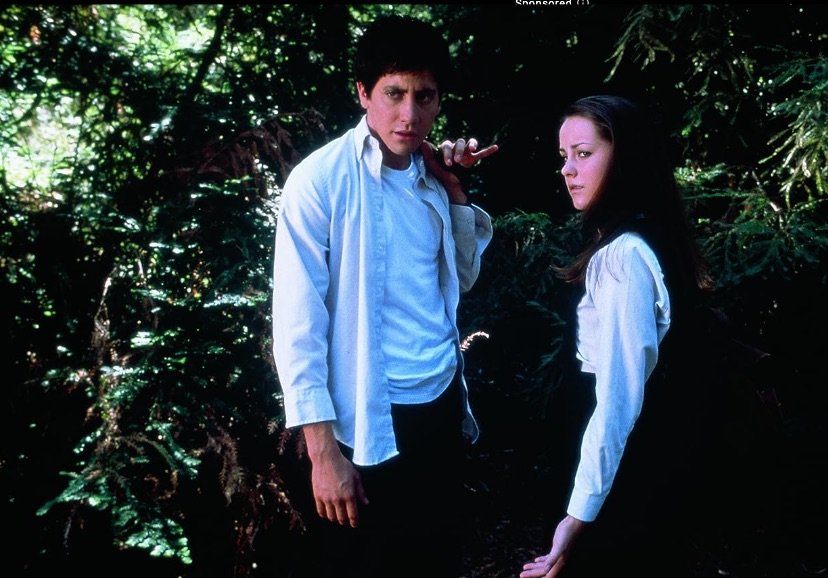
Easily a cult classic, Donnie Darko tells the story of a teenage boy (Jake Gyllenhaal) who, after surviving a jet engine crashing through his house, begins having visions of a man in a bunny suit instructing him to commit crimes. This film, like its namesake, is very dark. Not only will viewers easily be creeped out by the creature in Donnie’s visions, but the crimes that the character can uncover through his vigilante-like tendencies are even darker. Which is what makes the movie such a cult classic. Though it takes place in the late 80s, well before the widespread use of the World Wide Web or the millennial 2000 hype where it was debated if the world would end, Donnie Darko brought unseen, real-life horrors to the screen. While average people might try to shove some of these problems under the rug, Donnie’s acts bring them to light, making those around him uncomfortable, and unsafe, but also, very present.
Hard Candy (2005), dir. David Slade
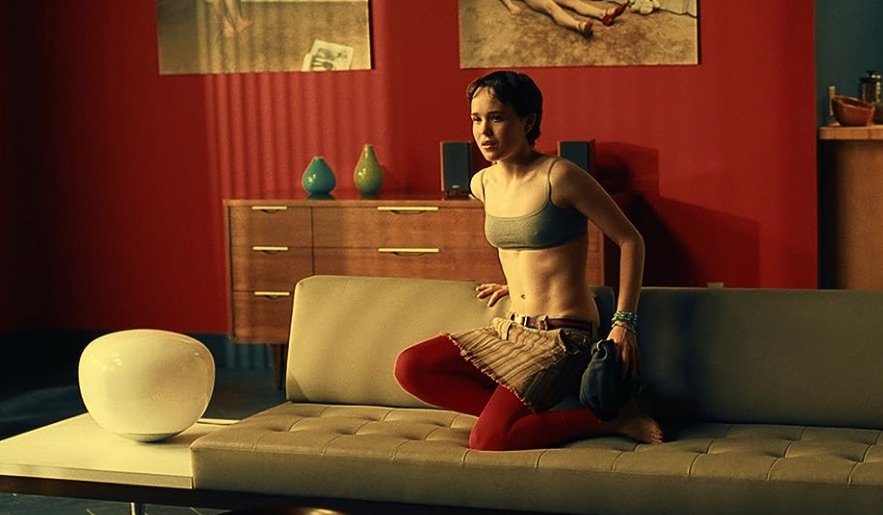
Hard Candy (2005) - Image via IMDb.
For those who may have seen my first pick, prepare to get even more uncomfortable. Hard Candy is forever a staple in my movie memory. Elliot Page plays Hayley, a young girl who goes to meet a photographer after chatting with him online. (For context, if you grew up in the 90s, all the Dateline episodes should be coming to mind.) However, Chris Hansen won’t be waiting for Jeff (Patrick Wilson) when they go back to his apartment for an impromptu photoshoot, Hayley has some other things in mind. Very serious, very real-world scary, and very deadly, this psychological thriller will leave you feeling distressed but relieved, too in its twist of events that you probably weren’t expecting.
Green Room (2015), dir. Jeremy Saulnier
Writing this post, I realize that I have a thing for movies that play games with your mind. With Green Room, it’s a little different from my prior recommendations, though. When an out-of-town punk rock band gets caught up in witnessing a violent crime that a gang of Nazis want to cover up, viewers can’t help but feel pure dread. In no scenario would this ever end well, making it easy for us to see right through the void promises of freedom and the opportunity to leave this warehouse-turned-venue alive. I mean, if we’ve learned anything over the last several decades, you can’t bargain with fascists; You can’t compromise with people who want you destroyed.
This leaves the rest of the film to play out as a game of wits and war. The scenes that follow are a mix of gore and suspense, all fueled by adrenaline and fear. While I won’t spoil the ending, I can confirm that this is one film that you might want to consider watching next.
The Killing of a Sacred Deer (2017), dir. Yorgos Lanthimos
Another indie film near and dear to my heart, The Killing of a Sacred Deer has a lot of strange sentimental value to me, as the first time I watched the movie, it was with Ande, Theresa, Laura, and several other horror-loving friends. Before we even knew it, What Sleeps Beneath was being born. During this in-house “movie manatee” (I know, it’s a matinee, but you wouldn’t understand, haha) we had movie scripts to follow along with all the films we watched, allowing us to take notes throughout the film so we could talk about them at the end. Yeah, if you didn’t get it by now, we are total horror nerds.
Anyway, writing this article, I decided to pull my notes on the film back out. While I won’t recount the scribbled bits of thoughts, there were many sections of the script that I had highlighted, all relative to responsibility and making choices. While this film asks perhaps one of the hardest questions during its climax, its journey to get there is even more interesting. The director and the actors did a wonderful job in portraying the details we weren’t quite sure why we were getting, but carried the storyline so effortlessly that we got quite the gut punch when the time was right. If you feel like getting a little uncomfortable, put this on the next time someone asks you what horror movie to watch.
Ande’s Picks
Because indie filmmaking is such a broad definition, ranging from mid-budget fare produced by established indie-operated subsidiaries of the majors, like Focus Features (Universal) and Miramax (Paramount), all the way down to self-produced microbudget films that never see wide distribution, I wanted my list to find a fair middle ground—highlighting movies that are relatively accessible, but are often overlooked and that few have probably seen.
Absentia (2011), dir. Mike Flanagan
Absentia is the first feature film from current horror all-star, Mike Flanagan. It’s a truly bare-bones film compared to what you’ll see on his Haunting series or Midnight Mass—having been made for a crowdfunded $70,000—but all the hallmarks of what fans have come to love about Flanagan’s films are already blossoming here, including themes of drug use and religion, family trauma, as well as long, introspective monologues. It also marks the beginning of Flanagan’s ongoing relationship with his actors, as seven actors of the 10 named roles in Absentia would return in at least one of his later films, including Katie Parker (The Haunting of Hill House, The Haunting of Bly Manor), who plays Callie, a recovering addict who goes to stay with her sister, Tricia, who is struggling with declaring her missing husband dead in absentia.
While the low budget can show its seams at times, there are some truly chilling moments in Absentia, and a lot to love about the writing and performances, particularly if you’re a dedicated Flanafan—Fanagan?—like we all are.

The Signal (2007), dir. David Bruckner, Dan Bush, Jacob Gentry
The most prolific of The Signal’s three co-directors is David Bruckner, who horror fans may recognize from the most recent reincarnation of Hellraiser (2022), as well as The Night House (2020) and The Ritual (2017), but those films might never have happened had it not been for The Signal. Not quite what we would normally define as an anthology, The Signal is a single story but told in three distinct parts, each from a different perspective and director. A zombie apocalypse caused by a strange transmission emanating from every cell phone, radio, and TV sets this film in the same category as Pontypool (2008) and Stephen King’s unfortunate Cell (2016). Thankfully, it leans much closer to the former in terms of quality. Another film made on a shoestring budget, The Signal is an example of indie filmmaking at its finest—offering the kind of storytelling that the major studios wouldn’t dare to greenlight.
Bug (2006), dir. William Friedkin
Friedkin’s name may be synonymous with The Exorcist (1973) in horror circles, but it wasn’t the late great director’s only foray into the genre. A much too often overlooked film in Friedkin’s stable is Bug, a tight thriller/horror starring Ashley Judd and Michael Shannon. It’s a paranoia-soaked nightmare full of manic conspiracies, delusions, plots, and a hell of a lot of aluminum foil. This is a movie best experienced knowing as little as possible, but trust me when I say that it’s one you’ll want to watch with a can of Raid within arm’s reach.
We Need to Talk About Kevin (2011), dir. Lynne Ramsay
For the impact that Lynne Ramsay has had on the film world, her output is remarkably slim. But in 2011, the director of Ratcatcher (1999) and You Were Never Really Here (2017) gave us this bleak and terrifying portrait of a mother trying to come to terms with the unspeakable crime committed by her son and whether or not she could have done anything to prevent it. Starring Tilda Swinton, John C. Reilly, and—disturbingly, in hindsight—Ezra Miller, We Need to Talk About Kevin is a film that really knows how to get under your skin.
As Eva (Swinton) reflects on her son’s life, she is seen constantly questioning whether Kevin’s various “red flags” are something to be concerned about or, as her husband (Reilly) insists, just a boy being a boy. Reilly, whose collaborations with Will Ferrell frequently overshadow his dramatic roles, is excellent—as is Swinton—each bringing understandable and nuanced perspectives to their dilemma and leaving viewers with an experience that will undoubtedly haunt their minds for days.
Excision (2012), dir. Richard Bates Jr.
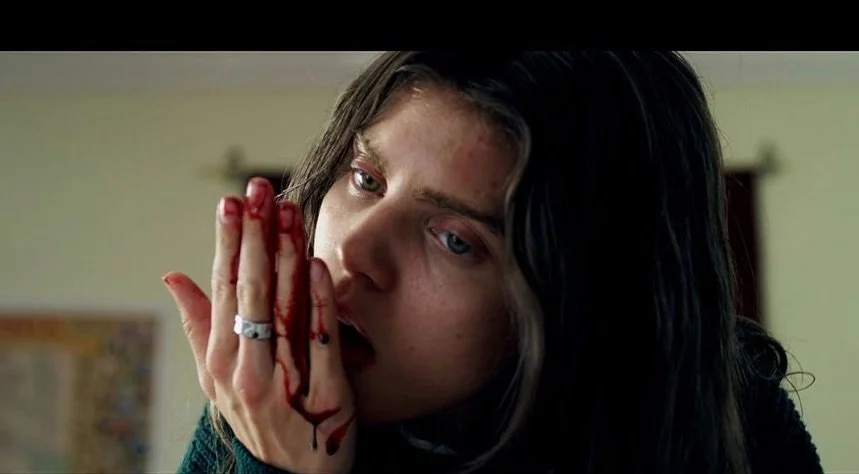
Last, but absolutely not least, Excision, directed by Richard Bates Jr. is a unique and bloody tale of an awkward teenager named Pauline who, ultimately, just wants to become a surgeon. Excision feels like a cross between Ginger Snaps (2000) and American Mary (2012), by way of May (2002), which is to say, it’s fantastic. A bizarre, dreamlike quality permeates the picture as Pauline (AnnaLynne McCord) struggles to win her parents’ approval, make friends, and lose her virginity, but naturally, nothing goes according to plan, resulting in an insane, macabre finale that takes it over the top. Plus, it features John Waters in a cameo role as a preacher, which should override any excuse you may have conjured up to avoid adding this to your watchlist.
Did your favorite indie horror movie not make the list? Let us know in the comments!
Article written by What Sleeps Beneath
WSB is a labor of love. You can support us by reading our articles, telling your friends about us, visiting our Bookshop page, and shopping our merch. Thank you for being part of the horror community!
In The Buffalo Hunter Hunter, blood carries the violence of colonialism, while a settler’s journal controls whose story survives. This essay examines how Stephen Graham Jones uses vampirism and layered testimony to confront historical erasure.